“This is my forest. I know every stone and every root. No one can frighten me here.”
Ronja The Robber’s Daughter, Astrid Lindgren
Growing up, much of my time was spent in a centuries-old farmhouse in a moorland valley where my friend Annie lived. Outside her bedroom was a narrow landing, most of it taken up by a bookcase we’d need to shimmy past to get in and out. The shelves were so tightly packed, books would need to be prised free.
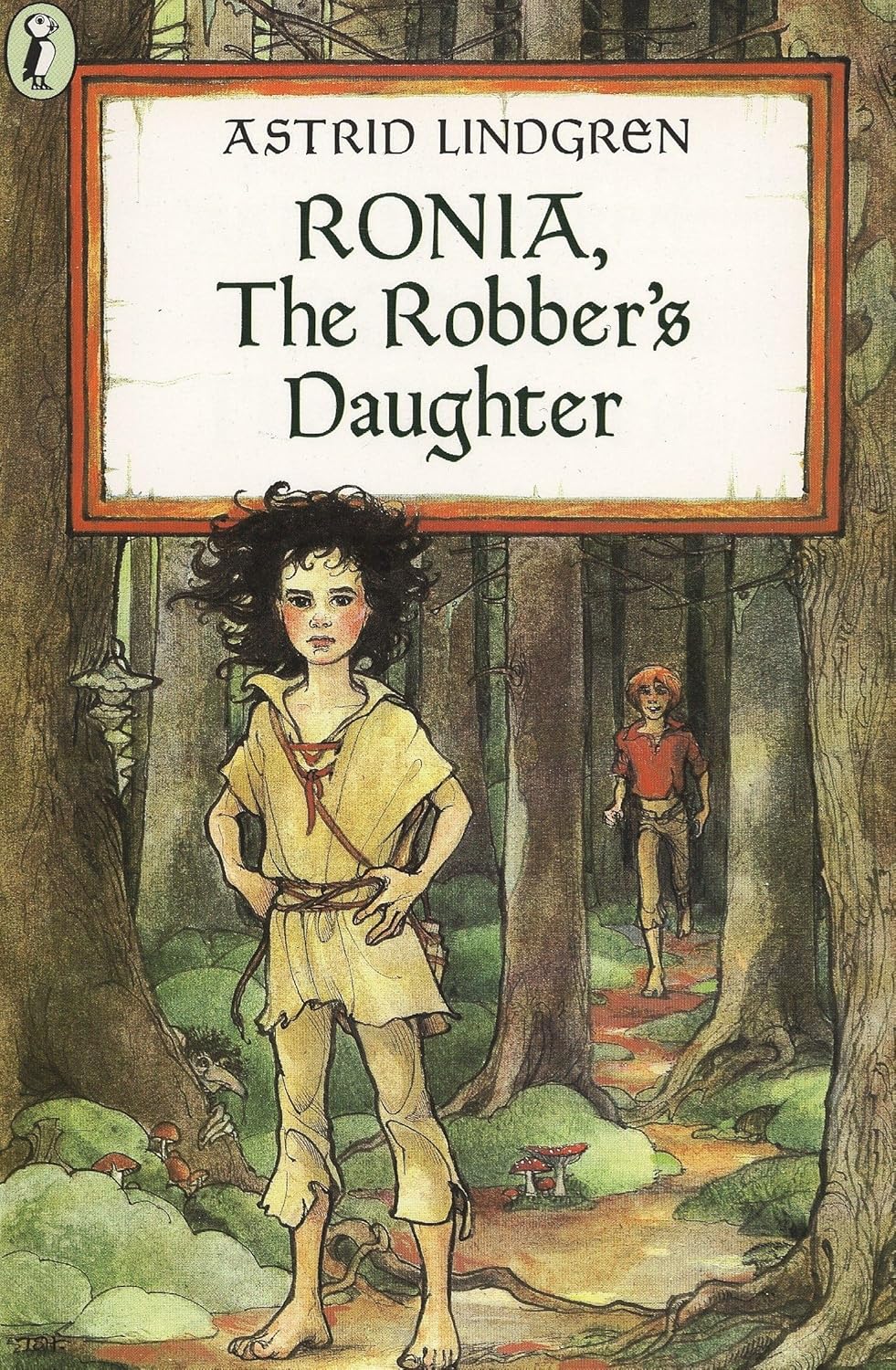
It was rare that I passed this bookcase without tugging out one book in particular – Ronja the Robber’s Daughter by Astrid Lindgren which had been read to my class at school. Usually, I wouldn’t even open the book, but just study the cover, especially the figure in the foreground: a wild-haired, barefooted Ronja, steadfast on a thin forest trail. Fearless and nature-led, she embodied everything I wanted to be.
For what was to be her final novel, (after Ronja, Lindgren shifted her focus to picture books) Lindgren drew inspiration from her densely forested home region of Småland, along with Thoreau’s Walden. City-based at the time, Lindgren ached for the forest and was inspired by Thoreau’s departure from society to lead a solitary, simple life in the woods.
Originally published in Sweden in 1981 as Ronja rövardotter and in English in 1983, the translated edition (unnecessarily) changed the spelling of Ronja to Ronia and featured a different cover by prolific children’s book illustrator Trina Schart Hyman.
I’ve always wondered why this cover had such a lasting impression, and I figure it may have something to do with Hyman’s art technique, which involved extensive layering. She began with a pencil drawing, then built layers using India ink and diluted acrylic. The result is a mesmeric, fabled atmosphere that enchants me to this day.
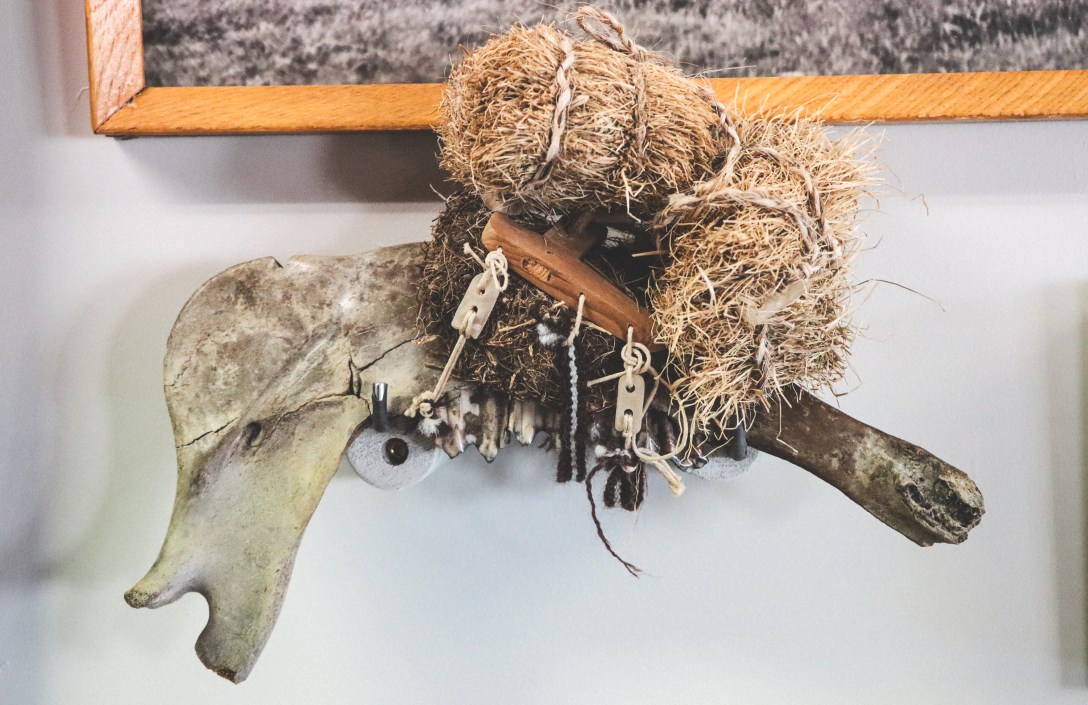
It’s just over a year since I first visited Skógar Museum in Iceland, and I’ve been thinking about one of my favourite artefacts (out of the fifteen thousand residing there) – a toy ‘horse’ made from a sheep’s jawbone by the museum’s founder, Þórður Tómasson. There’s probably not much to know about the ‘horse’; however, I’m one of those highly annoying people who feed on minute, possibly inconsequential details about things I get attached to.
In her fantastic (although sometimes challenging to get along with) book The Museum of Whales You Will Never See: Travels Among the Collections of Iceland, A. Kendra Greene writes lyrically about ‘Iceland’s biggest museum outside of Reykjavik,’ calling it ‘…a museum of old rituals, of daily chores, of things to do and things undone. This is a museum of kinship, of who we are by way of who’ve we’ve been.’
Something I appreciate about the museum, and which Greene highlighted, is that it’s ‘without sequence…you can start anywhere.’ I recall my first trip and can grin to myself, right now, as I curl over my laptop, at the memory of flitting around, bedazzled and delighted by all the curious things and stuff left behind by Icelanders of another time.
Greene writes about meeting the then 95-year-old Tómasson, but apparently, ‘the language yawned‘ between them, and there was little to say, which I found a bit sad. I was strangely affected to learn of the passing of a man I’d never met and whose museum I visited first the first time two years after his death (he died in 2022 at the age of 100). I would have loved to have met him, even just to shake his hand and say ‘I’m not often happy, but what you have built here has made me very, very happy, especially the jawbone horse.’
It’s been a few months since I was in Cave Vatnshellir on the Snæfellsnes Peninsula in Iceland looking at the bones of a fox who died there hundreds of years ago. However, I’ll find that, quite often, I’ll randomly think about this fox which found itself in the Underworld, or, as it’s called in IcelandicUndirheimarnir, before its time.
I imagine what it would have been like for this animal – who weighed less than the carry-on bag I took to Iceland – not to be able to find a way out. I imagine it treading carefully through the darkness, nosing wet lava rock, hearing its own heart thump. I think about the time it would have taken for it to die in a darkness so complete it’s impossible to comprehend unless you’ve been down to where the daylight can’t reach.
Yes, the lava formations in the cave were riveting to see, and yes, the dark was exhilaratingly absolute when the flashlights went out, but the moment we saw the bones, I was all about the fox and I wanted what our guide couldn’t possibly give me – its life story.
I want to think others have walked away from Cave Vatnshellir with the fox on their mind, that I’m not the only one preoccupied with the life and death of this Northern nomad.
It’s been a few days since I trudged back from Scandinavia, and the withdrawal is all too real. I miss the clean air and tap water that doesn’t have a chemical aftertaste. I miss the company of the unique troop I met on my Swedish endeavour, and I miss the trees. I miss the trees a lot. Forests, especially those that stretch beyond where I can see, equip me with a sense of optimism that little else can match. There’s an uncomfortable dampness to my spirit when there isn’t a forest within sight when the trees aren’t close enough to reach out and touch.
The energy of England is troubled and distracted. There’s always an underlying tension in this country, and it’s difficult not to despair. But I’m determined to keep my renewed sense of vigour – gifted by my time in Scandinavia – alive. On this trip, I travelled to Northern Sweden to participate in Go Sollefteå, an event organised and hosted by Kalle Flodin and Sollefteå municipality.
In 2018, Kalle uprooted his life in Stockholm and moved to a sparse forest cabin in the North of Sweden to create a new life grounded in simplicity. Kalle’s videos and those of Jonna Jinton (her channel led me to Kalle’s channel) and Talasbuan (Kalle’s channel led me to their channel) regularly pour much-needed brightness and authenticity into my life. I’m one of many viewers who clutch onto the dream of having a forest home, of waking up to the rejuvenating scent of pine, and discovering moose tracks outside my front door.
It was during an ADHD burnout that I read about the Go Sollefteå event. My days were blurred together in a teary mess of trauma. Creating distressed me – my cruel inner critic shit on everything I did, which made me reluctant to work on anything at all. Eating was a chore – my diet was fuelled mainly by protein shakes. My sleep was disrupted by overthinking, nightmares and drenching night sweats. Leaving the house was an effort beyond all others. Suicidal thoughts frequently snaked through my head.
But the prospect of venturing to the sparsely populated North of Sweden – something I never did when I lived in the country – meeting the person who’d made the ‘simple cabin life’ his reality and getting to know other people ‘bound to the north’ by whatever means was too sparkling, too exhilarating, too therapeutic an opportunity not to reach out for. I submitted my application a few hours before the deadline, thinking, ‘I probably won’t get accepted…But I have to try.’
When the acceptance email came through, I teared up and scrambled to explain to my bewildered family why my mood had so suddenly and miraculously ascended from the bowels of hell.
And So To Sweden
After spending a fitful night in a converted jumbo jet parked close to Stockholm Airport, I was picked up by a lilac-haired Swede called Pernilla. She’d generously offered to pick me up on her way to Sollefteå. (She made a significant detour to get me. She doesn’t think it was that big of a deal, but it was that big of a deal.) Little did I know at the time that I was hitching a lift with a knitting phenomenon.
Pernilla and I cruised north, and five hours glided by, our chats regularly punctuated by me saying, ‘Where are the moose? I can’t believe we haven’t seen a moose yet. Do you think we’re going to see a moose?’ Pernilla told me she had seen about fifteen before she picked me up, including a mother with a calf. She’d see another one a day later close to our hotel. I’d miss it by minutes.
Almost 70% of Sweden is forest, and we drove through a good portion of that on the way to Sollefteå. Trees regulate my nervous system – they’re experts at doing so in general – and as we drove on the blissfully empty roads, I felt evermore lifted by the sight of them. I had that soothing sensation of coming home.
I’d planned to photograph the journey; I imagined myself photographing the Go Sollefteå experience from start to finish. But I didn’t. I didn’t have the energy. I was emerging from under the weighty emotional debris of my burnout. Being present in the moment was more important than trying to document it.
The main venue for the event was Hotell Hallstaberget. Built alongside one of the oldest ski slopes in Sweden, it’s been bringing together, ‘outdoor enthusiasts’ and I love this ‘fun-loving Norsemen’ since 1969.
Shortly after Pernilla and I arrived, it was time for introductions. Folk from all corners of the globe assembled in a circle and together we met Kalle, his supremely well-behaved husky Tuss and the lively, bright-eyed team behind putting the event together. It was all so easy-going, and my nerves started to dissipate. I overshared, as I have a habit of doing. But it was fine. I’m either mute, or you know my life story within minutes of meeting me for the first time; there’s no middle ground and I’m learning to accept that about myself.
Introductions were followed by an elaborate buffet dinner, after which I cornered an Australian woman called Chelsea, on her way to get a drink. She’d arrived late due to car troubles and had missed the introductions. Chelsea had moved to Sweden earlier in the year and lived on a farm with her Belgian boyfriend, Lars. ‘When I saw your profile photo on Facebook, I thought we’d get along,’ I told her, perhaps a bit too eagerly. However, my intuition was correct, and we got along as fabulously as you’d expect two neurodivergent darklings to get along.
My mood the following morning was soaring from the get-go, with the weather partly responsible because when I hauled back the curtains in my room, I was greeted with dense fog, and if you know me, you’ll know I’m quite the low-lying cloud enthusiast.
The day to come was crammed with activities: a swift, steep hike – ‘please don’t look up at the drone! – followed by a crash course in Swedish led by the sort of high-spirited folk I wish I’d met when I initially tried to root down in Sweden. Then there was fika with kanelbullar the size of my head, which I very happily and very swiftly demolished.
In the evening, we attended a yoga session led by Kalle’s neighbour and founder of Ayur Yoga, Wivi-Anne. It was perhaps the most intense and life-affirming experience of the trip. I’d been to one other yoga class in my life and I’d lasted five minutes. I stayed for the duration of this session – minus ten minutes when I went to the toilet, then couldn’t remember which room to return to.
Although I stayed until the end, I sat out most of the poses. My body was too rigid and awkward, reluctant to ease into even the most basic ones. Everything hurt. But the energy in the room was comforting, forgiving.
When the session was done, most people, myself included, were not quite ready to move from the space. The room was opened up for questions. I spoke about the realisation that I all too often forget to breathe. I talked about how my whole body hurt when I tried to follow along with the poses. I spoke about the impact of the last pose, a simple ‘hands together’ position and how it led to a single profound realisation: that I can stop apologising for being who I am.
That night my phone died – I’d left my plug adapter behind in Stockholm – so I didn’t get the message that the aurora borealis was out and dancing ecstatically in the skies above Sollefteå.
There was some confusion the next day, and I missed the second hike. So, I took myself off on my own. The hike the day before had been fun but fast paced because of scheduling. There hadn’t been the chance to get close to the forest. Well, not for me anyway, who didn’t have the gazelle-like agility and fitness of other group members.
I took the opportunity this time around to get close and spent some blissful hours appreciating mushrooms, bluebells and lichen. I watched a fox for a while, and the fox watched me. I acknowledged the croak of a solitary raven as it flew over my head and took it as a sign that this was how it was supposed to be – that I needed to soak myself in the preciousness of this experience.
Pernilla and I scoured thrift stores in the afternoon. (There was the option to look at houses for sale, but I’ve got a long way to go before I can even think of the possibility of buying something anywhere.) I narrowly missed out on scoring a pair of Fjällräven trousers. Dinner that night was a cosy, candle-lit affair in a wooden round house with Mexican inspired cuisine, as is tradition on a weekend in Sweden. There was also liquorice so thickly doused with salt that it was inedible for all but a dauntless few.
The following day, we said our goodbyes after breakfast. I lingered in Sollefteå for the rest of the day, not wanting to accept that it was over but humungously grateful for the experience and humbled by it.
I needed to repair my relationship with Sweden – there’s much trauma associated with the time I spent living there – and this trip went above and beyond in helping me do that. One of my anxieties had been about being captured on camera, and I faced this fear as fully as I possibly could. I’ve come away feeling I’ve crossed paths with some of the most thoughtful, generous, honest, creative and positive people that I’ve ever met. And even if I don’t look like I am in the photo, and despite all the unknowns that scare the shit out of me, I’m inspired, invigorated and ready for whatever’s coming next.
One of our last stops on our first day—after realising that we were still four and a half hours away* from the campsite where we were supposed to be spending the night—was a man-made cave which neither of us knew existed until we were sailing on by it.
*Finnbjörn had said to me, ‘Say stop whenever you want and I will stop…within reason.’ I took advantage of his giving nature, so accepted the blame for the sluggishness of the trip. We ended up not driving to where we were supposed to go and instead wrangled a place in a field in another, much closer, campsite.
Rútshellir Cave
Not far from Skógafoss, by the Eyjafjöll mountains and literally right off the Ring Road, is one of the largest man-made caves in Iceland. We didn’t have Rútshellir Cave on our itinerary, but it was free and not featured on any tours, so there was only a smattering of other people.
After walking through the stone and wood sheepcote, which was built at some point in the 20th century, there are two caves to explore. The first is about twenty metres long and used to store hay and stockfish (fish air-dried on wooden racks outdoors). People may have lived in it at some point. (I like to believe they did.) The second, smaller cave is thought to have been used as a smithy, though there’s also mention of it being a heathen temple. One of the earliest accounts of the cave dates to 1714, and its name is from its alleged first inhabitant, Rutur. Some think Rutur was an evil chieftain or a thief. Others, like me, suspect he was a troll.
We didn’t, but somebody else did and was loudly scolded by their law-abiding child.
Intriguingly, Rútshellir Cave was of great interest to the Nazis, and in 1936, it was thoroughly searched by the SS troops Ahnenerbem who were under the command of Viking fanboy Heinrich Himmler. Fixated on the idea of a pure Nordic race, they were in Iceland looking for evidence of old temples and were convinced that was indeed an advanced heathen temple.
*As I am wont to do, I went down a rabbit hole about the Nazis and their obsession with Iceland. I found an article in the Reykjavik Grapevine where Helgi Hrafn Guðmundsson writes about how Iceland and the Icelandic people disappointed the German diplomat Dr Werner Gerlach.
Day Two
I thought camping in the car was fine because I’m essentially impish in size, but Finnbjörn (whose name translates to polar bear) was too long to be comfortable and so didn’t sleep. So, we agreed to keep going to the Glacier Lagoon and then return to Akranes. The weather was too hot to be comfortable, and I was radically overstimulated. As it turns out, I’d forgotten how wearing road trips could be, considering my last lengthy one was when I was still in my maiden years.
The Glacier Lagoon
This was, undoubtedly, the busiest place on our road trip. Tourism has reached unprecedented heights in Iceland; about a million people visit the lagoon yearly, and we saw many of them on this blistering Monday in June.
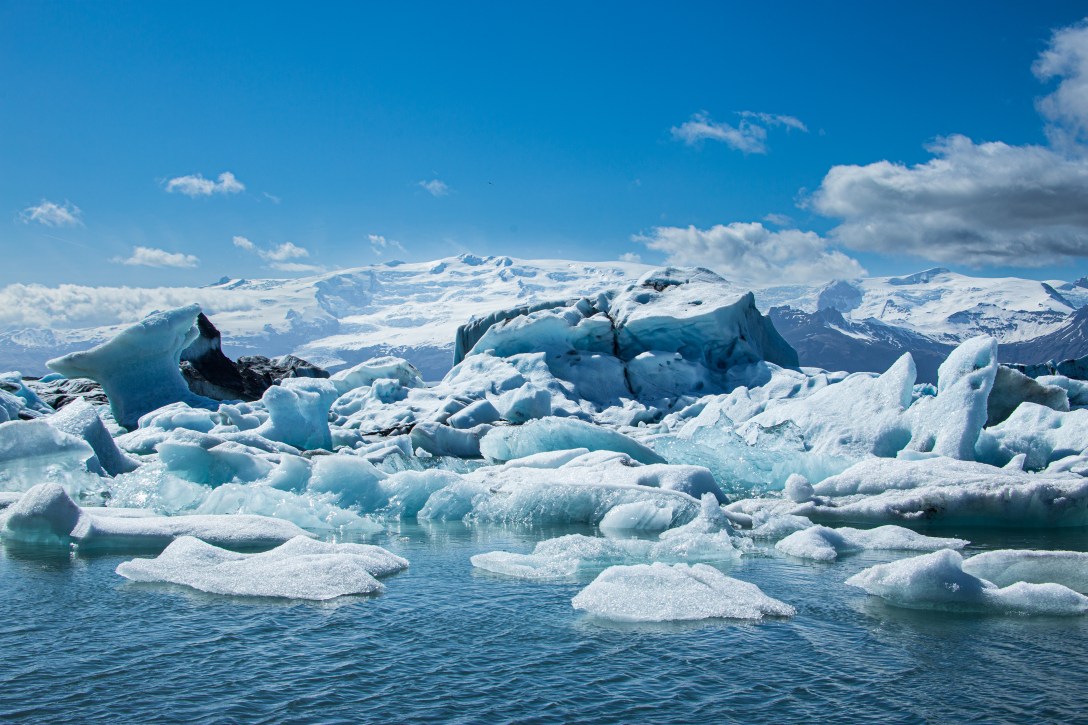
The Glacier Lagoon b.1935 is made up of meltwater and at 932 feet, it’s the deepest lake in Iceland. The ice in the lagoon breaks away from the glacier Breiðamerkurjökull, an outlet of Vatnajökull glacier – the largest ice cap in Europe. (It wasn’t until I arrived home that it dawned on me that there are humans alive right now who are older than this body of water.)
I was childishly manic at the lagoon…but famished, so we headed first for the café. Finnbjörn supped at a double espresso, and I, afraid I was somehow going to miss out on seeing the icebergs, wolfed a piece of white bread and pesto marketed as ‘vegan pizza,’ then bounced up and raced on ahead of my weary boyfriend.
I watched the icebergs intently, bewitched by the glassiness and the zingy blue hues conjured by compression and the dance of light and ice crystals. Some stay in the lagoon for up to five years before drifting the short distance to the Atlantic Ocean. When he joined me by the shore, Finnbjörn pointed out a seal. Nobody else noticed it. It was likely sheltering from the scores of orcas that patrol the waters of Southeast Iceland.
Before reluctantly heading back to the car, I Facetimed my daughter Saga. ‘Are you at the North Pole, mummy?’ I told her we weren’t that far away. She asked if I’d seen reindeer or Santa and what the black on the ice was. I told her it was centuries-old ash from a volcano. She said okay and went back to the picture she was drawing.
Optimistically, I thought I’d ride my good feelings all the long way back to Akranes. I rode them for around forty-five minutes of the five-hour drive before losing it with the midnight sun and wrapping my head in a blanket. But the light was relentless and hounded us all the way home.
From Along The Way
A handful of tips if you’re road-tripping in Iceland during Summer:
If you’re over 6 feet tall and in your mid-forties, sleeping in the back of a car may be a rough ordeal. I recommend a test run of your sleeping arrangements.
Yes, the sun is up all night, and yes, it can be tempting to keep going because time feels infinite but don’t.
If you’re driving electric, know where the charging stations are before your trip begins.
Always keep an eye on the weather. So many apps exist for this.
Watch out for sheep and their lambs as well as oystercatchers and their chicks.
Take more water than you think you’ll need.
Pack more snacks than you think you’ll need.
Be wary of speed cameras.
You will need much more time than you think you’ll need. For example, taking a photo of horses with wind-ruffled manes will not take the sixty seconds you imagine it will.
Have an itinerary—Finnbjörn made ours using suggestions from Trip Advisor—but make it somewhat flexible.





 Northern Fever