Ronja the Robber’s Daughter – The Enduring Spell of a Book Cover

“This is my forest. I know every stone and every root. No one can frighten me here.”

Ronja The Robber’s Daughter, Astrid Lindgren

Growing up, much of my time was spent in a centuries-old farmhouse in a moorland valley where my friend Annie lived. Outside her bedroom was a narrow landing, most of it taken up by a bookcase we’d need to shimmy past to get in and out. The shelves were so tightly packed, books would need to be prised free.

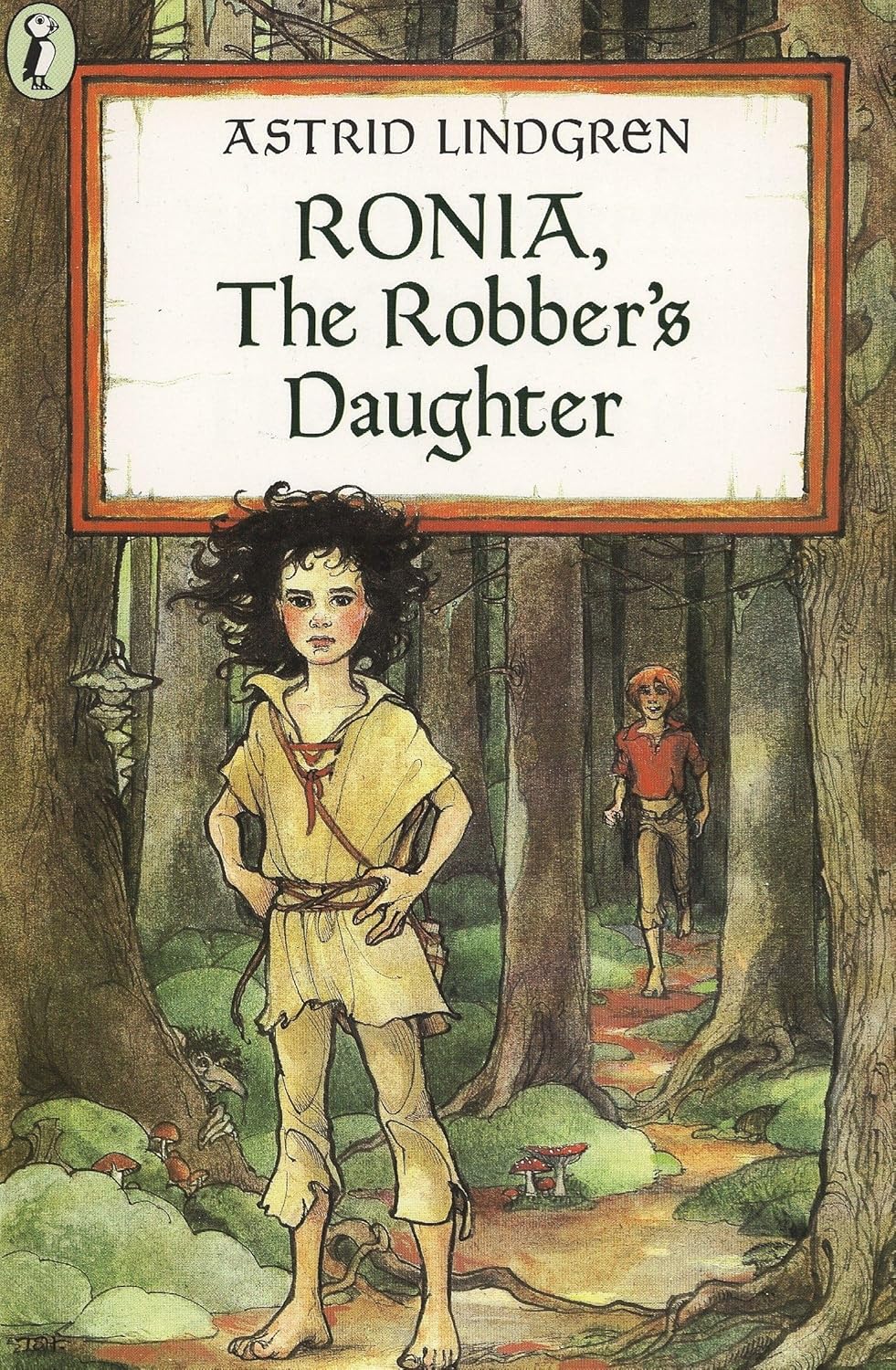
It was rare that I passed this bookcase without tugging out one book in particular – Ronja the Robber’s Daughter by Astrid Lindgren which had been read to my class at school. Usually, I wouldn’t even open the book, but just study the cover, especially the figure in the foreground: a wild-haired, barefooted Ronja, steadfast on a thin forest trail. Fearless and nature-led, she embodied everything I wanted to be.

For what was to be her final novel, (after Ronja, Lindgren shifted her focus to picture books) Lindgren drew inspiration from her densely forested home region of Småland, along with Thoreau’s Walden. City-based at the time, Lindgren ached for the forest and was inspired by Thoreau’s departure from society to lead a solitary, simple life in the woods.

Originally published in Sweden in 1981 as Ronja rövardotter and in English in 1983, the translated edition (unnecessarily) changed the spelling of Ronja to Ronia and featured a different cover by prolific children’s book illustrator Trina Schart Hyman.

I’ve always wondered why this cover had such a lasting impression, and I figure it may have something to do with Hyman’s art technique, which involved extensive layering. She began with a pencil drawing, then built layers using India ink and diluted acrylic. The result is a mesmeric, fabled atmosphere that enchants me to this day.
The Forest I’ve Carried Since Childhood: Reflections On Elsa Beskow’s Children Of The Forest

Just now, holding a book gifted to my brothers at their christening in 1997, I found myself unexpectedly weepy.

Children of the Forest was one of several Elsa Beskow books my (lucky) brothers received. To finally have Beskow stories in our home was, for me, astonishing. These sumptuous picture books weren’t something we’d been able to afford. I’d need to leaf through them at school (Beskow herself had a liberal upbringing in a progressive family and is one of the keystone authors in early-years Waldorf schooling) or at a friend’s house whose bookcase was rainbowed with the instantly recognisable colourful cloth spines and gold foil lettering.

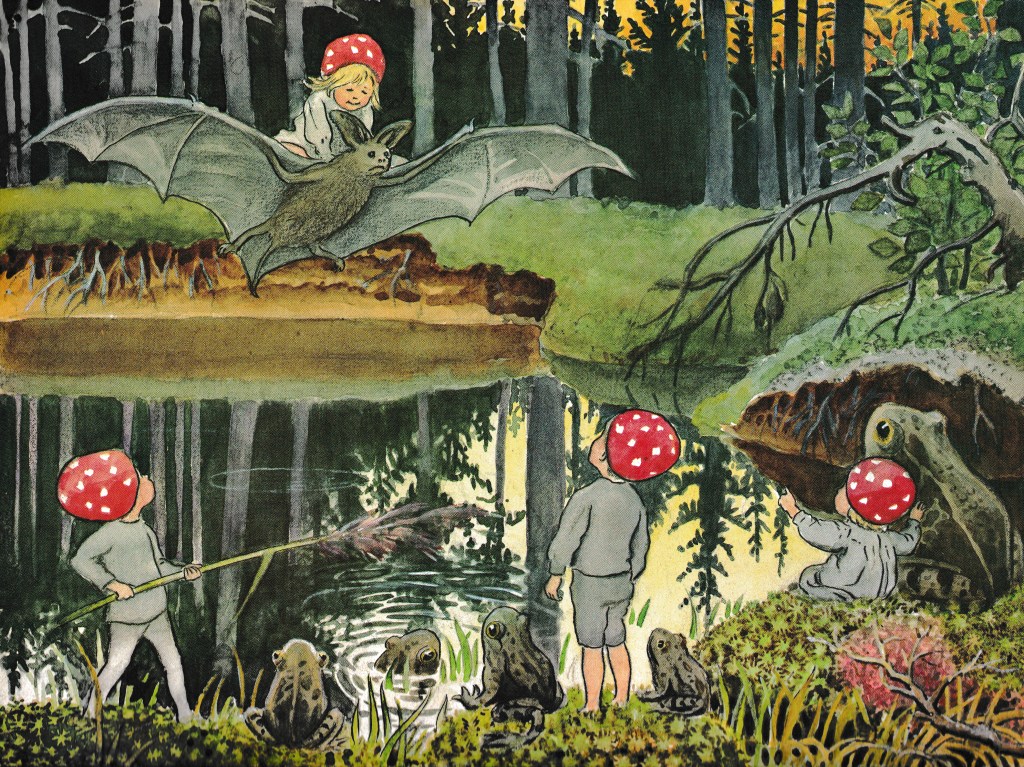
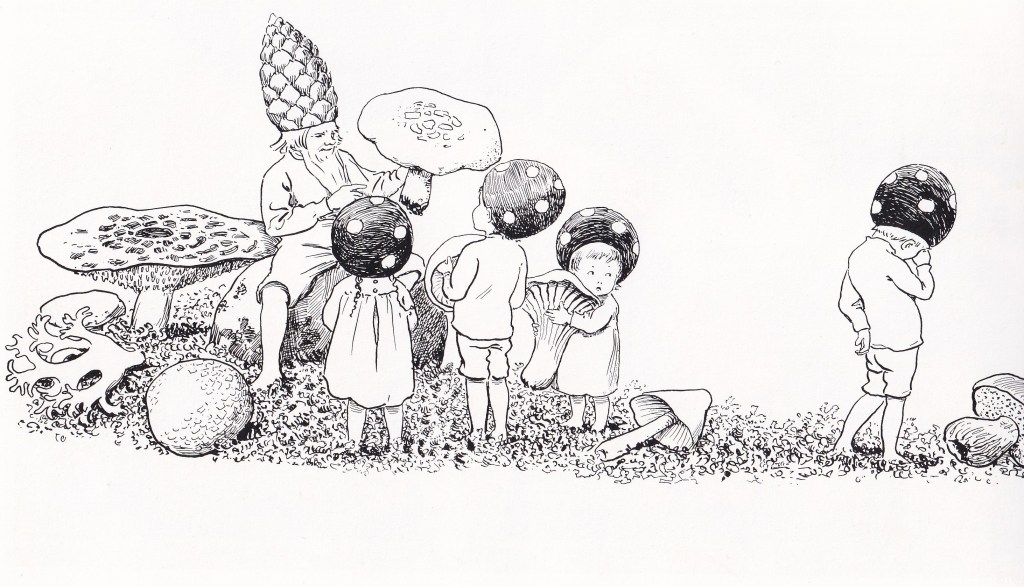
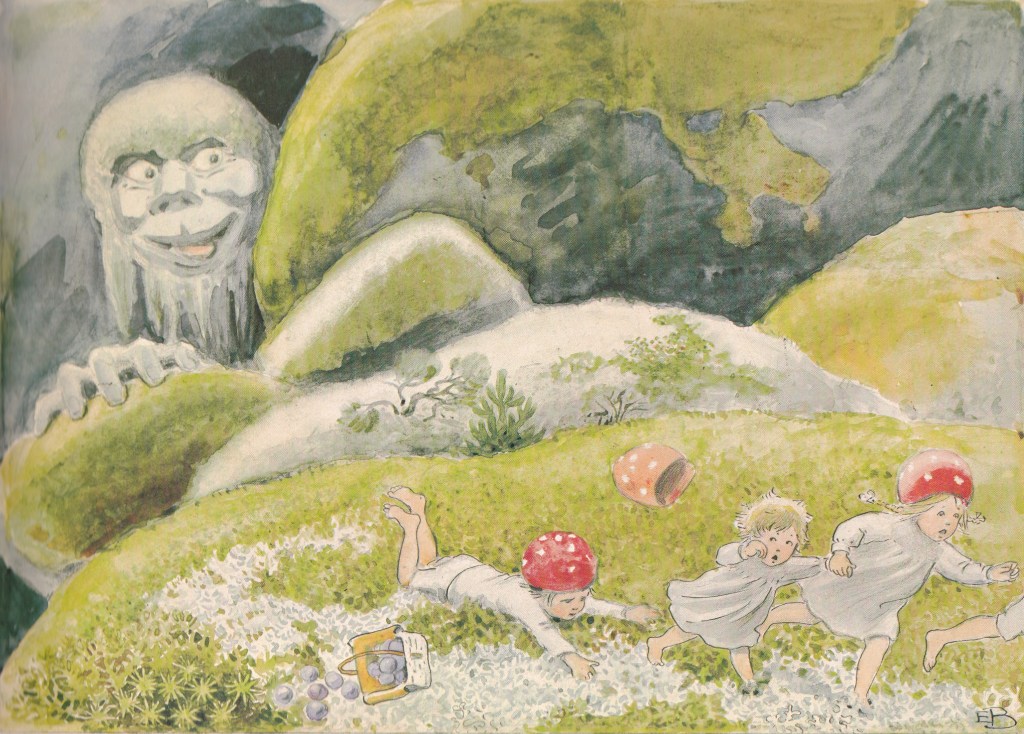
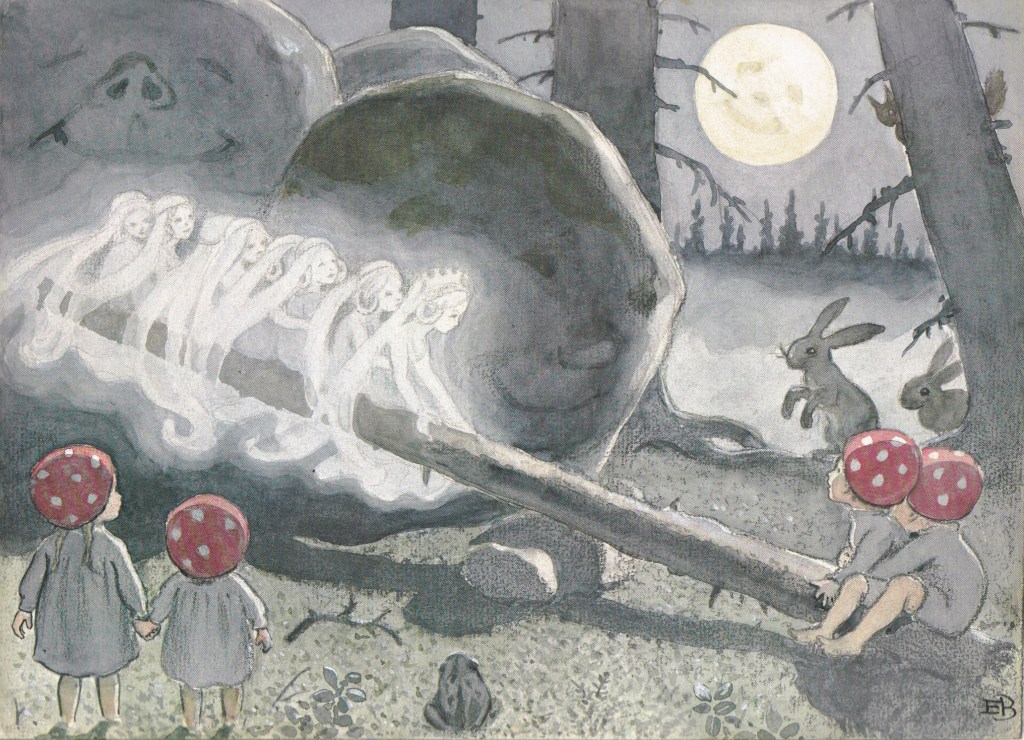
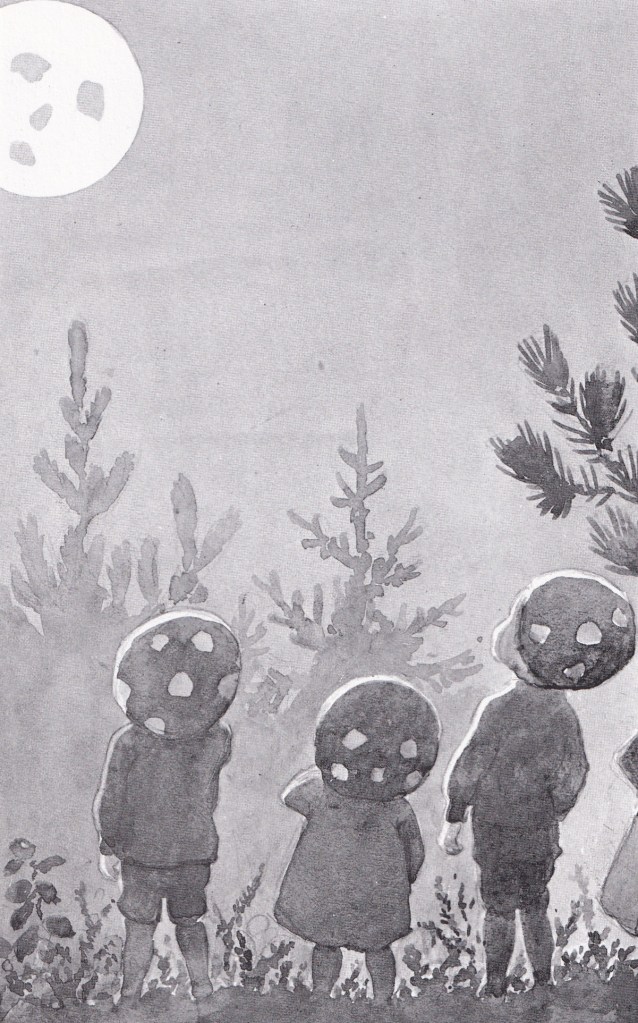
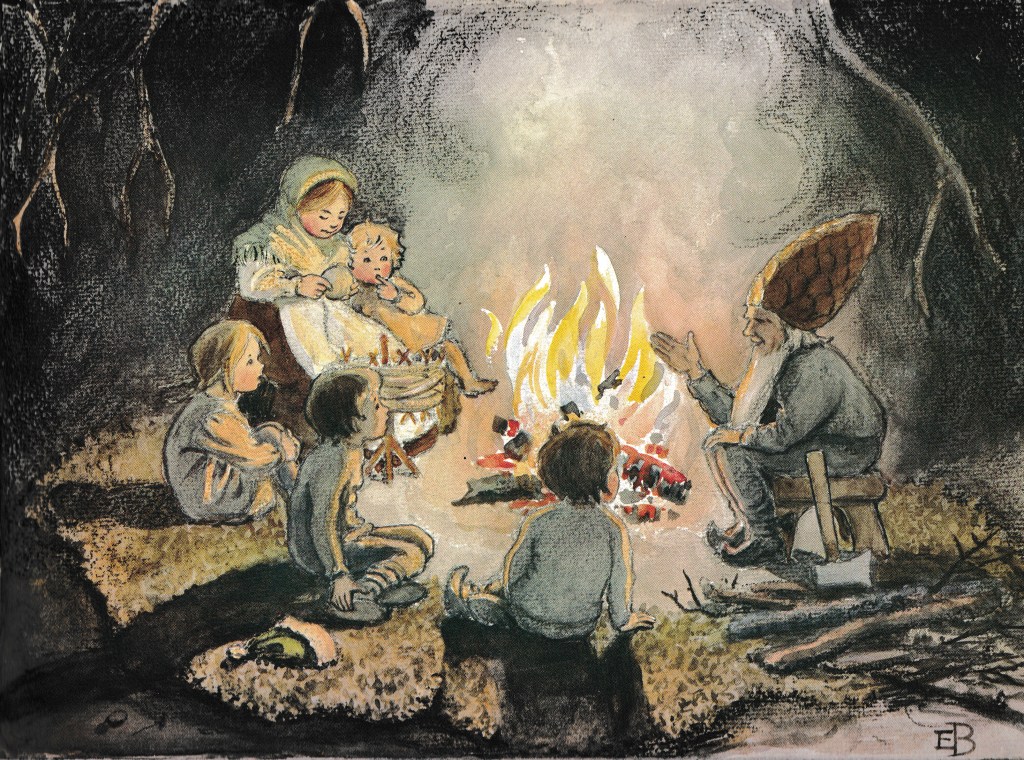
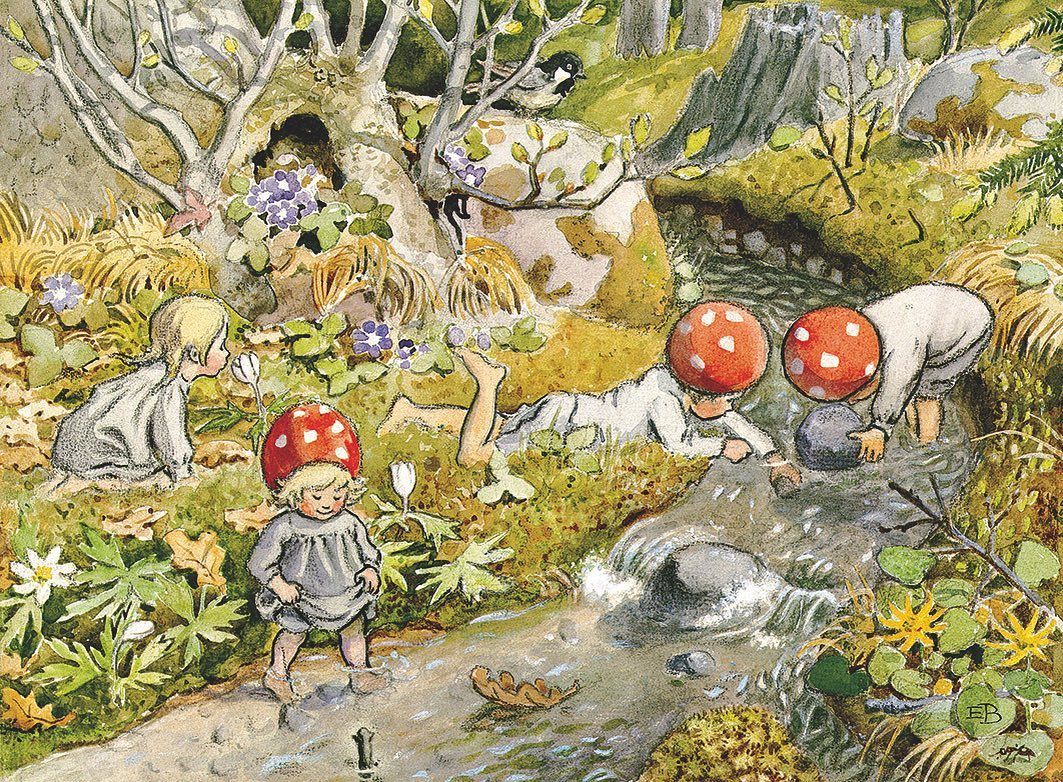
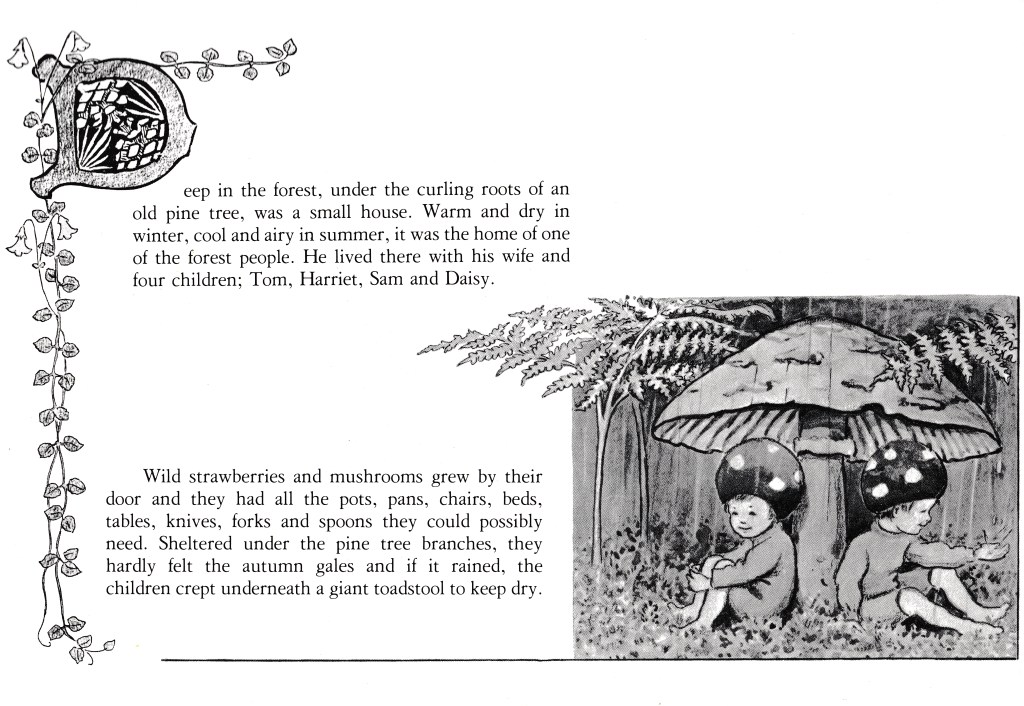
First published in Swedish under the title Tomtebobarnen in 1910 and in English in 1982, Children of the Forest follows the enviable escapades of four mushroom-hatted siblings gamboling through the seasons.

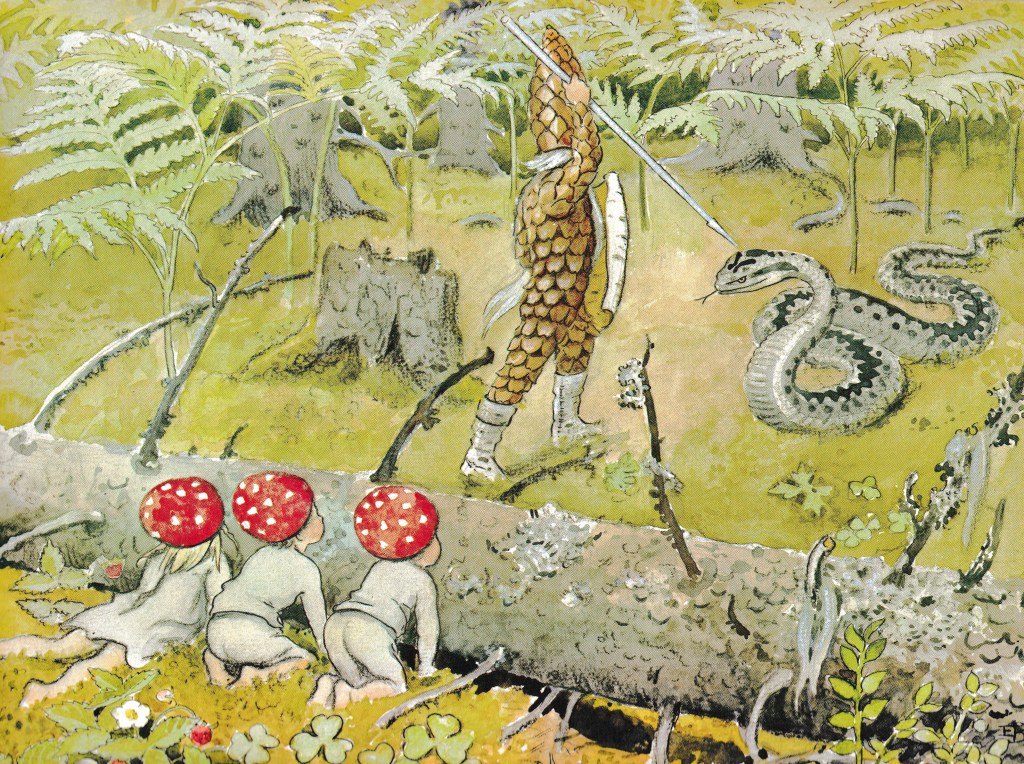
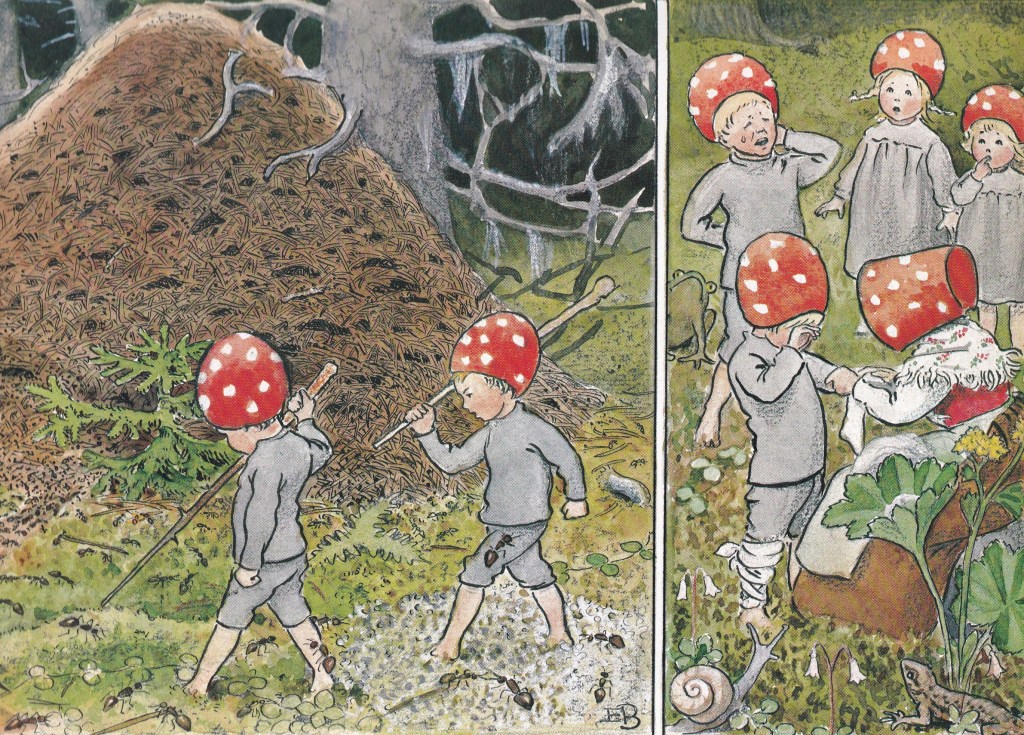
There’s a gentleness to the story, but every page has something to teach and hardships aren’t glossed over; their father, decked in a pine-coat suit with a birch-bark shield, kills Vara the viper (a hedgehog offers to take the body), one boy angers his father by playing with an apple pip instead of learning to recognise mushrooms, and the two brothers end up bitten by ants after poking their nest with hawthorn spears, modelled on the one that killed the snake. “Silly boys,” said their mother, as she put dock leaf ointment on their stings. “Never hurt the creatures of the forest, unless they mean you harm.”

When they’re not wondering where to bury a snake, nursing ant bites or being scolded for not paying attention, the children ride bats, play games with elusive, ‘light as thistledown’ forest fairies, and harvest berries to store for winter, encountering a forest troll when they do because, well, this is Sweden, after all.

The reasons I would constantly reach for these stories as a child are multilayered. I wanted to live under the roots of an old pine, of course, but they also gifted a serene escape from the chaos of growing up in a family of six.

Children of the Forest and every other Beskow story I read instilled in me, a sensitive child who knew she was different but didn’t know why, a profound calm and a sense there was somewhere I could belong. Looking back, I knew as a child what I needed to feel well in the world. Before we moved from the rural village I’d grown up in and from Waldorf education to a town and a state school, I had an impending sense of doom. I knew I wouldn’t cope, and spoiler, I didn’t.

I recall my first Swedish summer, picking blueberries in Värmland, the relief of finally reaching the forests of Beskow’s books. Afterwards, I volunteered to sort the berries before bagging them to freeze for winter. I’d love to meet someone who also finds scattering, scanning and sorting bucket after bucket of blueberries a meditative pleasure.

I felt weepy holding Children of the Forest because I’m nostalgic, but also because I knew from the beginning what I needed to be well. Even as a child, I was already orientating myself towards a slow, seasonal life in the north.