I don’t live within easy reach of nature at the moment. What I mean by this is I need to take a train or snag a lift to get somewhere wild. These days, soothing my soul in the countryside is a whole endeavour. Because of the ADHD burnout I’m currently experiencing, ‘ a whole endeavour’ isn’t doable every time I need to connect with the land.
When I visit my partner in Iceland, the sentence he hears most is, ‘Can we go on a hike?’ When I’m there, on that almost uninhabited island (the population is under 400,000, with around 60% based in the capital Reykjavik), my tense, terse, tired soul is nurtured by its wildness. I don’t fully understand the surreal place that is Iceland, but I know what healing feels like, and healing is what the nature of the Far North gifts me in droves.
I was teetering on the edge a few days before visiting my partner earlier this month. Finnbjörn had promised we’d go on a road trip around the South, and as I sobbed down the phone, he kept reminding me to think of our journey and the landscapes we’d see.
The plan was simple – to stop wherever we thought looked interesting (within reason), overnight in his uncle’s Tesla and exhaust our camera batteries by capturing the landscape around us. One of Finnbjörn’s strengths is planning trips. As I flipped through a Lonely Planet guidebook, trying to re-familiarize myself with places I hadn’t seen in years but not really having the attention span to do so, he gently suggested locations we might stop at and logged the places in his phone whenever a place piqued my interest.
We didn’t know how long we’d be on the road. Finnbjörn optimistically estimated three or four nights and waxed lyrical about how comfortable we would be sleeping in the Tesla: ‘We have air conditioning and a mattress and a blackout blanket to cover the windows… it’ll be just like a cosy hotel room!’ he enthused.
Spoiler: it was not like a cosy hotel room—not for him. We slept in the car for one night. It was fine for me at my dinky height of 5ft 5, but it was less than ideal for Finnbjörn, who has the height and shoulder width of his berserker ancestors.
***
It was hot and hazy (pollution from the nearby-ish volcano likely contributed to the haze) when we set off from Akranes, a petite harbour town about a forty-minute drive from Reykjavik. The weather felt more Mediterranean than sub-Arctic. But I was feeling, for the first time in a painfully long time, excited and a touch happy. The weather would continue to be (mostly and unusually) glorious for our two-day trip.
The last time I visited tourist sights in the South of the island was in 2011. I spent three months as a conservation volunteer, passing by much time in a minibus, going from place to place. But I was heavily medicated on quetiapine and slept away many, many hours with my head on my then boyfriend’s lap when I should have been drinking in the views. But this time, no longer on pills that knocked me out, it was different – my face was pressed to the window.
Now, I struggle to define my relationship with the Icelandic landscape. So much of it captivates me to the point that it’s almost unbearable. Experiencing the places I feel connected to – even if those experiences aren’t as complete as I crave them to be – fills me with ecstatic energy that it would be idiotic to try to contain. (In other words, I can be quite the nightmare to travel with.)
But there are also parts of Iceland, particularly the flat, barren lands, which bring up many complicated feelings and with which I don’t feel much connection. It could be because the openness of the land makes me feel exposed and vulnerable, though mostly to the thoughts in my head and truths which I find difficult to confront.
Our two-day trip around and about the South of Iceland revived my passion for photography, a passion which had been languishing at death’s door. It hadn’t been part of the road trip plan to bring it back to life, but the old magick of the Icelandic landscape made it so, and fuck am I’m grateful it did.
It’s probably come to your attention that this post isn’t a ‘typical’ road trip blog – if there even is such a thing – but I’ve tried to capture some of the ‘feeling’ of the trip. If I got too much in my head about making this post too tidy and relaying every move we made, it would never get finished. But I hope I can engage you enough over the following photos and few thousand words about some of the places we stopped by at that you’ll feel stopping here awhile was worth it.
*Turns out this behemoth of a post is going to be in two parts because I’d like to go to bed at a godly hour and I don’t want to give you even a smattering of writing that I’ve rushed.
Reynisfjara
At the Southernmost tip of Iceland, 112 miles from Reykjavik (about a two-and-a-half-hour drive), is Reynisfjara, also known as ‘that beach where Solstafir shot some of the Fjara video,’ also known as The Black Beach and also known as one of the most dangerous places in Iceland.
The reason it’s one of the most dangerous places? People believe they can outwit the infamous sneaker waves, colossal coastal waves that appear suddenly amid a train of smaller waves. They rise faster than anyone can run, and the currents are brutal.
There are no lifeguards (rescue missions are too risky) or security measures at Raynisfjara – other than the gigantic signage at the entrance down to the beach, which is impossible to miss unless you’re registered blind. Above the signage depicting the ‘zones’ of the beach are three lights, and the colour of the lights indicates the conditions of the beach and instructs visitors on which ‘zone’ they’re able to enter.
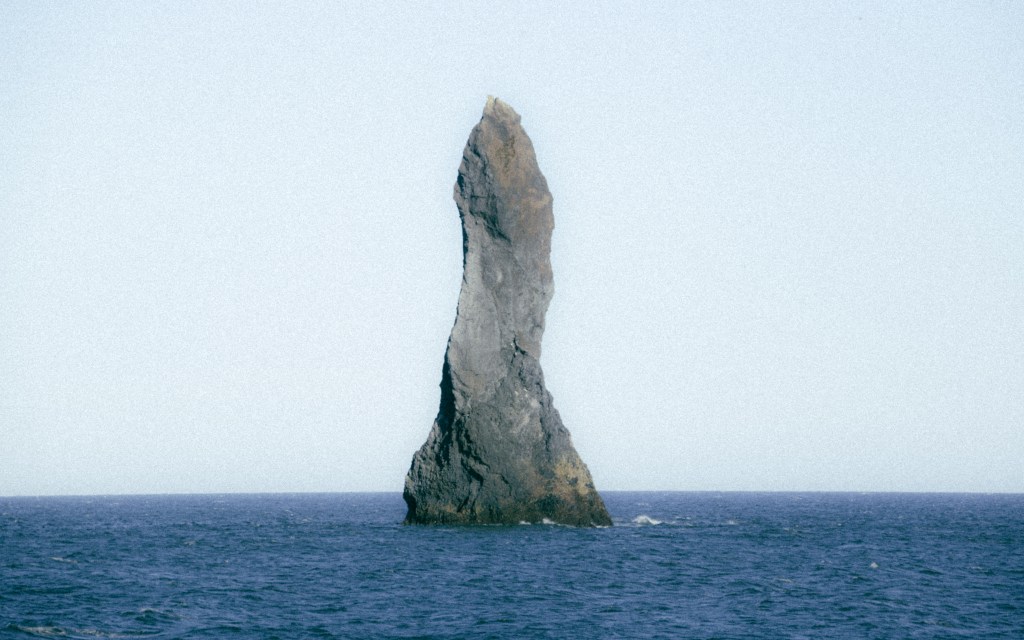
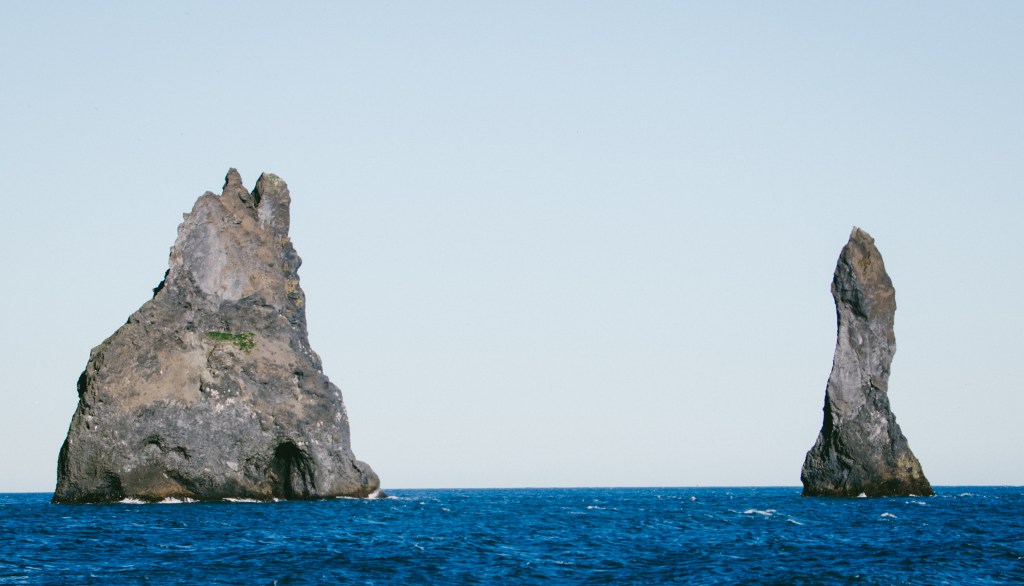
Many people were ignoring the zone system, and despite the mentioned sign saying BE CAREFUL, DON’T GO NEAR THE WATER, people did, like the two women I watched skimming stones across the frothing surf. I’m under the impression that many people think that following safety guidelines will diminish their experience of the Icelandic nature they’ve flown however many thousands of miles to experience.
I felt tense at Rynisfjara, overwhelmed by the bustle of people and anxious about the recklessness of the folk wandering too damn close to the water. Finnbjörn took a photo of me and said he’d edit it so it looked like I was there alone. ‘It’ll confuse people when they see a picture of this place so quiet,’ he chuckled. Spoiler: Nobody on Facebook noticed. The few photos I captured were of the sea stacks which folklore says aren’t sea stacks at all but trolls caught out by the sun.
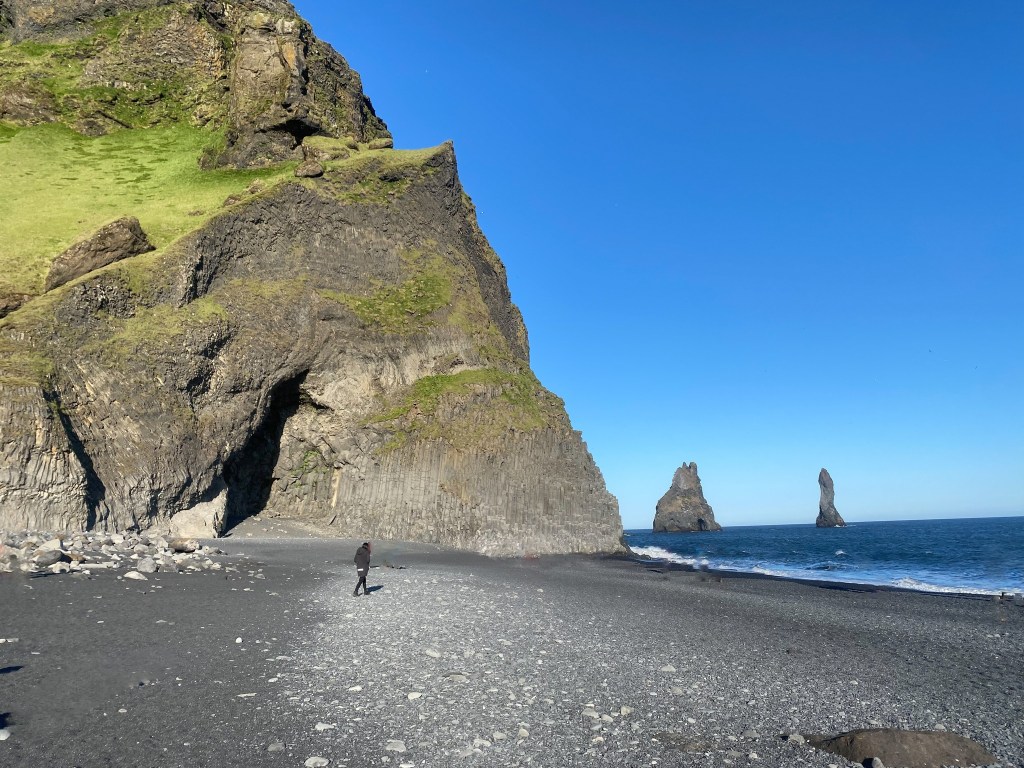
In the Fjara video there’s a young woman barefoot on the sand, and whenever I re-watch it, I wince because that sand – actually lava from nearby Katla’s historic eruptions – is sharp. The sharpness is a sign of how ‘geologically young’ the sand is, as it’s yet to be smoothed by the sea. For those who like deep diving into THE MOST RANDOM THINGS, there’s more about Reynisfraja’s sand – including magnified sand grains because tell me who doesn’t want to see magnified grains of sand – here.
A few days after I arrived back in the UK, there was a report about a man who had swum in the sea at Reynisfjara, which is, of course, forbidden. Photos of him emerged on the Facebook page Stupid Things People Do In Iceland, and, honestly, I think he probably did it to see if he’d end up there.
Seljalandafoss
I have no doubt you remember Eyjafjallajökull, the volcano – whose name I’m now able to pronounce after years of practice – whose eruption closed Europe’s air space for a while. Well, it’s from here – Eyjafjallajökull is technically an ice cap covering a volcano – the water of Seljalandafoss originates.
It is the only waterfall in Iceland you can circle completely (to my knowledge, feel free to correct me). Finnbjörn did the walk. I did not. He was overheated – his name translates to polar bear, and he very much embodies the king of the north – and needed a refresher. I was content with keeping my camera dry. When he came out from behind the falls, he was more alive than at any other time during the trip.
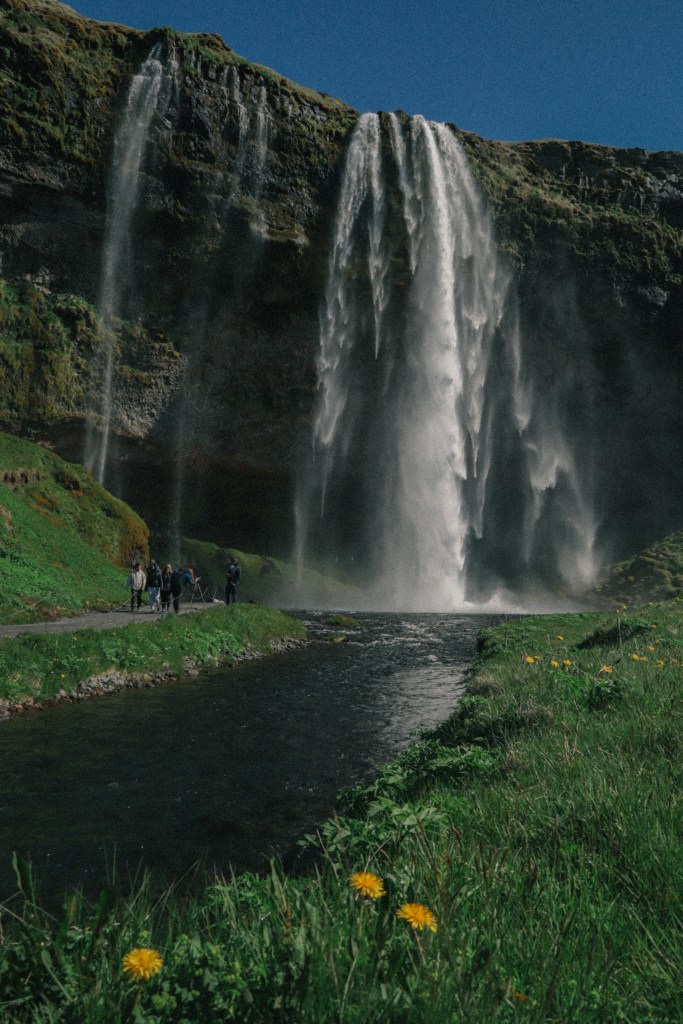
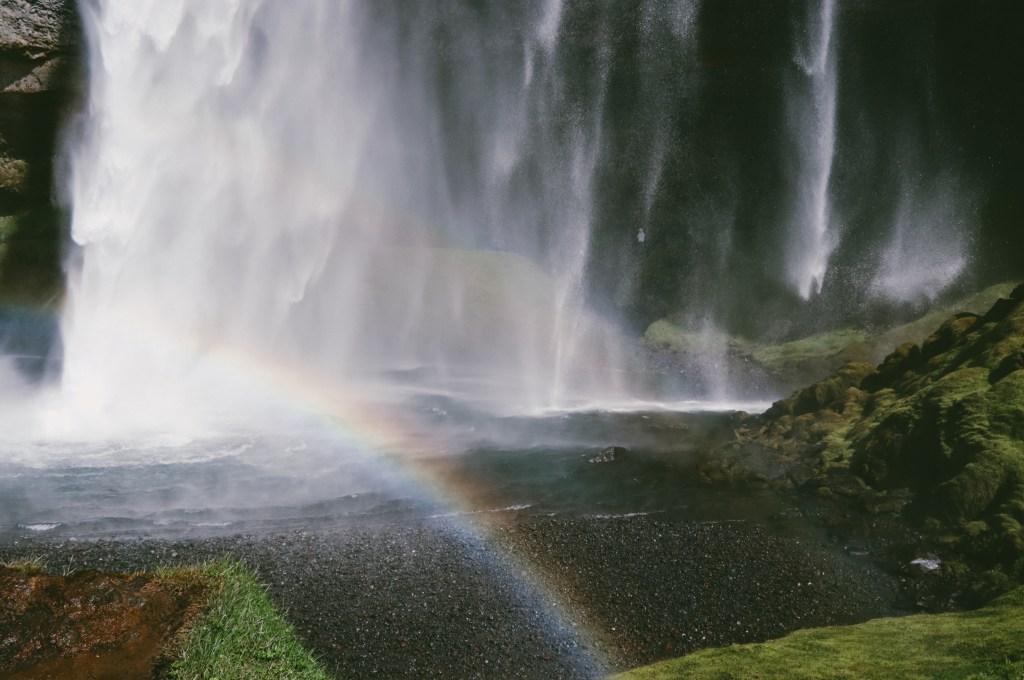
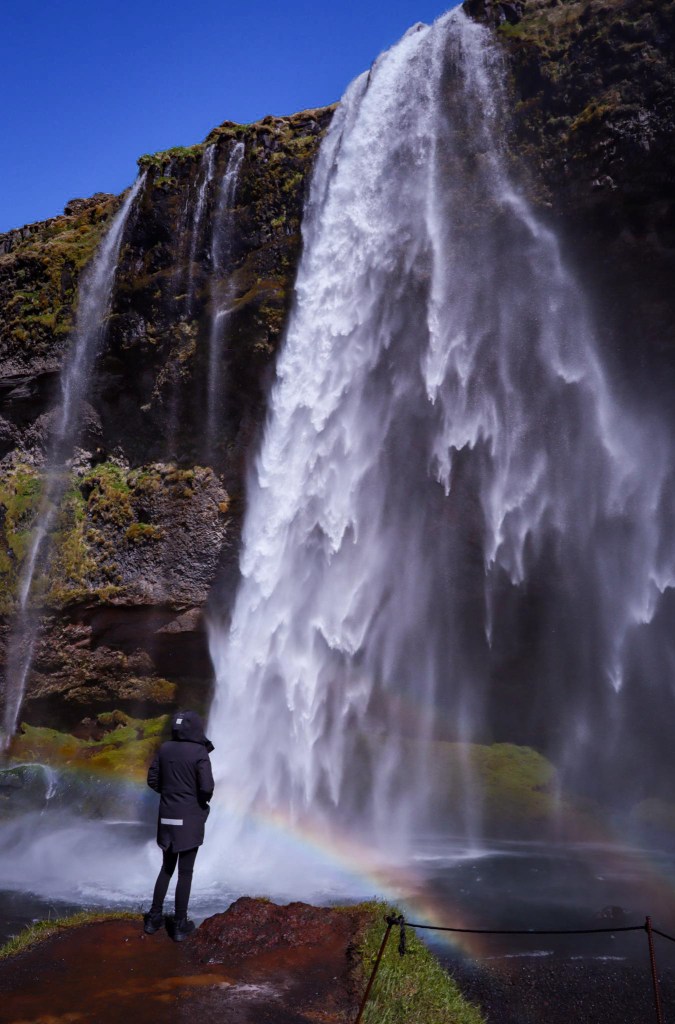
However, what with it being a popular stop for bus tours and basically anyone on the Southern Ring Road, there was a lot, a lot of people and walking anywhere near the waterfall without getting in the way of someone was nigh on impossible. There was a lengthy queue to stand in the spot where I’m standing in this photo. Waiting to take my place in front of the waterfall felt all kinds of unnatural, however for the briefest moment when I wasn’t fanatically worrying about the other people waiting for the spot, a rainbow and then another bloomed from the mist, and I felt euphoric.
For those who’d like another random deep dive, in the 1986 film The Juniper Tree, a young Bjork is seen walking behind Seljalandafoss.
Skógafoss
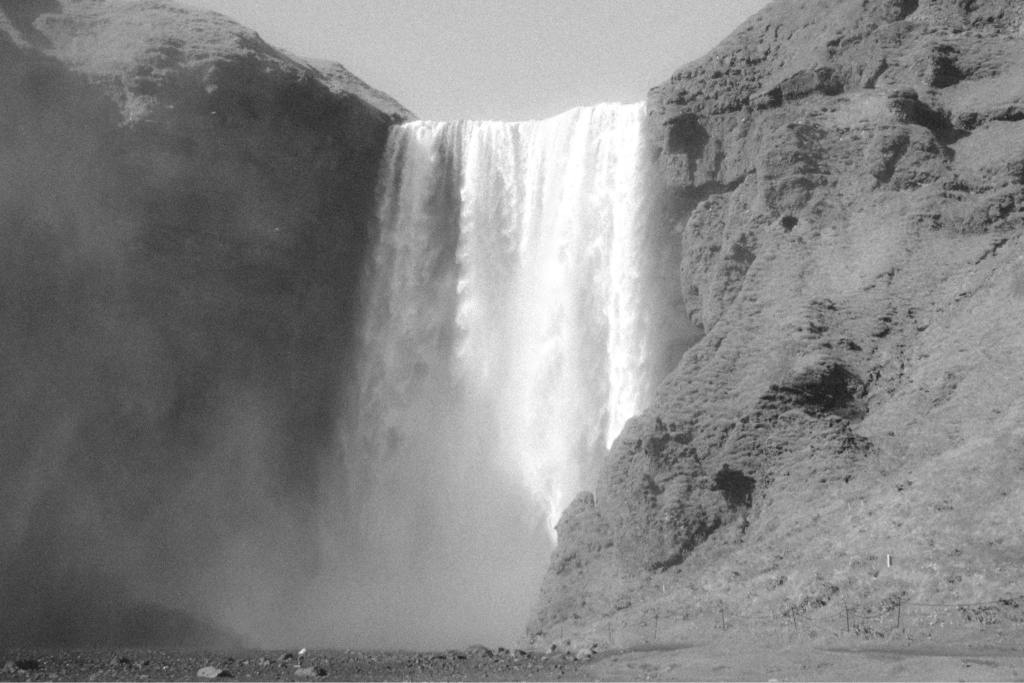
Skógafoss, astonishingly, wasn’t as peopled as Seljalandafoss, and it was easier to be in its presence and power. As a Pagan, I find the divine in nature, and when there are too many distractions—most often in the form of people—it can be challenging to connect with the landscape in the truest sense.
Skógafoss has quite the presence in popular culture and is, unsurprisingly, one of the most photographed waterfalls in Iceland. You’ve likely seen it somewhere, even if you still need to visit the country. It’s the waterfall in the TV show Vikings that led Floki to believe he’d discovered the home of the gods and it also appeared in the aforementioned Solstafir video. You might also recognize it from Game Of Thrones where it was a main feature in this scene with Jon Snow and Daenerys Targaryen.
I wanted to climb the 527 steps up the side of the falls to an observation platform, but we still had a way to go and much to see and it’s a good job we did leave because if we’d arrived at the following destination too late, the disappointment would have destroyed me.
Skógar Museum
We arrived at Skógar Museum an hour before closing time. After thirty minutes of excitedly darting about, trying to see as much as I could, I knew it would become my favourite museum in Iceland, trumping even The National Museum of Iceland and absolutely trumping The Icelandic Phallological Museum.
Founded in 1949 the museum initially occupied one room at Skógar Regional School, with exhibitions in classrooms during the summer holidays. Today, it’s made up several buildings, including ten old houses, and is home to more than 18,000 artifacts. I wasn’t in the least bit surprised to discover that it’s considered one of Southern Iceland’s most treasured cultural attractions.
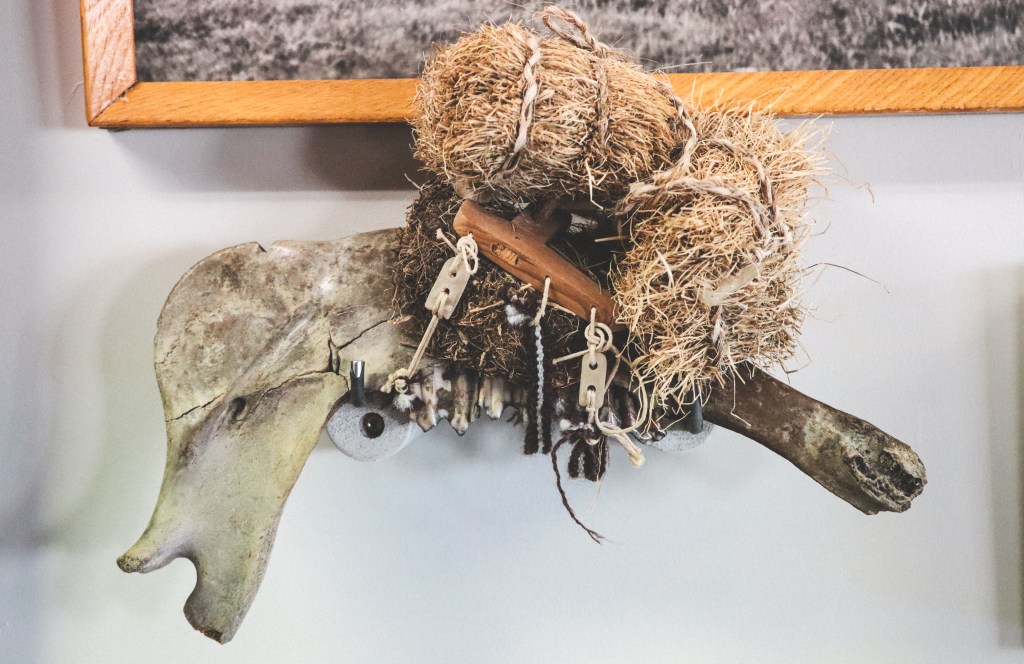
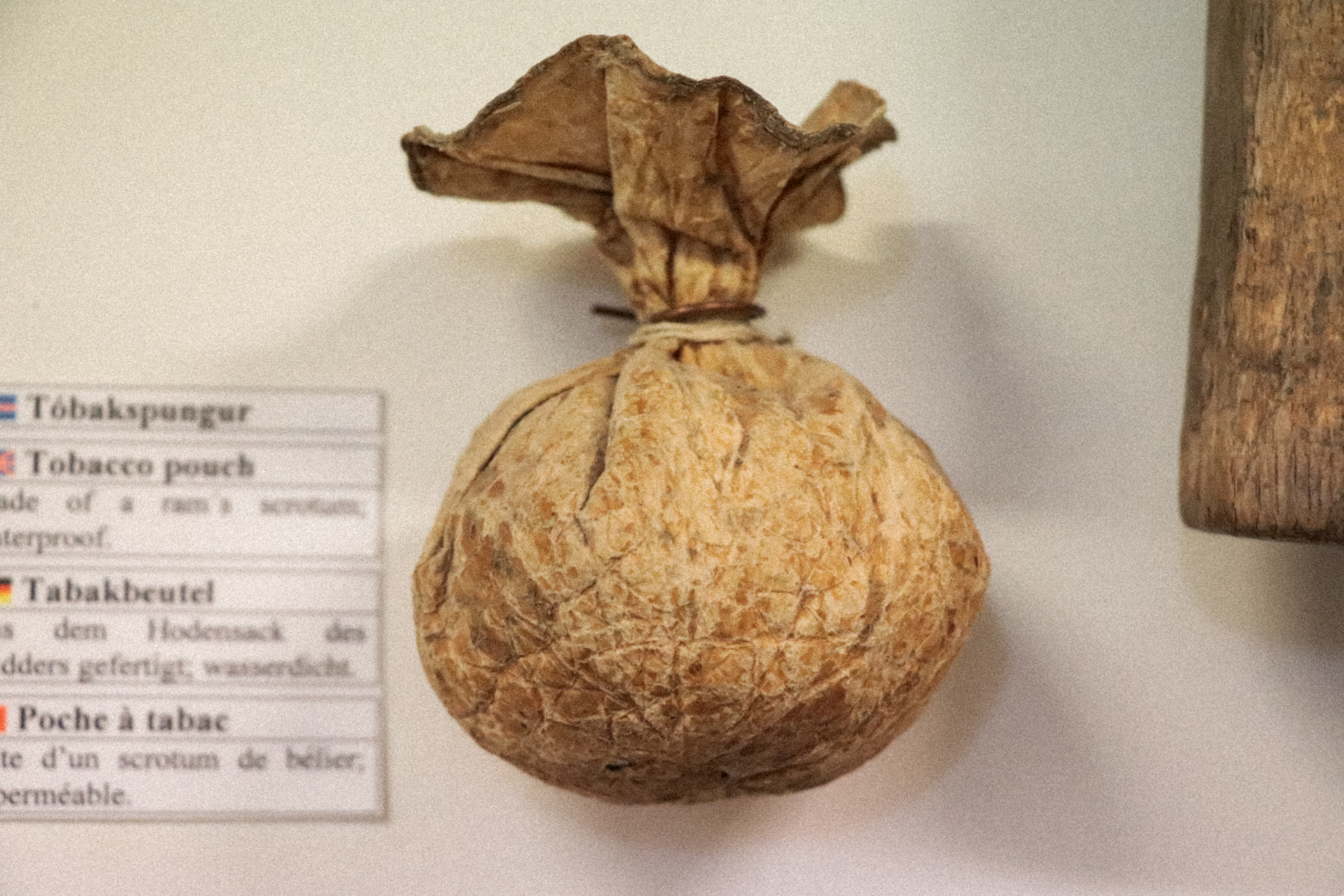
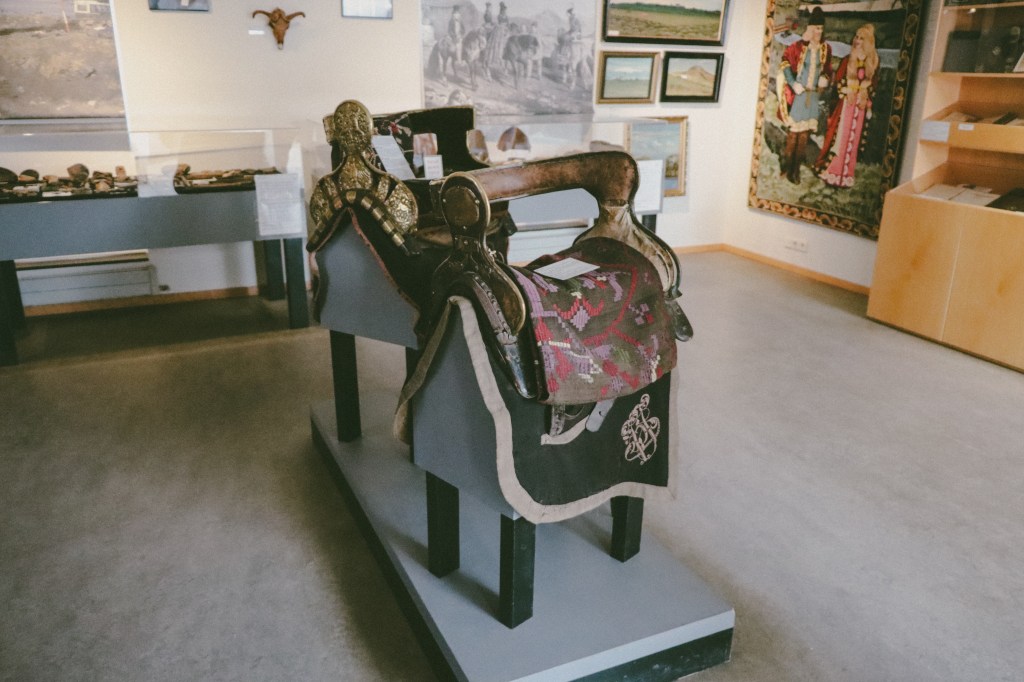
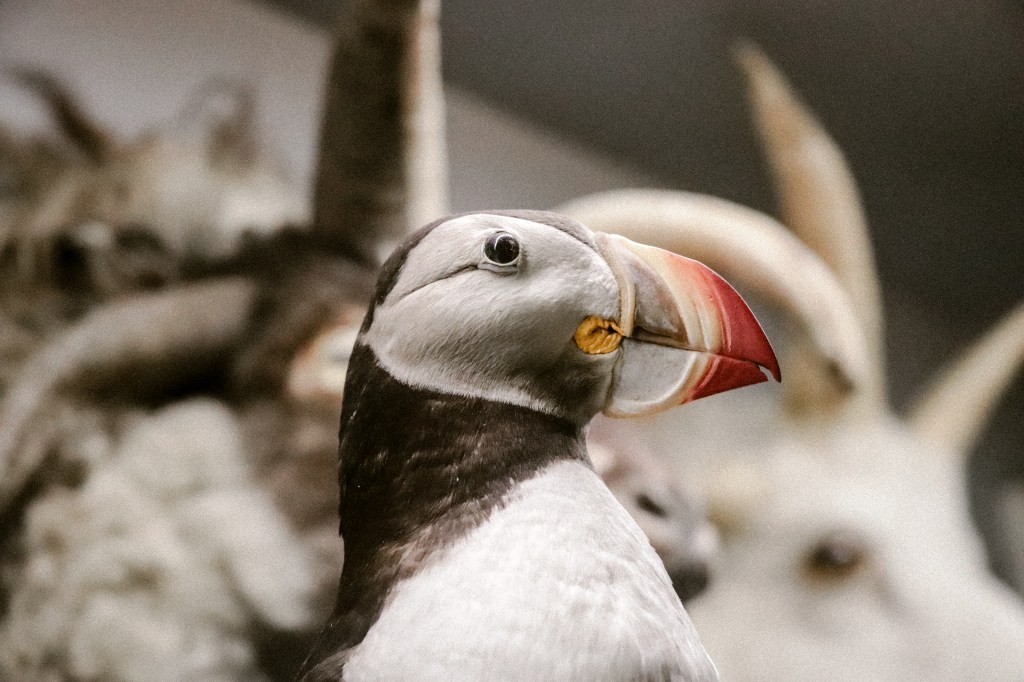
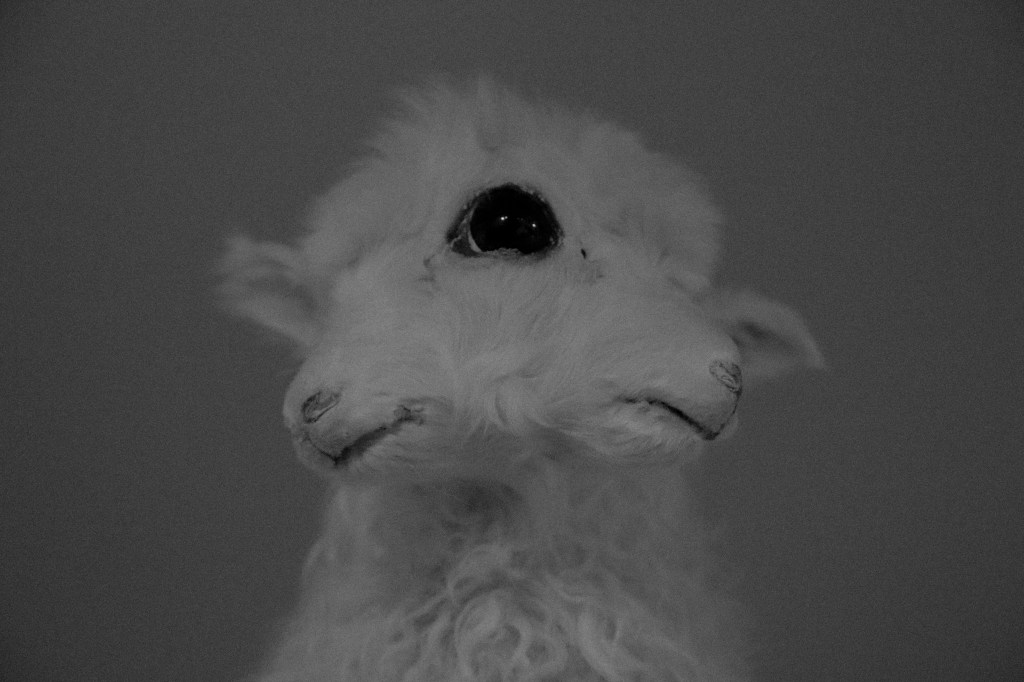
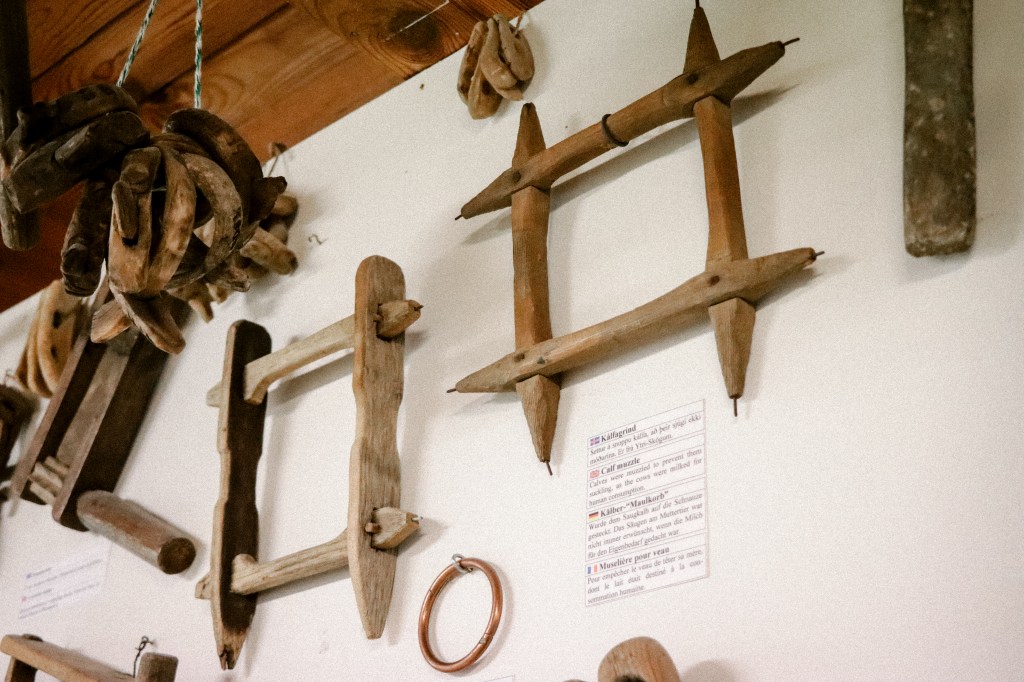
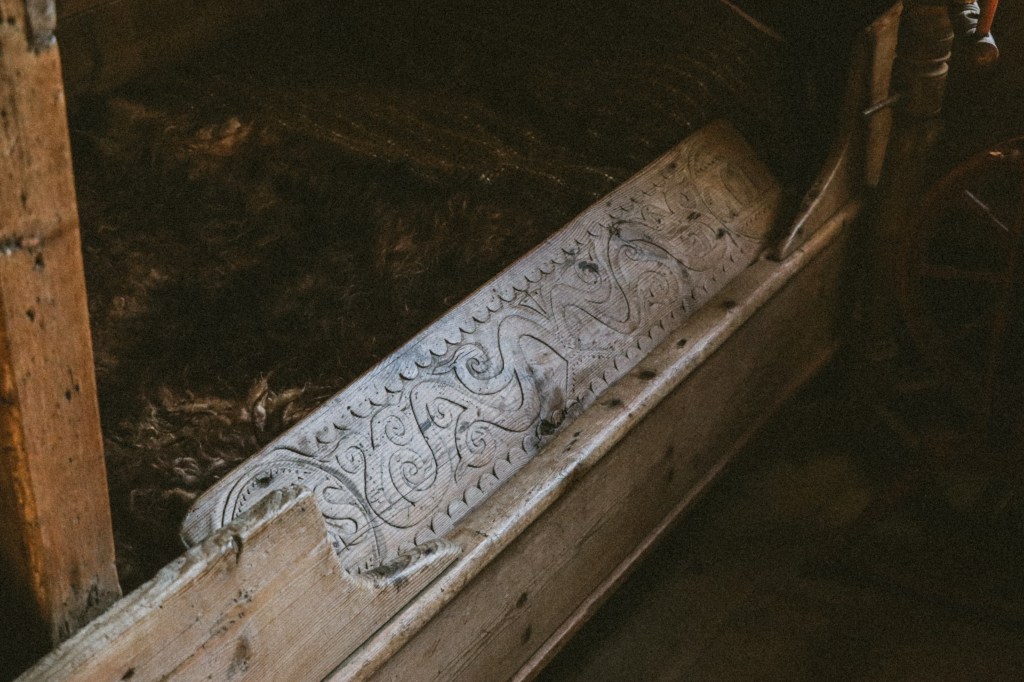
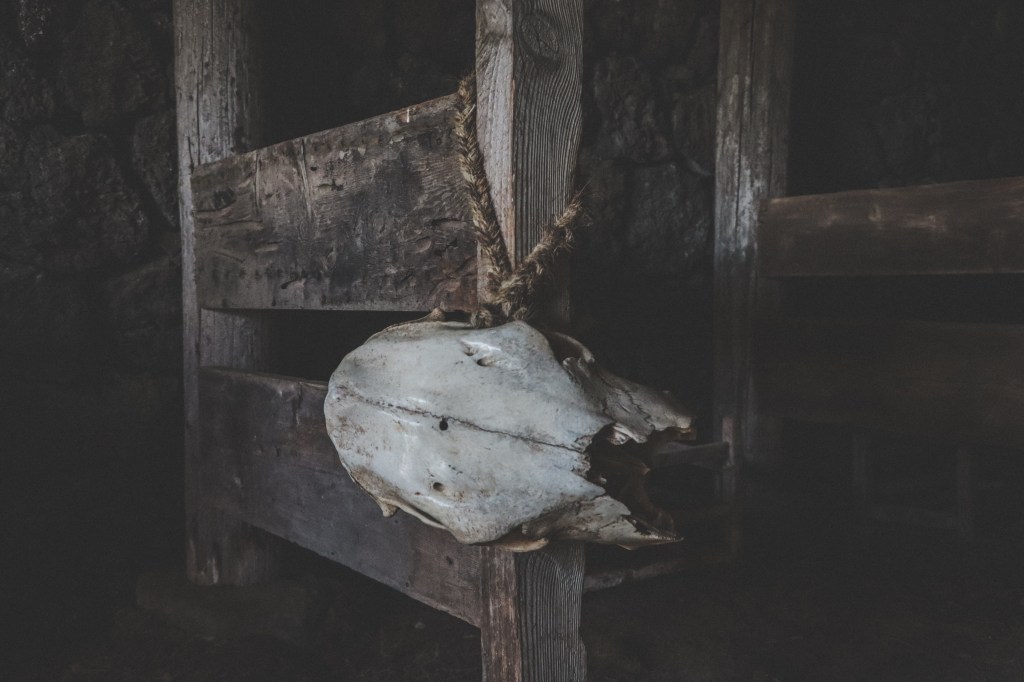
Among the old houses – from various places in the South of Iceland that were taken down and reassembled at the museum – is a house from 1878 made entirely from driftwood.
The displays of artefacts – which you can get up close to – felt so carefully considered and lovingly arranged. There was no air of pretentiousness or surveillance. The ambience was so warm and so welcoming, to the point where I whispered, ‘I’ll come back soon and spend hours here with all of you,’ after mere minutes. I felt inspired, gleeful and kept having the urge to laugh.
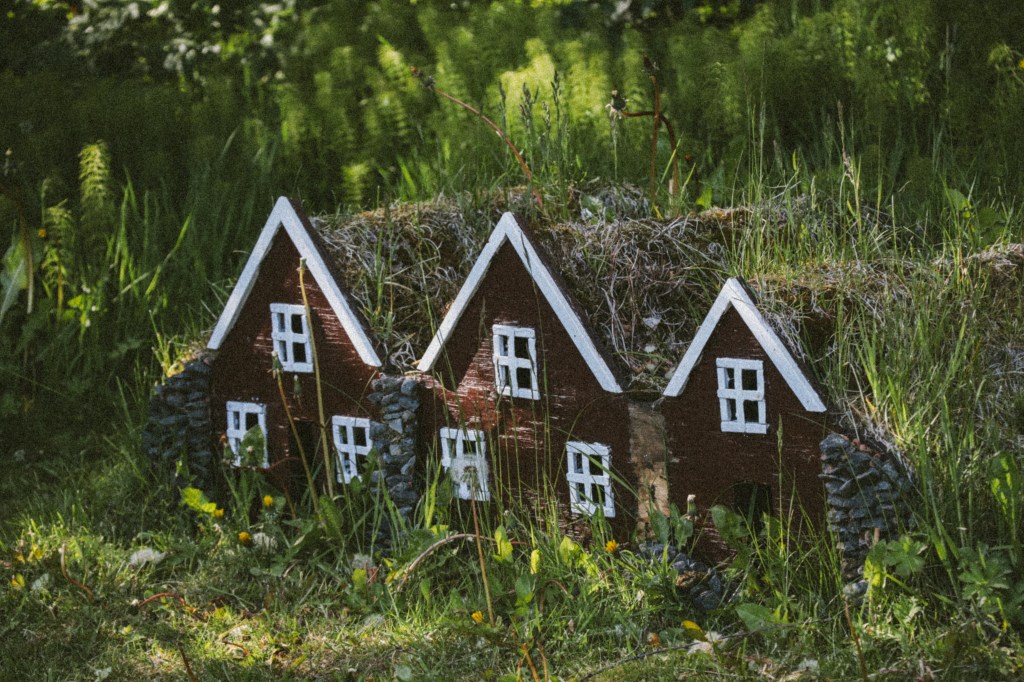
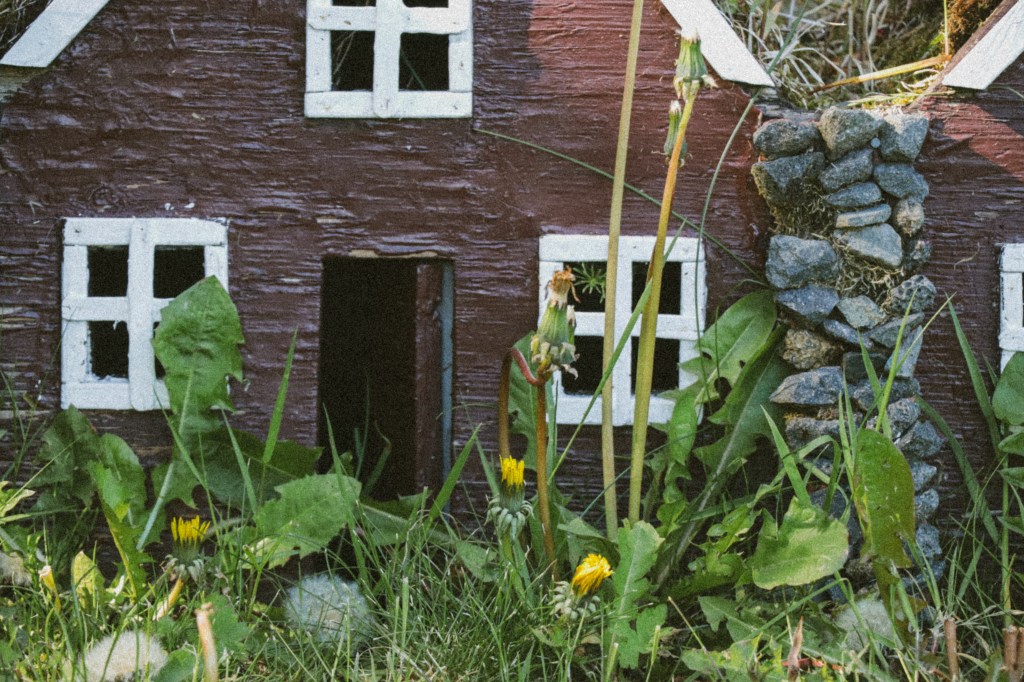
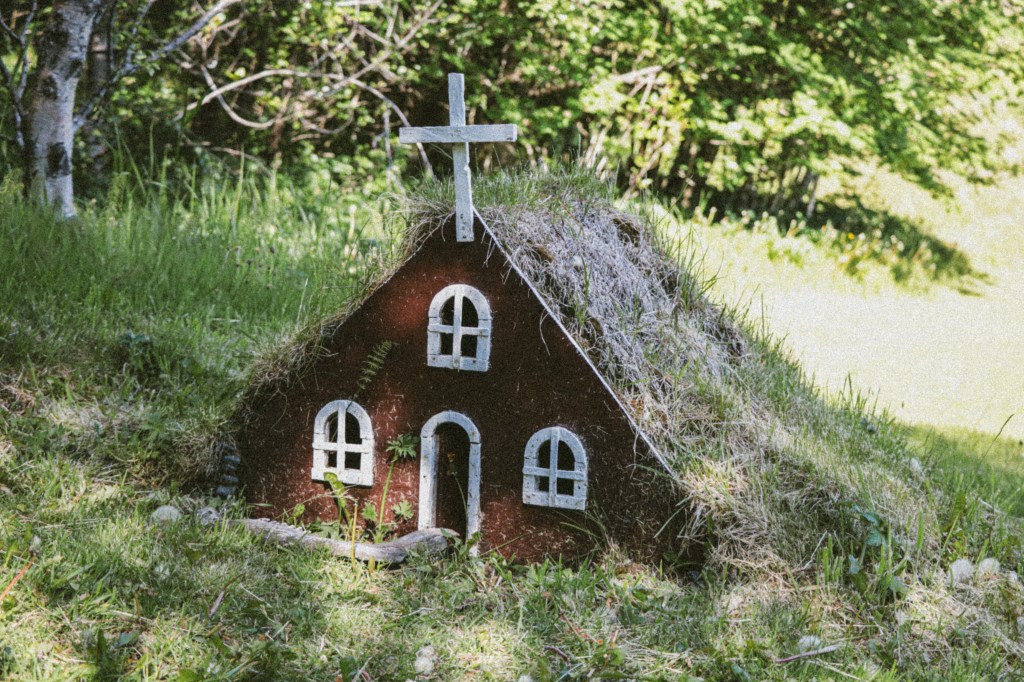
Interestingly, just this afternoon, I watched a documentary about the museum featuring its founder, Þórður Tómasson, who curated the museum until his retirement at 92 in 2013. Seeing how he engaged with the artefacts and the visitors in the documentary made me think he had been spiriting around the museum by my side.