

I regularly feel the need to downplay my delight about things that excite me, because, unrestrained, my enthusiasm can make people feel overwhelmed and awkward, especially if they’re mostly familiar with my depressed state.
It’s a good thing, then, that when I’m forest wandering, I’m almost always alone because forests bring out the best in me, especially forests in Sweden, which are heavily occupied with boulders.
Encountering boulders on my wanderings is always an ecstatic experience, and I can recall most of my meetings with remnants of ancient bedrock (or petrified trolls, as I’d prefer to believe) with gut-glass clarity. I have memories of wildly circling my Swedish ex like a border collie pup, tugging at his clothes and begging him to come to the woods and see the boulders I’d found on my daily hikes.

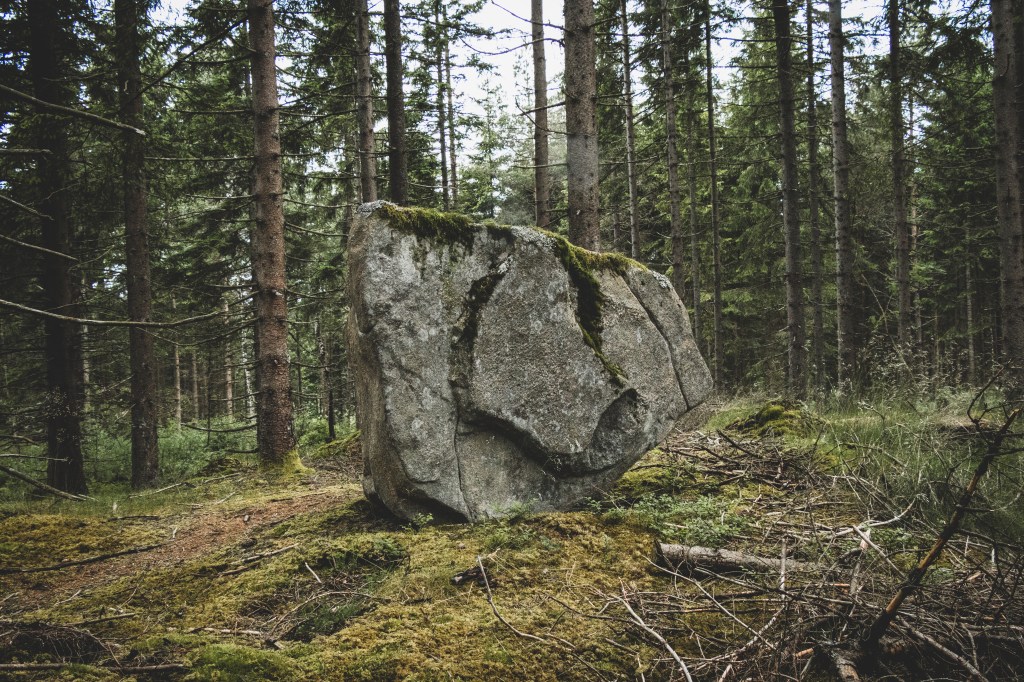
I glimpsed this boulder through the trees, and to reach it, needed to stray from the path, which I happily did. I rarely stay on any footpath for long anyway. The bliss I experienced in the presence of this, let’s admit, very beautiful rock, was something I wish I could bottle and give to people who don’t experience life as a highly sensitive neurodivergent wyrdo who gets blissed out by boulders.
Sweden was heavily glaciated in the last Ice Age, and the boulders – official title: glacial erratics* – were swept up during the advance/retreat of the glaciers and deposited where they currently sit. I don’t think this will ever cease to boggle my mind. I know I’ll probably be wondering forever about this boulder’s tale and its migration to where I found it in a serene, sun-dappled forest glade in the north.
*You may be as nerdishly thrilled as I to know that the word erratics comes from the Latin word errare, which means ‘to wander.’


 Northern Fever