I had a beautiful comment left on my last post by a reader called Eivor, who wrote that what I’d said about the forests in Sweden resonated and that trees boost their mood and give them hope. They said they were always struck by how much they missed the trees when they were away from them, something I’m feeling ever more intensely myself these days when all I want to do is be forest wandering from sun up to sun down.
Eivor’s comment made me think of when I was living in Sweden and how lost I’d have been without the forest. I had little clue about anything when I wasn’t among the trees. I was the epitome of anxiety. In the forest, though, rambling, scrambling, slipping amidst the moss and pine, I was empowered, eager, excited. I was different from the fretful woman who would watch through the peephole before going out.
For me, the forest was my workspace and sanctuary. It was more my home than the apartment I’d return to. The forest inspired me, it nourished my exhausted soul, and, of course, it provided hope. It always provided hope.
The forest and its expanse thrilled me. I’d almost always go alone, but on the odd occasion I could show a friend my favourite haunts, I’d be giddy as a child on their birthday.
I took my camera with me most days, and while I mainly created self-portraits, I’d sometimes have a companion to shoot with. In this photo, my friend Martina is captured on a darkening autumn afternoon. Sometime after I shared it online, the Swedish-based artist Alessia Brusco @skogens.rymd.art – who I’d recently struck up a friendship with – contacted me to ask if she could recreate it in a painting.
She recreated this photo, too.
I still remember the day I took this shot and how delightedly I drank up that sunlight and then watched, rooted to the path, as the sun blazed down behind the trees and the evening crept in from all directions.
Thus far, 2024 has been disorientating, exhausting, painful, maddening and swift. So swift. Too swift. Since doing my initial ADHD assessment over a year ago, I’ve been struggling to come to grips with the reality that I’ve been living with this condition my entire life, and it’s only just coming to light as I hurtle towards my 40s. I’ve also been grieving everything that ‘could have been.’ But I’ll write more about this on my other blog awyrdofherown.blog when possible.
Around midnight last night, too tired to read, I flickered around on Pinterest, looking for… I’m not even sure what. At some point, I landed on this knitted cape, leading me toLittle Scandinavian, where I ended up on a post about The Scandinavian School in London, which looked like everything I would want for my daughter in a school, but whose gigantic fees were painful to read. It’s ridiculous, laughable even, that I let the fees of a school in a city where I don’t even live upset me.
I should have gone to bed then but didn’t. My mood was wounded. So I decided to scout out an image for the cover of my next book and ended up on The Public Domain Review – a treasury for the insatiably curious creative – which I combed through for Nordic bounty.
While I furiously bookmarked articles and added, to my already gridlocked desktop, old photographs of Norwegian fjords and Icelandic fishermen, I thought about producing an art appreciation post of some of the stuff I unearthed.
For the longest time, ‘art appreciation posts’ and ‘I-saw-these-things-and-thought-you-might-like-them-too’ posts were the lifeblood of my blogs. But then I gradually stopped making them, and I’ve missedmaking them, and am now on a mission to eradicate the idea from my head that making them ‘is not a good use of my time.’
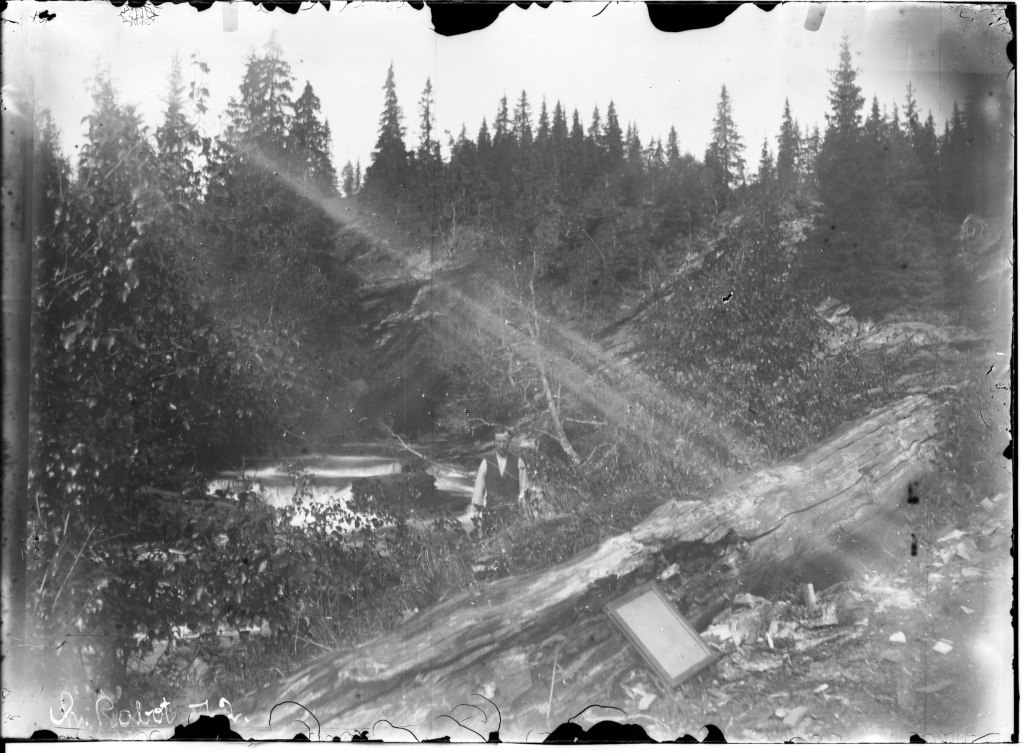
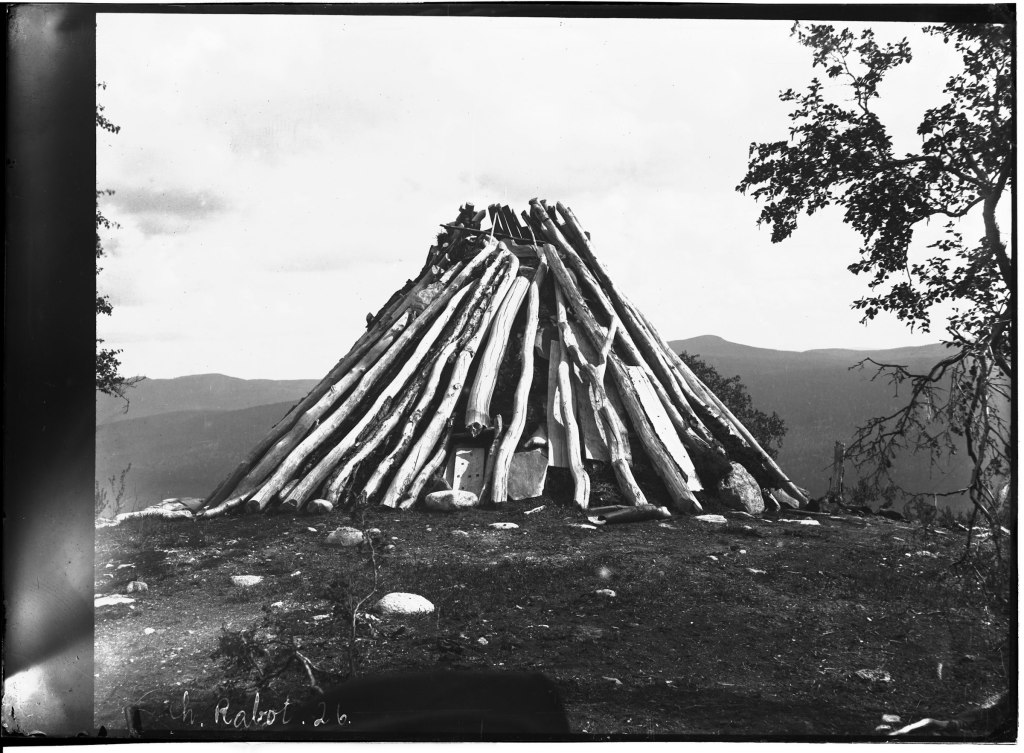
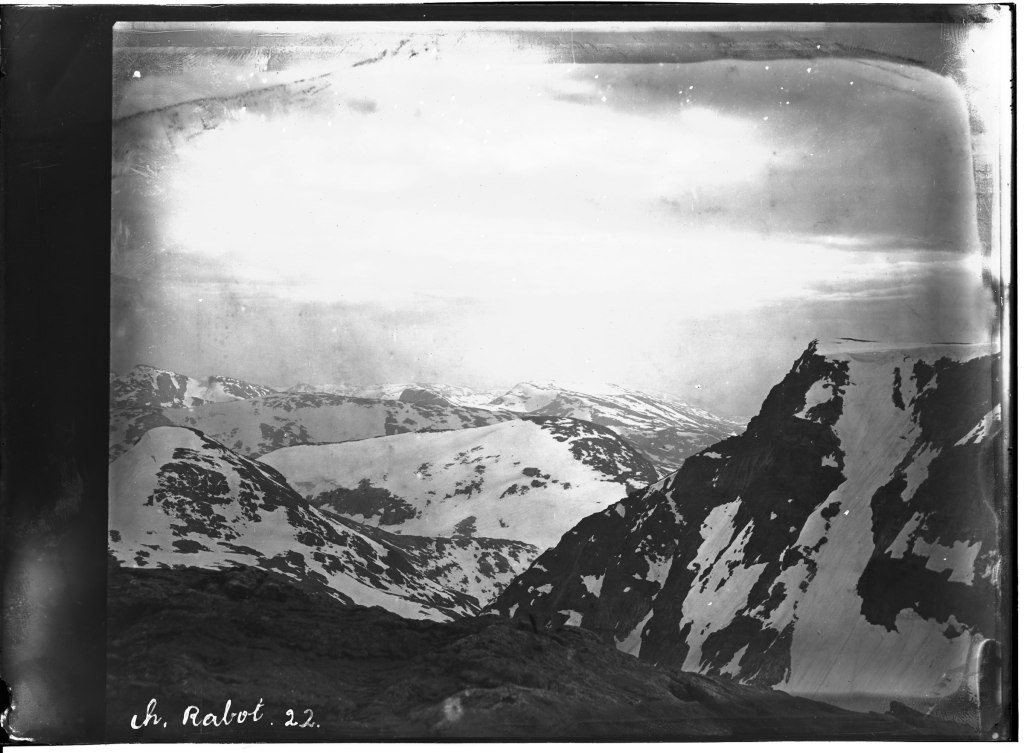
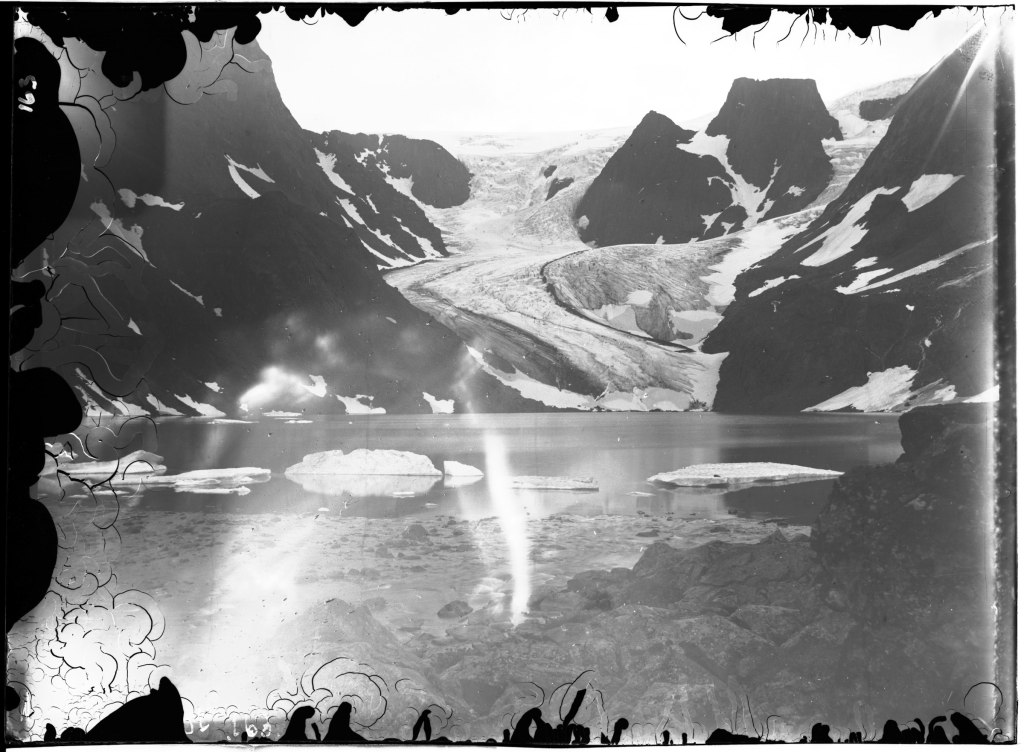
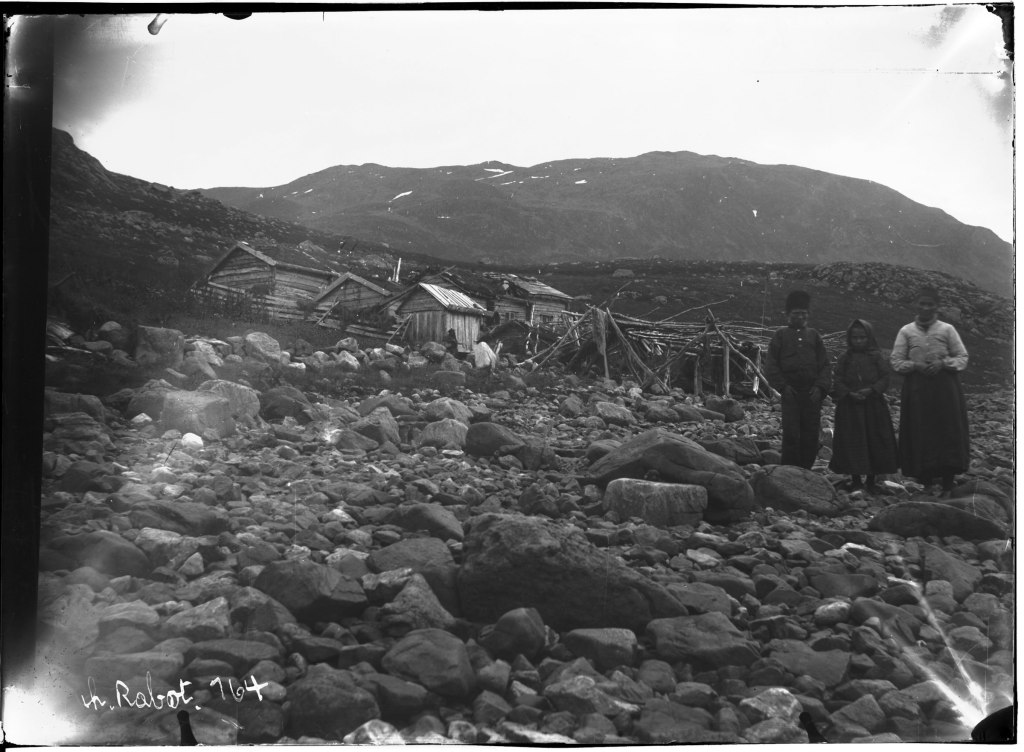
The first thing to catch my attention on The Public Domain Review was this striking, slightly sinister portrait of French geographer, glaciologist, and photographer Charles Rabot. This picture led me to a stupendously readable essay about Rabot by Erica X Eisen (whose other work I’m going to consume with gusto). Rabot had a ‘particular affinity for Norwegian culture…’ and his awe of ‘boral landscapes’ and ‘nostalgic yearning’ for the north is something I strongly identify with:
‘They are so beautiful, so magnificent, those deathly solitudes, so strange in their fleeting finery of brilliant colors, that they always leave one with a burning desire to see them again.’ – Charles Rabot
Eisen’s writing is astute and memorable – the following passage in particular ‘If there are any people to be seen in these snow-pied expanses, they are tiny afterthoughts so overwhelmed by the whiteness around them that any individuating features are obliterated completely — to the extent that these figures seem less like the protagonists of the shots and more like another accidental void bitten into the negative by the frost.’
The first person to climb Kebnekaise, Sweden’s highest mountain, in 1883, Rabot was also friends with the most swoon-worthy of Norwegian explorers, Fridtjof Nansen who’ll be much more thoroughly swooned over in another post where I’ll look at the bizarre but beguiling topic of fancying long-dead polar explorers.
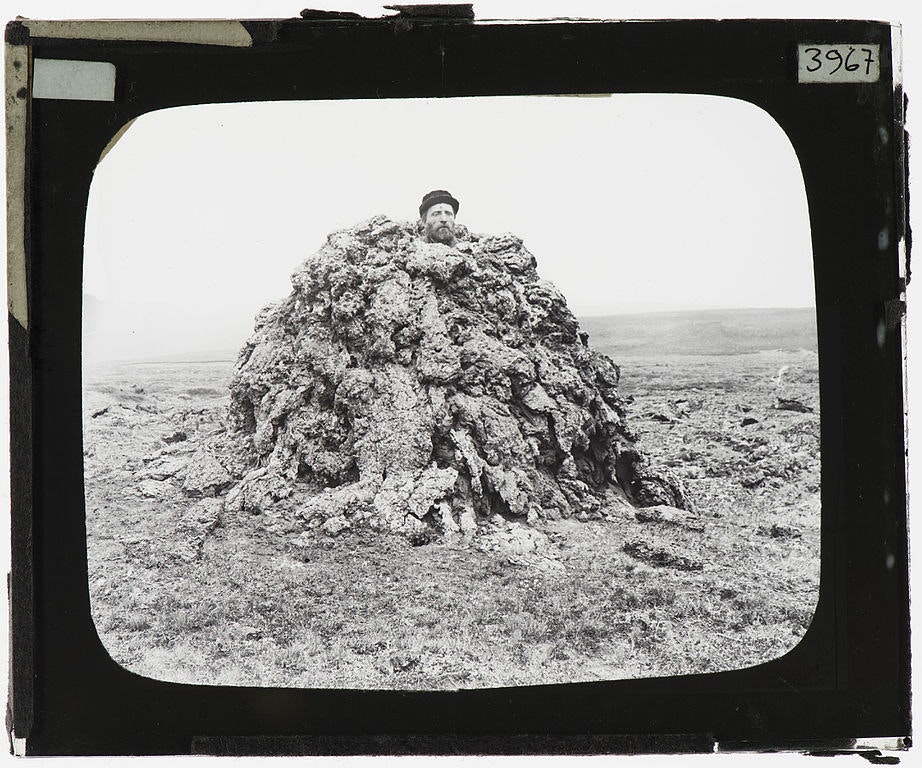
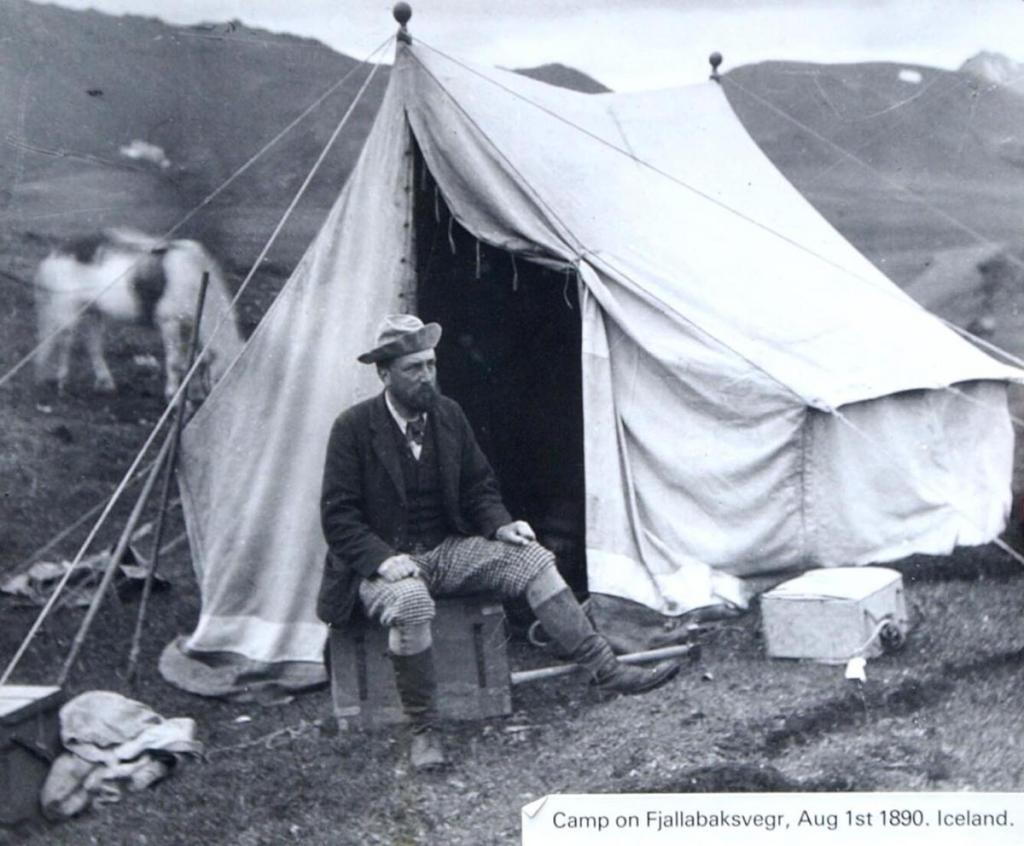
When I searched Iceland on The Public Domain Review, ‘ volcano chaser and pioneer of volcanic photography,’ Tempest Anderson showed up with one of the most gloriously surreal photographs I’ve ever seen.
Very much intrigued by the name Tempest, I was convinced there’d be a riveting origin story, so was a bit put out to find it was simply inspired by a prominent West Yorkshire family.
Yet there’s no doubt the man led a life not dissimilar to a windstorm—his list of occupations and accomplishments is…extensive. York-born and bred Anderson was a leading eye surgeon as well as a photographer, an inventor of photography equipment, a consulting physician to a lunatic asylum, a prison medical officer, a Sheriff of York… the list ploughs on. At 43, unmarried and restless, Anderson decided he’d use his spare time to study volcanology and chase volcanic eruptions. The photographs he shot in Iceland were taken using one of the earliest panoramic cameras, which, unsurprisingly, Anderson had developed himself.
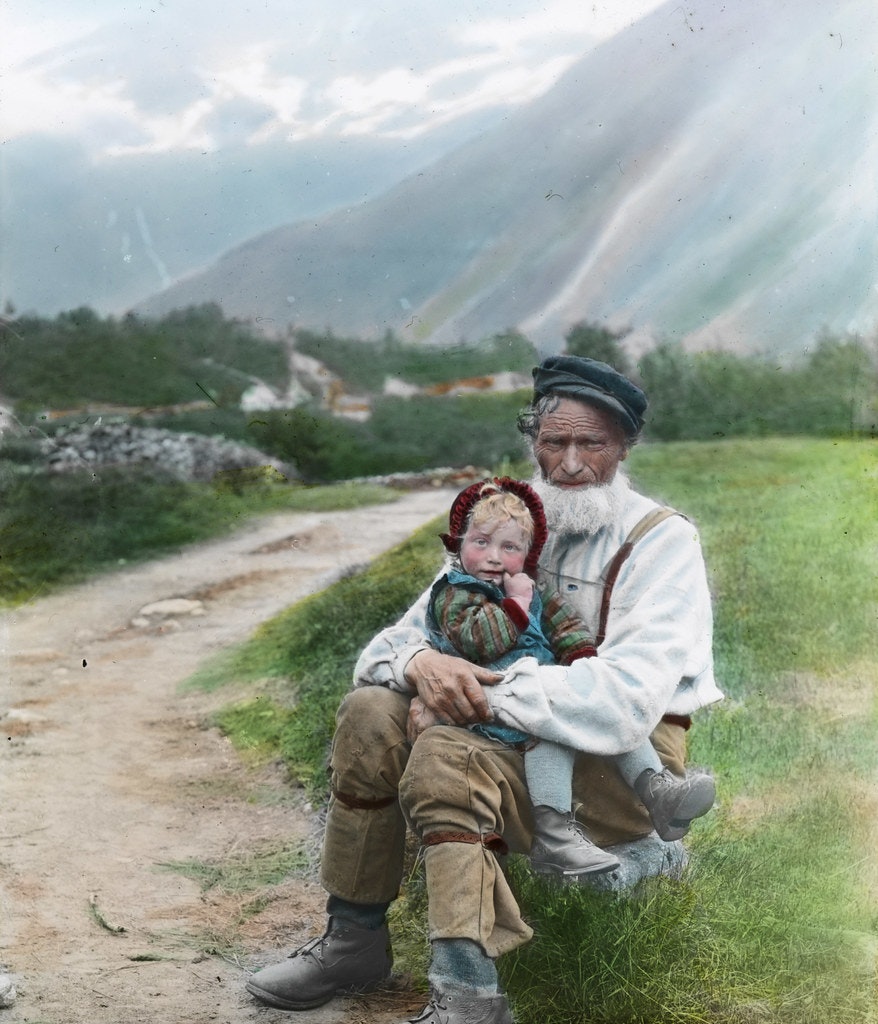
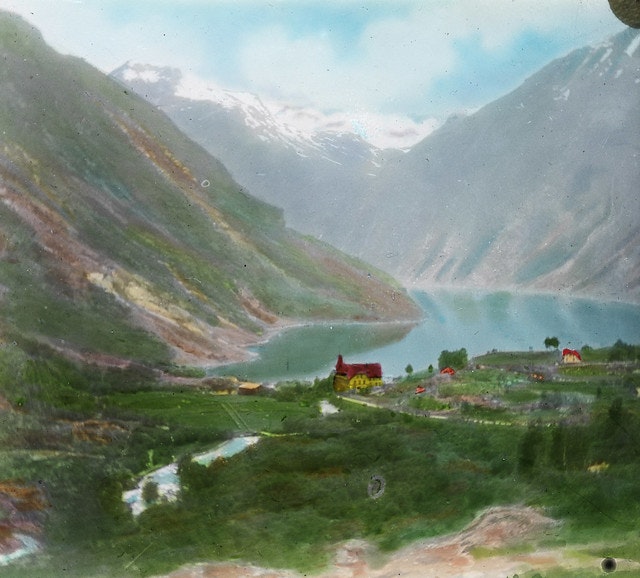
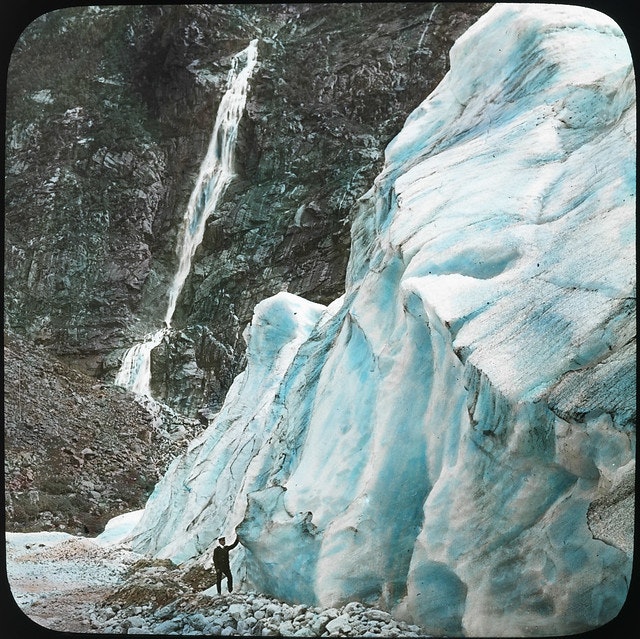
I’ll keep coming back to look at these lantern slides depicting Norway from the early 20th century, and I know each time I do, they’ll thrill me all over again. By the way, for full disclosure, I had to Google what a lantern slide is.
Lantern slides are positive, transparent photographs made on glass and viewed with the aid of a “magic lantern,” the predecessor of the slide projector. Lantern slide plates were commercially manufactured by sensitizing a sheet of glass with a silver gelatin emulsion. The plate was then exposed to a negative and processed, resulting in a positive, transparent image with exceptional detail and a rich tonal range. – Constance McCabe (National Gallery of Art.)
Produced by British photographers Samuel J. Beckett and P. Heywood Hadfield in my favourite part of Norway – Sogn og Fjordane (now known as Vestland) – these bold, crazily vivid lantern slides are held at the county archives in the fjord village of Leikanger, somewhere I’m going to absolutely seek out when I’m next over by way of the Sognefjord. Right now though, I’d very much like to know what the woman on the steps was thinking when this picture was made. Also, image 4 – haunted to my core.
Hadfield was a surgeon on a ship cruising the Norwegian fjords and an amateur photographer in his free time. Little is known about Beckett, but copies of books by both men (The Fjords and Folk of Norway by Beckett and Fjords of Norway A Cruise On The SS Ophir by Heywood) are available on Abebooks and eBay and are very kindly priced for books printed well over a hundred years ago.
More Recommended Reading From The Public Domain Review
Increasing awareness about the Arctic and what’s going on at the top of the world has never been more important.
So once a week I will be sharing pivotal research material – from news stories to Ted Talks – for anyone interested in developing their knowledge about climate change and the effects it has on the north.
Watch : Time-Lapse Proof Of Extreme Ice Loss
National Geographic photographer, scientist and adventurer James Balog has been photographing human modification of our planet’s natural systems for 35 years, and is one of the most important climate change activists we have breathing today.
This stirring, intelligent, powerful TED talk discusses the power science and art can have when they come together, and the visible changes Balog has documented of the ice we are so rapidly losing – 95% of the glaciers in the world are melting as I write.
If you feel you need more after the talk, Balog’s documentary Chasing Ice is available on Netflix. The time lapse photography of retreating glaciers will open your mind to new planes of thought about climate change.
A new report illustrates the scale of contamination in the Norwegian and Barents Seas north of Scandinavia, and shows that no corner of the Earth is immune from the scourge of plastic pollution.
Virtually everywhere researchers look they find plastic, according to the report by the Norwegian Polar Institute.
Even in remote areas with relatively low human impact, it says the concentration of plastic waste in the European Arctic is now comparable or even higher than in more urban and populated areas.
And there are signs the amount of plastic is increasing, with global plastic production reaching 322 million tonnes in 2015 and predicted to grow by around 4 per cent a year.
If you’re interested in getting daily news about the Arctic and climate change, I recommend you visit Google Alerts . The site monitors the internet for the content you have specified that you’d like to receive, and emails it directly to you.
Listen : Arctic Fever, A Spoken Word/Dark Ambient Album
Arctic Fever is a spoken word/dark ambient album featuring my poetry intertwined with the music of Crown of Asteria.
Centered around the thawing of the Arctic, Arctic Fever portrays how the catastrophic changes are impacting the peoples, flora and fauna of the far north.
While the listener will have an insight into what is happening now in the north, they will also have the opportunity to envisage what life was like at the top of the world, before the Arctic was cursed with whisky, organised religion, diseases and heat.
Arctic Fever is a homage to the Arctic, and all who dwell there, who are experiencing, in real time, the sea ice lessen, the permafrost weaken and the north they have forever know disappear.











 Northern Fever