
I first encountered the work of Swedish artist John Bauer as a kid. I attended a Waldorf school and was immersed in books and art inspired by Nordic nature and the folkloric beings inhabiting the landscape. A quick scan on Google suggests it may have been In The Troll Wood that snagged my ever-roving attention.
It was through discovering the music of Mortiis in 2001 that I was reintroduced to Bauer’s art. I’ve been chasing the company of shadowed pines, trolls and moose ever since. Some years ago, I wrote a piece for the website Routes North following a second pilgrimage to Bauer’s home city of Jönköping and the Jönköping Läns Museum, which houses the world’s largest collection of Bauer’s art.
Since 1995, Mortiis has used Bauer’s iconic ouroboros-inspired illustration, which first featured in Bland tomtar och troll (Among Gnomes and Trolls), a children’s anthology of stories and illustrations, in 1915. However, instead of depicting a serpent consuming its tail, Bauer’s serpent is caught in mid-attack of a sword-wielding elven knight. Mortiis has modified Bauer’s illustration throughout the years, coinciding with the eras of his music.

Mortiis has also utilised several of Bauer’s artworks for album and EP covers; for instance, the 1995 album Keiser av en dimensjon ukjent features the piece Brother Saint Martin and the Three Trolls, and the 1996 EP Stjernefødt features the artwork Guldnyckeln.


In an interview with Bardo Methodology, Mortiis explained that he didn’t know about Bauer’s art until he randomly discovered it in a Red Cross shop in Sweden. He managed to buy several framed paintings for a few euros each. I was dead set on getting the ouroboros as my first tattoo in 2007, in homage to Bauer and Mortiis. It wouldn’t be long until I regretted it though – the intricate details haven’t aged well, and the ‘great idea’ to incorporate bats into the design was an epic fail on my part.
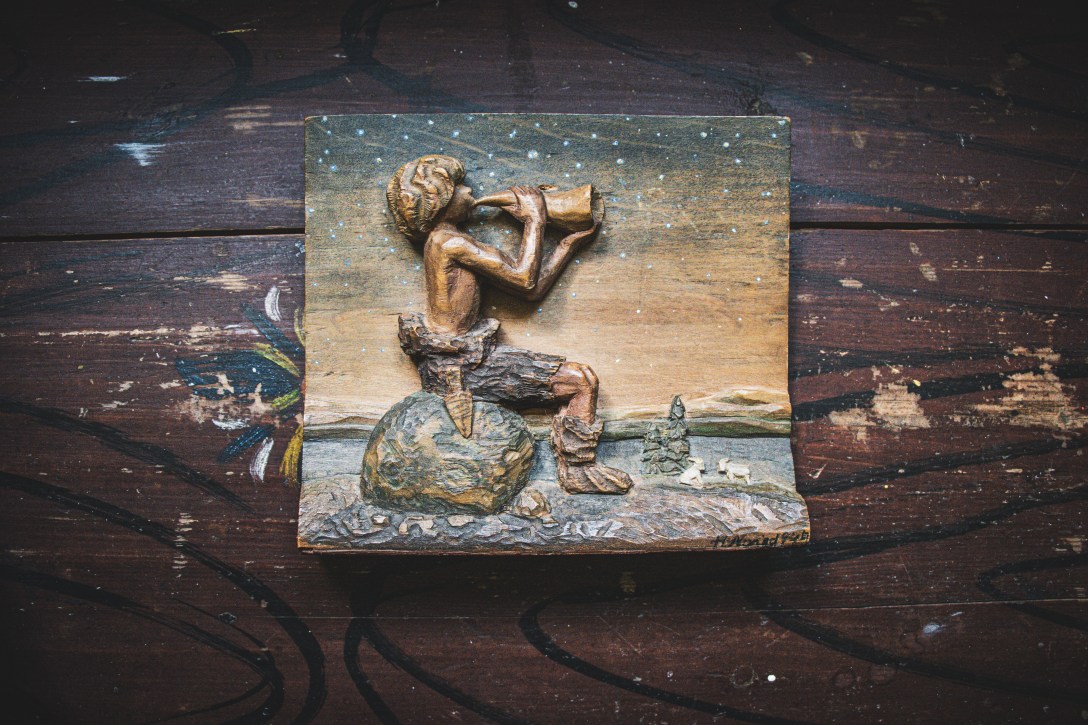
As someone deeply influenced by Bauer’s work, you can imagine how elated I was to find this painstakingly carved wooden art piece inspired by Bauer’s 1910 painting Vill Vallareman (A Fairy Shepherd) at an Airbnb I was staying at in Sweden.
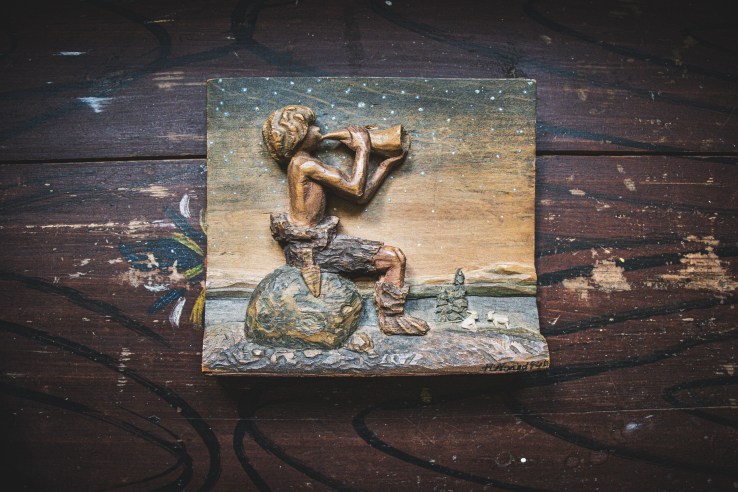

When I was taking the recycling down to the bin on my final day, I saw the house owner, Maria, and asked her about the origin of the 81-year-old carving. If I’m remembering right, she said her uncle was the creator. She asked me, in an almost surprised tone, if I liked the carving. I told her I loved it. Casually and without pause, she said I could have it. Reader, my knees almost buckled.
I swaddled Vill Vallareman effter John Bauer like a newborn, checking on it repeatedly during my journey back to the UK, petrified it would get cracked or chipped. Blessedly, it made it back in one piece, and while I have more questions about it and its creator than I know what to do with, I’m grateful (though remain in disbelief) it’s with me. I live with the hope it’s not long until I can swaddle it up again and take it back across the sea to a forever home in a forest perhaps not too great a distance from those Bauer once wandered.
 Northern Fever