I recently visited Borås Museum with a friend, but due to missed buses and a long overdue catch-up (seven years overdue) in the museum café, we had only minutes to zip around before it closed.
My friend was especially eager to look inside Ramnakyrken. This quint red church had originally stood in Kinnarumma, a village about 15 kilometres from Borås. It was dismantled in 1912 and rebuilt in its current location in 1914. However, our time was up, and the church doors had been locked. An especially considerate museum employee took pity on us and offered to open the church, which she did with a key so gigantic I was, for a moment, convinced it was fake.
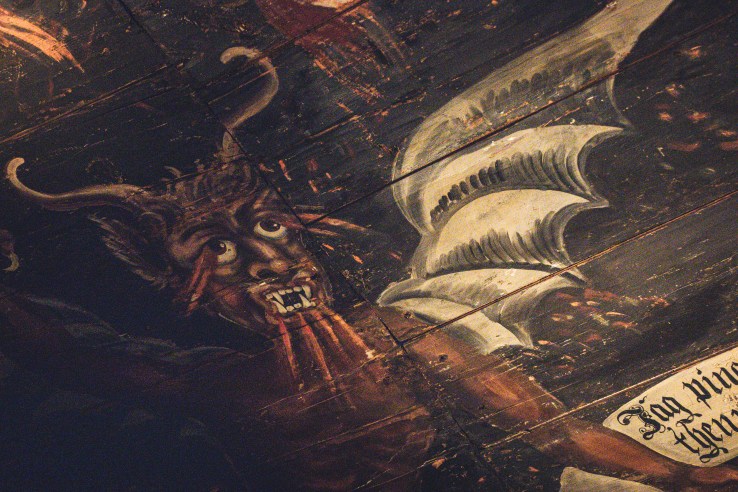
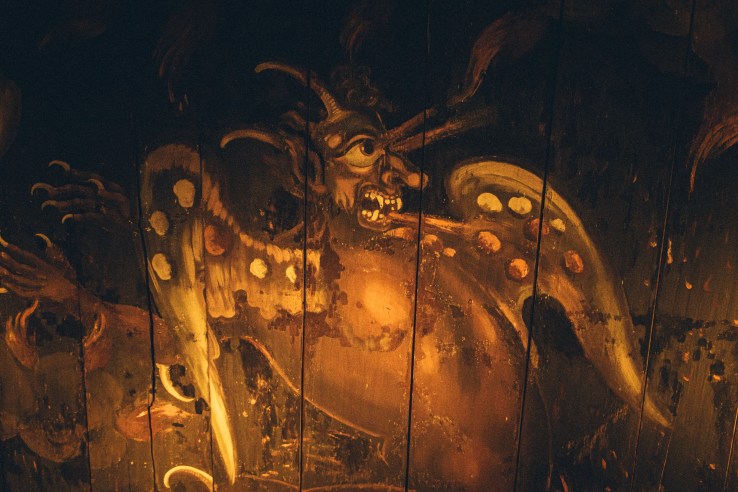
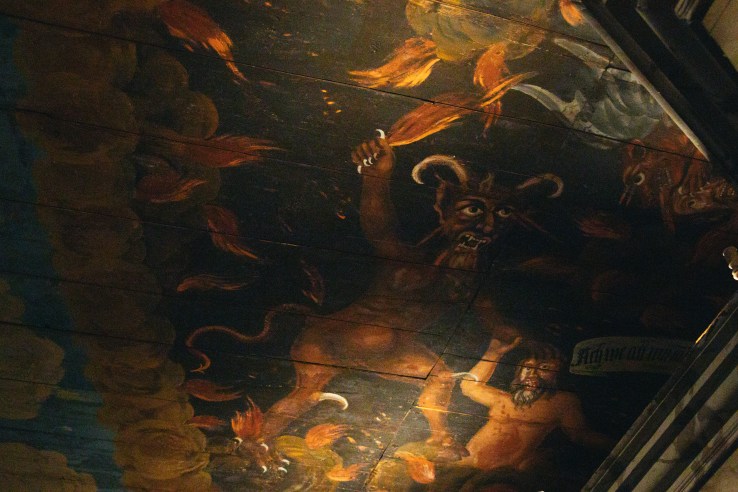
While the church was interesting, I kept my camera switched off, that was until we were making our way back out and I looked up. There was only time to snap a few shots of impressively vibrant demons before ducking back outside.
The ceiling was originally painted, with lesser diabolical depictions, in 1706 by Nicklas Berg. It was painted over (rude) between 1752 and 1753 by a man called Ditlof Ross, though you can still make out ‘echoes’ of Berg’s original work. The ceiling was whitewashed in 1869-70 during a restoration (I’d love to know who ordered that job); however, in 1930, when the church was re-consecrated due to a need for additional church spaces in Borås, the paintings were uncovered and restored. It’s been a popular church for weddings and baptisms ever since. Are you also wondering how many children have been traumatised over the years by innocently looking upwards and making eye contact with these decorative servants of Satan?
I first encountered the work of Swedish artist John Bauer as a kid. I attended a Waldorf school and was immersed in books and art inspired by Nordic nature and the folkloric beings inhabiting the landscape. A quick scan on Google suggests it may have been In The Troll Wood that snagged my ever-roving attention.
It was through discovering the music of Mortiis in 2001 that I was reintroduced to Bauer’s art. I’ve been chasing the company of shadowed pines, trolls and moose ever since. Some years ago, I wrote a piece for the website Routes North following a second pilgrimage to Bauer’s home city of Jönköping and the Jönköping Läns Museum, which houses the world’s largest collection of Bauer’s art.
Since 1995, Mortiis has used Bauer’s iconic ouroboros-inspired illustration, which first featured in Bland tomtar och troll (Among Gnomes and Trolls), a children’s anthology of stories and illustrations, in 1915. However, instead of depicting a serpent consuming its tail, Bauer’s serpent is caught in mid-attack of a sword-wielding elven knight. Mortiis has modified Bauer’s illustration throughout the years, coinciding with the eras of his music.
Mortiis has also utilised several of Bauer’s artworks for album and EP covers; for instance, the 1995 album Keiser av en dimensjon ukjent features the piece Brother Saint Martin and the Three Trolls, and the 1996 EP Stjernefødt features the artwork Guldnyckeln.
In an interview with Bardo Methodology, Mortiis explained that he didn’t know about Bauer’s art until he randomly discovered it in a Red Cross shop in Sweden. He managed to buy several framed paintings for a few euros each. I was dead set on getting the ouroboros as my first tattoo in 2007, in homage to Bauer and Mortiis. It wouldn’t be long until I regretted it though – the intricate details haven’t aged well, and the ‘great idea’ to incorporate bats into the design was an epic fail on my part.
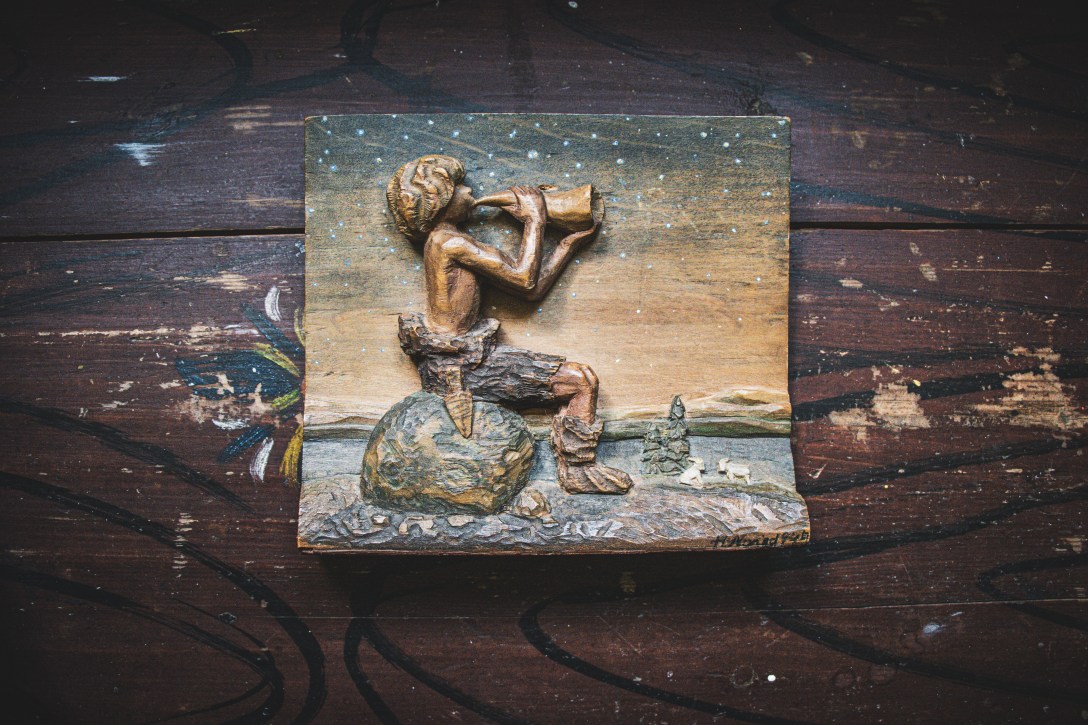
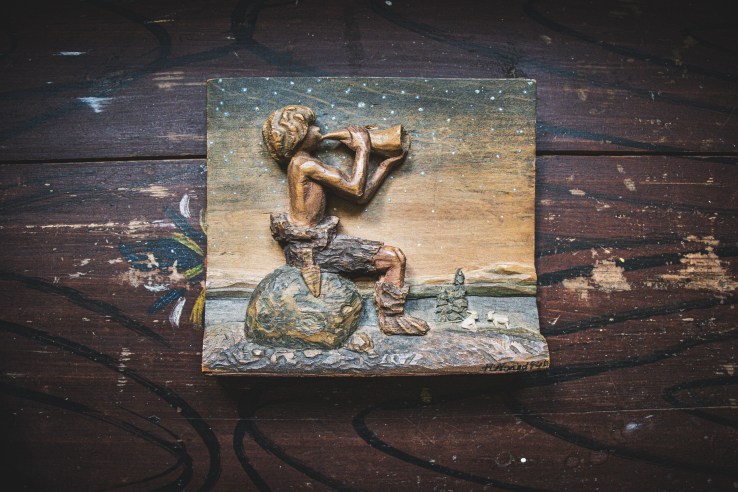
As someone deeply influenced by Bauer’s work, you can imagine how elated I was to find this painstakingly carved wooden art piece inspired by Bauer’s 1910 painting Vill Vallareman (A Fairy Shepherd) at an Airbnb I was staying at in Sweden.
When I was taking the recycling down to the bin on my final day, I saw the house owner, Maria, and asked her about the origin of the 81-year-old carving. If I’m remembering right, she said her uncle was the creator. She asked me, in an almost surprised tone, if I liked the carving. I told her I loved it. Casually and without pause, she said I could have it. Reader, my knees almost buckled.
I swaddled Vill Vallaremaneffter John Bauer like a newborn, checking on it repeatedly during my journey back to the UK, petrified it would get cracked or chipped. Blessedly, it made it back in one piece, and while I have more questions about it and its creator than I know what to do with, I’m grateful (though remain in disbelief) it’s with me. I live with the hope it’s not long until I can swaddle it up again and take it back across the sea to a forever home in a forest perhaps not too great a distance from those Bauer once wandered.
I had a beautiful comment left on my last post by a reader called Eivor, who wrote that what I’d said about the forests in Sweden resonated and that trees boost their mood and give them hope. They said they were always struck by how much they missed the trees when they were away from them, something I’m feeling ever more intensely myself these days when all I want to do is be forest wandering from sun up to sun down.
Eivor’s comment made me think of when I was living in Sweden and how lost I’d have been without the forest. I had little clue about anything when I wasn’t among the trees. I was the epitome of anxiety. In the forest, though, rambling, scrambling, slipping amidst the moss and pine, I was empowered, eager, excited. I was different from the fretful woman who would watch through the peephole before going out.
For me, the forest was my workspace and sanctuary. It was more my home than the apartment I’d return to. The forest inspired me, it nourished my exhausted soul, and, of course, it provided hope. It always provided hope.
The forest and its expanse thrilled me. I’d almost always go alone, but on the odd occasion I could show a friend my favourite haunts, I’d be giddy as a child on their birthday.
I took my camera with me most days, and while I mainly created self-portraits, I’d sometimes have a companion to shoot with. In this photo, my friend Martina is captured on a darkening autumn afternoon. Sometime after I shared it online, the Swedish-based artist Alessia Brusco @skogens.rymd.art – who I’d recently struck up a friendship with – contacted me to ask if she could recreate it in a painting.
She recreated this photo, too.
I still remember the day I took this shot and how delightedly I drank up that sunlight and then watched, rooted to the path, as the sun blazed down behind the trees and the evening crept in from all directions.
It’s been a few days since I trudged back from Scandinavia, and the withdrawal is all too real. I miss the clean air and tap water that doesn’t have a chemical aftertaste. I miss the company of the unique troop I met on my Swedish endeavour, and I miss the trees. I miss the trees a lot. Forests, especially those that stretch beyond where I can see, equip me with a sense of optimism that little else can match. There’s an uncomfortable dampness to my spirit when there isn’t a forest within sight when the trees aren’t close enough to reach out and touch.
The energy of England is troubled and distracted. There’s always an underlying tension in this country, and it’s difficult not to despair. But I’m determined to keep my renewed sense of vigour – gifted by my time in Scandinavia – alive. On this trip, I travelled to Northern Sweden to participate in Go Sollefteå, an event organised and hosted by Kalle Flodin and Sollefteå municipality.
In 2018, Kalle uprooted his life in Stockholm and moved to a sparse forest cabin in the North of Sweden to create a new life grounded in simplicity. Kalle’s videos and those of Jonna Jinton (her channel led me to Kalle’s channel) and Talasbuan (Kalle’s channel led me to their channel) regularly pour much-needed brightness and authenticity into my life. I’m one of many viewers who clutch onto the dream of having a forest home, of waking up to the rejuvenating scent of pine, and discovering moose tracks outside my front door.
It was during an ADHD burnout that I read about the Go Sollefteå event. My days were blurred together in a teary mess of trauma. Creating distressed me – my cruel inner critic shit on everything I did, which made me reluctant to work on anything at all. Eating was a chore – my diet was fuelled mainly by protein shakes. My sleep was disrupted by overthinking, nightmares and drenching night sweats. Leaving the house was an effort beyond all others. Suicidal thoughts frequently snaked through my head.
But the prospect of venturing to the sparsely populated North of Sweden – something I never did when I lived in the country – meeting the person who’d made the ‘simple cabin life’ his reality and getting to know other people ‘bound to the north’ by whatever means was too sparkling, too exhilarating, too therapeutic an opportunity not to reach out for. I submitted my application a few hours before the deadline, thinking, ‘I probably won’t get accepted…But I have to try.’
When the acceptance email came through, I teared up and scrambled to explain to my bewildered family why my mood had so suddenly and miraculously ascended from the bowels of hell.
And So To Sweden
After spending a fitful night in a converted jumbo jet parked close to Stockholm Airport, I was picked up by a lilac-haired Swede called Pernilla. She’d generously offered to pick me up on her way to Sollefteå. (She made a significant detour to get me. She doesn’t think it was that big of a deal, but it was that big of a deal.) Little did I know at the time that I was hitching a lift with a knitting phenomenon.
Pernilla and I cruised north, and five hours glided by, our chats regularly punctuated by me saying, ‘Where are the moose? I can’t believe we haven’t seen a moose yet. Do you think we’re going to see a moose?’ Pernilla told me she had seen about fifteen before she picked me up, including a mother with a calf. She’d see another one a day later close to our hotel. I’d miss it by minutes.
Almost 70% of Sweden is forest, and we drove through a good portion of that on the way to Sollefteå. Trees regulate my nervous system – they’re experts at doing so in general – and as we drove on the blissfully empty roads, I felt evermore lifted by the sight of them. I had that soothing sensation of coming home.
I’d planned to photograph the journey; I imagined myself photographing the Go Sollefteå experience from start to finish. But I didn’t. I didn’t have the energy. I was emerging from under the weighty emotional debris of my burnout. Being present in the moment was more important than trying to document it.
The main venue for the event was Hotell Hallstaberget. Built alongside one of the oldest ski slopes in Sweden, it’s been bringing together, ‘outdoor enthusiasts’ and I love this ‘fun-loving Norsemen’ since 1969.
Shortly after Pernilla and I arrived, it was time for introductions. Folk from all corners of the globe assembled in a circle and together we met Kalle, his supremely well-behaved husky Tuss and the lively, bright-eyed team behind putting the event together. It was all so easy-going, and my nerves started to dissipate. I overshared, as I have a habit of doing. But it was fine. I’m either mute, or you know my life story within minutes of meeting me for the first time; there’s no middle ground and I’m learning to accept that about myself.
Introductions were followed by an elaborate buffet dinner, after which I cornered an Australian woman called Chelsea, on her way to get a drink. She’d arrived late due to car troubles and had missed the introductions. Chelsea had moved to Sweden earlier in the year and lived on a farm with her Belgian boyfriend, Lars. ‘When I saw your profile photo on Facebook, I thought we’d get along,’ I told her, perhaps a bit too eagerly. However, my intuition was correct, and we got along as fabulously as you’d expect two neurodivergent darklings to get along.
My mood the following morning was soaring from the get-go, with the weather partly responsible because when I hauled back the curtains in my room, I was greeted with dense fog, and if you know me, you’ll know I’m quite the low-lying cloud enthusiast.
The day to come was crammed with activities: a swift, steep hike – ‘please don’t look up at the drone! – followed by a crash course in Swedish led by the sort of high-spirited folk I wish I’d met when I initially tried to root down in Sweden. Then there was fika with kanelbullar the size of my head, which I very happily and very swiftly demolished.
In the evening, we attended a yoga session led by Kalle’s neighbour and founder of Ayur Yoga, Wivi-Anne. It was perhaps the most intense and life-affirming experience of the trip. I’d been to one other yoga class in my life and I’d lasted five minutes. I stayed for the duration of this session – minus ten minutes when I went to the toilet, then couldn’t remember which room to return to.
Although I stayed until the end, I sat out most of the poses. My body was too rigid and awkward, reluctant to ease into even the most basic ones. Everything hurt. But the energy in the room was comforting, forgiving.
When the session was done, most people, myself included, were not quite ready to move from the space. The room was opened up for questions. I spoke about the realisation that I all too often forget to breathe. I talked about how my whole body hurt when I tried to follow along with the poses. I spoke about the impact of the last pose, a simple ‘hands together’ position and how it led to a single profound realisation: that I can stop apologising for being who I am.
That night my phone died – I’d left my plug adapter behind in Stockholm – so I didn’t get the message that the aurora borealis was out and dancing ecstatically in the skies above Sollefteå.
There was some confusion the next day, and I missed the second hike. So, I took myself off on my own. The hike the day before had been fun but fast paced because of scheduling. There hadn’t been the chance to get close to the forest. Well, not for me anyway, who didn’t have the gazelle-like agility and fitness of other group members.
I took the opportunity this time around to get close and spent some blissful hours appreciating mushrooms, bluebells and lichen. I watched a fox for a while, and the fox watched me. I acknowledged the croak of a solitary raven as it flew over my head and took it as a sign that this was how it was supposed to be – that I needed to soak myself in the preciousness of this experience.
Pernilla and I scoured thrift stores in the afternoon. (There was the option to look at houses for sale, but I’ve got a long way to go before I can even think of the possibility of buying something anywhere.) I narrowly missed out on scoring a pair of Fjällräven trousers. Dinner that night was a cosy, candle-lit affair in a wooden round house with Mexican inspired cuisine, as is tradition on a weekend in Sweden. There was also liquorice so thickly doused with salt that it was inedible for all but a dauntless few.
The following day, we said our goodbyes after breakfast. I lingered in Sollefteå for the rest of the day, not wanting to accept that it was over but humungously grateful for the experience and humbled by it.
I needed to repair my relationship with Sweden – there’s much trauma associated with the time I spent living there – and this trip went above and beyond in helping me do that. One of my anxieties had been about being captured on camera, and I faced this fear as fully as I possibly could. I’ve come away feeling I’ve crossed paths with some of the most thoughtful, generous, honest, creative and positive people that I’ve ever met. And even if I don’t look like I am in the photo, and despite all the unknowns that scare the shit out of me, I’m inspired, invigorated and ready for whatever’s coming next.
Thus far, 2024 has been disorientating, exhausting, painful, maddening and swift. So swift. Too swift. Since doing my initial ADHD assessment over a year ago, I’ve been struggling to come to grips with the reality that I’ve been living with this condition my entire life, and it’s only just coming to light as I hurtle towards my 40s. I’ve also been grieving everything that ‘could have been.’ But I’ll write more about this on my other blog awyrdofherown.blog when possible.
Around midnight last night, too tired to read, I flickered around on Pinterest, looking for… I’m not even sure what. At some point, I landed on this knitted cape, leading me toLittle Scandinavian, where I ended up on a post about The Scandinavian School in London, which looked like everything I would want for my daughter in a school, but whose gigantic fees were painful to read. It’s ridiculous, laughable even, that I let the fees of a school in a city where I don’t even live upset me.
I should have gone to bed then but didn’t. My mood was wounded. So I decided to scout out an image for the cover of my next book and ended up on The Public Domain Review – a treasury for the insatiably curious creative – which I combed through for Nordic bounty.
While I furiously bookmarked articles and added, to my already gridlocked desktop, old photographs of Norwegian fjords and Icelandic fishermen, I thought about producing an art appreciation post of some of the stuff I unearthed.
For the longest time, ‘art appreciation posts’ and ‘I-saw-these-things-and-thought-you-might-like-them-too’ posts were the lifeblood of my blogs. But then I gradually stopped making them, and I’ve missedmaking them, and am now on a mission to eradicate the idea from my head that making them ‘is not a good use of my time.’
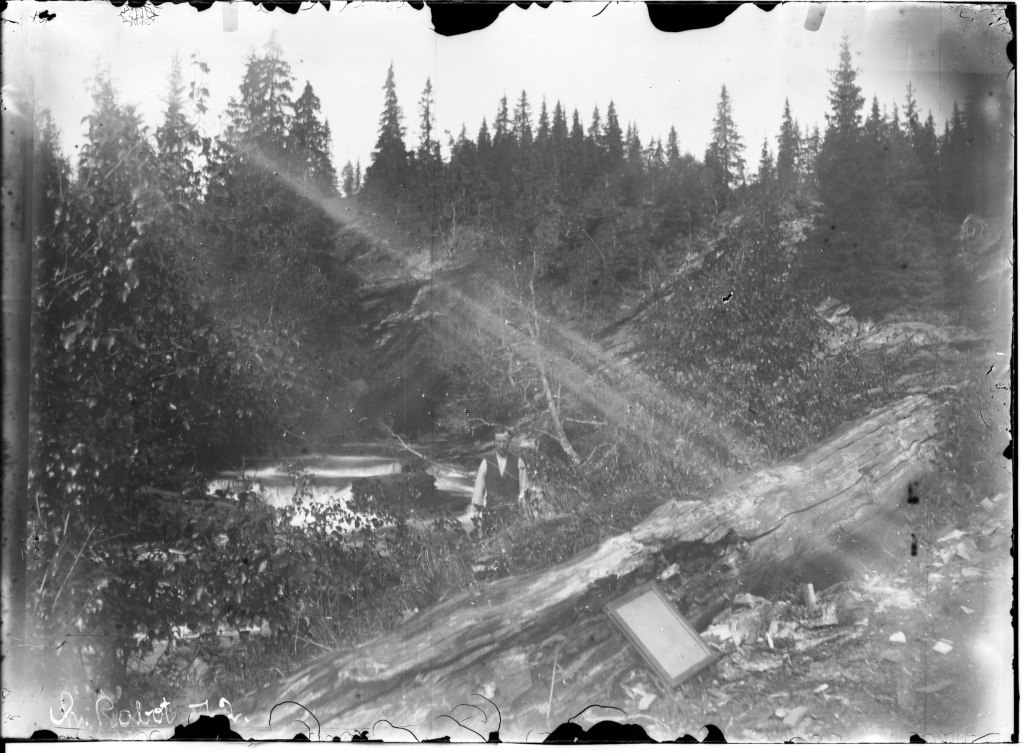
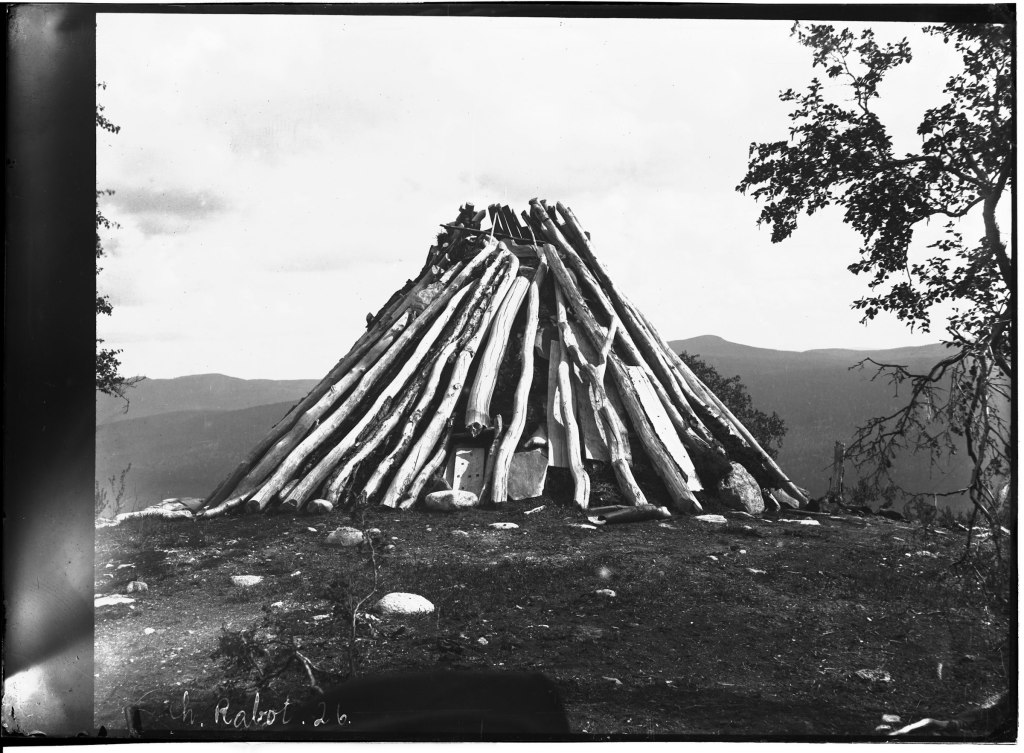
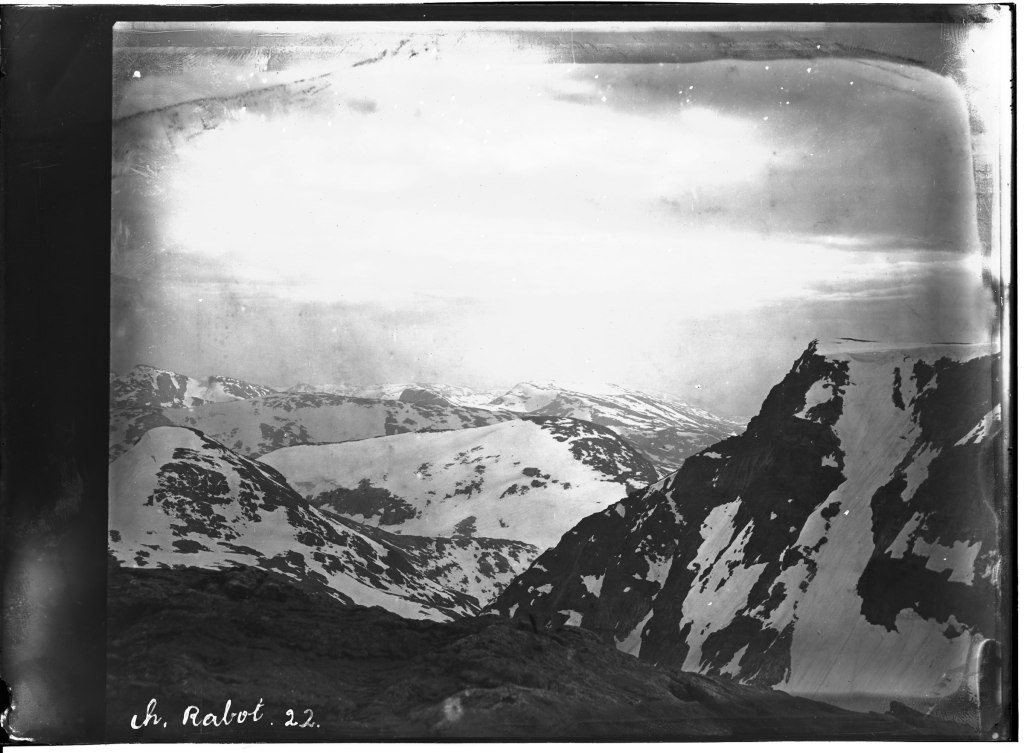
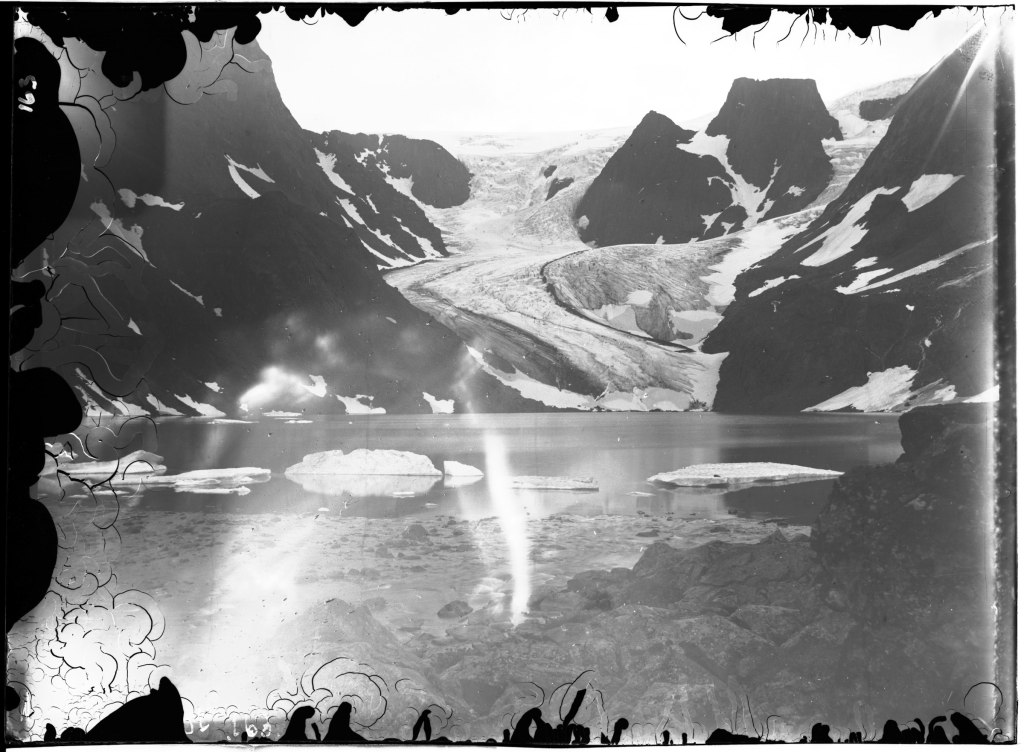
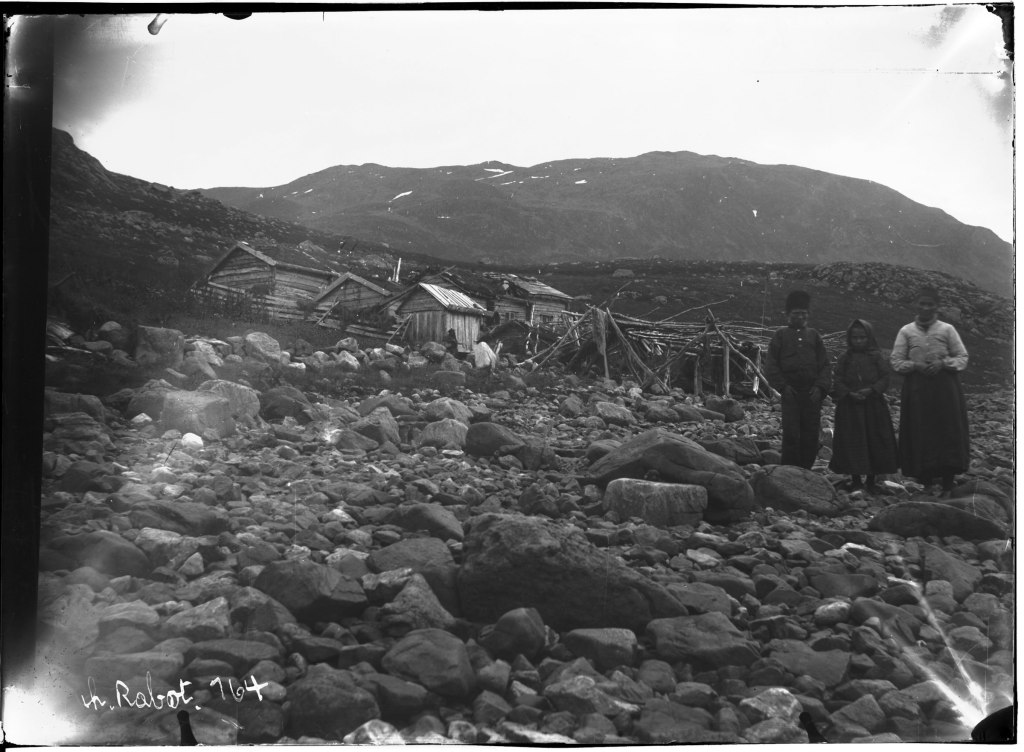
The first thing to catch my attention on The Public Domain Review was this striking, slightly sinister portrait of French geographer, glaciologist, and photographer Charles Rabot. This picture led me to a stupendously readable essay about Rabot by Erica X Eisen (whose other work I’m going to consume with gusto). Rabot had a ‘particular affinity for Norwegian culture…’ and his awe of ‘boral landscapes’ and ‘nostalgic yearning’ for the north is something I strongly identify with:
‘They are so beautiful, so magnificent, those deathly solitudes, so strange in their fleeting finery of brilliant colors, that they always leave one with a burning desire to see them again.’ – Charles Rabot
Eisen’s writing is astute and memorable – the following passage in particular ‘If there are any people to be seen in these snow-pied expanses, they are tiny afterthoughts so overwhelmed by the whiteness around them that any individuating features are obliterated completely — to the extent that these figures seem less like the protagonists of the shots and more like another accidental void bitten into the negative by the frost.’
The first person to climb Kebnekaise, Sweden’s highest mountain, in 1883, Rabot was also friends with the most swoon-worthy of Norwegian explorers, Fridtjof Nansen who’ll be much more thoroughly swooned over in another post where I’ll look at the bizarre but beguiling topic of fancying long-dead polar explorers.
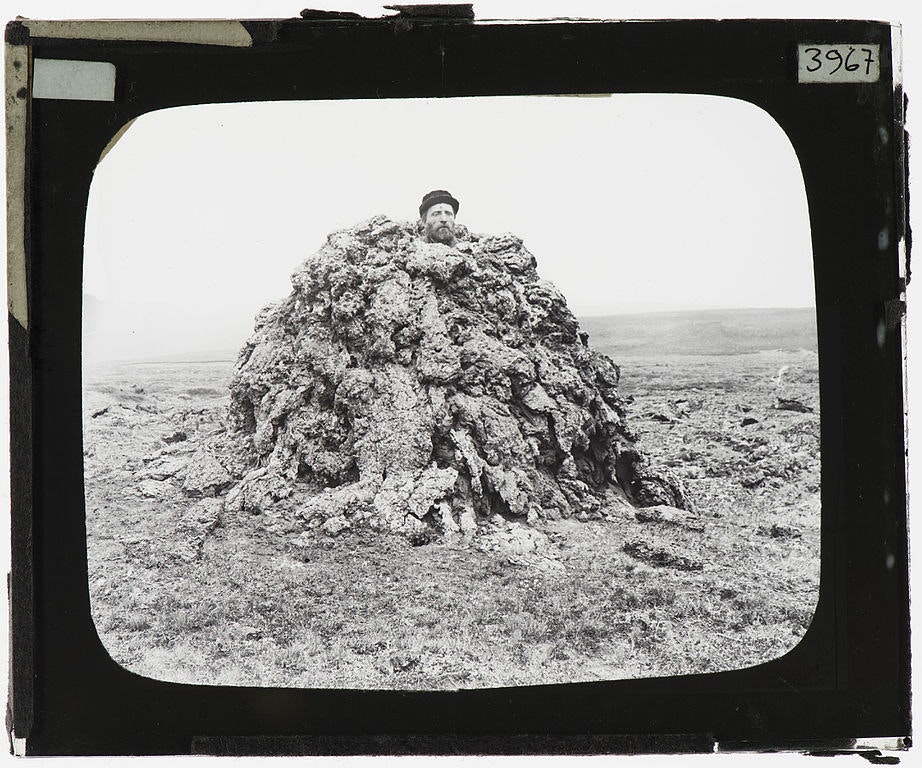
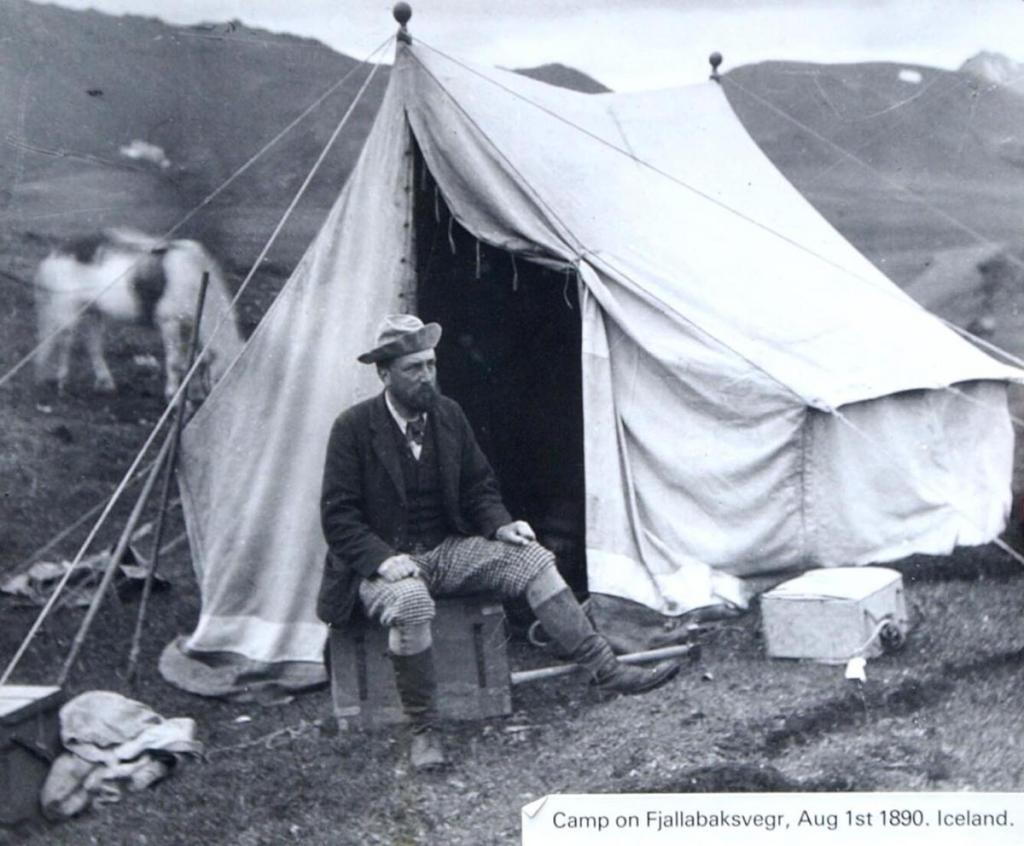
When I searched Iceland on The Public Domain Review, ‘ volcano chaser and pioneer of volcanic photography,’ Tempest Anderson showed up with one of the most gloriously surreal photographs I’ve ever seen.
Very much intrigued by the name Tempest, I was convinced there’d be a riveting origin story, so was a bit put out to find it was simply inspired by a prominent West Yorkshire family.
Yet there’s no doubt the man led a life not dissimilar to a windstorm—his list of occupations and accomplishments is…extensive. York-born and bred Anderson was a leading eye surgeon as well as a photographer, an inventor of photography equipment, a consulting physician to a lunatic asylum, a prison medical officer, a Sheriff of York… the list ploughs on. At 43, unmarried and restless, Anderson decided he’d use his spare time to study volcanology and chase volcanic eruptions. The photographs he shot in Iceland were taken using one of the earliest panoramic cameras, which, unsurprisingly, Anderson had developed himself.
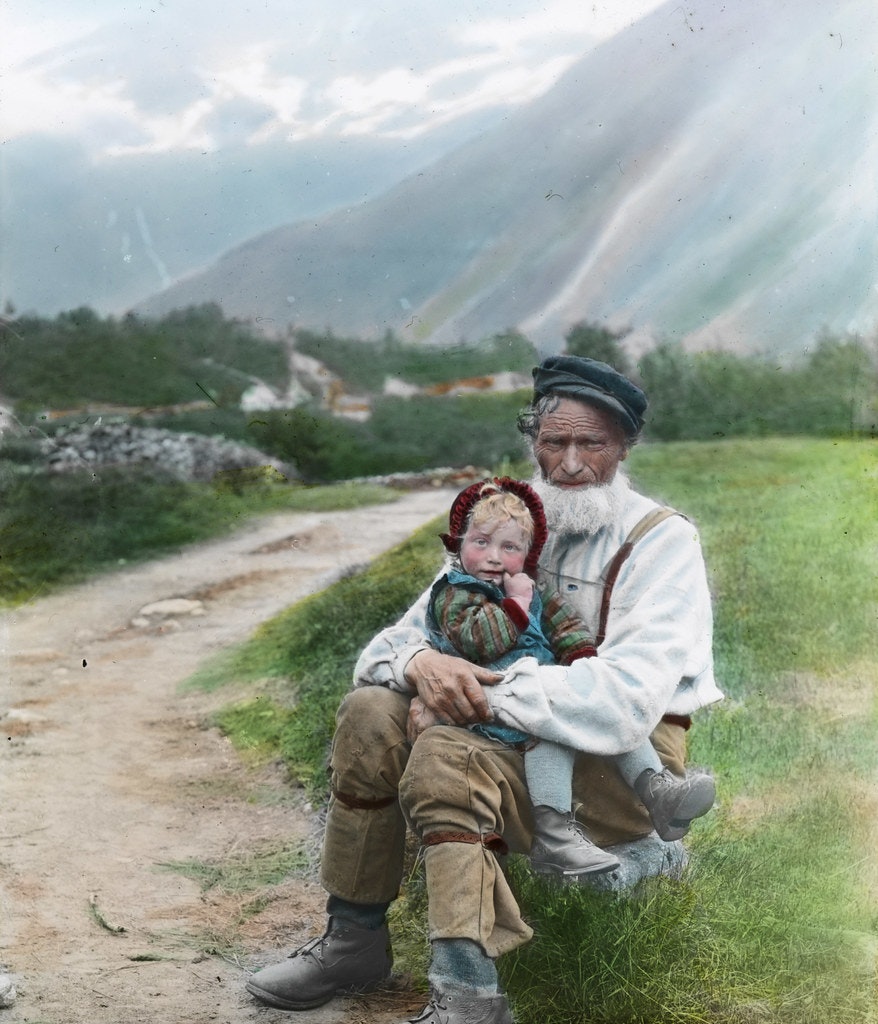
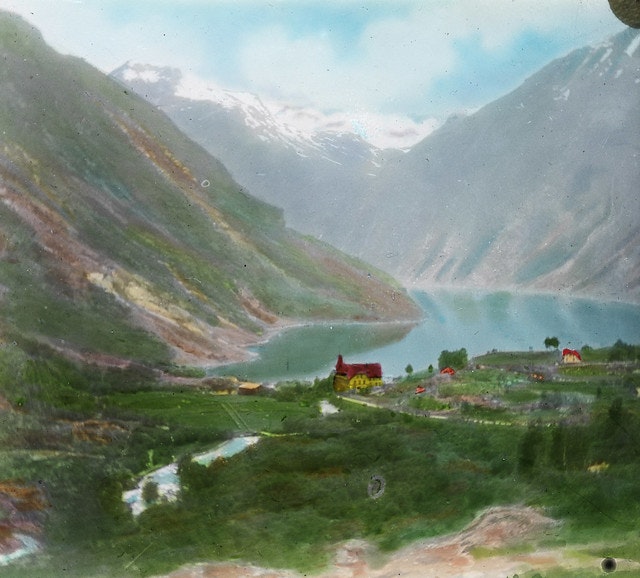
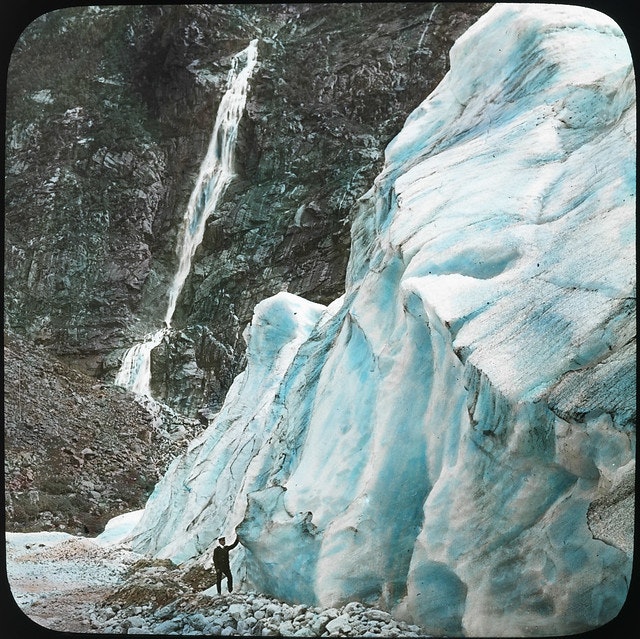
I’ll keep coming back to look at these lantern slides depicting Norway from the early 20th century, and I know each time I do, they’ll thrill me all over again. By the way, for full disclosure, I had to Google what a lantern slide is.
Lantern slides are positive, transparent photographs made on glass and viewed with the aid of a “magic lantern,” the predecessor of the slide projector. Lantern slide plates were commercially manufactured by sensitizing a sheet of glass with a silver gelatin emulsion. The plate was then exposed to a negative and processed, resulting in a positive, transparent image with exceptional detail and a rich tonal range. – Constance McCabe (National Gallery of Art.)
Produced by British photographers Samuel J. Beckett and P. Heywood Hadfield in my favourite part of Norway – Sogn og Fjordane (now known as Vestland) – these bold, crazily vivid lantern slides are held at the county archives in the fjord village of Leikanger, somewhere I’m going to absolutely seek out when I’m next over by way of the Sognefjord. Right now though, I’d very much like to know what the woman on the steps was thinking when this picture was made. Also, image 4 – haunted to my core.
Hadfield was a surgeon on a ship cruising the Norwegian fjords and an amateur photographer in his free time. Little is known about Beckett, but copies of books by both men (The Fjords and Folk of Norway by Beckett and Fjords of Norway A Cruise On The SS Ophir by Heywood) are available on Abebooks and eBay and are very kindly priced for books printed well over a hundred years ago.
More Recommended Reading From The Public Domain Review














 Northern Fever