Several years ago, I experienced what I thought was a major depressive episode, but which turned out to be neurodivergent burnout. My nervous system was shattered, making any sort of stimulation unbearable. When I tried to listen to music, I’d physically recoil, like Nosferatu in a sunbeam, and need to turn it off.
Almost overnight, creating and consuming art became impossible. I lost the ability to read, to write, to form coherent sentences. My world became so small it was like I barely existed. This deprivation made for the most terrifying time of my life.
I remember slamming my hands against my ears a few seconds into a Wardruna track. Warduna! A band whose live performance had left me sobbing and prompted the purchase of a one-way ticket to Norway.
When I was able to listen to music again, I tried to discover what I’d missed, but was quickly overwhelmed and returned to what was familiar. Curiosity is in my makeup though, and before too long, I was tentatively exploring the ever-rising ocean of musical releases.
It’s been difficult to accept that my capacity isn’t what it used to be, and I get easily frustrated by the sifting required to find something precious. Also, since burning out, it’s been more difficult to listen to music at times when I used to without issue. For instance, I often listened to music while writing, but nowadays mostly need silence. I’m still figuring out how to ‘be in the world’ as a late diagnosed neurodivergent, and what my capacity for everything, including music, looks like.
It’s usually right before going to bed, when I feel the urge to discover something new. Earlier this week, I put Nordic Folk into the Bandcamp search and opened new tab after new tab for promising projects, vowing each I’d give them my attention over the coming days.
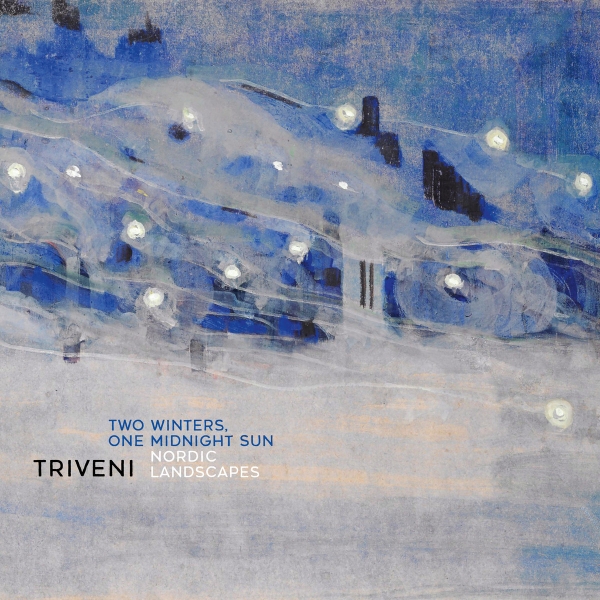
But I needed quieter days than I’d thought this week. When I did listen to music, I found myself returning to Two Winters, One Midnight Sun by Triveni, a project of Belgian composer and accordionist Barbara Eva Ardenois. Listening to this shimmering soundscape unearthed from Bandcamp’s Nordic Folk hoard reunited me with something I hadn’t felt in ages – bliss.
On her Bandcamp page Ardenois writes: My journey through the Nordic countries began in the autumn of 2021. Over the following seasons, I lived and travelled across Sweden, Denmark, Finland and Norway, studying traditional music as part of the Nordic Master in Folk Music.
The sound of the kantele, the vast Nordic landscapes, and the stillness of nature left a lasting impression on me. Through dark winters and luminous summer nights, I shaped my musical world where light sparks as a symbol of hope.
In 2023, I created Triveni—named after the confluence of three rivers. In this project, I weave elements of Swedish shepherd music, Karelian kantele improvisations and contemporary classical music, gently blending field recordings and subtle electronics.
My Dreamy Folk Flow draws sonic landscapes for the quiet hours—when light returns or fades—welcoming you to slow down, connect and wonder.
This album is co-created with my two dear friends and fellow musicians, Ingrid Rodebjer (Sweden) and Hanna Ryynänen (Finland). Their improvisations and deep roots in traditional music bring new colours and atmospheric layers to these cross-cultural soundscapes. – Barbara Eva Ardenois
“This is my forest. I know every stone and every root. No one can frighten me here.”
Ronja The Robber’s Daughter, Astrid Lindgren
Growing up, much of my time was spent in a centuries-old farmhouse in a moorland valley where my friend Annie lived. Outside her bedroom was a narrow landing, most of it taken up by a bookcase we’d need to shimmy past to get in and out. The shelves were so tightly packed, books would need to be prised free.
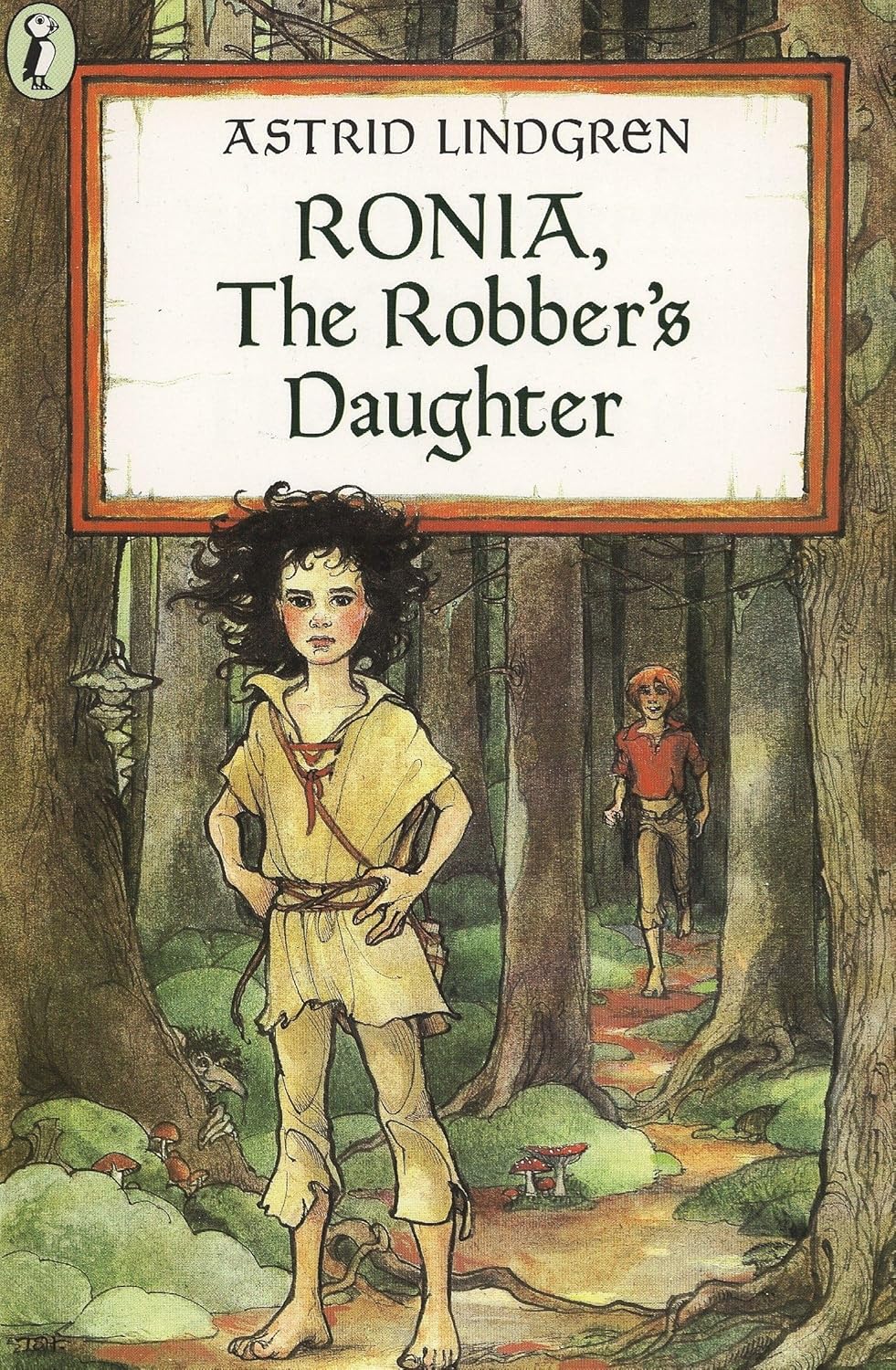
It was rare that I passed this bookcase without tugging out one book in particular – Ronja the Robber’s Daughter by Astrid Lindgren which had been read to my class at school. Usually, I wouldn’t even open the book, but just study the cover, especially the figure in the foreground: a wild-haired, barefooted Ronja, steadfast on a thin forest trail. Fearless and nature-led, she embodied everything I wanted to be.
For what was to be her final novel, (after Ronja, Lindgren shifted her focus to picture books) Lindgren drew inspiration from her densely forested home region of Småland, along with Thoreau’s Walden. City-based at the time, Lindgren ached for the forest and was inspired by Thoreau’s departure from society to lead a solitary, simple life in the woods.
Originally published in Sweden in 1981 as Ronja rövardotter and in English in 1983, the translated edition (unnecessarily) changed the spelling of Ronja to Ronia and featured a different cover by prolific children’s book illustrator Trina Schart Hyman.
I’ve always wondered why this cover had such a lasting impression, and I figure it may have something to do with Hyman’s art technique, which involved extensive layering. She began with a pencil drawing, then built layers using India ink and diluted acrylic. The result is a mesmeric, fabled atmosphere that enchants me to this day.
Just now, holding a book gifted to my brothers at their christening in 1997, I found myself unexpectedly weepy.
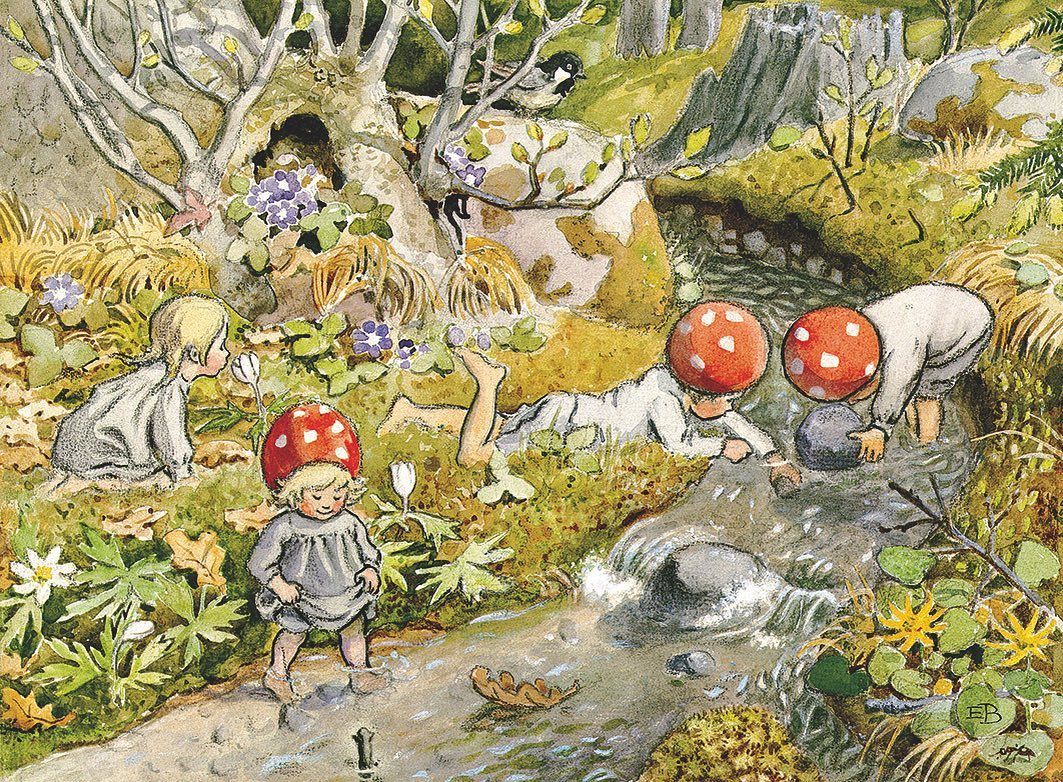
Children of the Forest was one of several Elsa Beskow books my (lucky) brothers received. To finally have Beskow stories in our home was, for me, astonishing. These sumptuous picture books weren’t something we’d been able to afford. I’d need to leaf through them at school (Beskow herself had a liberal upbringing in a progressive family and is one of the keystone authors in early-years Waldorf schooling) or at a friend’s house whose bookcase was rainbowed with the instantly recognisable colourful cloth spines and gold foil lettering.
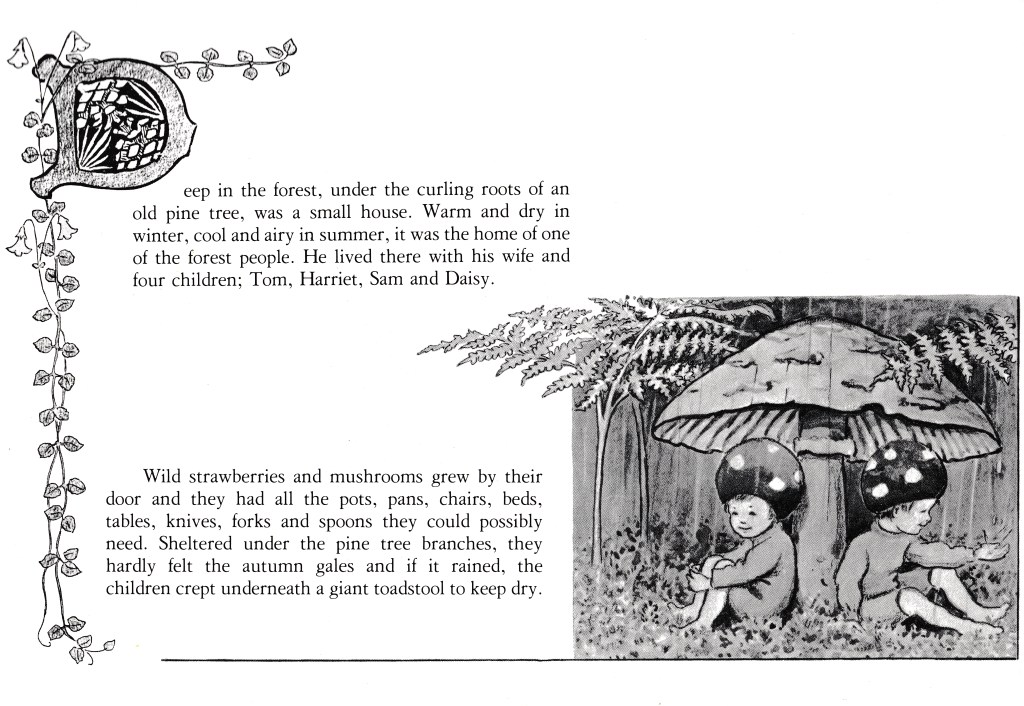
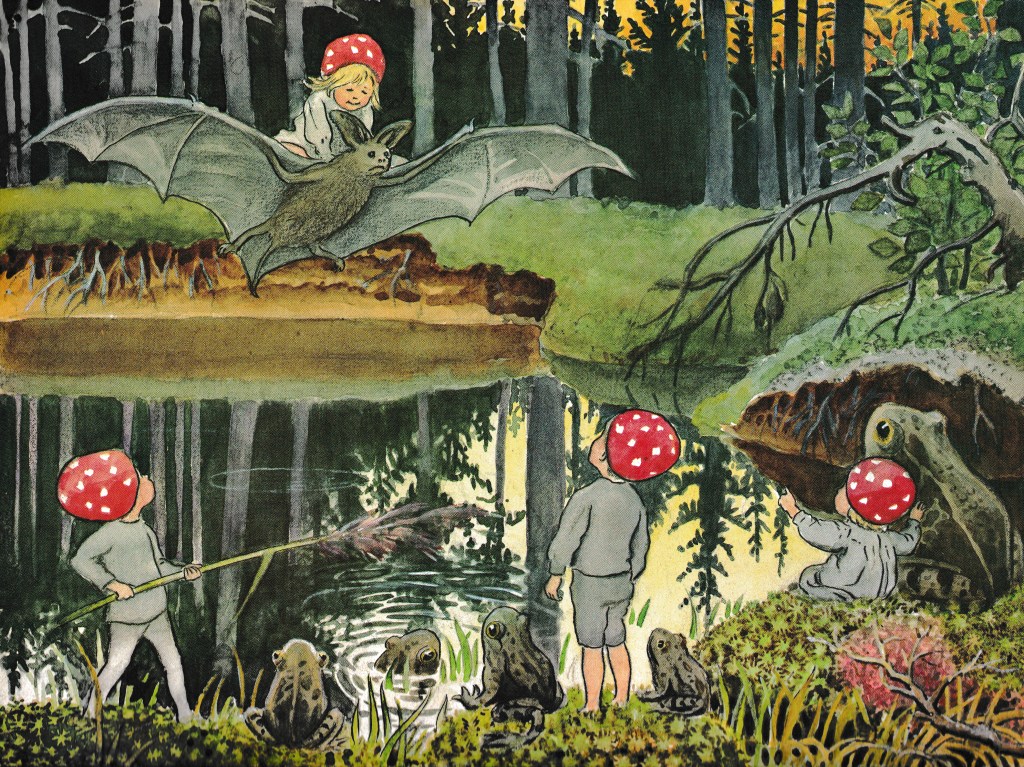
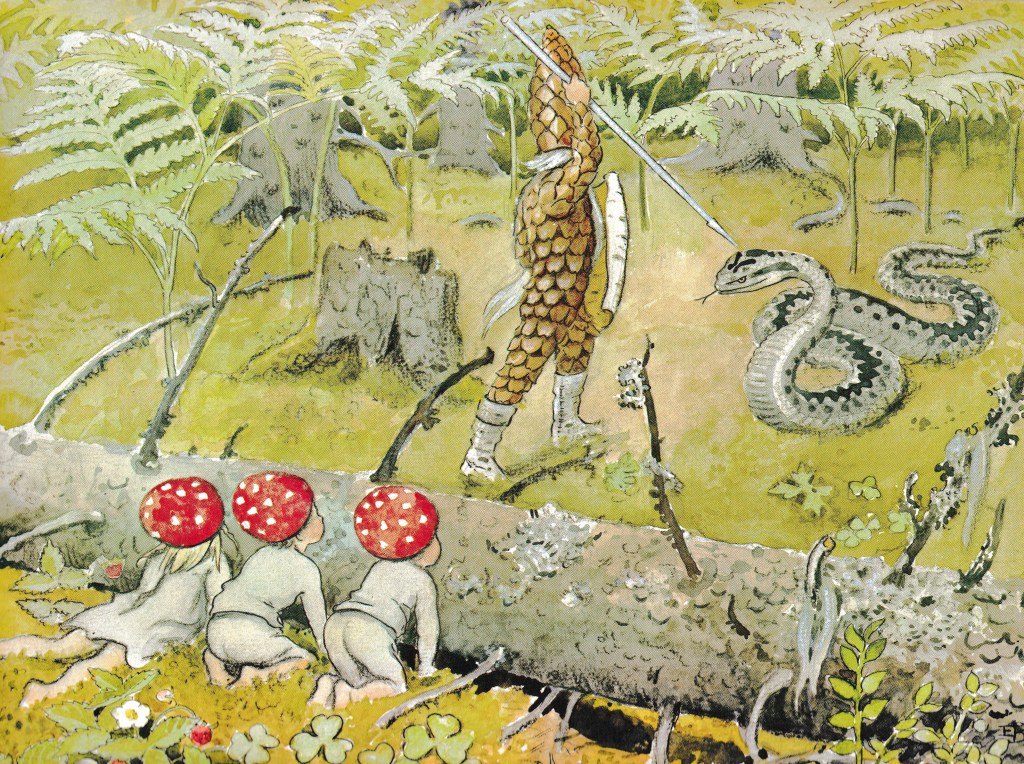
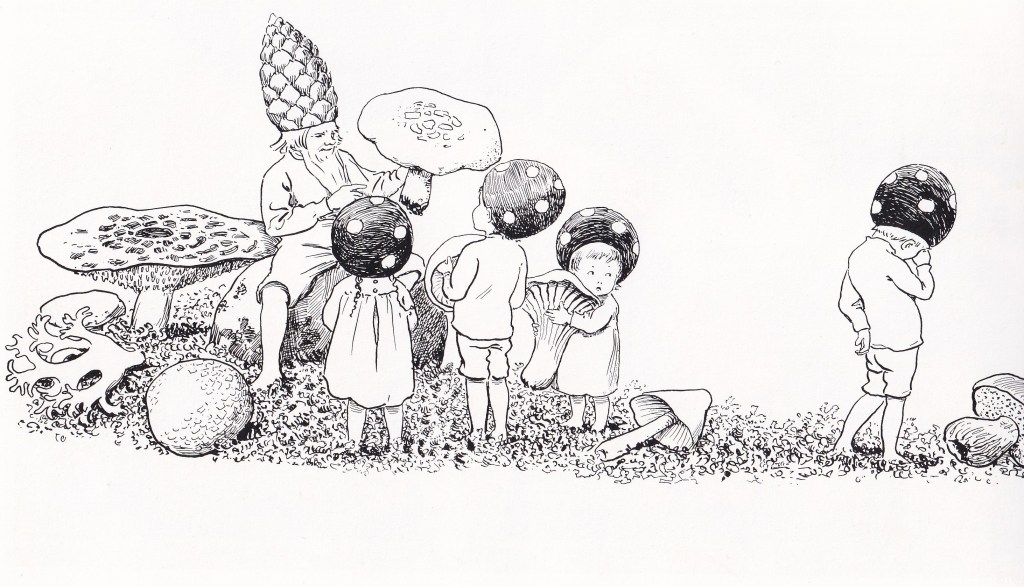
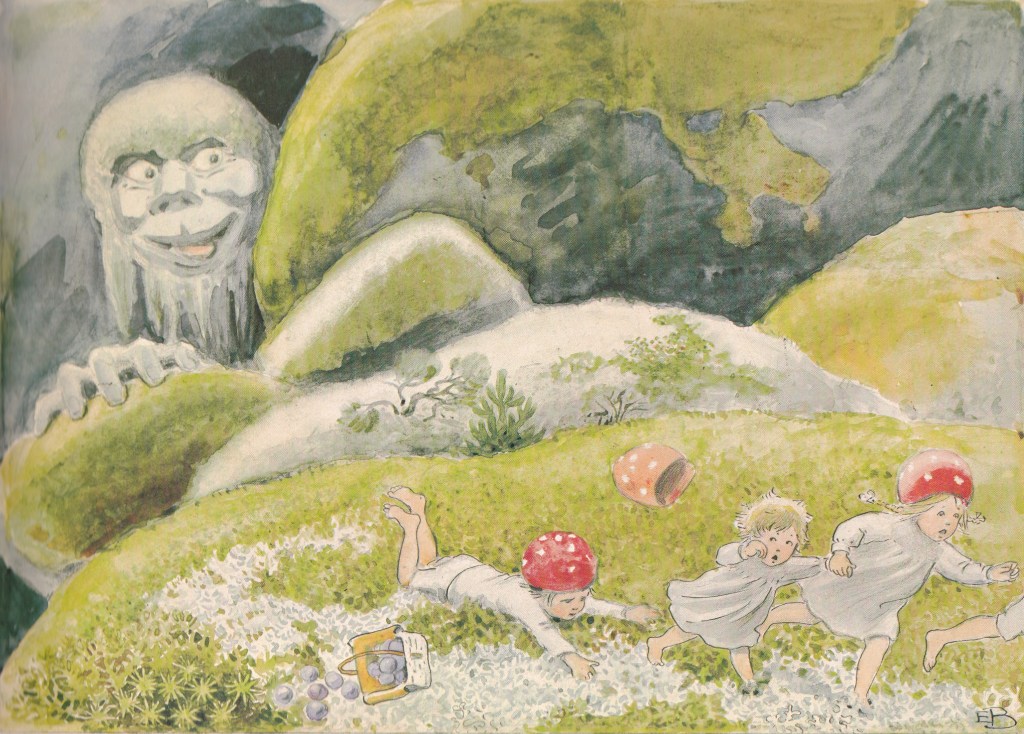
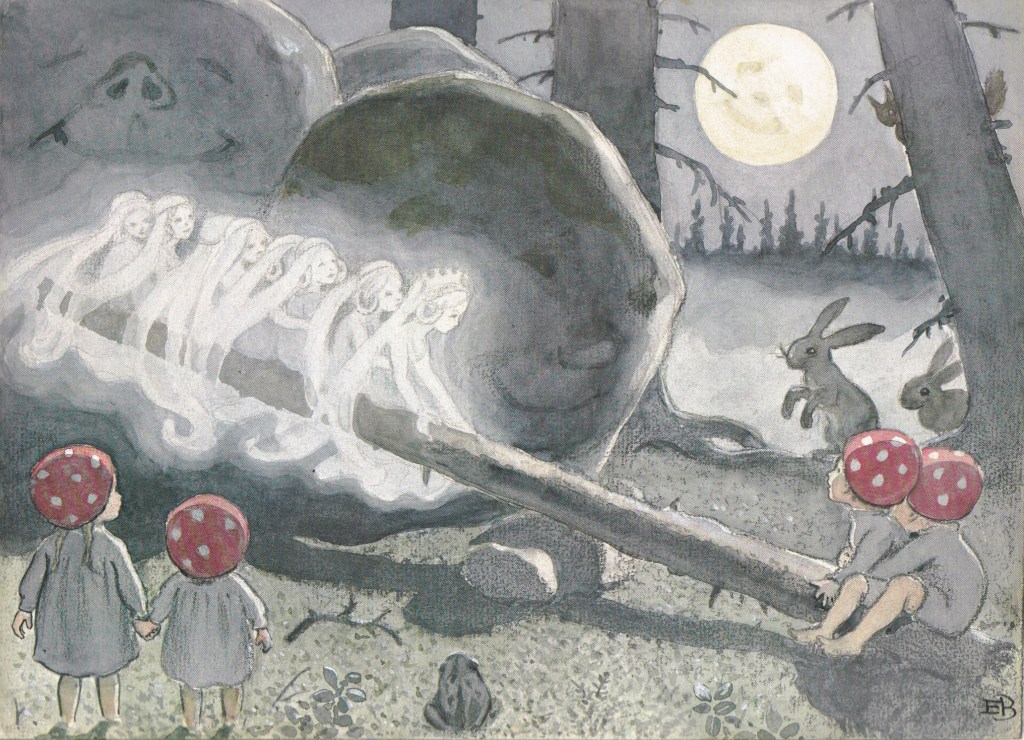
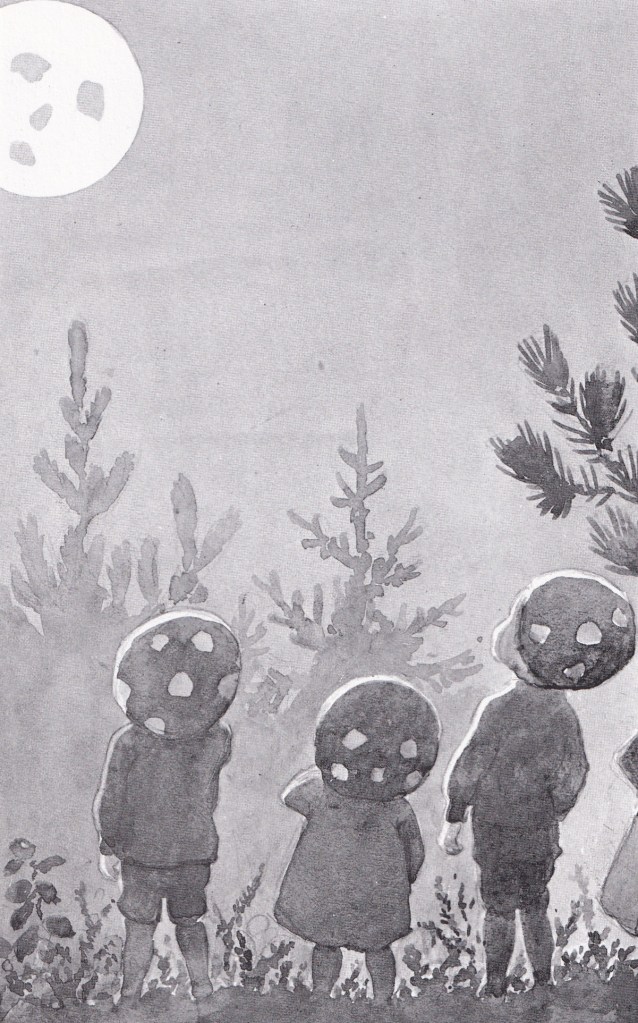
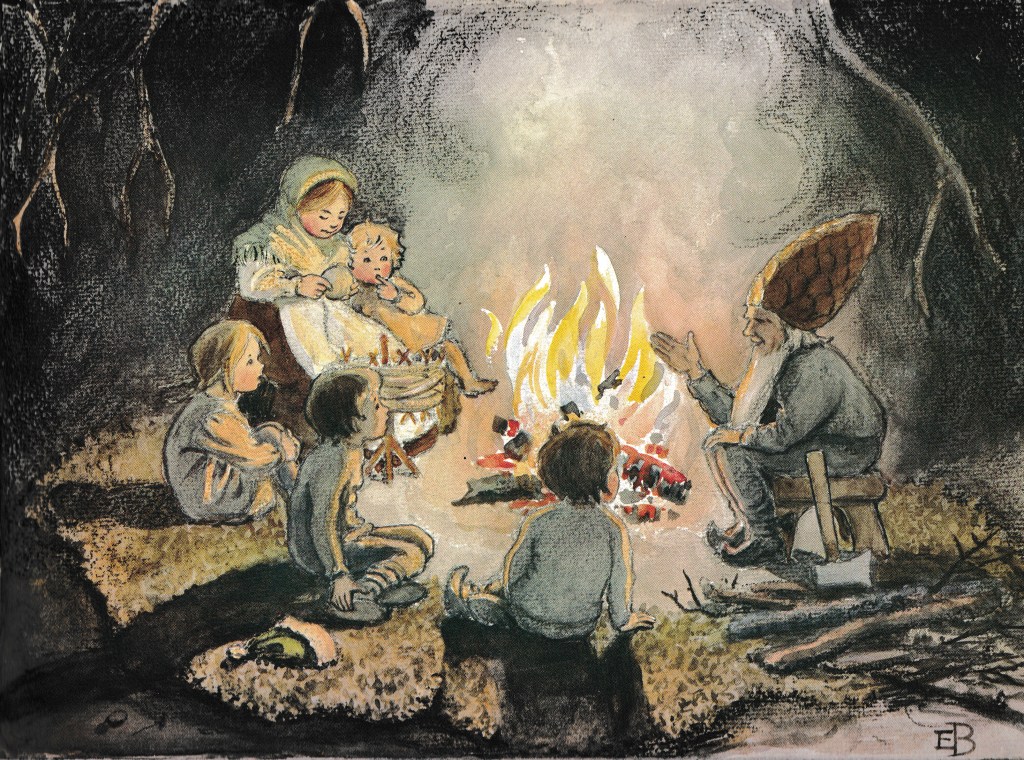
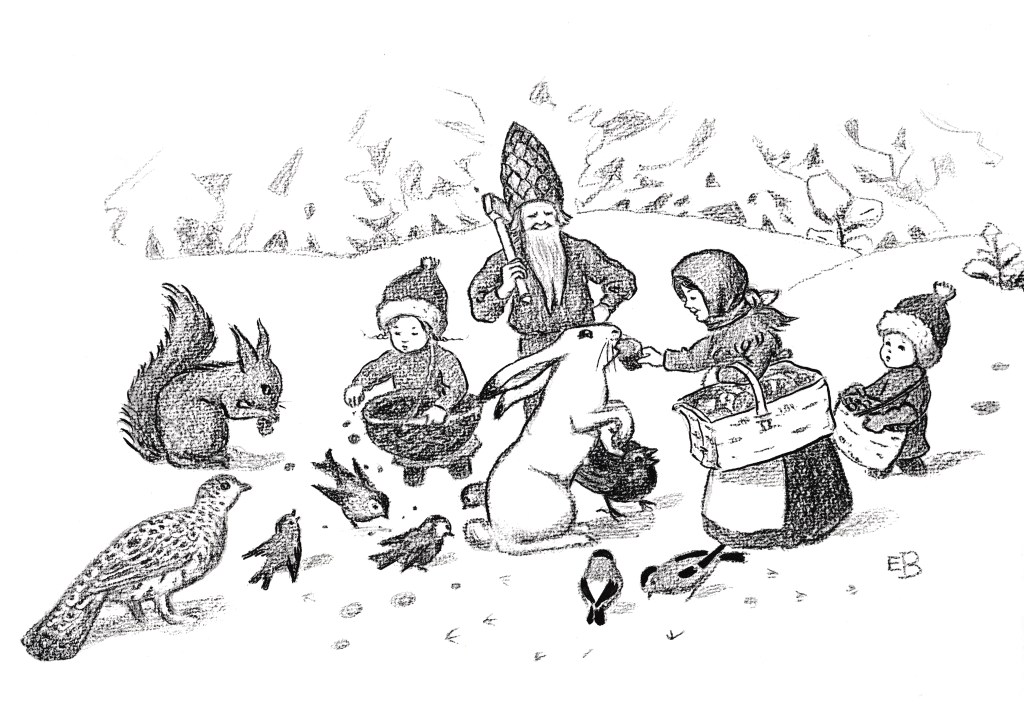
First published in Swedish under the title Tomtebobarnen in 1910 and in English in 1982, Children of the Forest follows the enviable escapades of four mushroom-hatted siblings gamboling through the seasons.
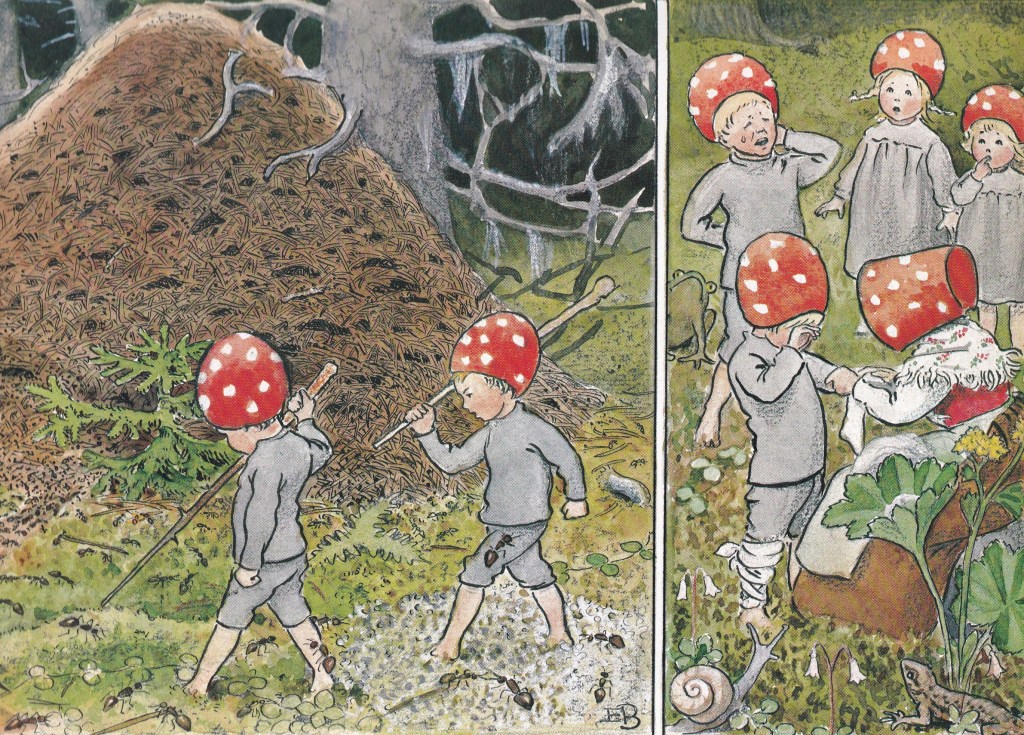
There’s a gentleness to the story, but every page has something to teach and hardships aren’t glossed over; their father, decked in a pine-coat suit with a birch-bark shield, kills Vara the viper (a hedgehog offers to take the body), one boy angers his father by playing with an apple pip instead of learning to recognise mushrooms, and the two brothers end up bitten by ants after poking their nest with hawthorn spears, modelled on the one that killed the snake. “Silly boys,” said their mother, as she put dock leaf ointment on their stings. “Never hurt the creatures of the forest, unless they mean you harm.”
When they’re not wondering where to bury a snake, nursing ant bites or being scolded for not paying attention, the children ride bats, play games with elusive, ‘light as thistledown’ forest fairies, and harvest berries to store for winter, encountering a forest troll when they do because, well, this is Sweden, after all.
The reasons I would constantly reach for these stories as a child are multilayered. I wanted to live under the roots of an old pine, of course, but they also gifted a serene escape from the chaos of growing up in a family of six.
Children of the Forest and every other Beskow story I read instilled in me, a sensitive child who knew she was different but didn’t know why, a profound calm and a sense there was somewhere I could belong. Looking back, I knew as a child what I needed to feel well in the world. Before we moved from the rural village I’d grown up in and from Waldorf education to a town and a state school, I had an impending sense of doom. I knew I wouldn’t cope, and spoiler, I didn’t.
I recall my first Swedish summer, picking blueberries in Värmland, the relief of finally reaching the forests of Beskow’s books. Afterwards, I volunteered to sort the berries before bagging them to freeze for winter. I’d love to meet someone who also finds scattering, scanning and sorting bucket after bucket of blueberries a meditative pleasure.
I felt weepy holding Children of the Forest because I’m nostalgic, but also because I knew from the beginning what I needed to be well. Even as a child, I was already orientating myself towards a slow, seasonal life in the north.
Autumn and its gales may be here (rejoice!), but I’m sharing this post regardless. I started writing about mosquitoes in September, but glanced away from the page, and October blew in. You know how it is, I’m sure.
A few years ago, I was celebrating Midsummer with family in Sweden. The weather was impeccable, the midsommarstång inspiring to behold, and the mosquitoes, for whatever reason (no repellent involved – I’d forgotten it), keeping a wide berth.
Well, keeping a wide berth from me. I was the only one not being savaged by summer’s least welcome players. My partner at the time – a man of Icelandic stock – was plagued worse than everyone and carries the scars to prove it.
Intriguingly, it may have been an odour in my sweat that was keeping them at bay. This lucky break was an isolated incident, though, as typically I’m swarmed and left with archipelagos of bites which swell to memorable heights.
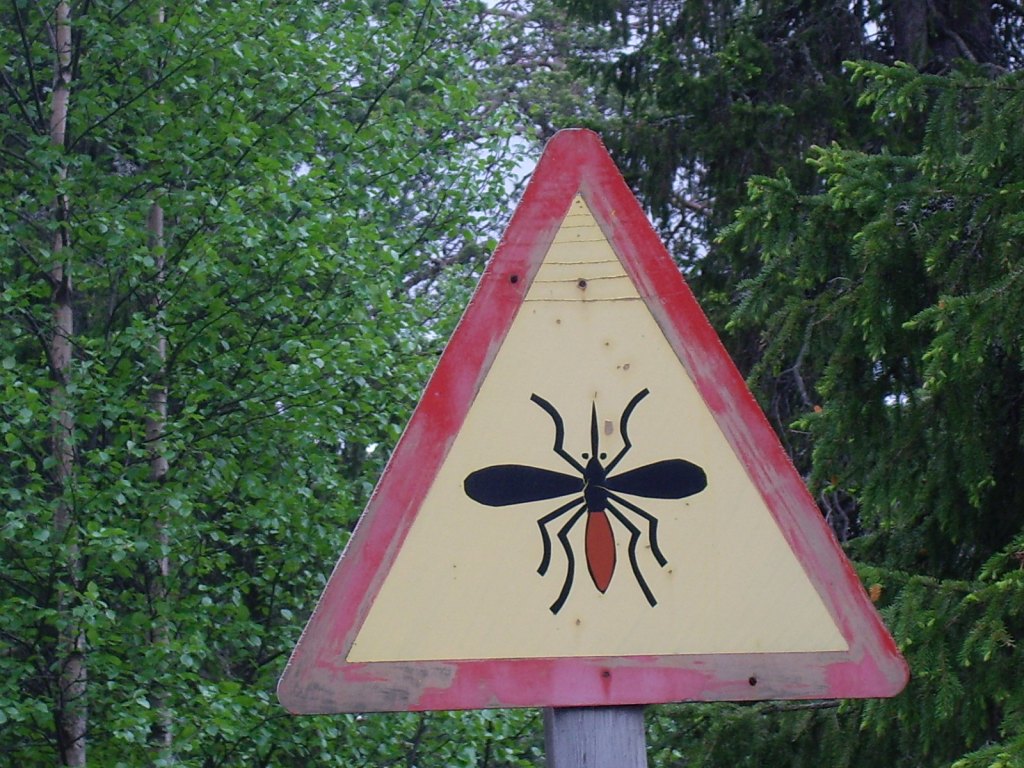
Legit mosquito sign in Finland. (Wikipedia.)
It’s a little awkward to admit that I typically try to “shoo” mosquitoes away. On the occasion I’ve been beset with rage by their assaults and have slapped them to death, I’ve felt horrible. It’s difficult to reason with yourself when your neurodivergent empathy extends to biting insects. I may have felt differently had I been in Lapland, where mosquito swarms are biblical. I read a comment on Reddit about a couple getting out of their car, only to immediately dart back inside after spotting a fast-approaching mosquito cloud.
It’s not unusual for animals to spend so much time trying to escape mosquitoes that eating becomes impossible, and they starve to death. They can also die from blood loss – a swarm can take as much as 300 ml of blood from a single caribou in a one day.
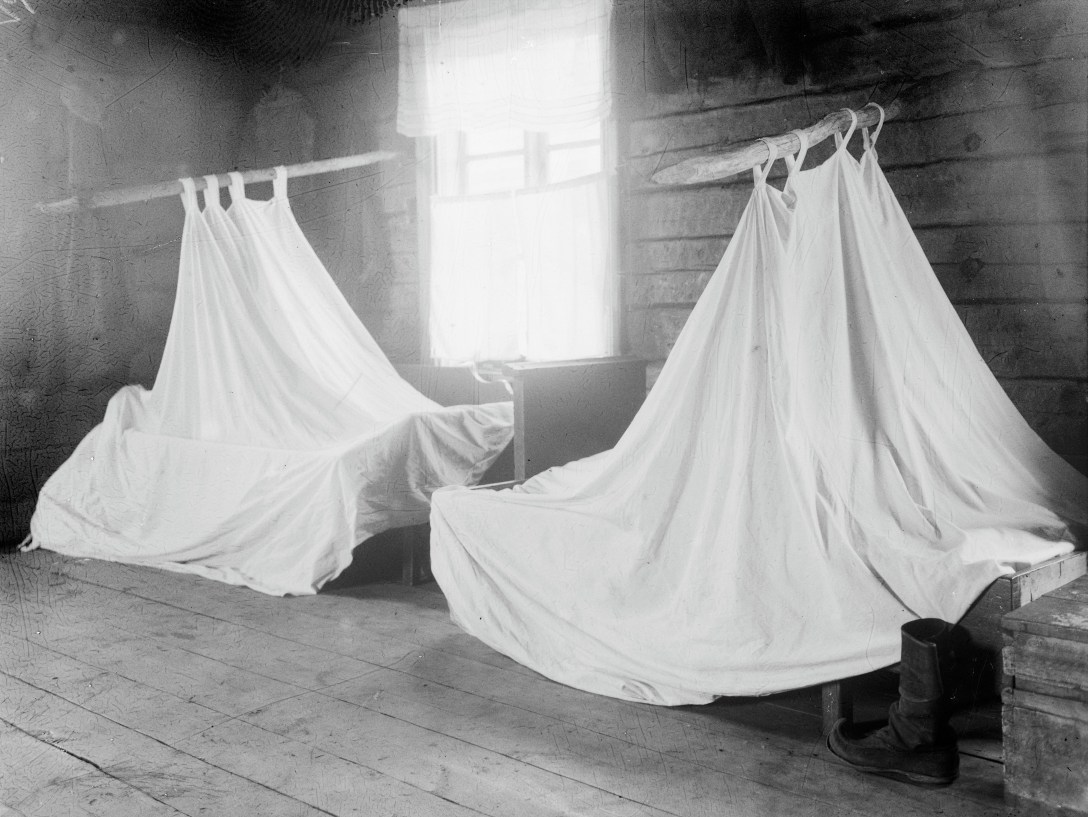
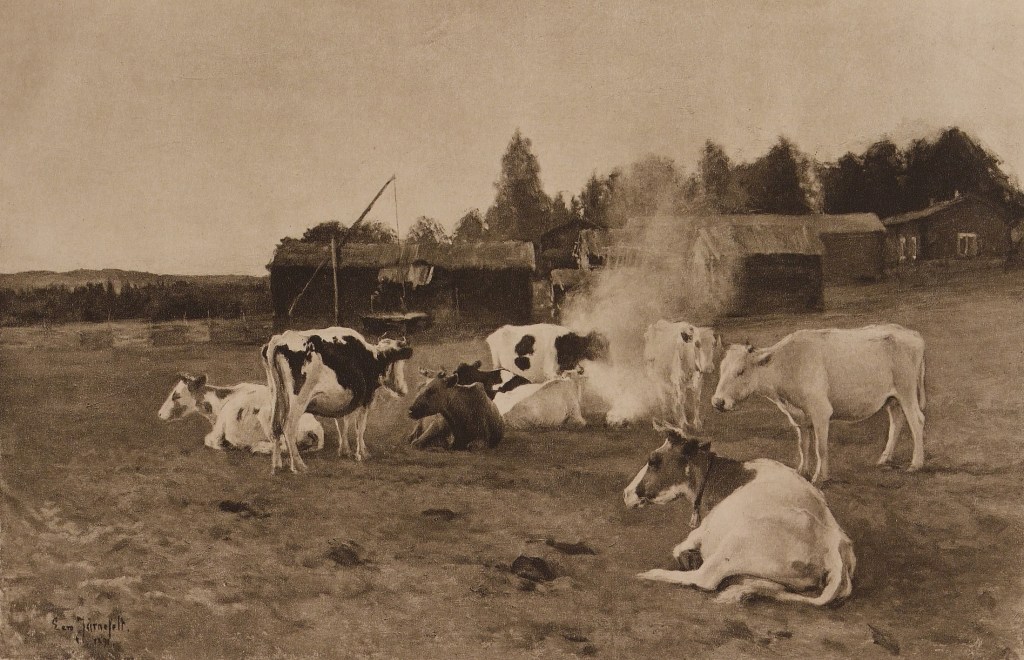
‘Smoking fire near the cows to keep off mosquitoes and other insects while the cows were milked.’ Eero Järnefelt (1891)
I’m familiar with summer in the Nordics for the most part, but I’ve only recently learned that there are 50-60 species of mosquitoes in the Nordic countries alone. (Imagine how flabbergasted I was to discover over 3,000 species of mosquitoes exist worldwide.) I was also late to learn that it’s only female mosquitoes that feed on blood, while males feed exclusively on nectar.
Any standing water – from a puddle to a gutter to a tyre track – can host a breeding ground and then a nursery for developing larvae. Iceland’s lack of standing water is one reason mosquitoes haven’t managed to get a foothold.
“…as I made my way round their boggy breeding grounds they rose up to meet me in dark, swirling clouds, insinuating themselves in my clothes, choking my mouth and smothering every inch of my skin in bites. As I saw my hands beginning to swell, I ruefully consoled myself with the thought that at least I would not contract malaria, because my tormenters belonged to the genus Aedes which, happily, are not carriers of the disease.”
Walter Marsden, Lapland: The World’s Wild Places
*Soon after reading this – bear in mind Lapland was published in 1975 – I found out that mosquito-borne diseases such as malaria are spreading across Europe due to the climate crisis.
Early explorers of the North described mosquitoes as ‘worse than the cold,’ and ‘the one serious drawback of the north.’ I’m surely not the only one who relishes the vision of fumbling English gentry being set upon by mosquitoes, which have also been called ‘a frightful curse,’ as well as, quite fabulously, ‘…devils…armed with a lancet and a blood-pump…’
“In the summertime in Iqaluit, the capital city of the Inuit-administered Canadian territory of Nunavut, swarms of insects hover above the inhabitants like cartoonish clouds of gloom as they go about their day-to-day lives.“
Kate Press, Briarpatch Magazine
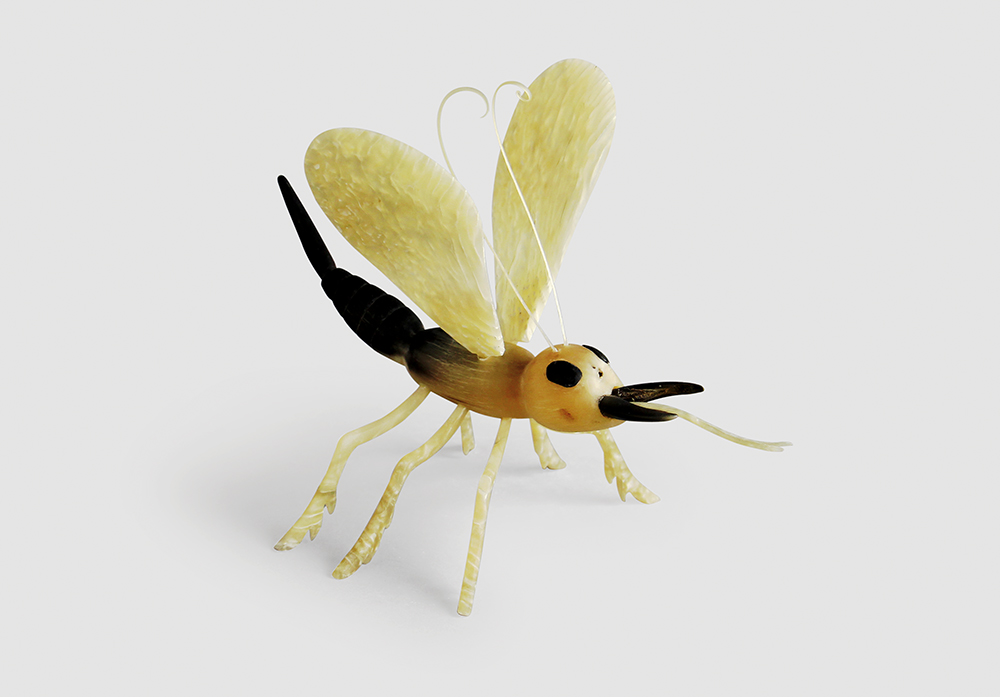
Igah Hainnu Mosquito (2016) Muskox horn, seal whiskers and seal claws
Many indigenous peoples of the Arctic viewed mosquitoes as something sent to ‘test endurance.’ For the Sámi, enduring harassment from mosquitoes was a way of proving hardiness. Young herders and hunters were expected to tolerate swarms during migration and calving season without excessive complaint. Jonna Jinton, an artist living in northern Sweden, endures the biting plague with humour, as demonstrated in this tongue-in-cheek mosquito meditation video.
In the Swedish town of Övertorneå, the community hosts the World Championship in Mosquito Catching, where the winner is the person who catches the most mosquitoes in just fifteen minutes, earning a cash prize and being crowned world champion.
In Finland, one of the Nordic countries I’ve yet to visit, these micro-predators have their own signs, and there’s a history of ‘mosquito bravado.’ Especially among the likes of fishermen and loggers who work amidst clouds of mosquitoes.
“We were breathing hard now, sweating in the afternoon haze and mobbed by a few thousand mosquitos each. Every square inch of exposed skin was smeared with Vietnam-issue jungle juice, stuff that dissolves plastic buttons and burns like acid in your eyes. It kept the actual blood loss down to a level that didn’t threaten death, but that wasn’t the real problem. It was the psychological warfare, airborne water torture. You felt the constant patter, and knew that your back was crawling with living grey fur, hundreds of relentless snouts probing for a chink in your armour. A hand wiped down a sleeve would come away sticky, smeared with corpses, and you strained them through your teeth.”
Nick Jans, The Last Light Breaking: Living Among Alaska’s Inupiat Eskimos
In the 1970s, the Inuk community leader Abe Opic wrote an essay called What it means to Be an Eskimo, where he, justifiably, compared white people to mosquitoes: “There are only very few Eskimos but millions of whites, just like the mosquitos. It is something very special and wonderful to be an Eskimo – they are like snow geese. If an Eskimo forgets his language and Eskimo ways, he will be nothing but just another mosquito.”
Michael MassieThe Endurance Game, 2016, serpentinite, bone, birch, ebony and brass
The Inuit have several stories about how mosquitoes came to be. The one you’re about to read was told to the Greenlandic/Danish explorer Knud Rasmussmun by Inugpasugjuk, a member of the Nattilingmiut Inuit community.
There was once a village where the people were dying of starvation. At last there were only two women left alive, and they managed to exist by eating each other’s lice. When all the rest were dead, they left their village and tried to save their lives. They reached the dwellings of men, and told how they had kept themselves alive simply by eating lice. But no one in that village would believe what they said, thinking rather that they must have lived on the dead bodies of their neighbours. And thinking this to be the case, they killed the two women. They killed them and cut them open to see what was inside them; and lo, not a single scrap of human flesh was there in the stomachs; they were full of lice. But now all the lice suddenly came to life, and this time they had wings, and flew out of the bellies of the dead women and darkened the sky. Thus mosquitoes first came.
If you do head to the far North, where the waters lie still and light lingers long into the night, wear long-sleeved shirts (doubling up is advised), socks, and trousers made from dense material. Wear a head net if you have access to one and remember that repellent loses its effectiveness when you begin to sweat. If you think you can escape them by going a bit further North, I should warn you that these blighters are now appearing in places where it was once too cold for them, which is, to put it lightly, worrying as fuck. We all know the North is warming, but the migration of mosquitoes makes it ever more painfully real.
I don’t want to abandon this post without attempting to lighten the mood (for you and me), so if you’re interested in seeing what it’s like to sit in a Finnish forest during summer, this gentleman can show you.
I regularly feel the need to downplay my delight about things that excite me, because, unrestrained, my enthusiasm can make people feel overwhelmed and awkward, especially if they’re mostly familiar with my depressed state.
It’s a good thing, then, that when I’m forest wandering, I’m almost always alone because forests bring out the best in me, especially forests in Sweden, which are heavily occupied with boulders.
Encountering boulders on my wanderings is always an ecstatic experience, and I can recall most of my meetings with remnants of ancient bedrock (or petrified trolls, as I’d prefer to believe) with gut-glass clarity. I have memories of wildly circling my Swedish ex like a border collie pup, tugging at his clothes and begging him to come to the woods and see the boulders I’d found on my daily hikes.
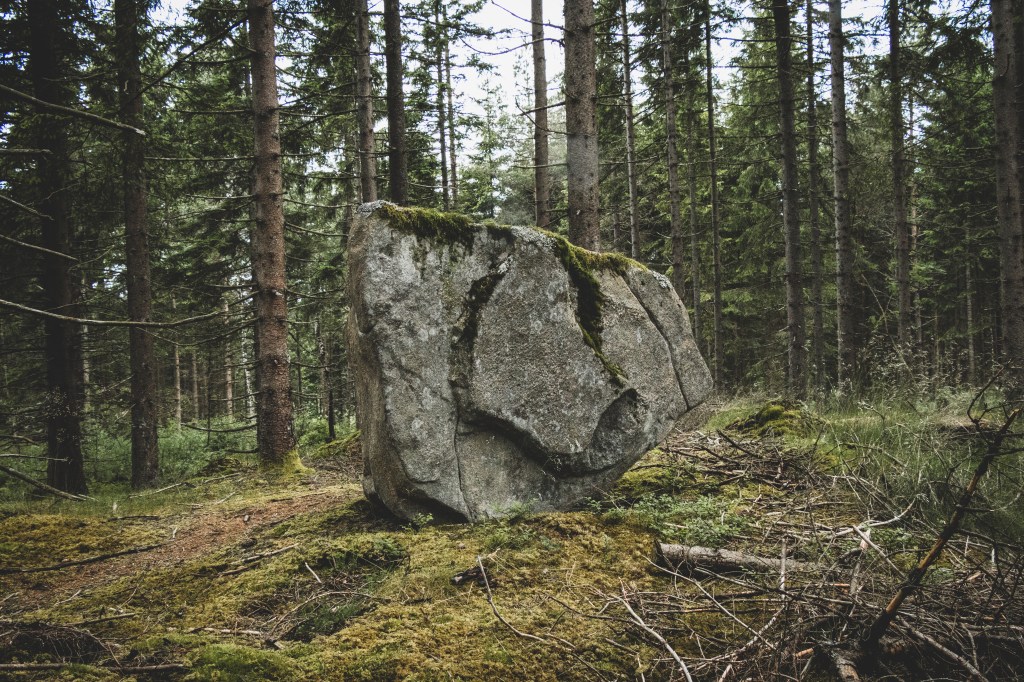
I glimpsed this boulder through the trees, and to reach it, needed to stray from the path, which I happily did. I rarely stay on any footpath for long anyway. The bliss I experienced in the presence of this, let’s admit, very beautiful rock, was something I wish I could bottle and give to people who don’t experience life as a highly sensitive neurodivergent wyrdo who gets blissed out by boulders.
Sweden was heavily glaciated in the last Ice Age, and the boulders – official title: glacial erratics* – were swept up during the advance/retreat of the glaciers and deposited where they currently sit. I don’t think this will ever cease to boggle my mind. I know I’ll probably be wondering forever about this boulder’s tale and its migration to where I found it in a serene, sun-dappled forest glade in the north.
*You may be as nerdishly thrilled as I to know that the word erratics comes from the Latin word errare, which means ‘to wander.’



 Northern Fever