Roadtrip Around The South Of Iceland : Part One

I don’t live within easy reach of nature at the moment. What I mean by this is I need to take a train or snag a lift to get somewhere wild. These days, soothing my soul in the countryside is a whole endeavour. Because of the ADHD burnout I’m currently experiencing, ‘ a whole endeavo­ur’ isn’t doable every time I need to connect with the land.

When I visit my partner in Iceland, the sentence he hears most is, ‘Can we go on a hike?’ When I’m there, on that almost uninhabited island (the population is under 400,000, with around 60% based in the capital Reykjavik), my tense, terse, tired soul is nurtured by its wildness. I don’t fully understand the surreal place that is Iceland, but I know what healing feels like, and healing is what the nature of the Far North gifts me in droves. 

I was teetering on the edge a few days before visiting my partner earlier this month. Finnbjörn had promised we’d go on a road trip around the South, and as I sobbed down the phone, he kept reminding me to think of our journey and the landscapes we’d see.

The plan was simple – to stop wherever we thought looked interesting (within reason), overnight in his uncle’s Tesla and exhaust our camera batteries by capturing the landscape around us. One of Finnbjörn’s strengths is planning trips. As I flipped through a Lonely Planet guidebook, trying to re-familiarize myself with places I hadn’t seen in years but not really having the attention span to do so, he gently suggested locations we might stop at and logged the places in his phone whenever a place piqued my interest.

We didn’t know how long we’d be on the road. Finnbjörn optimistically estimated three or four nights and waxed lyrical about how comfortable we would be sleeping in the Tesla: ‘We have air conditioning and a mattress and a blackout blanket to cover the windows… it’ll be just like a cosy hotel room!’ he enthused.

Spoiler: it was not like a cosy hotel room—not for him. We slept in the car for one night. It was fine for me at my dinky height of 5ft 5, but it was less than ideal for Finnbjörn, who has the height and shoulder width of his berserker ancestors.

***

It was hot and hazy (pollution from the nearby-ish volcano likely contributed to the haze) when we set off from Akranes, a petite harbour town about a forty-minute drive from Reykjavik. The weather felt more Mediterranean than sub-Arctic. But I was feeling, for the first time in a painfully long time, excited and a touch happy. The weather would continue to be (mostly and unusually) glorious for our two-day trip.

The last time I visited tourist sights in the South of the island was in 2011. I spent three months as a conservation volunteer, passing by much time in a minibus, going from place to place. But I was heavily medicated on quetiapine and slept away many, many hours with my head on my then boyfriend’s lap when I should have been drinking in the views. But this time, no longer on pills that knocked me out, it was different – my face was pressed to the window.

Now, I struggle to define my relationship with the Icelandic landscape. So much of it captivates me to the point that it’s almost unbearable. Experiencing the places I feel connected to – even if those experiences aren’t as complete as I crave them to be – fills me with ecstatic energy that it would be idiotic to try to contain. (In other words, I can be quite the nightmare to travel with.)

But there are also parts of Iceland, particularly the flat, barren lands, which bring up many complicated feelings and with which I don’t feel much connection. It could be because the openness of the land makes me feel exposed and vulnerable, though mostly to the thoughts in my head and truths which I find difficult to confront.

Our two-day trip around and about the South of Iceland revived my passion for photography, a passion which had been languishing at death’s door. It hadn’t been part of the road trip plan to bring it back to life, but the old magick of the Icelandic landscape made it so, and fuck am I’m grateful it did.

It’s probably come to your attention that this post isn’t a ‘typical’ road trip blog – if there even is such a thing – but I’ve tried to capture some of the ‘feeling’ of the trip. If I got too much in my head about making this post too tidy and relaying every move we made, it would never get finished. But I hope I can engage you enough over the following photos and few thousand words about some of the places we stopped by at that you’ll feel stopping here awhile was worth it.

*Turns out this behemoth of a post is going to be in two parts because I’d like to go to bed at a godly hour and I don’t want to give you even a smattering of writing that I’ve rushed.

Reynisfjara

At the Southernmost tip of Iceland, 112 miles from Reykjavik (about a two-and-a-half-hour drive), is Reynisfjara, also known as ‘that beach where Solstafir shot some of the Fjara video,’ also known as The Black Beach and also known as one of the most dangerous places in Iceland.

The reason it’s one of the most dangerous places? People believe they can outwit the infamous sneaker waves, colossal coastal waves that appear suddenly amid a train of smaller waves. They rise faster than anyone can run, and the currents are brutal.

There are no lifeguards (rescue missions are too risky) or security measures at Raynisfjara – other than the gigantic signage at the entrance down to the beach, which is impossible to miss unless you’re registered blind. Above the signage depicting the ‘zones’ of the beach are three lights, and the colour of the lights indicates the conditions of the beach and instructs visitors on which ‘zone’ they’re able to enter.

Many people were ignoring the zone system, and despite the mentioned sign saying BE CAREFUL, DON’T GO NEAR THE WATER, people did, like the two women I watched skimming stones across the frothing surf. I’m under the impression that many people think that following safety guidelines will diminish their experience of the Icelandic nature they’ve flown however many thousands of miles to experience.

I felt tense at Rynisfjara, overwhelmed by the bustle of people and anxious about the recklessness of the folk wandering too damn close to the water. Finnbjörn took a photo of me and said he’d edit it so it looked like I was there alone. ‘It’ll confuse people when they see a picture of this place so quiet,’ he chuckled. Spoiler: Nobody on Facebook noticed. The few photos I captured were of the sea stacks which folklore says aren’t sea stacks at all but trolls caught out by the sun.

In the Fjara video there’s a young woman barefoot on the sand, and whenever I re-watch it, I wince because that sand – actually lava from nearby Katla’s historic eruptions – is sharp. The sharpness is a sign of how ‘geologically young’ the sand is, as it’s yet to be smoothed by the sea. For those who like deep diving into THE MOST RANDOM THINGS, there’s more about Reynisfraja’s sand – including magnified sand grains because tell me who doesn’t want to see magnified grains of sand – here.

A few days after I arrived back in the UK, there was a report about a man who had swum in the sea at Reynisfjara, which is, of course, forbidden. Photos of him emerged on the Facebook page Stupid Things People Do In Iceland, and, honestly, I think he probably did it to see if he’d end up there.  

Seljalandafoss

I have no doubt you remember Eyjafjallajökull, the volcano – whose name I’m now able to pronounce after years of practice – whose eruption closed Europe’s air space for a while. Well, it’s from here – Eyjafjallajökull is technically an ice cap covering a volcano – the water of Seljalandafoss originates.

It is the only waterfall in Iceland you can circle completely (to my knowledge, feel free to correct me). Finnbjörn did the walk. I did not. He was overheated – his name translates to polar bear, and he very much embodies the king of the north – and needed a refresher. I was content with keeping my camera dry. When he came out from behind the falls, he was more alive than at any other time during the trip.

However, what with it being a popular stop for bus tours and basically anyone on the Southern Ring Road, there was a lot, a lot of people and walking anywhere near the waterfall without getting in the way of someone was nigh on impossible. There was a lengthy queue to stand in the spot where I’m standing in this photo. Waiting to take my place in front of the waterfall felt all kinds of unnatural, however for the briefest moment when I wasn’t fanatically worrying about the other people waiting for the spot, a rainbow and then another bloomed from the mist, and I felt euphoric.

For those who’d like another random deep dive, in the 1986 film The Juniper Tree, a young Bjork is seen walking behind Seljalandafoss.

Skógafoss

Skógafoss, astonishingly, wasn’t as peopled as Seljalandafoss, and it was easier to be in its presence and power. As a Pagan, I find the divine in nature, and when there are too many distractions—most often in the form of people—it can be challenging to connect with the landscape in the truest sense.

Skógafoss has quite the presence in popular culture and is, unsurprisingly, one of the most photographed waterfalls in Iceland. You’ve likely seen it somewhere, even if you still need to visit the country. It’s the waterfall in the TV show Vikings that led Floki to believe he’d discovered the home of the gods and it also appeared in the aforementioned Solstafir video. You might also recognize it from Game Of Thrones where it was a main feature in this scene with Jon Snow and Daenerys Targaryen.

I wanted to climb the 527 steps up the side of the falls to an observation platform, but we still had a way to go and much to see and it’s a good job we did leave because if we’d arrived at the following destination too late, the disappointment would have destroyed me.

Skógar Museum

We arrived at Skógar Museum an hour before closing time. After thirty minutes of excitedly darting about, trying to see as much as I could, I knew it would become my favourite museum in Iceland, trumping even The National Museum of Iceland and absolutely trumping The Icelandic Phallological Museum.

Founded in 1949 the museum initially occupied one room at Skógar Regional School, with exhibitions in classrooms during the summer holidays. Today, it’s made up several buildings, including ten old houses, and is home to more than 18,000 artifacts. I wasn’t in the least bit surprised to discover that it’s considered one of Southern Iceland’s most treasured cultural attractions.

A jawbone toy ‘horse.’
Tobacco pouch made from a ram’s scrotum.
Skulls were typically used as milking stools.

Among the old houses – from various places in the South of Iceland that were taken down and reassembled at the museum – is a house from 1878 made entirely from driftwood.

The displays of artefacts – which you can get up close to – felt so carefully considered and lovingly arranged. There was no air of pretentiousness or surveillance. The ambience was so warm and so welcoming, to the point where I whispered, ‘I’ll come back soon and spend hours here with all of you,’ after mere minutes. I felt inspired, gleeful and kept having the urge to laugh.

Interestingly, just this afternoon, I watched a documentary about the museum featuring its founder, Þórður Tómasson, who curated the museum until his retirement at 92 in 2013. Seeing how he engaged with the artefacts and the visitors in the documentary made me think he had been spiriting around the museum by my side.

A Nostalgic Yearning For The North – Photographic Finds From The Public Domain Review

Thus far, 2024 has been disorientating, exhausting, painful, maddening and swift. So swift. Too swift. Since doing my initial ADHD assessment over a year ago, I’ve been struggling to come to grips with the reality that I’ve been living with this condition my entire life, and it’s only just coming to light as I hurtle towards my 40s. I’ve also been grieving everything that ‘could have been.’ But I’ll write more about this on my other blog awyrdofherown.blog when possible. 

Around midnight last night, too tired to read, I flickered around on Pinterest, looking for… I’m not even sure what. At some point, I landed on this knitted cape, leading me to Little Scandinavian, where I ended up on a post about The Scandinavian School in London, which looked like everything I would want for my daughter in a school, but whose gigantic fees were painful to read. It’s ridiculous, laughable even, that I let the fees of a school in a city where I don’t even live upset me.

I should have gone to bed then but didn’t. My mood was wounded. So I decided to scout out an image for the cover of my next book and ended up on The Public Domain Review – a treasury for the insatiably curious creative – which I combed through for Nordic bounty. 

While I furiously bookmarked articles and added, to my already gridlocked desktop, old photographs of Norwegian fjords and Icelandic fishermen, I thought about producing an art appreciation post of some of the stuff I unearthed.

For the longest time, ‘art appreciation posts’ and ‘I-saw-these-things-and-thought-you-might-like-them-too’ posts were the lifeblood of my blogs. But then I gradually stopped making them, and I’ve missed making them, and am now on a mission to eradicate the idea from my head that making them ‘is not a good use of my time.’

The articles featured here in order are:

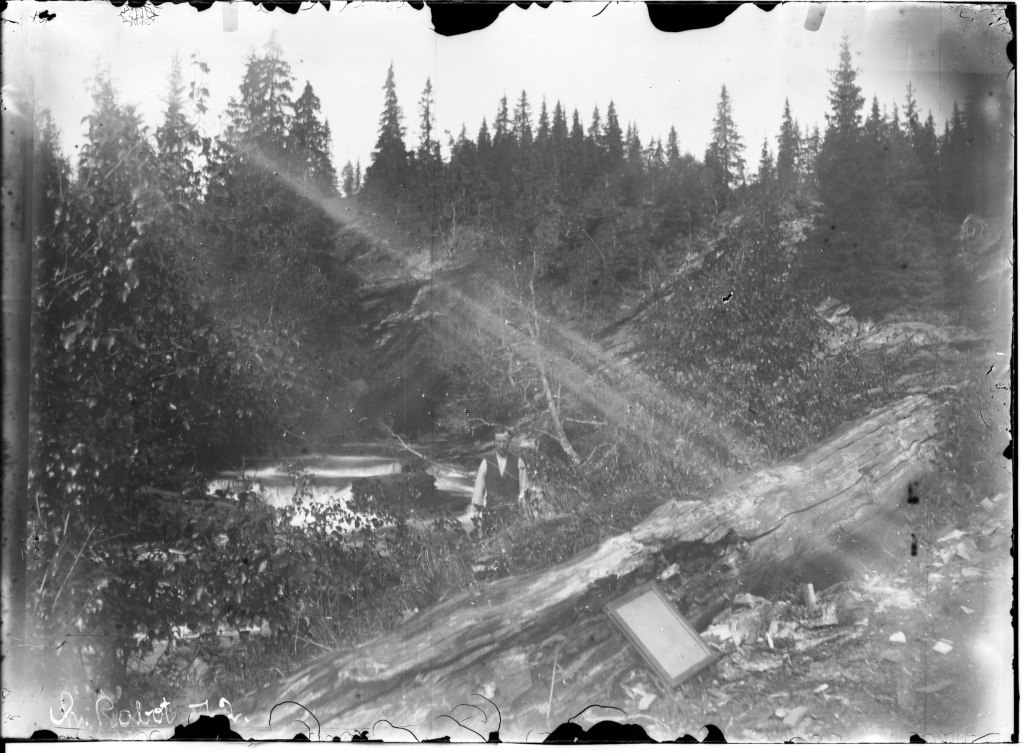
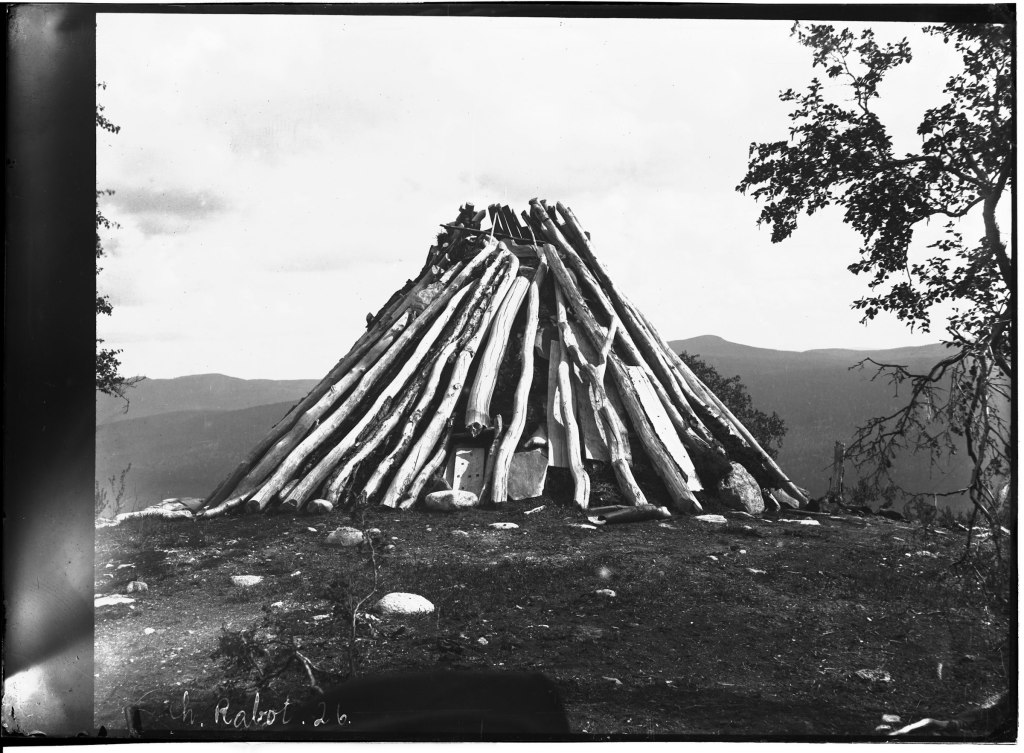
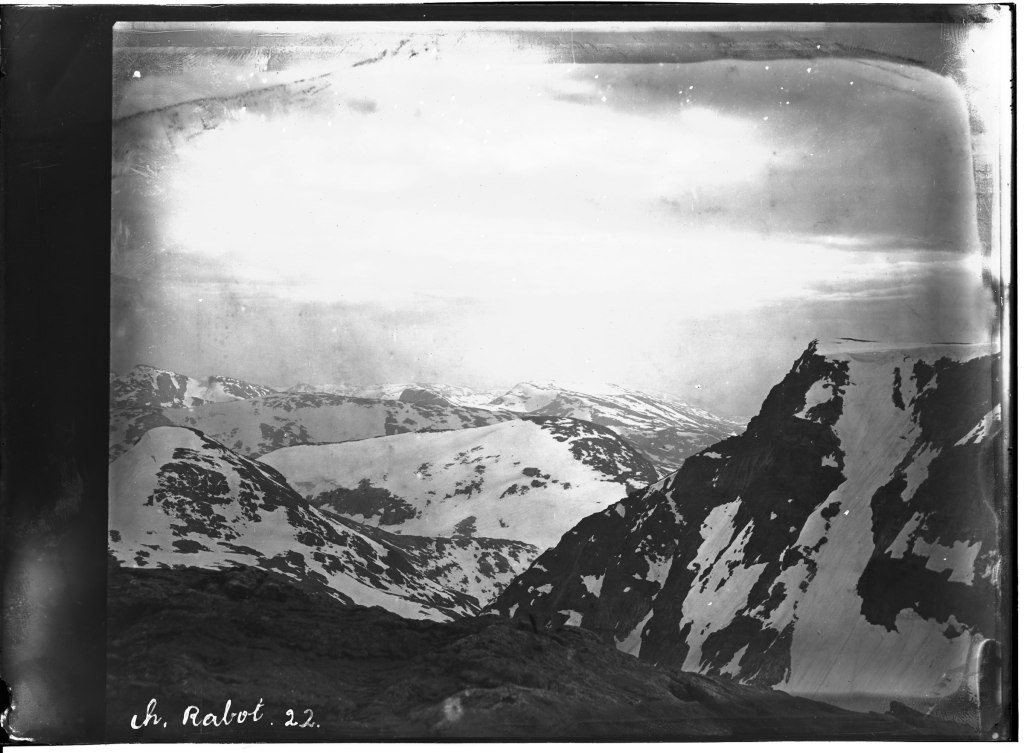
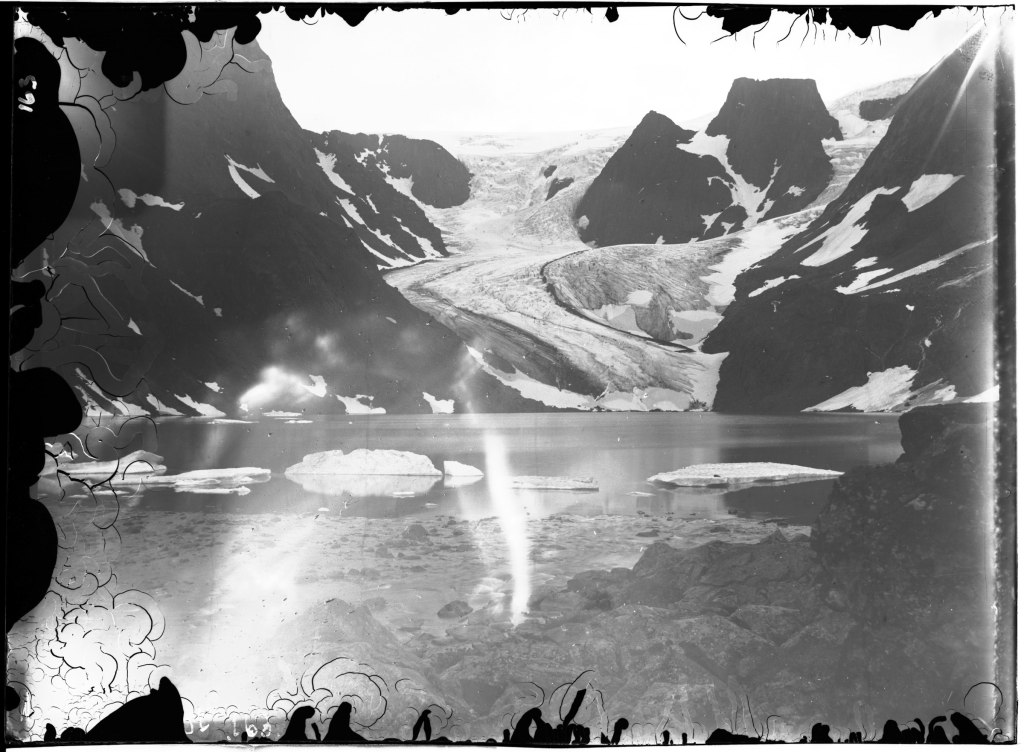
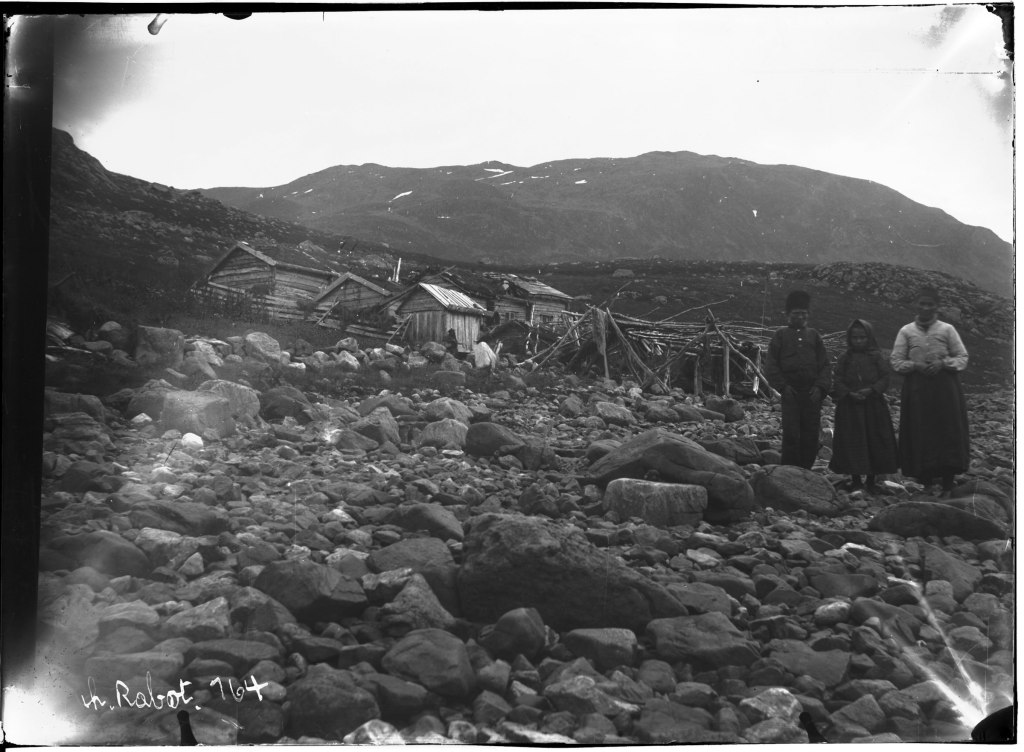
Masters of the Ice: Charles Rabot’s Arctic Photographs (ca. 1881)

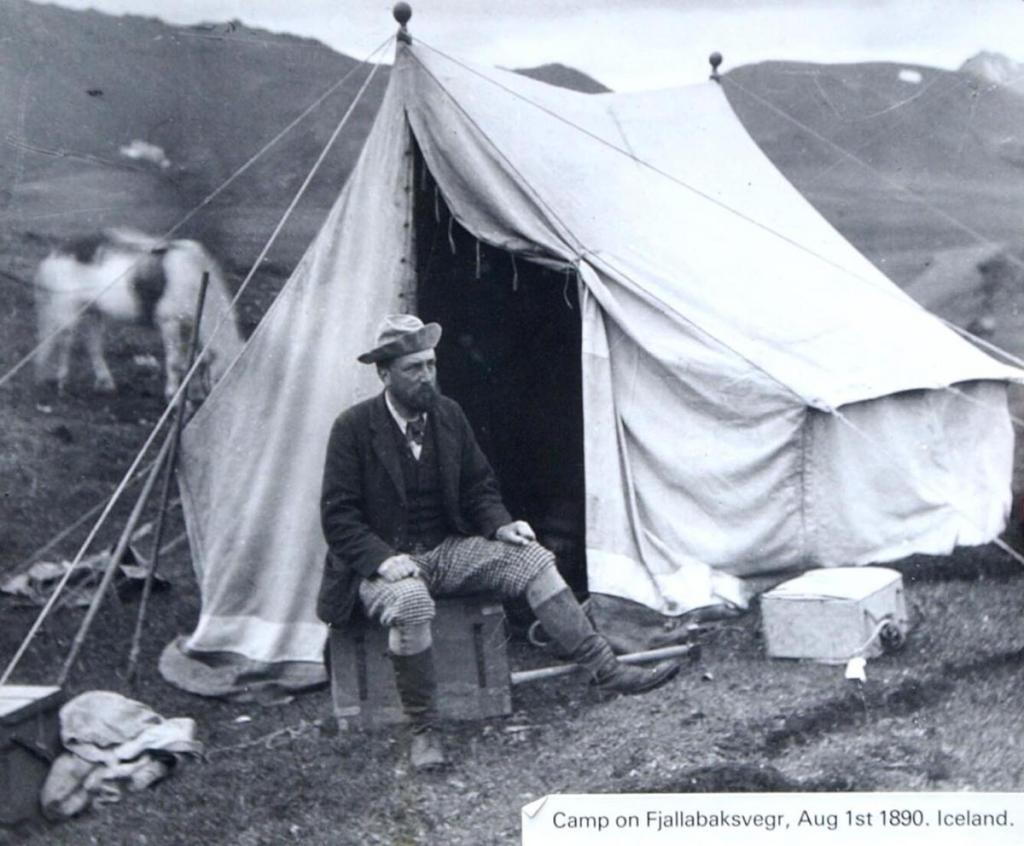
Tempest Anderson: Pioneer Of Volcano Photography

 Lantern Slides Of Norway (ca. 1910)

The first thing to catch my attention on The Public Domain Review was this striking, slightly sinister portrait of French geographer, glaciologist, and photographer Charles Rabot. This picture led me to a stupendously readable essay about Rabot by Erica X Eisen (whose other work I’m going to consume with gusto). Rabot had a ‘particular affinity for Norwegian culture…’ and his awe of ‘boral landscapes’ and ‘nostalgic yearning’ for the north is something I strongly identify with: 

They are so beautiful, so magnificent, those deathly solitudes, so strange in their fleeting finery of brilliant colors, that they always leave one with a burning desire to see them again.’ – Charles Rabot

Eisen’s writing is astute and memorable – the following passage in particular ‘If there are any people to be seen in these snow-pied expanses, they are tiny afterthoughts so overwhelmed by the whiteness around them that any individuating features are obliterated completely — to the extent that these figures seem less like the protagonists of the shots and more like another accidental void bitten into the negative by the frost.’

The first person to climb Kebnekaise, Sweden’s highest mountain, in 1883, Rabot was also friends with the most swoon-worthy of Norwegian explorers, Fridtjof Nansen who’ll be much more thoroughly swooned over in another post where I’ll look at the bizarre but beguiling topic of fancying long-dead polar explorers.

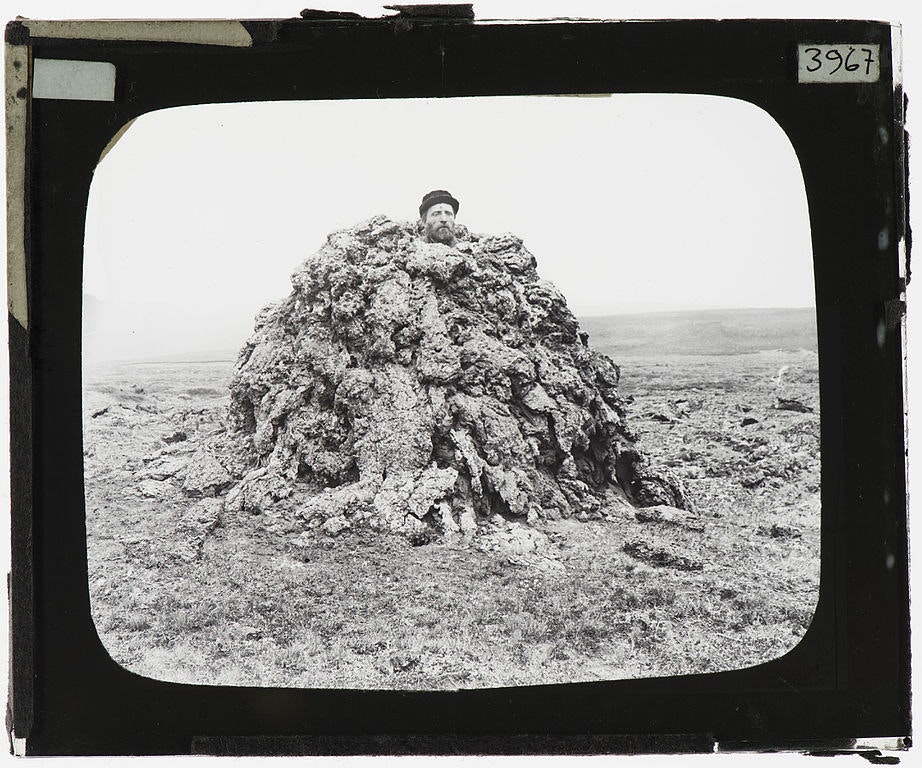
When I searched Iceland on The Public Domain Review, ‘ volcano chaser and pioneer of volcanic photography,’ Tempest Anderson showed up with one of the most gloriously surreal photographs I’ve ever seen.

Very much intrigued by the name Tempest, I was convinced there’d be a riveting origin story, so was a bit put out to find it was simply inspired by a prominent West Yorkshire family. 

Yet there’s no doubt the man led a life not dissimilar to a windstorm—his list of occupations and accomplishments is…extensive. York-born and bred Anderson was a leading eye surgeon as well as a photographer, an inventor of photography equipment, a consulting physician to a lunatic asylum, a prison medical officer, a Sheriff of York… the list ploughs on. At 43, unmarried and restless, Anderson decided he’d use his spare time to study volcanology and chase volcanic eruptions. The photographs he shot in Iceland were taken using one of the earliest panoramic cameras, which, unsurprisingly, Anderson had developed himself. 

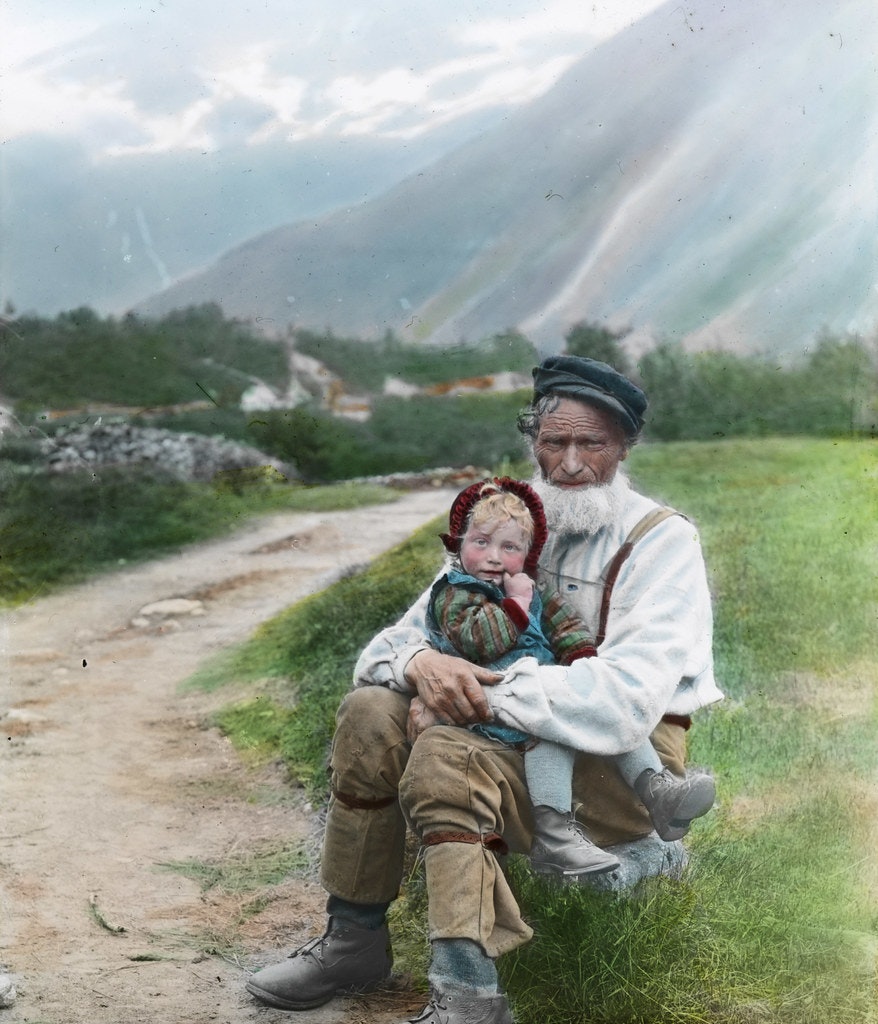
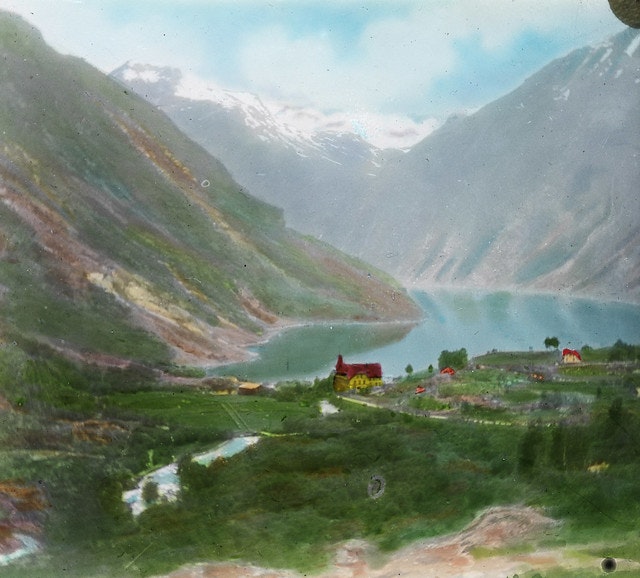
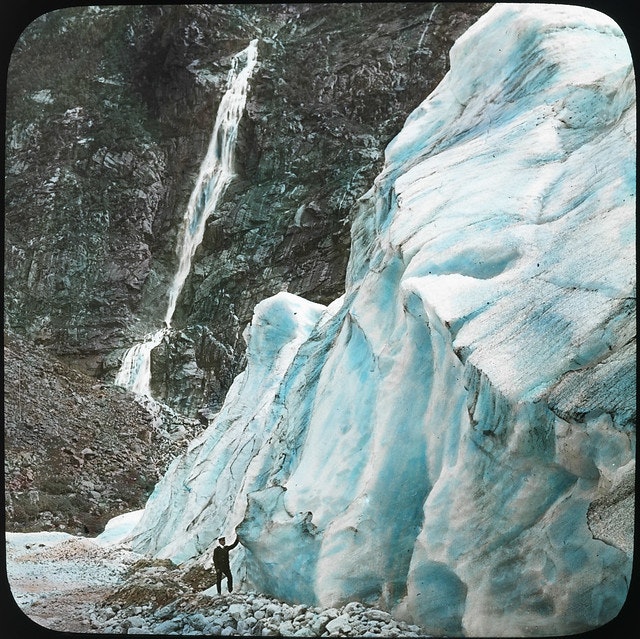
I’ll keep coming back to look at these lantern slides depicting Norway from the early 20th century, and I know each time I do, they’ll thrill me all over again. By the way, for full disclosure, I had to Google what a lantern slide is. 

Lantern slides are positive, transparent photographs made on glass and viewed with the aid of a “magic lantern,” the predecessor of the slide projector. Lantern slide plates were commercially manufactured by sensitizing a sheet of glass with a silver gelatin emulsion. The plate was then exposed to a negative and processed, resulting in a positive, transparent image with exceptional detail and a rich tonal range. – Constance McCabe (National Gallery of Art.)

Produced by British photographers Samuel J. Beckett and P. Heywood Hadfield in my favourite part of Norway – Sogn og Fjordane (now known as Vestland) – these bold, crazily vivid lantern slides are held at the county archives in the fjord village of Leikanger, somewhere I’m going to absolutely seek out when I’m next over by way of the Sognefjord. Right now though, I’d very much like to know what the woman on the steps was thinking when this picture was made. Also, image 4 – haunted to my core.

Hadfield was a surgeon on a ship cruising the Norwegian fjords and an amateur photographer in his free time. Little is known about Beckett, but copies of books by both men (The Fjords and Folk of Norway by Beckett and Fjords of Norway A Cruise On The SS Ophir by Heywood) are available on Abebooks and eBay and are very kindly priced for books printed well over a hundred years ago. 

More Recommended Reading From The Public Domain Review

Season’s Bleatings: Finnish Photographs of the Nuuttipukki (1928)

Aurora Borealis In Art

Photographs Of 19th Century Norwegians

New Year’s Eve In Iceland

I’ve always found the frenzy of New Year’s Eve overwhelming. The relentless din of fireworks, the roaring countdown, the gargantuan pressure to have THE BEST TIME EVER. It’s just too much. Most of my New Year’s Eves have been spent in bed with my journal, picking over the past year in minute detail.  

My perfect NYE would be in a forest cabin, hours from the closest town, where I’d experience absolute stillness well before and after midnight. If there did have to be noise, I’d much prefer to hear the pattering of hail, or a tree cracking in the cold or a raven cawing rather than fireworks and the deafening screams of HAPPY NEW YEAR! 

But, this year, I was elated to be involved in the celebrations, which included fireworks and hugging at midnight, though thankfully no screaming. My Icelandic boyfriend invited me to spend the evening (though the evening lasts most of the day, with only four hours of light in Iceland at this time of year) with his family and girlfriend (our relationship is open). 

I happily jumped head first into their traditions and felt much more upbeat than usual because the weather was suitably wintery – as it should be at the end of December. It was cold (-6.5 at times), and there was plenty of snow. (In a post on my blog, A Wyrd of her Own, I wrote about how out of sync I felt with the UK’s weather and the gigantic impact this had on my mood over Christmas.) In the UK, on NYE, it was wet, cloudy and blustery, with the temperature well into double figures. 

It’s tradition in Iceland to meet for a family meal between 6pm and 7pm. (We met at 6.30pm), and our meal was made up of typical Jól fare, including caramel-glazed potatoes, red cabbage, Waldorf salad (bound together with an incredible amount of whipped cream), endless bottles of Appelsín (orange soda) and cans of Malt og Appelsín (non-alcoholic malt beer mixed with aforementioned orange soda. Apparently it’s the taste of an Icelandic Christmas in a can.) There was also Toblerone ice cream. Curiously, decades ago in Iceland it became extremely popular as a festive dessert, and after snaffling down two helpings I can absolutely understand why. 

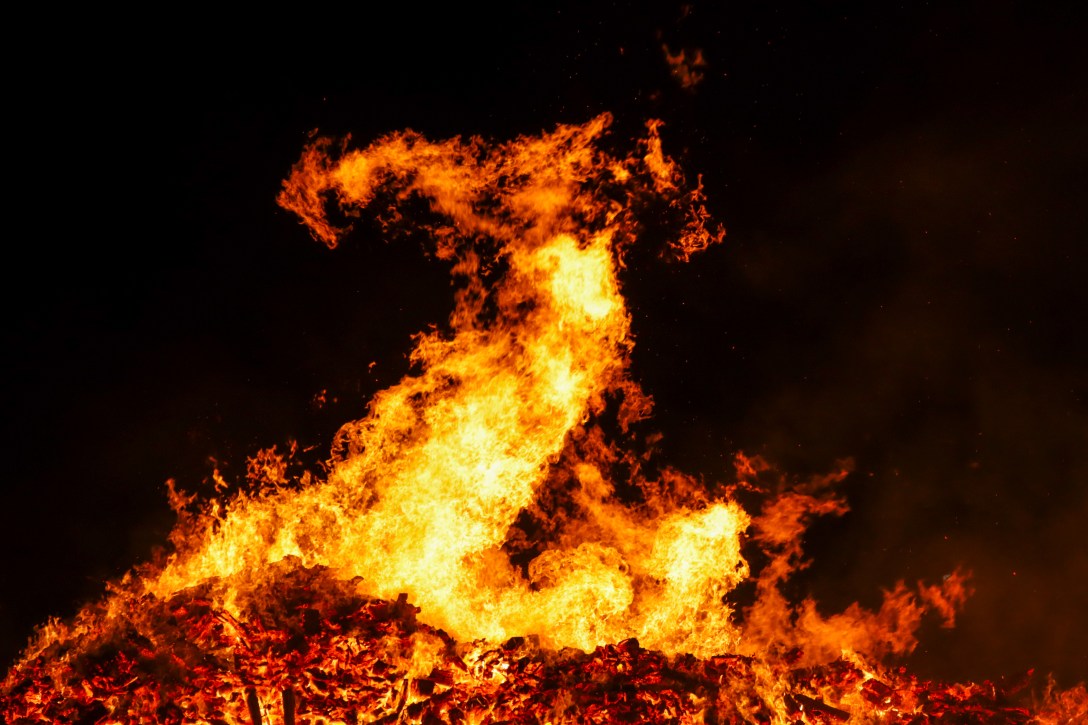
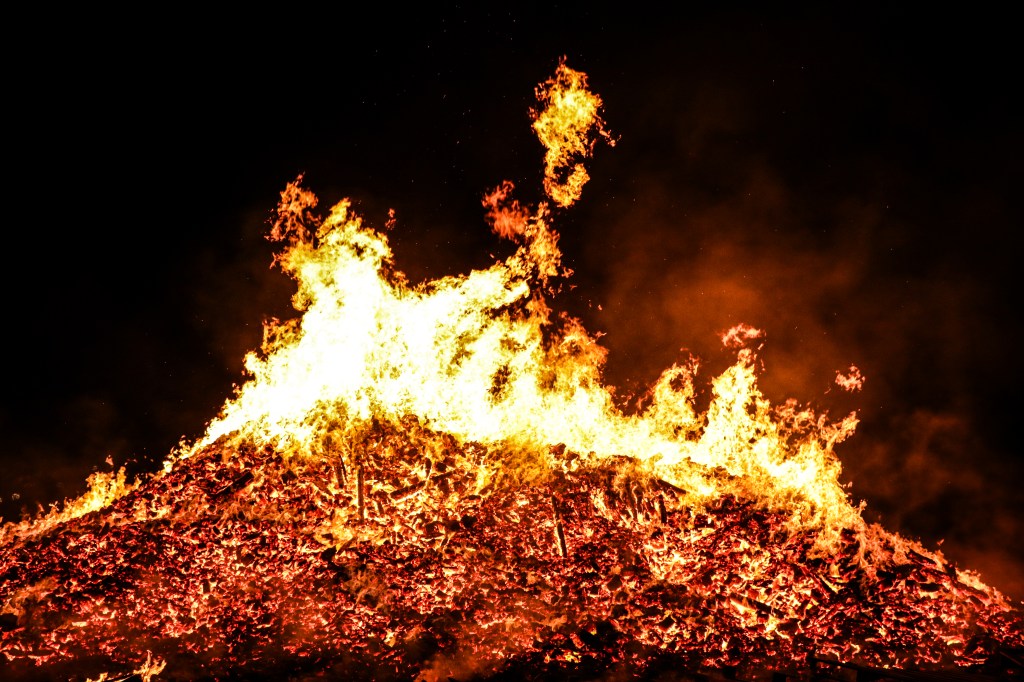
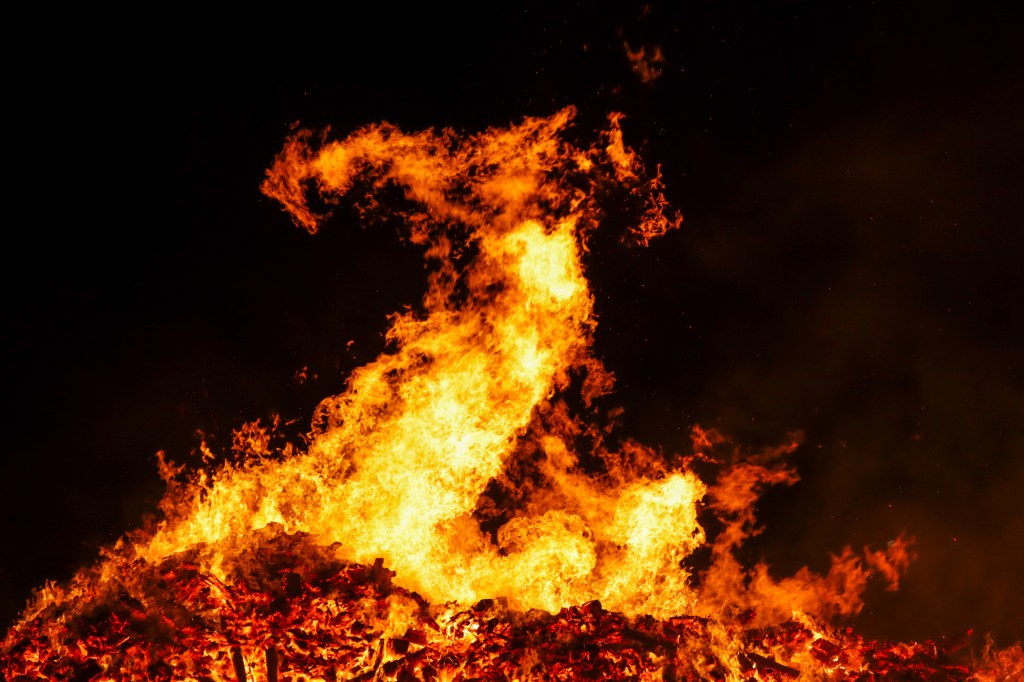
After dinner and heartfelt debates about the existence of elves (according to my boyfriend’s uncles it’s simply not true that 54% of the population believes in them), we tramped across a field of deep snow to wonder at a gigantic communal bonfire. Known as Áramótabrennur, these fires have burned on NYE in and around Reykjavik since the 18th Century and originated from the belief that to have a clean start in the new year, you had to burn away the old year and all that it represented. We went to the bonfire at Geirsnef (you can ogle some of my photographs below), though we had several places to choose from in the Greater Reykjavik area. Across Iceland, around 90 bonfires are ignited on NYE. 

There’s heaps of folklore linked to NYE in Iceland, and the folk tales of Jón Árnason, compiled in the 19th Century, talk of New Year’s Eve as the time when Hidden Folk would relocate their homes and become visible to people. Women would make the home spotless and light a candle in every corner. Once clean, the mistress of the house would walk around it and welcome any passing elves inside by saying, ‘Those who want to come may come, those who want to leave may leave, without harm to myself and my people.’ Leaving candles outside to guide the Hidden Folk was also customary.  

Following the fire, we watched the annual comedy show, Áramótaskaupið (New Year’s Spoof). Broadcast on TV since 1966, it’s become such an central part of NYE celebrations that in 2002, an estimated 95.5% of the population tuned in to watch it. 

After the show, from which I learned that Icelanders call Tenerife Tene (I find it amusing that Icelanders flee a cold volcanic island for a warm one), it was time to bring out the fireworks. Fireworks in Iceland differ from those elsewhere. They’re sold by ICE-SAR, the Icelandic Association for Search and Rescue (a volunteer-led organisation that saves upwards of 1200 people a year), who use the profits – which can reach hundreds of millions of kronur – to update their equipment. 

We watched the kaleidoscopic display from a snowy hilltop. There was no being penned in by thousands of people screaming HAPPY NEW YEAR, and, for the first time, I genuinely enjoyed watching fireworks illuminate the new year. 

There was absolutely zero pressure to have THE BEST TIME EVER, which enabled me, I’m sure, to really have fun. The evening ended with me feeling not overwhelmed but grateful, loved, and calmer than I can ever say I’ve been before on what I’d always thought of as the most highly-strung night of the year. 

The Christmas Cat Of Iceland

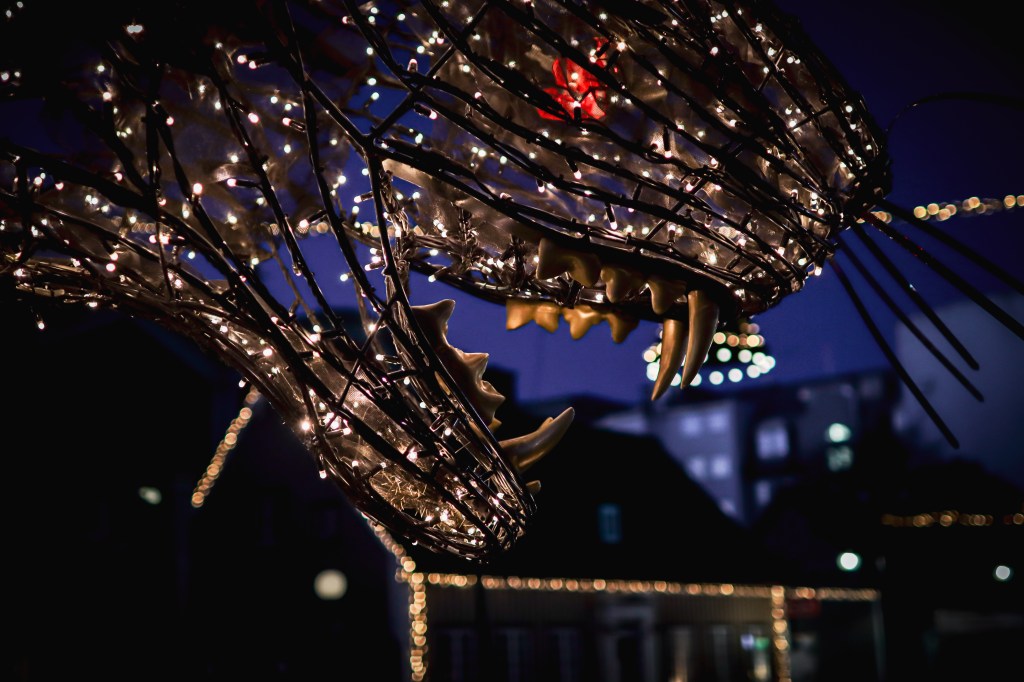
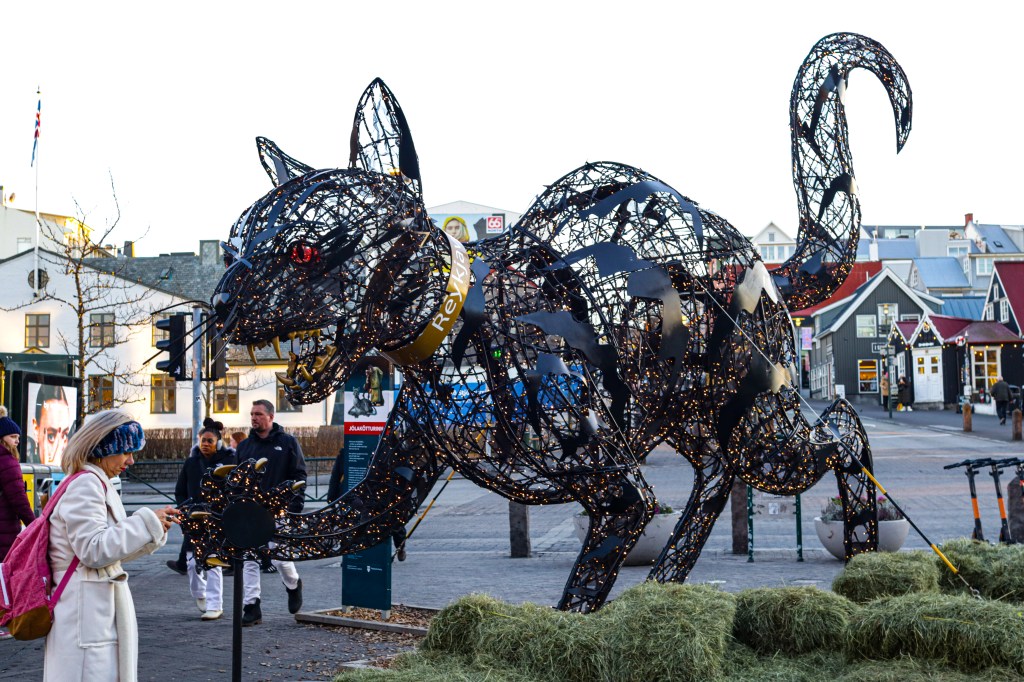
It was still dark at nine-thirty the other morning in Reykjavik (it would be well after ten before the sun shimmied up to provide the city with its scanty ration of daylight) when I bumbled outside to capture the looming Jólakötturinn (the Yule Cat) sculpture in all its ominous glory. 

Every November since 2018, a five-metre-tall iron sculpture, decked out with 6,500 LED lights, depicting Gryla’s child eating floofy familiar (some attribute the inspiration for its ‘floofiness’ from the Norwegian Forest Cat) who eats children who don’t get new clothes for Jól has materialised in the centre of Reykjavik to herald in the season the traditional Icelandic way – with foreboding.  

The sculpture cost the city a ‘sensible’ 4.4 million ISK and was fabricated by Austrian company MK Illumination. A garden centre owns it, and they lease it out each year to the city for a ‘steal’ at just over 3 million ISK.

Reykjavik’s Jól décor tends to be conventional, with the city reusing lights and garlands yearly. (Though I favour the cosy understatedness over most other cities I’ve seen ‘glowed up’ for Yuletide.) So, the sculpture’s arrival in 2018 was quite the talking point.

While the Yule Cat gathered much adoration (it was welcomed with a speech and a children’s choir), there was some backlash, too. One critic, Sanna Magdalena Mörtudóttir of the Socialists party, was critical of the city’s priorities and was furious the struggle of the city’s low-income families wasn’t brought up during the opening speech. 

While cats have held a prominent role in Nordic society since the Viking Age, it’s unknown how long the Yule Cat has been around. Though it’s theorised he’s been prowling since the Dark Ages. We do know that he’s stalked written records since the 19th Century. 

As Kathleen Hearons writes in Head Magazine, ‘Cats were the travelling companion of choice for Vikings – although not for sentimental reasons, but rather to kill mice and be skinned for their fur. Consequently, feline populations grew throughout the Nordic countries when the Vikings settled there. To this day, Reykjavik is “culturally a cat city,” according to Reykjavik Excursions. As of August 2022, there was a cat-to-human ratio of 1-to-10…

In bygone times, the threat of the Yule Cat would frighten children (and, without doubt, some adults) into finishing processing the autumn wool before Jól. By the Middle Ages, the export of wool from Iceland played a valuable role in the economy, and having a prosperous wool production was imperative. 

Though this fear-mongering technique ensured laziness was all but eradicated in the last part of the year, it was also a superb encourager of family bonding, as everyone in the family had a role to play and would gather around the fire in the evenings to prepare yarn and knit.

In an article for the Reykjavik Grapevine, Ethnologist Árni Björnsson says, ‘After 1600, there are a lot of changes in Icelandic society. Folklore often mirrors what’s happening in society. So, it makes sense that Grýla and the yuletide lads are grimmer during this difficult time for Icelanders. In 1602, the Danes banned Iceland from trading with countries other than Denmark, and this was tough because Iceland relied on many imported goods. To make matters worse, the colder period in Iceland also sets in around 1600.

 So, those things we call “jólavættir,” or supernatural beings of Christmas—including the yuletide lads, their ogress mother Grýla, and the Christmas cat—those elements were probably incorporated into the Christmas tradition to keep kids in line. Everyone was supposed to work hard to do all the things that had to be done before Christmas, and some people were lazy, you see. So it was said that if you weren’t diligent at working, the Christmas cat would come for you.’ 

In 1746, parents were banned by the King of Denmark from tormenting their children with stories of the Yule Cat, Gryla and her thirteen trouble-making lads as youngsters were becoming too afraid to leave their houses.

In 1932, a book was published by the poet Jóhannes úr Kötlum called Jólin koma (Christmas is Coming), and it featured a poem called Jólakötturinn which brings to life – though in the most family-friendly way – the goings about of the malicious moggy. An English translation was published in 2015 for the Icelandophiles out there. 

You all know the Yule Cat

And that cat was huge indeed.

People didn’t know where he came from

Or where he went.

– The first stanza from Jólakötturinn

Following the publication of Jólin koma, the Yule Cat was, in the words of Áki Guðni Karlsson, writing for Icelandicfolklore.is ‘firmly established as part of an “old Icelandic” pantheon of Christmas beings for generations of Icelanders.’

You’ve probably encountered Bjork’s dungeon synthy musical adaptation of Kötlum’s poem at some point, though I’ve only recently discovered she wasn’t the first person to put it to music. That honour lies with the late Icelandic singer Ingibjörg Þorbergs. There’s also an exquisite version created by Icelandic folk duo Ylja. 

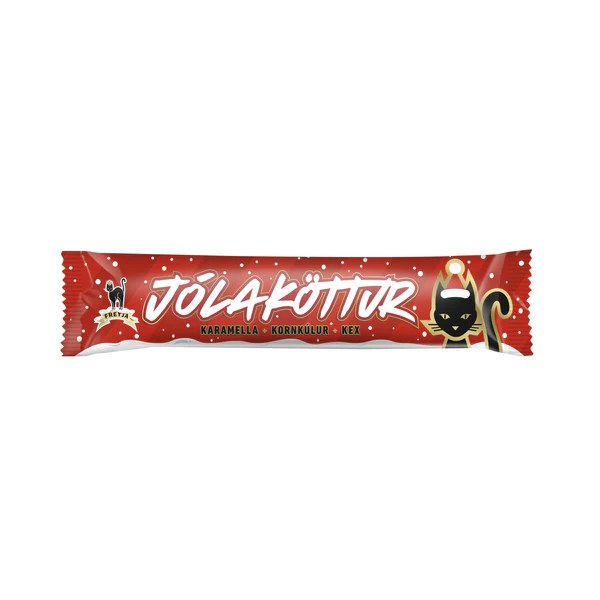
Like his mistress and her thirteen lads, the Yule Cat has long infiltrated Icelandic Christmas paraphernalia and even has his own chocolate bar, ‘Jólaköttur’ (the Christmas version of the famous chocolate bar Villiköttur), a delicious 50g beast of thick milk chocolate, caramel and biscuit all knobbled together with crisp rice.

The innovative chocolate company OmNom released a limited edition winter chocolate bar back in 2018 called Drunk Raisins + Coffee (which featured, among other things, green raisins infused with mandarin juice, cocoa beans from Tanzania, Icelandic milk and Austrian rum) in honour of the Yule Cat and in collaboration with the feral cat rescue organisation Villikettir.

On the OmNom website, Hanna Eiríksdóttir writes, ‘…stray and feral cats are neither evil nor frightening, and they definitely do not eat children. No one really knows how many cats in Iceland are feral or strays,they are thought to be in the thousands. In our minds, the Yule cat is the protector of these Icelandic stray and feral cats. The old folklore reminds us not to turn a blind eye to our little furry friends in need.’

I went back to the Yule Cat sculpture later on in the day. I saw togged-up kids catapulting themselves around in the straw pile surrounding the eternally pissed-looking puss, and now as I write this, I regret not sidling up to the parents and whispering to them, like the total weirdo I am, ‘So, do they think he eats harðfiskur now or…?’ 

North Of Instagram : Ragnar Axelsson

My life changed when I first encountered the work of Icelandic photographer Ragnar Axelsson, through his profound and powerful first book Faces Of The North over ten years ago.

When I was studying Axelsson’s black and white photography, documenting the vanishing ways of life of the hunters, farmers, and fishermen in Greenland, Iceland, and the Faroe Islands I noticed my heart had started beating to a different rhythm.

As much as the north has always been a part of my existence, Axelsson’s imagery made me crave it. Crave it in such a way that learning and writing about these far northerly places – and visiting some whenever I could – became as much a part of my life as breathing, as eating, as sleeping.

As I sit here at my little desk, in a little room, in little England looking at an Axelsson postcard I sent to my parents from Iceland several years ago, I find myself feeling distressed that I’m not as far north as I need to be. However, while I can’t magic myself to Greenland or Iceland or the Faroe Islands right now, I do have Axelsson’s photography to take me there.

If this is the first time you’ve seen Axelsson’s work, I believe, I really believe you’ll come away changed and the north will have a new and deeper significance for you.