A Wolf In Trondheim

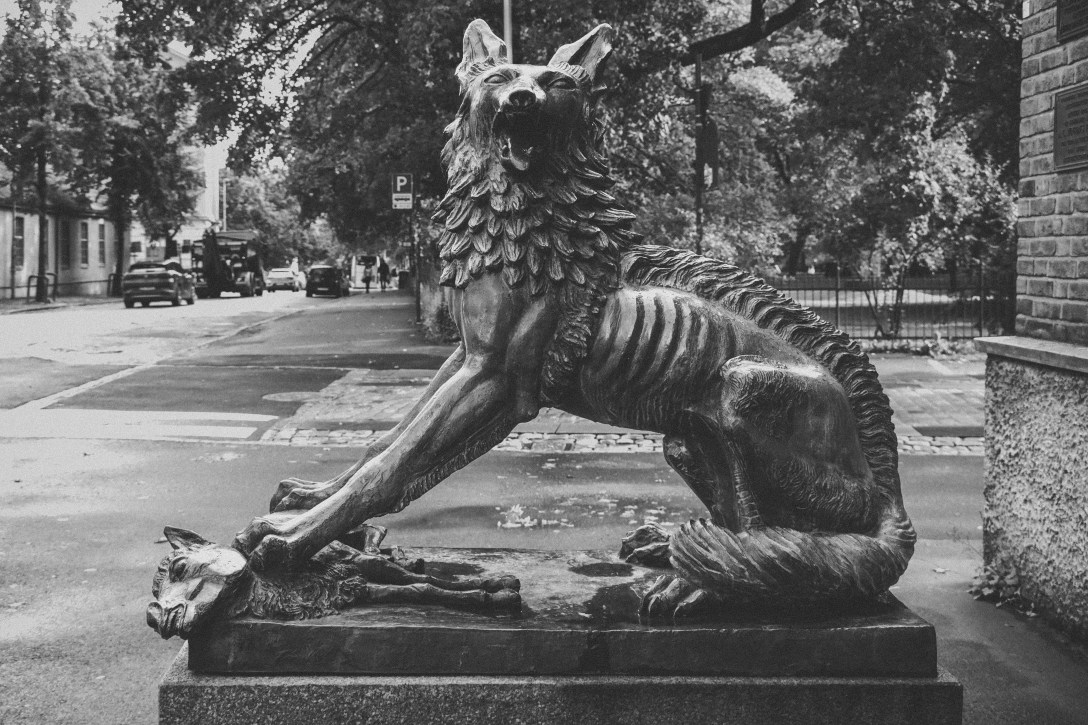
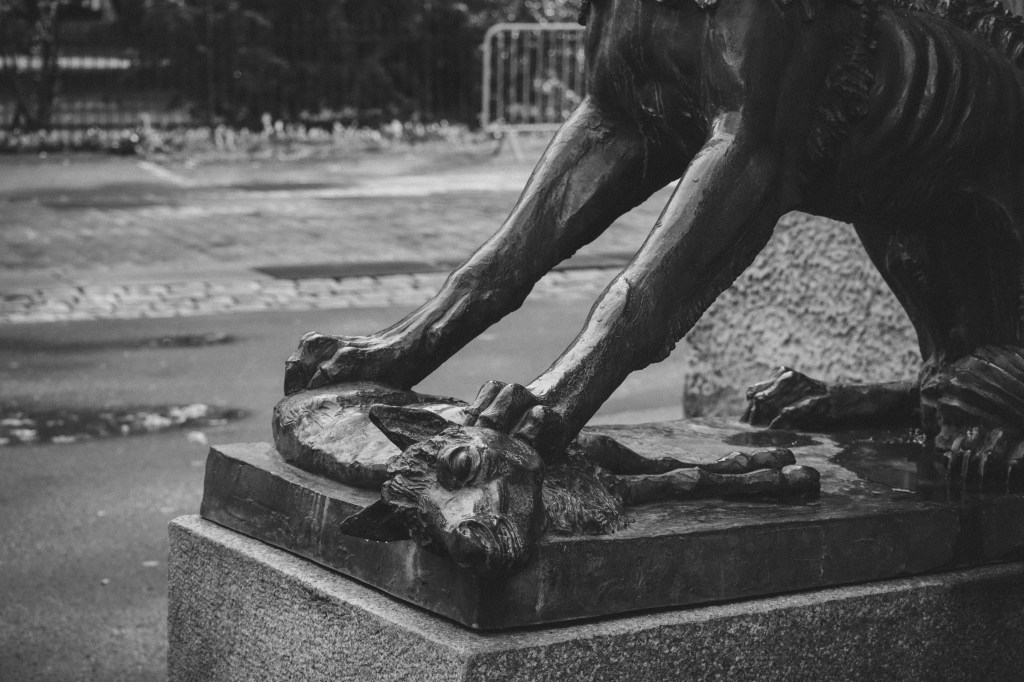
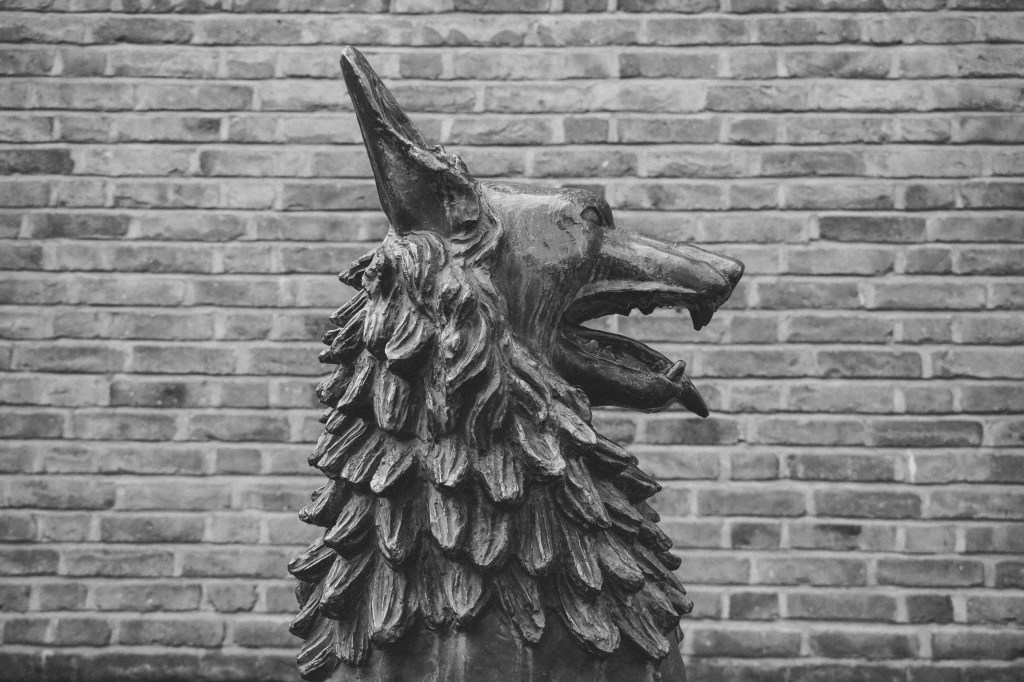
Almost a year ago, I took a trip to Trondheim and, by chance, stumbled across the sculpture Skrubbefar by Norwegian artist Dyre Vaa while trying to Google-map my way around the city. I’ve been meaning to share these photos since the day I took them. In case you’ve ever needed an example of ADHD wielding its power, here it is.

I must have spent about twenty minutes circling the emaciated but still imposing bronze canine that looks like it’s lurked straight out of a folk tale, with those bat-like ears, lustrous mane and lambkin pray. It was one of those encounters where I wanted to shout ‘HEI!’ to every person passing by, gesture wildly to the wolf, and say ‘You seen this?’

Originally created as a plaster piece in 1931, Skrubbefar was cast in bronze in 1970 and has been poised mid-snarl outside the museum ever since.

A Nostalgic Yearning For The North – Photographic Finds From The Public Domain Review

Thus far, 2024 has been disorientating, exhausting, painful, maddening and swift. So swift. Too swift. Since doing my initial ADHD assessment over a year ago, I’ve been struggling to come to grips with the reality that I’ve been living with this condition my entire life, and it’s only just coming to light as I hurtle towards my 40s. I’ve also been grieving everything that ‘could have been.’ But I’ll write more about this on my other blog awyrdofherown.blog when possible. 

Around midnight last night, too tired to read, I flickered around on Pinterest, looking for… I’m not even sure what. At some point, I landed on this knitted cape, leading me to Little Scandinavian, where I ended up on a post about The Scandinavian School in London, which looked like everything I would want for my daughter in a school, but whose gigantic fees were painful to read. It’s ridiculous, laughable even, that I let the fees of a school in a city where I don’t even live upset me.

I should have gone to bed then but didn’t. My mood was wounded. So I decided to scout out an image for the cover of my next book and ended up on The Public Domain Review – a treasury for the insatiably curious creative – which I combed through for Nordic bounty. 

While I furiously bookmarked articles and added, to my already gridlocked desktop, old photographs of Norwegian fjords and Icelandic fishermen, I thought about producing an art appreciation post of some of the stuff I unearthed.

For the longest time, ‘art appreciation posts’ and ‘I-saw-these-things-and-thought-you-might-like-them-too’ posts were the lifeblood of my blogs. But then I gradually stopped making them, and I’ve missed making them, and am now on a mission to eradicate the idea from my head that making them ‘is not a good use of my time.’

The articles featured here in order are:

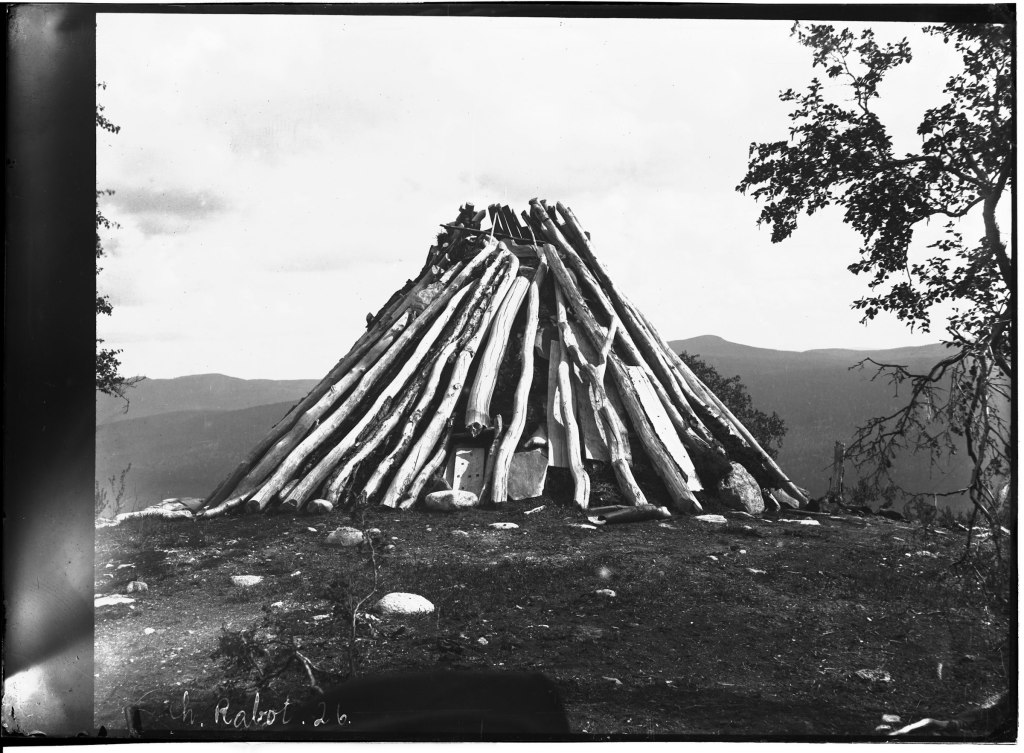
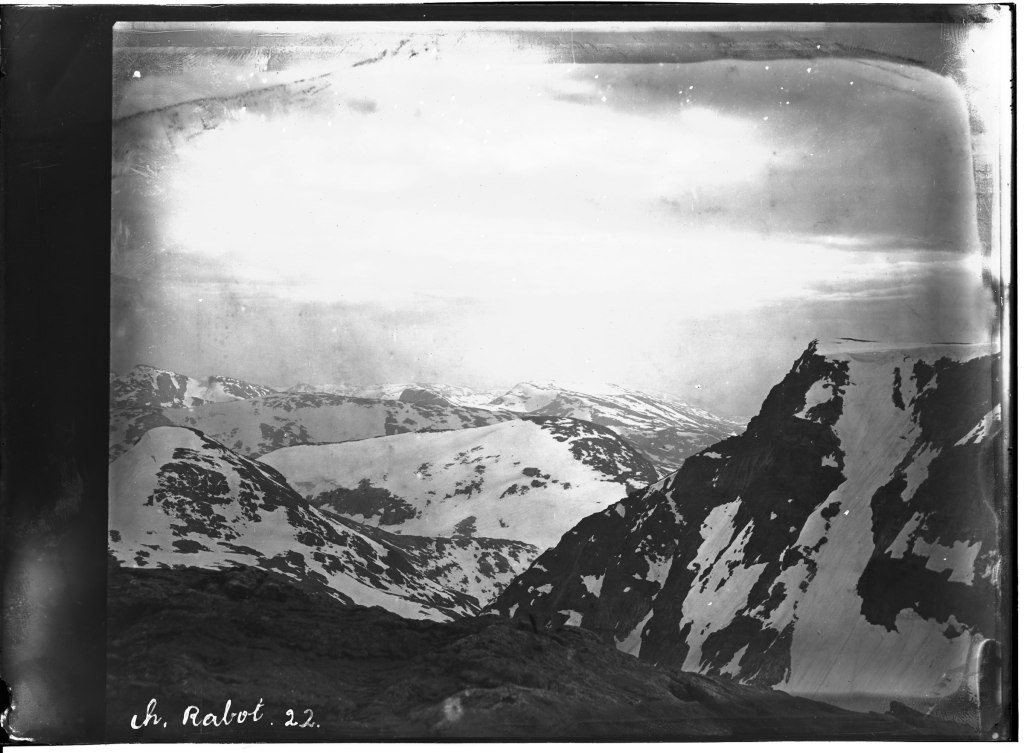
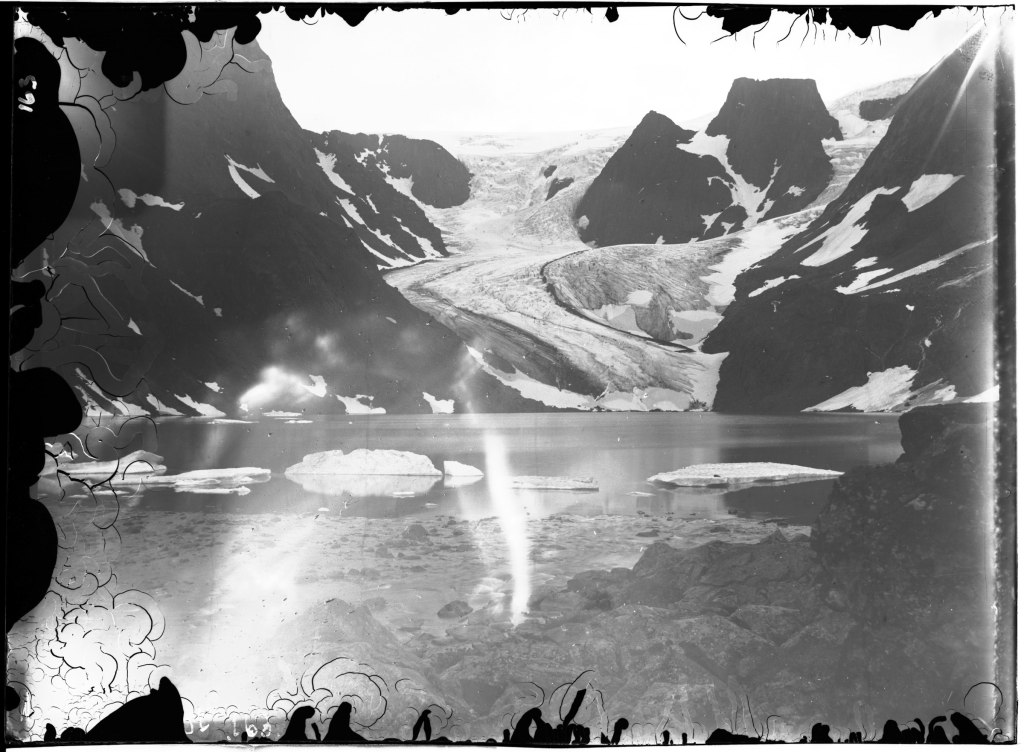
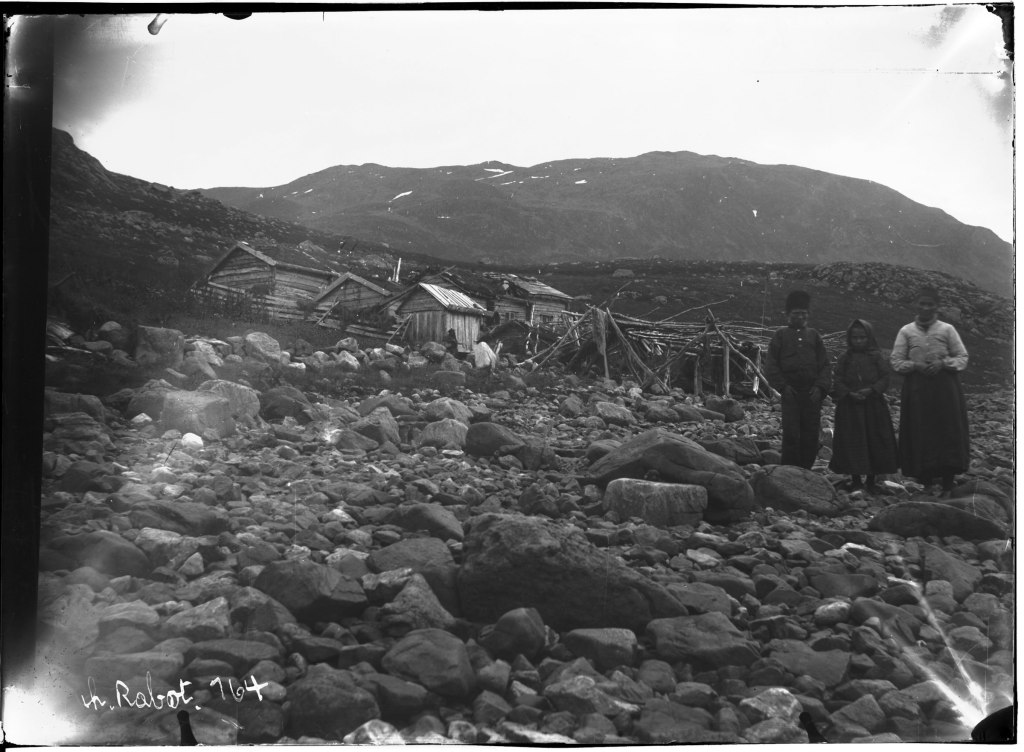
Masters of the Ice: Charles Rabot’s Arctic Photographs (ca. 1881)

Tempest Anderson: Pioneer Of Volcano Photography

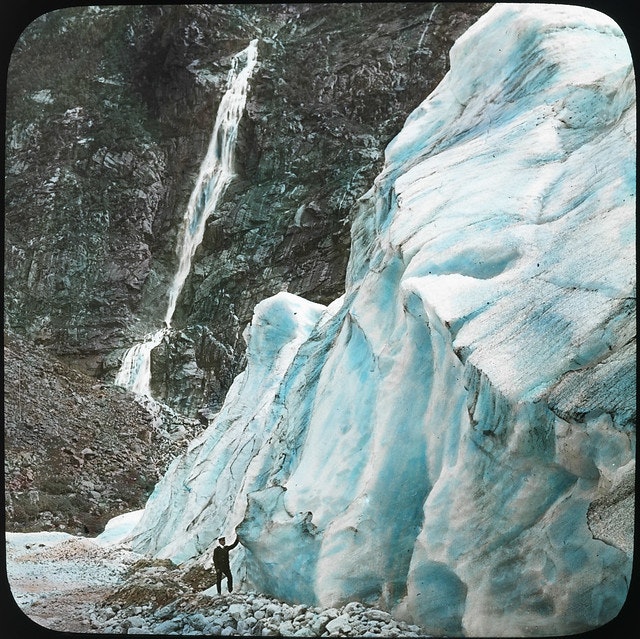
 Lantern Slides Of Norway (ca. 1910)

The first thing to catch my attention on The Public Domain Review was this striking, slightly sinister portrait of French geographer, glaciologist, and photographer Charles Rabot. This picture led me to a stupendously readable essay about Rabot by Erica X Eisen (whose other work I’m going to consume with gusto). Rabot had a ‘particular affinity for Norwegian culture…’ and his awe of ‘boral landscapes’ and ‘nostalgic yearning’ for the north is something I strongly identify with: 

They are so beautiful, so magnificent, those deathly solitudes, so strange in their fleeting finery of brilliant colors, that they always leave one with a burning desire to see them again.’ – Charles Rabot

Eisen’s writing is astute and memorable – the following passage in particular ‘If there are any people to be seen in these snow-pied expanses, they are tiny afterthoughts so overwhelmed by the whiteness around them that any individuating features are obliterated completely — to the extent that these figures seem less like the protagonists of the shots and more like another accidental void bitten into the negative by the frost.’

The first person to climb Kebnekaise, Sweden’s highest mountain, in 1883, Rabot was also friends with the most swoon-worthy of Norwegian explorers, Fridtjof Nansen who’ll be much more thoroughly swooned over in another post where I’ll look at the bizarre but beguiling topic of fancying long-dead polar explorers.

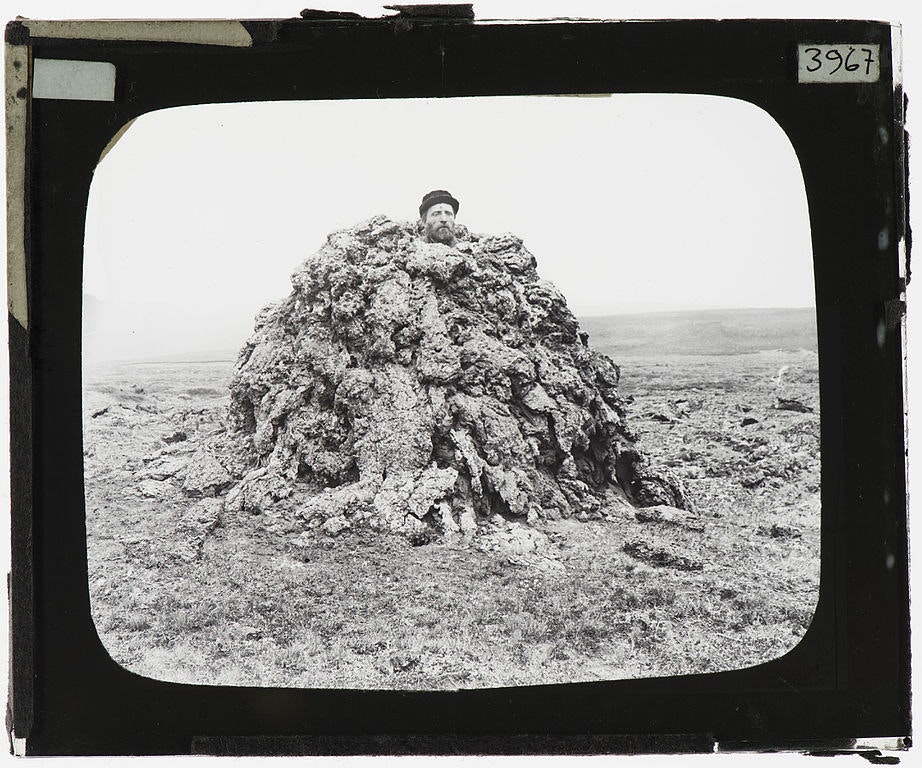
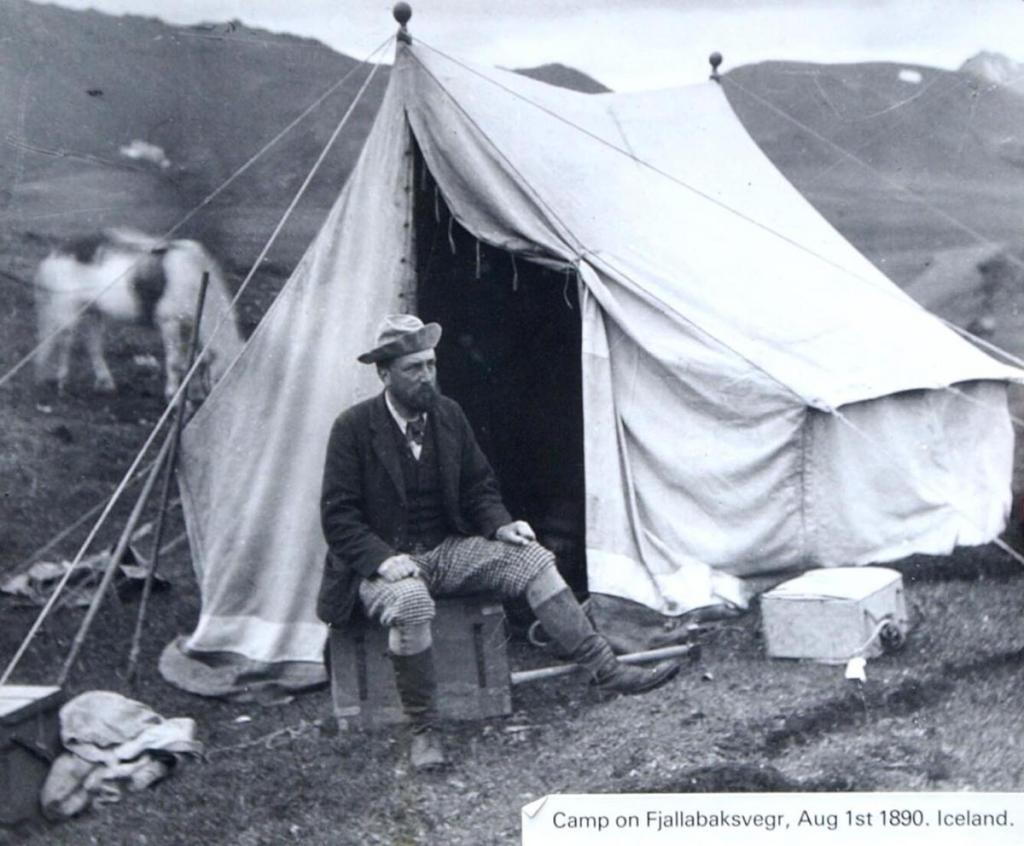
When I searched Iceland on The Public Domain Review, ‘ volcano chaser and pioneer of volcanic photography,’ Tempest Anderson showed up with one of the most gloriously surreal photographs I’ve ever seen.

Very much intrigued by the name Tempest, I was convinced there’d be a riveting origin story, so was a bit put out to find it was simply inspired by a prominent West Yorkshire family. 

Yet there’s no doubt the man led a life not dissimilar to a windstorm—his list of occupations and accomplishments is…extensive. York-born and bred Anderson was a leading eye surgeon as well as a photographer, an inventor of photography equipment, a consulting physician to a lunatic asylum, a prison medical officer, a Sheriff of York… the list ploughs on. At 43, unmarried and restless, Anderson decided he’d use his spare time to study volcanology and chase volcanic eruptions. The photographs he shot in Iceland were taken using one of the earliest panoramic cameras, which, unsurprisingly, Anderson had developed himself. 

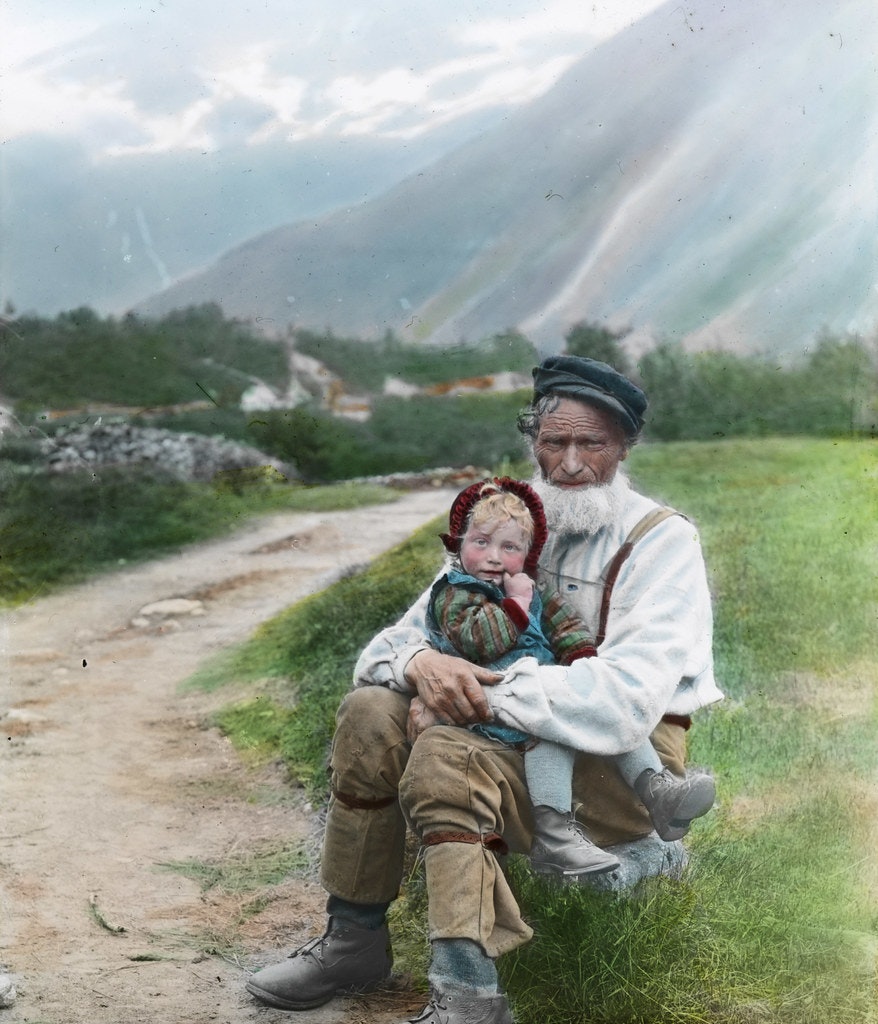
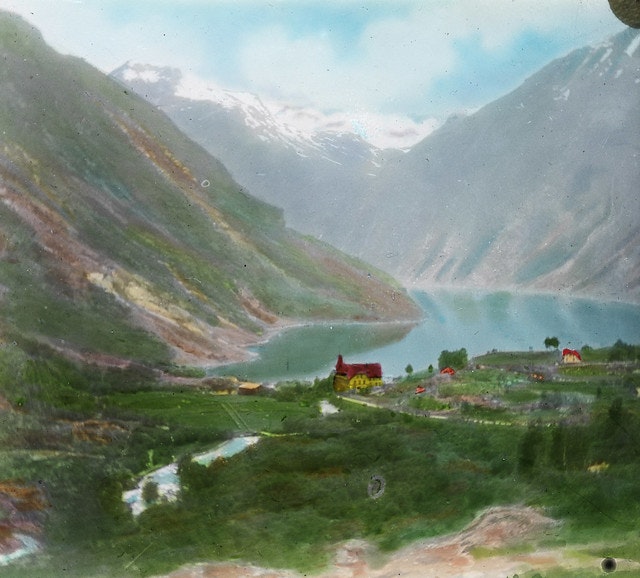
I’ll keep coming back to look at these lantern slides depicting Norway from the early 20th century, and I know each time I do, they’ll thrill me all over again. By the way, for full disclosure, I had to Google what a lantern slide is. 

Lantern slides are positive, transparent photographs made on glass and viewed with the aid of a “magic lantern,” the predecessor of the slide projector. Lantern slide plates were commercially manufactured by sensitizing a sheet of glass with a silver gelatin emulsion. The plate was then exposed to a negative and processed, resulting in a positive, transparent image with exceptional detail and a rich tonal range. – Constance McCabe (National Gallery of Art.)

Produced by British photographers Samuel J. Beckett and P. Heywood Hadfield in my favourite part of Norway – Sogn og Fjordane (now known as Vestland) – these bold, crazily vivid lantern slides are held at the county archives in the fjord village of Leikanger, somewhere I’m going to absolutely seek out when I’m next over by way of the Sognefjord. Right now though, I’d very much like to know what the woman on the steps was thinking when this picture was made. Also, image 4 – haunted to my core.

Hadfield was a surgeon on a ship cruising the Norwegian fjords and an amateur photographer in his free time. Little is known about Beckett, but copies of books by both men (The Fjords and Folk of Norway by Beckett and Fjords of Norway A Cruise On The SS Ophir by Heywood) are available on Abebooks and eBay and are very kindly priced for books printed well over a hundred years ago. 

More Recommended Reading From The Public Domain Review

Season’s Bleatings: Finnish Photographs of the Nuuttipukki (1928)

Aurora Borealis In Art

Photographs Of 19th Century Norwegians

What Is Brunost?

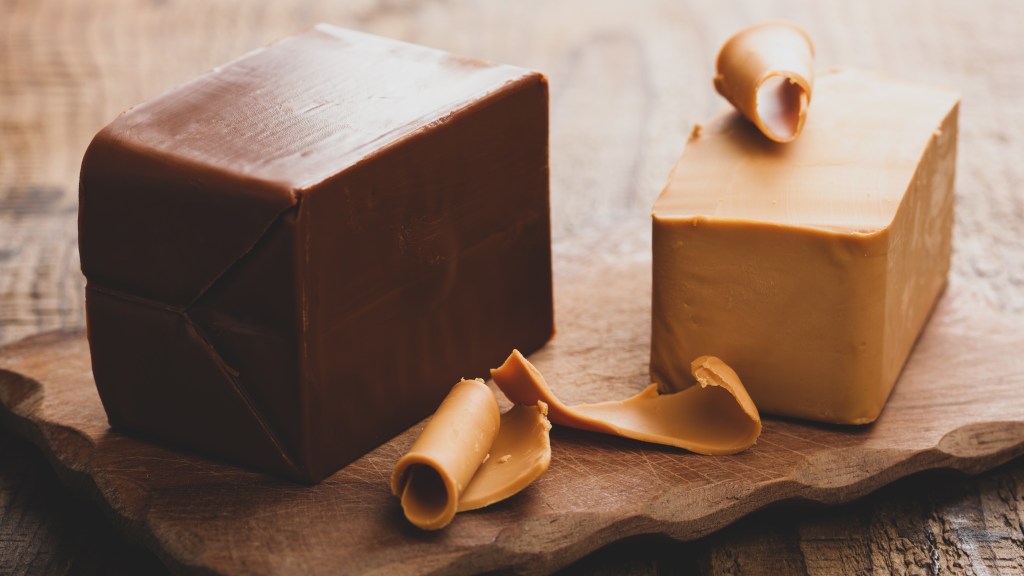
Thirteen years have hurtled by since I first went to Norway and had my first mouthful of brunost (brown cheese). From the get go, I was dead set on eating like a local. For breakfast at least. Lunch and dinner was typically pesto and pasta or cheap muesli. You know the kind – more dust than anything else. Though I found tykk-lefse med kanel (a thick flatbread spread with a sweet cinnamon butter) to be graciously affordable, so that was consumed regularly too. Perhaps too regularly. I grew sick of it after two weeks. Note: My relationship with tykk-lefse med kanel has been rekindled in recent years and we’re solid these days.

Anyway, brunost. To make Norway’s favourite cheese is straightforward and involves boiling the water from the whey of goat’s milk for several hours until the water evaporates. This caramelizes the sugar, giving the cheese its distinctive tan colour and caramel (debatable) flavour. What’s leftover from the process is left to firm up (though it isn’t massively firm, it’s akin to soft fudge) then it’s more or less ready. Like other cheese – though brunost isn’t technically a cheese – there’s no maturation needed.

I bought a block of brunost with the happy thought it would see me through the next few weeks of breakfasts and snacks. Having read about it before embarking on my Norwegian odyssey, I was certain I’d enjoy its ‘distinctive caramel flavour,’ because I love caramel. Who doesn’t love caramel? But my tastebuds had other ideas.

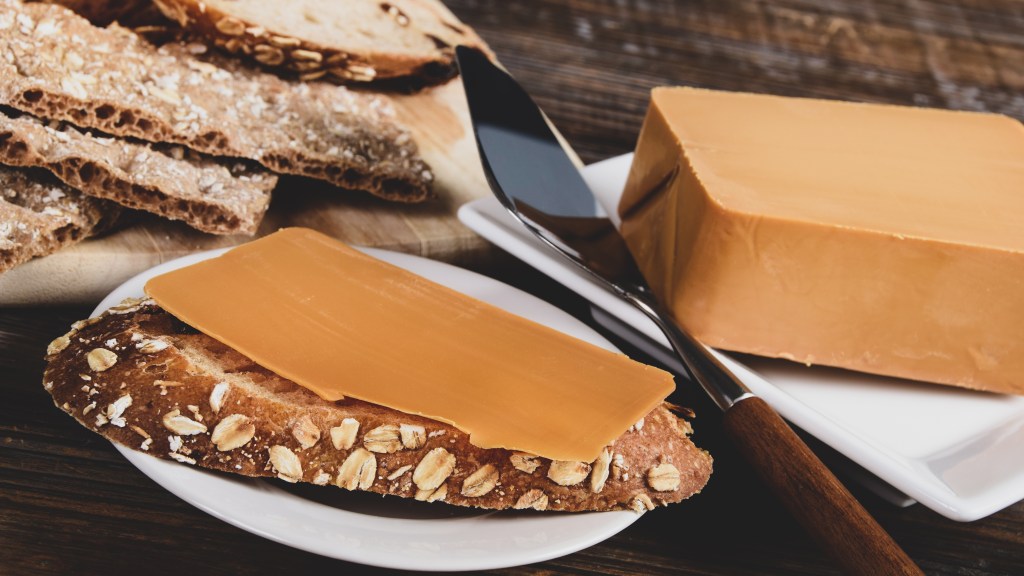
I ate it like the Norwegians do; thinly sliced with jam and fresh bread (though they also eat it with crispbread or waffles) but, despite its delectable creaminess, the actual taste, best described by another blogger as ‘salty goat’s fudge,’ wasn’t all that pleasing. Needless to say, I was distraught.

I tried it again later in the day, then again the next morning, determined to enjoy it, and not only because I’d paid nearly ten pounds for it. I can’t remember exactly what happened to the block – I was staying in a guest house at the time – I think I might have stuck a note on it and said anyone who wanted it could help themselves.

I haven’t given up on brunost though. Far from it. I’ve only eaten one variety – and there are many – and I’ve only tried it on bread and with jam. There are countless other ways I could eat it. I could make into a sauce for pancakes, add to gingerbread or use it in – Scandi Kitchen came up with this – mac’n’cheese.

When I was living in Sweden, I would eat something similar to brunost – though it was a soft and sticky spread instead of a firm-ish ‘cheese’ – called messmör. It was similar taste wise to brunost, just a bit sweeter and milder. After a few years of eating it, smeared almost transparently on bread, I found myself looking forward to it, and towards the end of my time in Sweden, would slather it on so thick you couldn’t see there was a slice of bread underneath.

Brunost has caused some controversy in recent years. Despite containing calcium and Vitamin B, due to its high sugar and fat content, one municipality considered banning it in schools. Whether this went ahead or not, I’m not sure, but I do like the idea of kids revolting against the banning of their salty goat’s fudge.

North Of Instagram

Instagram and I have had quite the unstable relationship over the years, so I thought I’d change that around and make it into something special.

The best way I could think to do that was to embrace all the striking northerly content I could find and share it here through a new series called North Of Instagram.

I hope that with this sharing, I’ll be able to introduce you to creative individuals who’ll stoke the northerly obsession that burns in your heart!

View this post on Instagram

#nordvis #home #lapland

A post shared by Nordvis (@nordvis) on


https://www.instagram.com/p/B3fn7QoHOkg/

View this post on Instagram

🌲 Austefjorden 🌲

A post shared by Frida Engeset Løfoll (@fel.illu) on

MostNorthern Christmas Book List (Or Books For Jólabókaflóð)

Iceland’s relationship with books is one that, as a writer and bibliophile, has me in tears. I could move to the the land of ice and fire quite happily based solely on how passionate everyone is about literature.

It’s estimated that 1 in 10 Icelanders will write a book in their lifetime and the small, Nordic country has more writers, more books published and more books read than anywhere else in the world.

It came as no surprise to  learn Iceland has a special celebration for books, one which practically the whole country participates in. It’s called jólabókaflóð which translates to the ‘Christmas Book Flood.’

The celebration actually begins in September, when the Icelandic Book Association posts a book catalogue to every home in Iceland. (The catalogue is called Bókatíðindi and you can browse this year’s edition here if you would like.)

So, from September onward there’s a book buying hysteria in Iceland, which culminates on Christmas Eve when people gift each other the books they’ve been frantically buying. The rest of the evening is then spent reading. I can’t think of anything more perfect than that.

I believe so strongly that we need to be more Icelandic when it comes to our relationship with books, that I’ve put together a list of northerly reads to inspire your own jólabókaflóð.

Icelanders give paperback books on Christmas Eve, but the ones I’ve listed here are all available on Amazon Kindle, so you can have them pretty much instantly to read. If you don’t have a Kindle, (I don’t) no stress, you can download the FREE Kindle app here for IOS, Android, Mac and PC.

Happy reading!

Ice Bear By Michael Engelhard

51UHoRGKo8L.jpg

I’ve been wanting to read Ice Bear ever since it popped up on Amazon as a recommended read a month or so ago.

While it’s the priciest book on this list, with the Kindle Edition coming in at a hefty £15.21 if you’re invested in deepening your knowledge of this most important and beautiful species, it’s entirely worth it.

“From Inuit shamans to Jean Harlow lounging on a bearskin rug, from the cubs trained to pull sleds toward the North Pole to “cuddly” superstar Knut, it all comes to life in these pages.

With meticulous research and more than 160 illustrations, the author brings into focus this powerful and elusive animal. Doing so, he delves into the stories we tell about Nature–and about ourselves–hoping for a future in which such tales still matter.” – Amazon.

Buy it here.

Dark Matter By Michelle Paver

Dark Matter is one of my all-time favourite books, and I featured it in my Top Ten Ten Books About The North list  back in February. It’s a gloriously creepy ghost story set in 51HeHhcACUL._SY346_the High Arctic and it leaves no nerve unturned.

For years I longed for a book like Dark Matter and when it came along, it was everything I wanted and more. There’s a really good reason this book has nearly 400 reviews on Amazon and almost a full 5 stars. If you choose Dark Matter, you’ll be up all night reading, I promise.

‘January 1937. Clouds of war are gathering over a fogbound London. Twenty-eight year old Jack is poor, lonely and desperate to change his life. So when he’s offered the chance to join an Arctic expedition, he jumps at it. Spirits are high as the ship leaves Norway: five men and eight huskies, crossing the Barents Sea by the light of the midnight sun. At last they reach the remote, uninhabited bay where they will camp for the next year. Gruhuken.

But the Arctic summer is brief. As night returns to claim the land, Jack feels a creeping unease. One by one, his companions are forced to leave. He faces a stark choice. Stay or go. Soon he will see the last of the sun, as the polar night engulfs the camp in months of darkness. Soon he will reach the point of no return – when the sea will freeze, making escape impossible.

And Gruhuken is not uninhabited. Jack is not alone. Something walks there in the dark…’ – Amazon

Buy it here.

The Nordic Theory Of Everything By Anu Partanen

The Nordic Theory Of Everything is another book I’ve been longing to read, and now that it’s available on Kindle for 99p I’ll be delving into it this Christmas eve. Since living in Sweden, it’s come to my attention that, actually, not everything is as rosy as the majority of literature out there would lead you to believe…so it’ll be really interesting to read, reflect and no doubt debate the theories within its 432 pages, even if I’m outnumbered 10 to 1 this Christmas time.

y648.jpg

‘From childcare to healthcare provision for the elderly and tackling issues of homelessness, the Nordic countries are world leaders in organising society – no wonder Finland has been ranked among the happiest places in the world.

But when Finnish journalist Anu Partanen moved to America, she quickly realised that navigating the basics of everyday life was overly complicated compared to how society was organised in her homeland. From the complications of buying a mobile, to the arduous task of filing taxes, she knew there was a better way and as she got to know her new neighbours she discovered that they too shared her deep apprehensions.

The Nordic Theory of Everything details Partanen’s mission to understand why America (and much of the Western world) suffers from so much inequality and struggling social services. Filled with fascinating insights, advice and practical solutions, she makes a convincing argument that we can rebuild society, rekindle optimism and become more autonomous people by following in the footsteps of our neighbours to the North.’ – Amazon

Buy it here.

Reindeer An Arctic Life By Tilly Smith

I saw the cover of this book and thought to myself, ‘if I don’t enjoy this, I’m going to be really disappointed.’ I needn’t have worried though, as I took advantage of the ‘Look Inside’ feature on Amazon, had a read of a few pages and knew it was going to be a beautiful, captivating and enlightenment little read, from which I’d come away from a more learned and inspired reindeer obsessive.

51aWnLoNbiL

‘In this enchanting book, Tilly Smith leads the reader through the cold and extraordinary natural history of the reindeer.

A creature that is often used to adorn the winter season, the reindeer has been domesticated in Eurasia for longer than the horse while in North America it exists side by side with the humans, never tamed yet vital to the native settlements.

Despite the popularity of the image of the reindeer, they are rarely seen in real life.

This beautiful, comforting little book, peppered with anecdotes about the author’s own herd, is sure to kindle affection for one of nature’s most adaptable mammals, from fur-covered hooves to downy antlers.’ – The History Press

Buy it here.


Tales Of Iceland Or Running With The Huldefolk In The Permanent Daylight By Stephen Markley

While I’ve read (very) mixed reviews about this ‘fast, fun, educational and true story’ written by a journalist from Chicago who went to Iceland with his two friends, one of whom, Matthew Trinetti, is the main character in the book, it intrigued the hell out of me. And, seen as though I can get it free on Kindle Unlimited (if you don’t have Kindle Unlimited, get it. Seriously. It’s brilliant.) I thought why not.

51e8rILg+9L

‘When American author Stephen Markley was a fresh-faced, impressionable university student in Ohio, he saw Quentin Tarantino describe a trip he’d taken to Iceland.

“Supermodels working at McDonald’s,” said Tarantino of the Icelandic. Markley never forgot those words.

Seven years later, Markley set out with two friends for Iceland, and adventure would ensue. The three young men found a country straddling Europe and North America, recovering from its 2008 economic crisis, struggling to regain its national identity, influenced by the entire globe yet trafficking in its singular Icelandic sagas and legends.

With Tales of Iceland, Markley delivers the fastest, funniest memoir and travelogue of an American experience in Iceland.

Beware: You will NOT learn how to say “Which way to the potato farm” in the Icelandic language. Nor will you learn how to locate the finest dining options in Reykjavik, or the best opera house. This is not that kind of travel book. Markley and his two irrepressible twenty-something American pals do not like opera, had no money to eat much besides eggs and skyr, and learned only how to say “Skál!” “Takk,” and “Skyr.” – Amazon

Buy it here.

Icebreaker By Horatio Clare

I only found out about this book and it’s author Horatio Clare today, but this book is on my ‘must read before the end of 2018 list.’

‘We are celebrating a hundred years since independence this year: how would you like to travel on a government icebreaker?’

41lY0KRMvtL.jpg

A message from the Finnish embassy launches Horatio Clare on a voyage around an extraordinary country and an unearthly place, the frozen Bay of Bothnia, just short of the Arctic circle. Travelling with the crew of Icebreaker Otso, Horatio, whose last adventure saw him embedded on Maersk container vessels for the bestseller Down to the Sea in Ships, discovers stories of Finland, of her mariners and of ice.

Finland is an enigmatic place, famous for its educational miracle, healthcare and gender equality – as well as Nokia, Angry Birds, saunas, questionable cuisine and deep taciturnity. Aboard Otso Horatio gets to know the men who make up her crew, and explores Finland’s history and character. Surrounded by the extraordinary colours and conditions of a frozen sea, he also comes to understand something of the complexity and fragile beauty of ice, a near-miraculous substance which cools the planet, gives the stars their twinkle and which may hold all our futures in its crystals.’ – Amazon

Buy it here.

Other Titles To Check Out

ScandiKitchen: Fika & Hygge By Bronte Aurell

Wild Guide: Scandinavia By Ben Love

Scandinavian Christmas By Trine Hahnemann

Finding Sisu: In Search Of Courage, Strength And Happiness The Finnish Way By Katja Pantzar

Folklore: The Northlore Series Edited By MJ Kobernus