
Several years ago, I experienced what I thought was a major depressive episode, but which turned out to be neurodivergent burnout. My nervous system was shattered, making any sort of stimulation unbearable. When I tried to listen to music, I’d physically recoil, like Nosferatu in a sunbeam, and need to turn it off.
Almost overnight, creating and consuming art became impossible. I lost the ability to read, to write, to form coherent sentences. My world became so small it was like I barely existed. This deprivation made for the most terrifying time of my life.
I remember slamming my hands against my ears a few seconds into a Wardruna track. Warduna! A band whose live performance had left me sobbing and prompted the purchase of a one-way ticket to Norway.
When I was able to listen to music again, I tried to discover what I’d missed, but was quickly overwhelmed and returned to what was familiar. Curiosity is in my makeup though, and before too long, I was tentatively exploring the ever-rising ocean of musical releases.
It’s been difficult to accept that my capacity isn’t what it used to be, and I get easily frustrated by the sifting required to find something precious. Also, since burning out, it’s been more difficult to listen to music at times when I used to without issue. For instance, I often listened to music while writing, but nowadays mostly need silence. I’m still figuring out how to ‘be in the world’ as a late diagnosed neurodivergent, and what my capacity for everything, including music, looks like.
It’s usually right before going to bed, when I feel the urge to discover something new. Earlier this week, I put Nordic Folk into the Bandcamp search and opened new tab after new tab for promising projects, vowing each I’d give them my attention over the coming days.
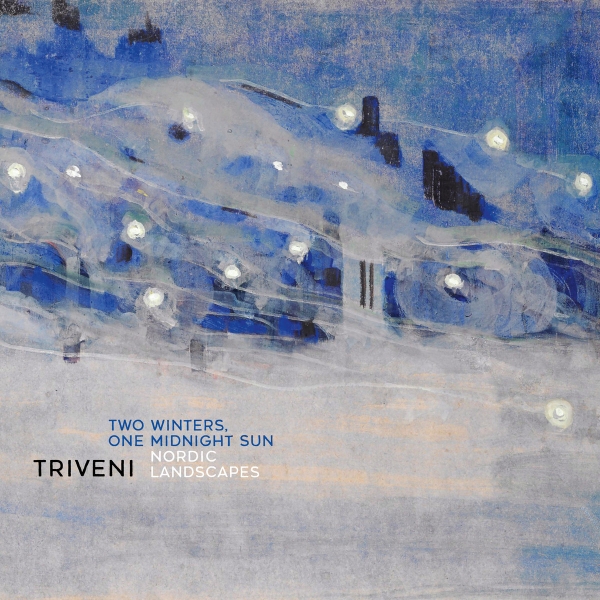
But I needed quieter days than I’d thought this week. When I did listen to music, I found myself returning to Two Winters, One Midnight Sun by Triveni, a project of Belgian composer and accordionist Barbara Eva Ardenois. Listening to this shimmering soundscape unearthed from Bandcamp’s Nordic Folk hoard reunited me with something I hadn’t felt in ages – bliss.
In case anyone is wondering, at this moment in time, my three favourite tracks on the album are Call of the High Plains, Twilight and Sirkat.
On her Bandcamp page Ardenois writes: My journey through the Nordic countries began in the autumn of 2021. Over the following seasons, I lived and travelled across Sweden, Denmark, Finland and Norway, studying traditional music as part of the Nordic Master in Folk Music.
The sound of the kantele, the vast Nordic landscapes, and the stillness of nature left a lasting impression on me. Through dark winters and luminous summer nights, I shaped my musical world where light sparks as a symbol of hope.
In 2023, I created Triveni—named after the confluence of three rivers. In this project, I weave elements of Swedish shepherd music, Karelian kantele improvisations and contemporary classical music, gently blending field recordings and subtle electronics.
My Dreamy Folk Flow draws sonic landscapes for the quiet hours—when light returns or fades—welcoming you to slow down, connect and wonder.
This album is co-created with my two dear friends and fellow musicians, Ingrid Rodebjer (Sweden) and Hanna Ryynänen (Finland). Their improvisations and deep roots in traditional music bring new colours and atmospheric layers to these cross-cultural soundscapes. – Barbara Eva Ardenois


 Northern Fever