Forests Bring Out The Best In Me

I regularly feel the need to downplay my delight about things that excite me, because, unrestrained, my enthusiasm can make people feel overwhelmed and awkward, especially if they’re mostly familiar with my depressed state.

It’s a good thing, then, that when I’m forest wandering, I’m almost always alone because forests bring out the best in me, especially forests in Sweden, which are heavily occupied with boulders.

Encountering boulders on my wanderings is always an ecstatic experience, and I can recall most of my meetings with remnants of ancient bedrock (or petrified trolls, as I’d prefer to believe) with gut-glass clarity. I have memories of wildly circling my Swedish ex like a border collie pup, tugging at his clothes and begging him to come to the woods and see the boulders I’d found on my daily hikes.

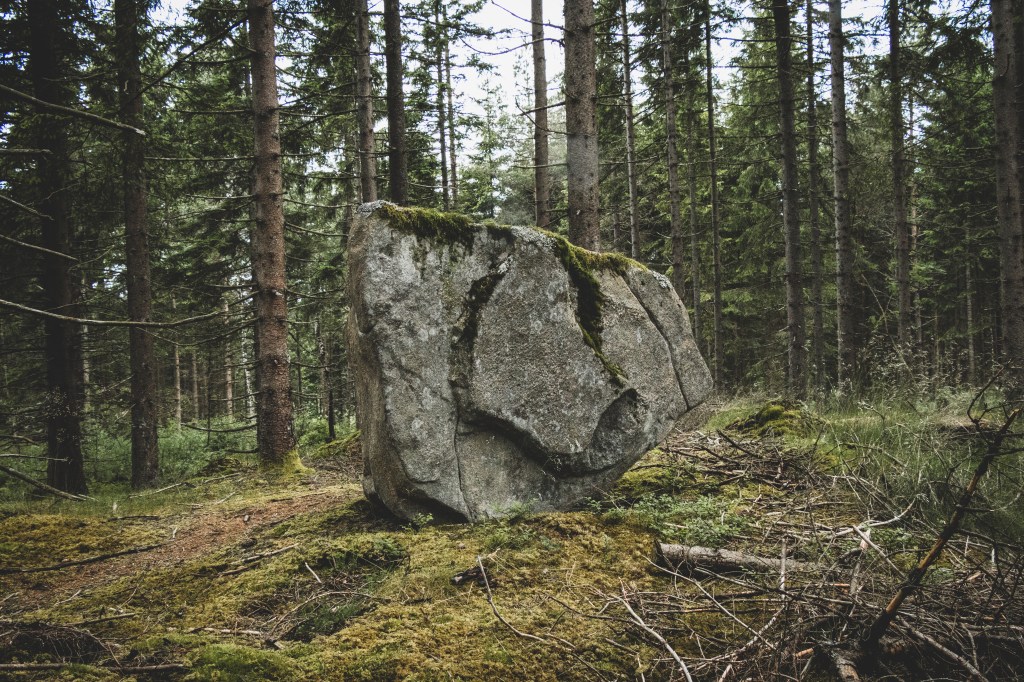
I glimpsed this boulder through the trees, and to reach it, needed to stray from the path, which I happily did. I rarely stay on any footpath for long anyway. The bliss I experienced in the presence of this, let’s admit, very beautiful rock, was something I wish I could bottle and give to people who don’t experience life as a highly sensitive neurodivergent wyrdo who gets blissed out by boulders.

Sweden was heavily glaciated in the last Ice Age, and the boulders – official title: glacial erratics* – were swept up during the advance/retreat of the glaciers and deposited where they currently sit. I don’t think this will ever cease to boggle my mind. I know I’ll probably be wondering forever about this boulder’s tale and its migration to where I found it in a serene, sun-dappled forest glade in the north.

*You may be as nerdishly thrilled as I to know that the word erratics comes from the Latin word errare, which means ‘to wander.’

Roadtrip Around The South Of Iceland : Part Two

Part Two has been a long time coming. Sorry about that, but, you know, life.

If this is your first time visiting A Nordic Fever, I suggest reading Gallivanting Around The South Of Iceland: Part One before embarking on this post.

Still Day One

One of our last stops on our first day—after realising that we were still four and a half hours away* from the campsite where we were supposed to be spending the night—was a man-made cave which neither of us knew existed until we were sailing on by it.  

*Finnbjörn had said to me, ‘Say stop whenever you want and I will stop…within reason.’ I took advantage of his giving nature, so accepted the blame for the sluggishness of the trip. We ended up not driving to where we were supposed to go and instead wrangled a place in a field in another, much closer, campsite. 

Rútshellir Cave

Not far from Skógafoss, by the Eyjafjöll mountains and literally right off the Ring Road, is one of the largest man-made caves in Iceland. We didn’t have Rútshellir Cave on our itinerary, but it was free and not featured on any tours, so there was only a smattering of other people.

After walking through the stone and wood sheepcote, which was built at some point in the 20th century, there are two caves to explore. The first is about twenty metres long and used to store hay and stockfish (fish air-dried on wooden racks outdoors). People may have lived in it at some point. (I like to believe they did.) The second, smaller cave is thought to have been used as a smithy, though there’s also mention of it being a heathen temple. One of the earliest accounts of the cave dates to 1714, and its name is from its alleged first inhabitant, Rutur. Some think Rutur was an evil chieftain or a thief. Others, like me, suspect he was a troll.

We didn’t, but somebody else did and was loudly scolded by their law-abiding child.

Intriguingly, Rútshellir Cave was of great interest to the Nazis, and in 1936, it was thoroughly searched by the SS troops Ahnenerbem who were under the command of Viking fanboy Heinrich Himmler. Fixated on the idea of a pure Nordic race, they were in Iceland looking for evidence of old temples and were convinced that was indeed an advanced heathen temple.

*As I am wont to do, I went down a rabbit hole about the Nazis and their obsession with Iceland. I found an article in the Reykjavik Grapevine where Helgi Hrafn Guðmundsson writes about how Iceland and the Icelandic people disappointed the German diplomat Dr Werner Gerlach.

Day Two

I thought camping in the car was fine because I’m essentially impish in size, but Finnbjörn (whose name translates to polar bear) was too long to be comfortable and so didn’t sleep. So, we agreed to keep going to the Glacier Lagoon and then return to Akranes. The weather was too hot to be comfortable, and I was radically overstimulated. As it turns out, I’d forgotten how wearing road trips could be, considering my last lengthy one was when I was still in my maiden years.

The Glacier Lagoon

This was, undoubtedly, the busiest place on our road trip. Tourism has reached unprecedented heights in Iceland; about a million people visit the lagoon yearly, and we saw many of them on this blistering Monday in June.

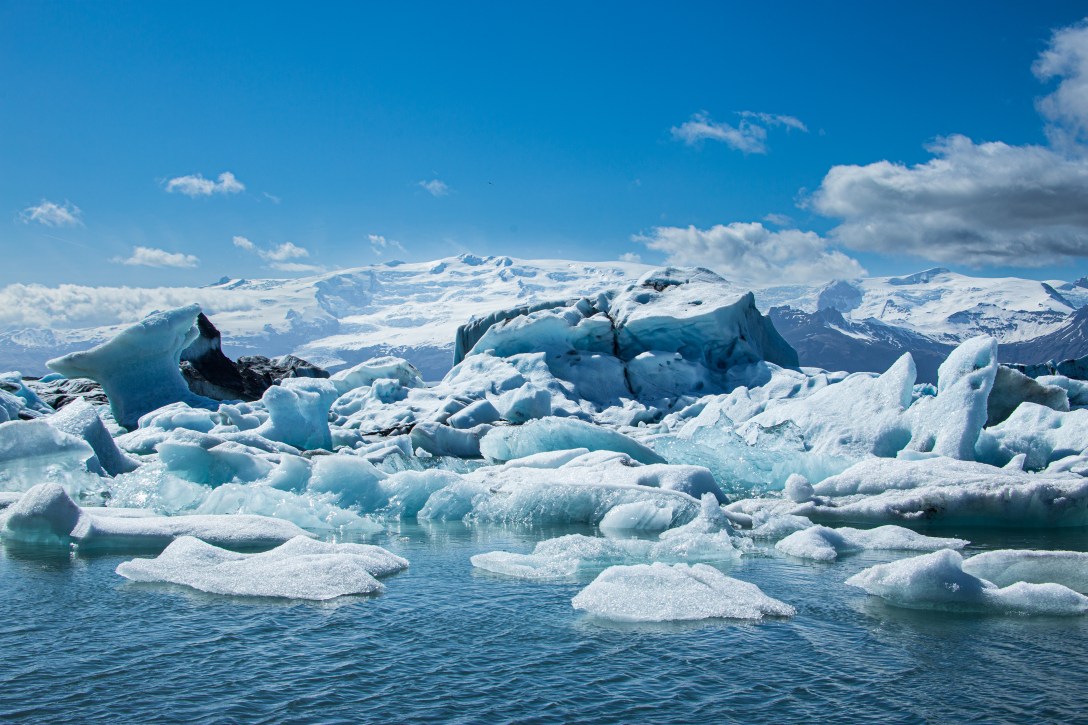
The Glacier Lagoon b.1935 is made up of meltwater and at 932 feet, it’s the deepest lake in Iceland. The ice in the lagoon breaks away from the glacier Breiðamerkurjökull, an outlet of Vatnajökull glacier – the largest ice cap in Europe. (It wasn’t until I arrived home that it dawned on me that there are humans alive right now who are older than this body of water.)

I was childishly manic at the lagoon…but famished, so we headed first for the café. Finnbjörn supped at a double espresso, and I, afraid I was somehow going to miss out on seeing the icebergs, wolfed a piece of white bread and pesto marketed as ‘vegan pizza,’ then bounced up and raced on ahead of my weary boyfriend.

I watched the icebergs intently, bewitched by the glassiness and the zingy blue hues conjured by compression and the dance of light and ice crystals. Some stay in the lagoon for up to five years before drifting the short distance to the Atlantic Ocean. When he joined me by the shore, Finnbjörn pointed out a seal. Nobody else noticed it. It was likely sheltering from the scores of orcas that patrol the waters of Southeast Iceland.

Before reluctantly heading back to the car, I Facetimed my daughter Saga. ‘Are you at the North Pole, mummy?’ I told her we weren’t that far away. She asked if I’d seen reindeer or Santa and what the black on the ice was. I told her it was centuries-old ash from a volcano. She said okay and went back to the picture she was drawing.

Optimistically, I thought I’d ride my good feelings all the long way back to Akranes. I rode them for around forty-five minutes of the five-hour drive before losing it with the midnight sun and wrapping my head in a blanket. But the light was relentless and hounded us all the way home.

From Along The Way

A handful of tips if you’re road-tripping in Iceland during Summer:

  • If you’re over 6 feet tall and in your mid-forties, sleeping in the back of a car may be a rough ordeal. I recommend a test run of your sleeping arrangements.
  • Yes, the sun is up all night, and yes, it can be tempting to keep going because time feels infinite but don’t.
  • If you’re driving electric, know where the charging stations are before your trip begins.
  • Always keep an eye on the weather. So many apps exist for this.
  • Watch out for sheep and their lambs as well as oystercatchers and their chicks.
  • Take more water than you think you’ll need.
  • Pack more snacks than you think you’ll need.
  • Be wary of speed cameras.
  • You will need much more time than you think you’ll need. For example, taking a photo of horses with wind-ruffled manes will not take the sixty seconds you imagine it will.
  • Have an itinerary—Finnbjörn made ours using suggestions from Trip Advisor—but make it somewhat flexible.  

What Is Skyr?

I spent three months in Iceland back in 2011 and I ate my body weight in Skyr. I tried every flavour I could and had Skyr withdrawal symptoms when I came home. I remember when Skyr first arrived in Tesco a few years later. I squealed and stashed a couple of tubs in my basket, ignoring the hefty Icelandic-esque price tag attached to them.

Once home, I promptly posted a photo of my Skyr to Facebook. My family, meanwhile, thought it bizarre me getting so excited about some dairy.

Pronounced skeer (with a slight trill on the r if you’re really going in for authenticity) Skyr is a cultured dairy product that’s been sustaining Icelanders since it was brought over from Norway in the 9th Century. Today, Skyr is probably Iceland’s most valuable contribution to the world’s culinary culture.

Uber, uber thick (yes, those two ubers are necessary) creamy and stacked with protein, Skyr has a tart taste to it. Icelanders traditionally eat it whipped with cream and topped with sugar. Though the most popular flavours among locals today are vanilla and blueberries. (I can vouch for vanilla. It’s awesome.) 

While most people think of Skyr are being a yogurt, its technically a soft cheese. After the whey has been removed, it goes through a process of ultra-filtration, and that’s how it gets to be so thick you can stand your spoon up in it.


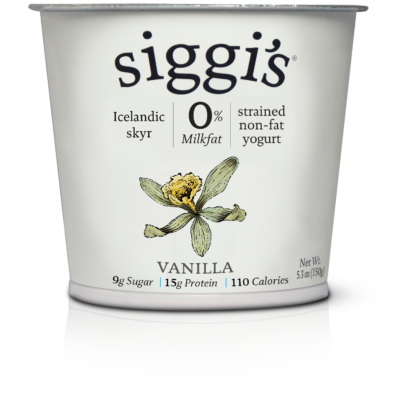
5.3oz_Vanilla_IcelandicSkyr-400x400Although Skyr was hardly known about beyond the shores of Iceland for a thousand years, the word of this ‘superfood’ has spread worldwide, and it’s made some folks their fortune, including Siggi Hilmarsson. A native Icelander living in the US, Siggi found himself homesick for what had been a part of his staple diet back home – Skyr.

Using a recipe that his mother found (I think in some magazine from the 1960’s), Siggi started to make Skyr in his little New York kitchen. And it tasted like home. Within a few months, Siggi quit his day job, bought a bunch of dairy making equipment and boom, his Skyr making empire – Siggi’s Dairy – was born.

If, like me, you find yourself becoming just that bit obsessed with Skyr, get yourself to Iceland and visit the National Museum where you’ll find three Viking-era jars that contain Skyr residue. Now if that’s not cool, I don’t know what is.

MostNorthern Christmas Book List (Or Books For Jólabókaflóð)

Iceland’s relationship with books is one that, as a writer and bibliophile, has me in tears. I could move to the the land of ice and fire quite happily based solely on how passionate everyone is about literature.

It’s estimated that 1 in 10 Icelanders will write a book in their lifetime and the small, Nordic country has more writers, more books published and more books read than anywhere else in the world.

It came as no surprise to  learn Iceland has a special celebration for books, one which practically the whole country participates in. It’s called jólabókaflóð which translates to the ‘Christmas Book Flood.’

The celebration actually begins in September, when the Icelandic Book Association posts a book catalogue to every home in Iceland. (The catalogue is called Bókatíðindi and you can browse this year’s edition here if you would like.)

So, from September onward there’s a book buying hysteria in Iceland, which culminates on Christmas Eve when people gift each other the books they’ve been frantically buying. The rest of the evening is then spent reading. I can’t think of anything more perfect than that.

I believe so strongly that we need to be more Icelandic when it comes to our relationship with books, that I’ve put together a list of northerly reads to inspire your own jólabókaflóð.

Icelanders give paperback books on Christmas Eve, but the ones I’ve listed here are all available on Amazon Kindle, so you can have them pretty much instantly to read. If you don’t have a Kindle, (I don’t) no stress, you can download the FREE Kindle app here for IOS, Android, Mac and PC.

Happy reading!

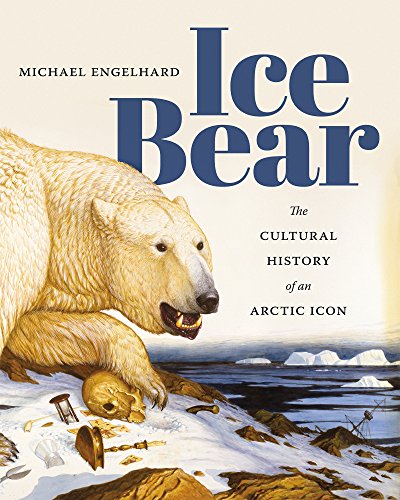
Ice Bear By Michael Engelhard
51UHoRGKo8L.jpg

I’ve been wanting to read Ice Bear ever since it popped up on Amazon as a recommended read a month or so ago.

While it’s the priciest book on this list, with the Kindle Edition coming in at a hefty £15.21 if you’re invested in deepening your knowledge of this most important and beautiful species, it’s entirely worth it.

“From Inuit shamans to Jean Harlow lounging on a bearskin rug, from the cubs trained to pull sleds toward the North Pole to “cuddly” superstar Knut, it all comes to life in these pages.

With meticulous research and more than 160 illustrations, the author brings into focus this powerful and elusive animal. Doing so, he delves into the stories we tell about Nature–and about ourselves–hoping for a future in which such tales still matter.” – Amazon.

Buy it here.

Dark Matter By Michelle Paver

Dark Matter is one of my all-time favourite books, and I featured it in my Top Ten Ten Books About The North list  back in February. It’s a gloriously creepy ghost story set in 51HeHhcACUL._SY346_the High Arctic and it leaves no nerve unturned.

For years I longed for a book like Dark Matter and when it came along, it was everything I wanted and more. There’s a really good reason this book has nearly 400 reviews on Amazon and almost a full 5 stars. If you choose Dark Matter, you’ll be up all night reading, I promise.

‘January 1937. Clouds of war are gathering over a fogbound London. Twenty-eight year old Jack is poor, lonely and desperate to change his life. So when he’s offered the chance to join an Arctic expedition, he jumps at it. Spirits are high as the ship leaves Norway: five men and eight huskies, crossing the Barents Sea by the light of the midnight sun. At last they reach the remote, uninhabited bay where they will camp for the next year. Gruhuken.

But the Arctic summer is brief. As night returns to claim the land, Jack feels a creeping unease. One by one, his companions are forced to leave. He faces a stark choice. Stay or go. Soon he will see the last of the sun, as the polar night engulfs the camp in months of darkness. Soon he will reach the point of no return – when the sea will freeze, making escape impossible.

And Gruhuken is not uninhabited. Jack is not alone. Something walks there in the dark…’ – Amazon

Buy it here.

The Nordic Theory Of Everything By Anu Partanen

The Nordic Theory Of Everything is another book I’ve been longing to read, and now that it’s available on Kindle for 99p I’ll be delving into it this Christmas eve. Since living in Sweden, it’s come to my attention that, actually, not everything is as rosy as the majority of literature out there would lead you to believe…so it’ll be really interesting to read, reflect and no doubt debate the theories within its 432 pages, even if I’m outnumbered 10 to 1 this Christmas time.

y648.jpg

‘From childcare to healthcare provision for the elderly and tackling issues of homelessness, the Nordic countries are world leaders in organising society – no wonder Finland has been ranked among the happiest places in the world.

But when Finnish journalist Anu Partanen moved to America, she quickly realised that navigating the basics of everyday life was overly complicated compared to how society was organised in her homeland. From the complications of buying a mobile, to the arduous task of filing taxes, she knew there was a better way and as she got to know her new neighbours she discovered that they too shared her deep apprehensions.

The Nordic Theory of Everything details Partanen’s mission to understand why America (and much of the Western world) suffers from so much inequality and struggling social services. Filled with fascinating insights, advice and practical solutions, she makes a convincing argument that we can rebuild society, rekindle optimism and become more autonomous people by following in the footsteps of our neighbours to the North.’ – Amazon

Buy it here.

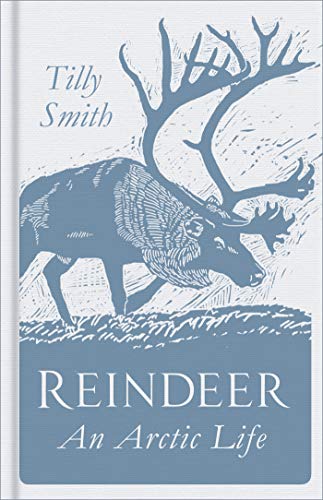
Reindeer An Arctic Life By Tilly Smith

I saw the cover of this book and thought to myself, ‘if I don’t enjoy this, I’m going to be really disappointed.’ I needn’t have worried though, as I took advantage of the ‘Look Inside’ feature on Amazon, had a read of a few pages and knew it was going to be a beautiful, captivating and enlightenment little read, from which I’d come away from a more learned and inspired reindeer obsessive.
51aWnLoNbiL

‘In this enchanting book, Tilly Smith leads the reader through the cold and extraordinary natural history of the reindeer.

A creature that is often used to adorn the winter season, the reindeer has been domesticated in Eurasia for longer than the horse while in North America it exists side by side with the humans, never tamed yet vital to the native settlements.

Despite the popularity of the image of the reindeer, they are rarely seen in real life.

This beautiful, comforting little book, peppered with anecdotes about the author’s own herd, is sure to kindle affection for one of nature’s most adaptable mammals, from fur-covered hooves to downy antlers.’ – The History Press

Buy it here.


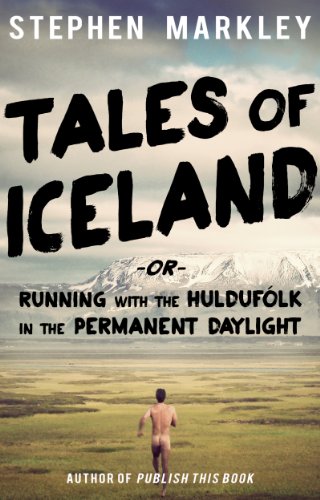
Tales Of Iceland Or Running With The Huldefolk In The Permanent Daylight By Stephen Markley

While I’ve read (very) mixed reviews about this ‘fast, fun, educational and true story’ written by a journalist from Chicago who went to Iceland with his two friends, one of whom, Matthew Trinetti, is the main character in the book, it intrigued the hell out of me. And, seen as though I can get it free on Kindle Unlimited (if you don’t have Kindle Unlimited, get it. Seriously. It’s brilliant.) I thought why not.
51e8rILg+9L

‘When American author Stephen Markley was a fresh-faced, impressionable university student in Ohio, he saw Quentin Tarantino describe a trip he’d taken to Iceland.

“Supermodels working at McDonald’s,” said Tarantino of the Icelandic. Markley never forgot those words.

Seven years later, Markley set out with two friends for Iceland, and adventure would ensue. The three young men found a country straddling Europe and North America, recovering from its 2008 economic crisis, struggling to regain its national identity, influenced by the entire globe yet trafficking in its singular Icelandic sagas and legends.

With Tales of Iceland, Markley delivers the fastest, funniest memoir and travelogue of an American experience in Iceland.

Beware: You will NOT learn how to say “Which way to the potato farm” in the Icelandic language. Nor will you learn how to locate the finest dining options in Reykjavik, or the best opera house. This is not that kind of travel book. Markley and his two irrepressible twenty-something American pals do not like opera, had no money to eat much besides eggs and skyr, and learned only how to say “Skál!” “Takk,” and “Skyr.” – Amazon

Buy it here.

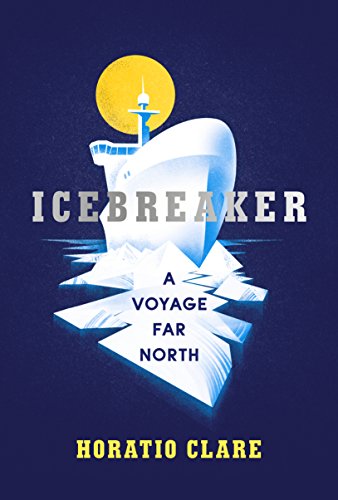
Icebreaker By Horatio Clare

I only found out about this book and it’s author Horatio Clare today, but this book is on my ‘must read before the end of 2018 list.’

‘We are celebrating a hundred years since independence this year: how would you like to travel on a government icebreaker?’
41lY0KRMvtL.jpg

A message from the Finnish embassy launches Horatio Clare on a voyage around an extraordinary country and an unearthly place, the frozen Bay of Bothnia, just short of the Arctic circle. Travelling with the crew of Icebreaker Otso, Horatio, whose last adventure saw him embedded on Maersk container vessels for the bestseller Down to the Sea in Ships, discovers stories of Finland, of her mariners and of ice.

Finland is an enigmatic place, famous for its educational miracle, healthcare and gender equality – as well as Nokia, Angry Birds, saunas, questionable cuisine and deep taciturnity. Aboard Otso Horatio gets to know the men who make up her crew, and explores Finland’s history and character. Surrounded by the extraordinary colours and conditions of a frozen sea, he also comes to understand something of the complexity and fragile beauty of ice, a near-miraculous substance which cools the planet, gives the stars their twinkle and which may hold all our futures in its crystals.’ – Amazon

Buy it here.

Other Titles To Check Out

ScandiKitchen: Fika & Hygge By Bronte Aurell

Wild Guide: Scandinavia By Ben Love

Scandinavian Christmas By Trine Hahnemann

Finding Sisu: In Search Of Courage, Strength And Happiness The Finnish Way By Katja Pantzar

Folklore: The Northlore Series Edited By MJ Kobernus


An Expat’s Life In Sweden : Winter’s Light & Details

The temperature has been rising again, so today was very slushy and I was very miserable, so I’m going to share some shots from a few weeks ago when the air was cold enough to catch in my throat and the light was glorious.

The light of spring and summer doesn’t get to me the way winter’s light does. Winter’s softer light gives me an energy that I’m unable to find in any other season. In spring and summer, more often than not I find myself saying ‘oh, piss off already, sun,’ and I can find myself slipping into many a depression during the warm months, because there’s too much light and not the sort of light that feeds my spirit.

_MG_9567-2

_MG_9571-2

_MG_9455-2

The details of winter – iced streams, frozen spider webs – can hold me captivated for hours. Literally. I nearly always loose track of time when I’m walking in the forest in winter, and more often than not, find myself making my way home in the dark.

_MG_9475-2

_MG_9592-2

_MG_9587-2

I would love to know which seasons help your spirit thrive.