
Part Two has been a long time coming. Sorry about that, but, you know, life.
If this is your first time visiting A Nordic Fever, I suggest reading Gallivanting Around The South Of Iceland: Part One before embarking on this post.
Still Day One
One of our last stops on our first day—after realising that we were still four and a half hours away* from the campsite where we were supposed to be spending the night—was a man-made cave which neither of us knew existed until we were sailing on by it.
*Finnbjörn had said to me, ‘Say stop whenever you want and I will stop…within reason.’ I took advantage of his giving nature, so accepted the blame for the sluggishness of the trip. We ended up not driving to where we were supposed to go and instead wrangled a place in a field in another, much closer, campsite.
Rútshellir Cave
Not far from Skógafoss, by the Eyjafjöll mountains and literally right off the Ring Road, is one of the largest man-made caves in Iceland. We didn’t have Rútshellir Cave on our itinerary, but it was free and not featured on any tours, so there was only a smattering of other people.
After walking through the stone and wood sheepcote, which was built at some point in the 20th century, there are two caves to explore. The first is about twenty metres long and used to store hay and stockfish (fish air-dried on wooden racks outdoors). People may have lived in it at some point. (I like to believe they did.) The second, smaller cave is thought to have been used as a smithy, though there’s also mention of it being a heathen temple. One of the earliest accounts of the cave dates to 1714, and its name is from its alleged first inhabitant, Rutur. Some think Rutur was an evil chieftain or a thief. Others, like me, suspect he was a troll.


Intriguingly, Rútshellir Cave was of great interest to the Nazis, and in 1936, it was thoroughly searched by the SS troops Ahnenerbem who were under the command of Viking fanboy Heinrich Himmler. Fixated on the idea of a pure Nordic race, they were in Iceland looking for evidence of old temples and were convinced that was indeed an advanced heathen temple.
*As I am wont to do, I went down a rabbit hole about the Nazis and their obsession with Iceland. I found an article in the Reykjavik Grapevine where Helgi Hrafn Guðmundsson writes about how Iceland and the Icelandic people disappointed the German diplomat Dr Werner Gerlach.
Day Two
I thought camping in the car was fine because I’m essentially impish in size, but Finnbjörn (whose name translates to polar bear) was too long to be comfortable and so didn’t sleep. So, we agreed to keep going to the Glacier Lagoon and then return to Akranes. The weather was too hot to be comfortable, and I was radically overstimulated. As it turns out, I’d forgotten how wearing road trips could be, considering my last lengthy one was when I was still in my maiden years.
The Glacier Lagoon
This was, undoubtedly, the busiest place on our road trip. Tourism has reached unprecedented heights in Iceland; about a million people visit the lagoon yearly, and we saw many of them on this blistering Monday in June.
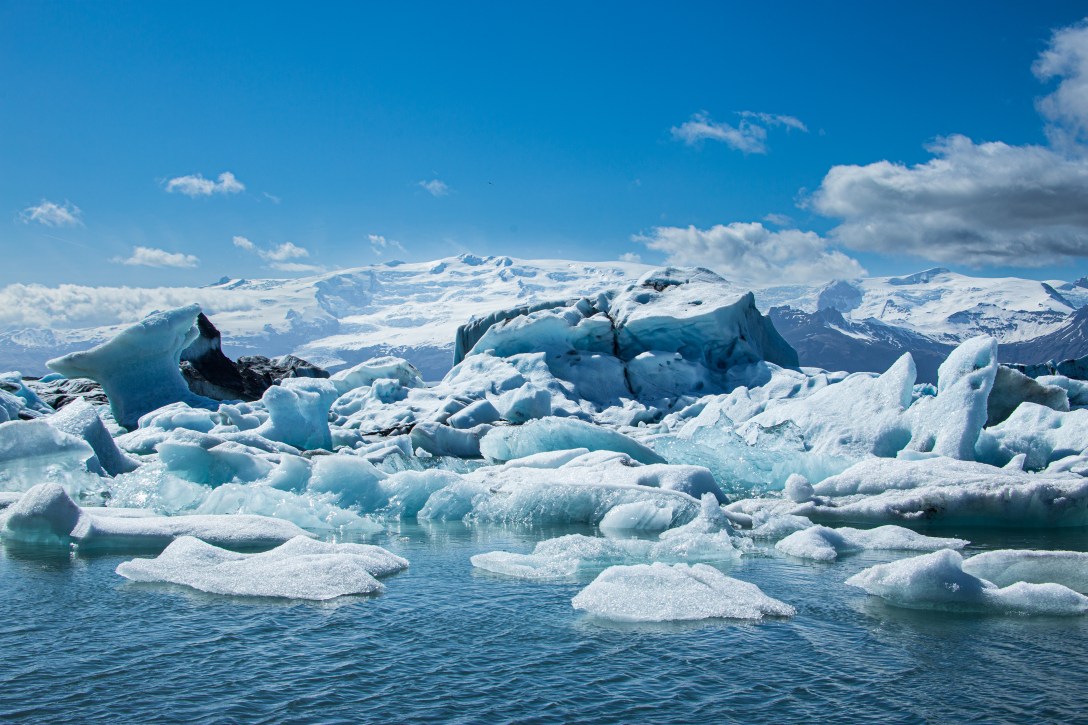
The Glacier Lagoon b.1935 is made up of meltwater and at 932 feet, it’s the deepest lake in Iceland. The ice in the lagoon breaks away from the glacier Breiðamerkurjökull, an outlet of Vatnajökull glacier – the largest ice cap in Europe. (It wasn’t until I arrived home that it dawned on me that there are humans alive right now who are older than this body of water.)


I was childishly manic at the lagoon…but famished, so we headed first for the café. Finnbjörn supped at a double espresso, and I, afraid I was somehow going to miss out on seeing the icebergs, wolfed a piece of white bread and pesto marketed as ‘vegan pizza,’ then bounced up and raced on ahead of my weary boyfriend.
I watched the icebergs intently, bewitched by the glassiness and the zingy blue hues conjured by compression and the dance of light and ice crystals. Some stay in the lagoon for up to five years before drifting the short distance to the Atlantic Ocean. When he joined me by the shore, Finnbjörn pointed out a seal. Nobody else noticed it. It was likely sheltering from the scores of orcas that patrol the waters of Southeast Iceland.


Before reluctantly heading back to the car, I Facetimed my daughter Saga. ‘Are you at the North Pole, mummy?’ I told her we weren’t that far away. She asked if I’d seen reindeer or Santa and what the black on the ice was. I told her it was centuries-old ash from a volcano. She said okay and went back to the picture she was drawing.
Optimistically, I thought I’d ride my good feelings all the long way back to Akranes. I rode them for around forty-five minutes of the five-hour drive before losing it with the midnight sun and wrapping my head in a blanket. But the light was relentless and hounded us all the way home.
From Along The Way


A handful of tips if you’re road-tripping in Iceland during Summer:
- If you’re over 6 feet tall and in your mid-forties, sleeping in the back of a car may be a rough ordeal. I recommend a test run of your sleeping arrangements.
- Yes, the sun is up all night, and yes, it can be tempting to keep going because time feels infinite but don’t.
- If you’re driving electric, know where the charging stations are before your trip begins.
- Always keep an eye on the weather. So many apps exist for this.
- Watch out for sheep and their lambs as well as oystercatchers and their chicks.
- Take more water than you think you’ll need.
- Pack more snacks than you think you’ll need.
- Be wary of speed cameras.
- You will need much more time than you think you’ll need. For example, taking a photo of horses with wind-ruffled manes will not take the sixty seconds you imagine it will.
- Have an itinerary—Finnbjörn made ours using suggestions from Trip Advisor—but make it somewhat flexible.

 the High Arctic and it leaves no nerve unturned.


 Northern Fever