Curious North : 10 Polar Bear Facts

annie-spratt-YXPKFBsLtkc-unsplash
Annie Spratt

The Inuit Have Many Different Names For The Polar Bear

The Inuit have many, many names for Nanuq. In this instance, I’ll take examples from The Netsilik Inuit of Canada. (Interestingly, they were among the last of the northern indigenous peoples to be preyed upon by Southern missionaries.) The adult male is anguraq, the adult female without cubs is tattaq, the pregnant female is arnaluk, the newborn is hagliaqtuq and the teenage polar bear who’s almost the same size as his mother is namiaq.
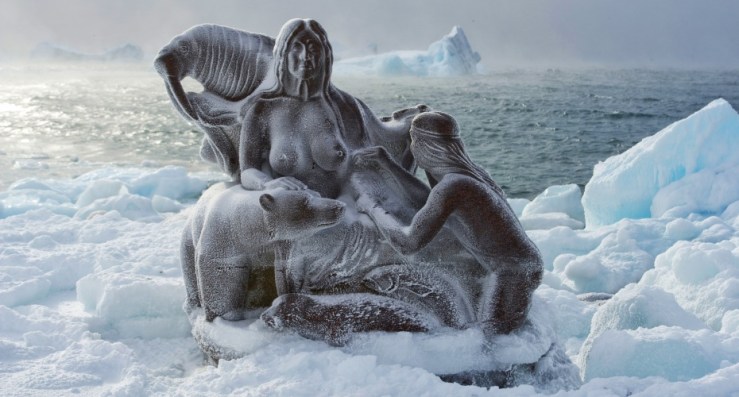
havets_moder
‘Havets Moder’ by Christian Rosing

In Inuit Mythology, The Polar Bear Is Said To Have Been One Of Sedna’s Finger Joints

In Inuit culture, the origin of the polar bear is somewhat blurred. However, in some stories, the polar bear started life at the same time as all other Arctic marine creatures – when Sedna had her hands hacked off with an axe wielded by her own father. It’s said that the sea goddess’s fingers became seals and fish, whereas the rest of her hands became the whales and polar bears.
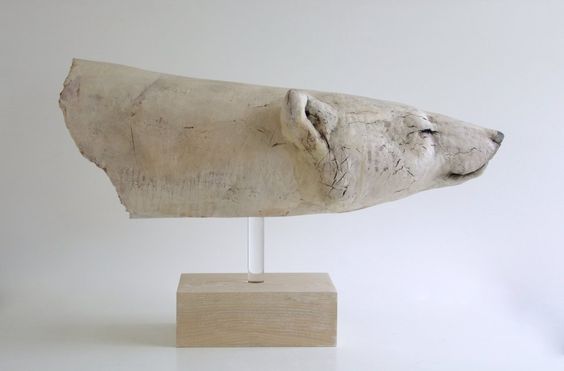
David Shephard
David Shepherd

Nanuq Was Always Honoured By The Inuit After The Hunt

When hunting, the Inuit always maintained the highest level of respect for the great wanderer. And this continued after death. In northwestern Alaska for example, a ritual would be observed called the Polar Bear Dance. It would celebrate both the hunter and the hunted.

It was believed the bear’s spirit would attend the ceremony, so great care was taken to honour the spirit so it would move on its way. The bear’s skull would be placed on a bench so it was able to ‘watch’ the dancing and feasting. This would go on for four or five days, after which the hunter who had killed the bear would then take the skull out onto the sea ice. When the hunter would hear the sea ice make a noise, he would know the spirit had left.

Adam Binder
Adam Binder

The Mother Of All Polar Bears Was Found In Ireland

When I think of all the places the polar bear could have originated from, Ireland isn’t the first destination on the list. However, it appears the mother of all polar bears descended from a brown bear which lived 20,000 – 50,000 years ago in the present-day Emerald Isle. DNA taken from polar bears from Russia, Canada, Greenland, Norway, and Alaska showed that each individual bear’s ancestry could be traced back to the Emerald Isle dweller.

tumblr_nakhhqwFT21qhh9l6o1_400
Le Petit Journal

Suicide by Polar Bear Has Happened More Than Once

Remember that tragic event in 2009 when Mandy K, a school teacher from Berlin attempted to commit suicide by entering the polar bear enclosure at Berlin Zoo? Well, I’ve recently discovered that she’s not the only person to have entered a polar bear enclosure with the intention of killing themselves.

Back in 1891, a woman by the name of Karoline Wolfe climbed down a rope into the Frankfurt Zoo’s bear pit with the aim of ‘being eaten alive by a white bear.’ Unlike Mandy K, Karoline didn’t leave the pit alive. In 1903 when the bear who had ‘shredded her flesh’ passed away, a number of Frankfurt businessmen has some postcards printed on which was the bear’s obituary. In the obituary, the bear was described as Wolf’s ‘ravenous lover,’ who was ‘so infatuated with her that he ‘gobbled her up.’
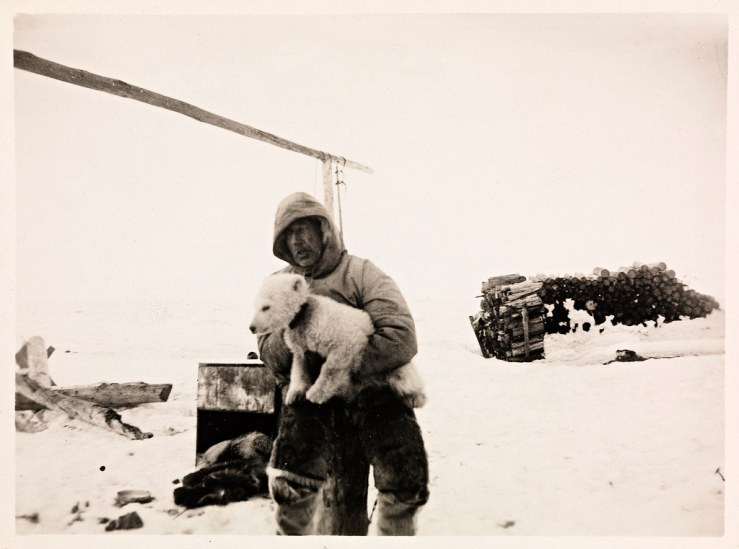
no-nb_bldsa_NPRA1998 001
Photographer unknown

Roald Amundsen Considered Using Polar Bears To Pull His Sledges

Poor Captain Scott has been mocked relentlessly for his idea to use ponies to pull his sleds in Antarctica. But Norwegian explorer Roald Amundsen also had a bizarre plan for his North Pole expedition – to use polar bears instead of dogs. Apparently, the thought first crossed his mind when he first saw trained polar bears in a zoological garden in Hamburg.

In an interview, Amundsen said: “These bears, when properly trained, are as tractable as oxen. They are at home in the cold of the Arctic and can be easily cared for and fed with seal meat.” But taming a bear isn’t an easy feat. The idea didn’t take off in the end – Amundsen wasn’t prepared to try and handle his fury convoy on his own – though over a decade after proposing the idea, he was still up for it, despite having been mauled by a bear in the meantime.

annie-spratt-3zE3OXraC9Q-unsplash
Annie Spratt

Polar Bears Get Hot Extremely Fast

You would think that, on occasion, a polar bear might get a bit cold. But they actually have the opposite problem – they overheat extremely easily. It’s much more likely for a polar bear to die from the heat than it is for them to die from the cold. With their two layers of fur and a solid layer of fat (which can measure up to 4.5 inches thick), their metabolic rate is steady, even in the most frigid of temperatures. While they can sprint up to 30 miles an hour if they need to, they can’t spend much time running as their temperature can rise to dangerous levels if they move too fast.

Svalbard

Polar Bears Don’t Hibernate

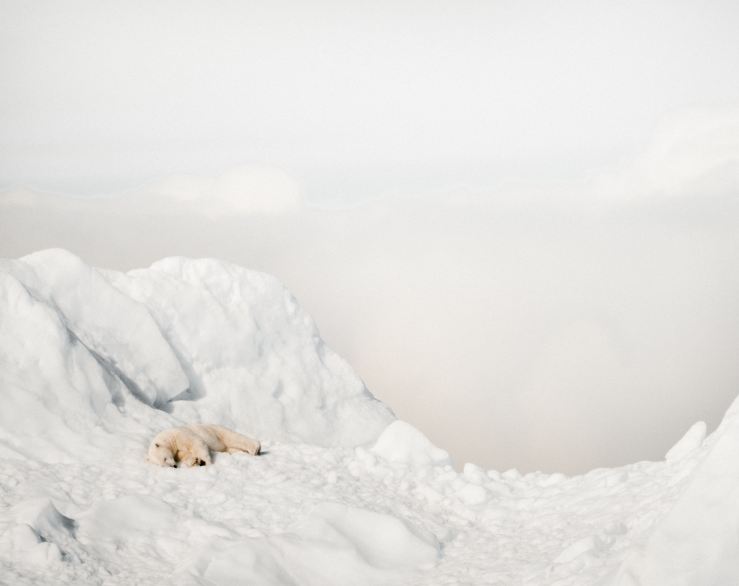
Unlike grizzlies and black bears that spend each winter in hibernation, polar bears don’t need to, and instead spend all winter being active. The reason being that there’s plenty of food available to hunt. The exception though is when a female bear is pregnant. Then, she digs herself a den and is sealed inside, surviving off her fat stores, until her cubs are large enough to brave the outdoors.
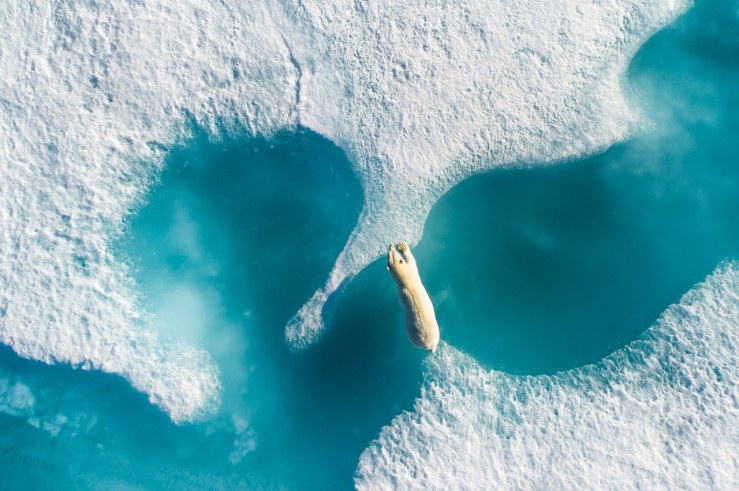
2017LEDOUX_030_002_013-3.jpg
Florian Ledoux

Doors Are Kept Unlocked In Churchill On Halloween

On the shores of the Hudson Bay in Manitoba, Canada, lies the town of Churchill. During Autumn, hundreds of bears pass through on their way to the hunting grounds. During this time, many of the locals don’t lock their doors so that if someone is running from a polar bear, they can duck inside. Halloween happens smack bang in the middle of polar bear season and, unsurprisingly, kids aren’t allowed to wear anything white for the festivities.
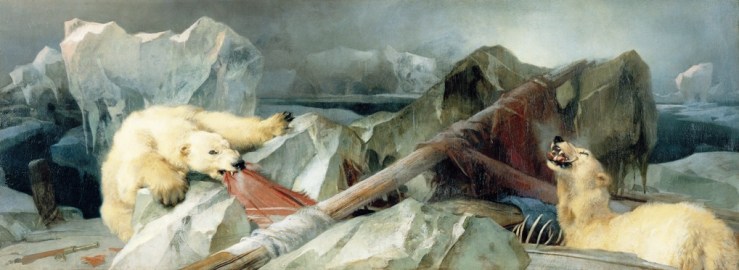
Manproposesgoddisposes.jpg
‘ Man Proposes, God Disposes’ by Edwin Henry Landseer

Superstition Surrounds Man Proposes, God Disposes

The painting Man Proposes, God Disposes (1864) by Edwin Henry Landseer, was inspired by the search for Franklin’s Lost Expedition and features two polar bears among the grizzly remains of the expedition wreckage. The painting, which hangs in the study hall of Royal Holloway, University London was, for a long time, covered up with a Union Jack during exams, for it was said students who sat in front of it were doomed to fail. One urban legend claims that in the 1920s a student looked at the painting and stabbed themselves in the eye with a pencil, after writing on their exam paper ‘the bears made me do it.’

Sources
Ice Bear by Michael Engelhard


North Of Instagram

Instagram and I have had quite the unstable relationship over the years, so I thought I’d change that around and make it into something special.

The best way I could think to do that was to embrace all the striking northerly content I could find and share it here through a new series called North Of Instagram.

I hope that with this sharing, I’ll be able to introduce you to creative individuals who’ll stoke the northerly obsession that burns in your heart!

View this post on Instagram

#nordvis #home #lapland

A post shared by Nordvis (@nordvis) on


https://www.instagram.com/p/B3fn7QoHOkg/

View this post on Instagram

🌲 Austefjorden 🌲

A post shared by Frida Engeset Løfoll (@fel.illu) on

Eyes On The Arctic : Need To Read Things

I’m back with Eyes On The Arctic, a weekly post where I collect all the need-to-read arctic related things that I’ve found over the past several days, and put them here in a handy bundle of links for you to pick, click and read.

12526-snowflakeRussian Scientists Find ‘Most Powerful’ Ever Methane Seep In Arctic Ocean

12526-snowflakeResearchers Freeze Ship Into Arctic Ice For Year-Long Study On Climate Change

12526-snowflakeProtecting Life In The Arctic Seas

12526-snowflakeI Am A Diver Who Documents Climate Change In The Arctic. And I Am Running Out Of Time

12526-snowflakeCanada’s Arctic, Boreal Birds Will Be Big Climate Change Losers

12526-snowflakeThe Woolly Mammoth Made Its Last Stand Marooned on an Isolated Arctic Island

12526-snowflakeIce With That? Critical Need For Sustainable Arctic Travel

Fäviken – The End Of A Nordic Dream

In 2017 I found myself hooked on the Netflix show Chef’s Table. Each beautifully shot episode focuses on one of the world’s top chefs and their (often tumultuous) rise to success. I don’t watch TV as a habit, and when I do tune in, the show has to be something that’s going to enrich my life. Chef’s Table did exactly that. Though one episode more so than others – the episode about Swedish chef, forager, hunter, and gardener Magnus Nilsson and Fäviken – one of the world’s best and most isolated restaurants.

4288
Photo : Per-Anders Jörgensen

After just ten minutes, my heart rate was quickening with excitement, and I scribbled ‘eat at Fäviken’ on my list of ‘Things To Do In The Nordics Before I Die.’ Being who I am, a woman with a northern fever, I developed something of an obsession with this little place deep in the forests of Jämtland, and the food grown (more than half of the food diners eat at Fäviken has been grown, found or hunted in the 20,000 acres of grounds), prepared and served there. 

4252
Photo: Erik Olsson

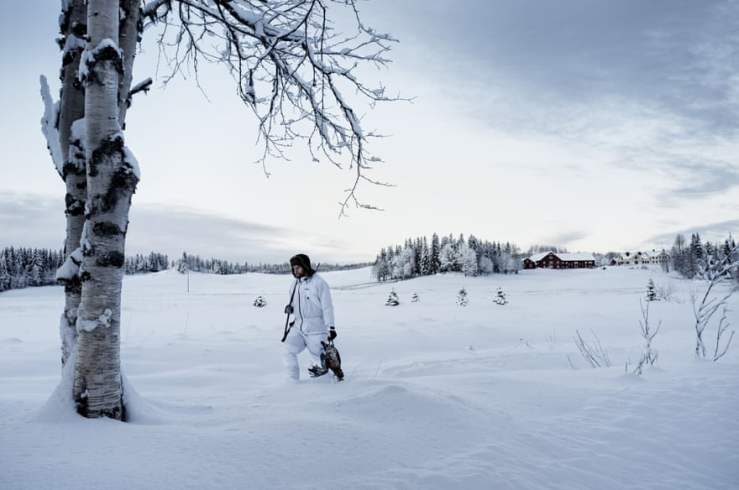
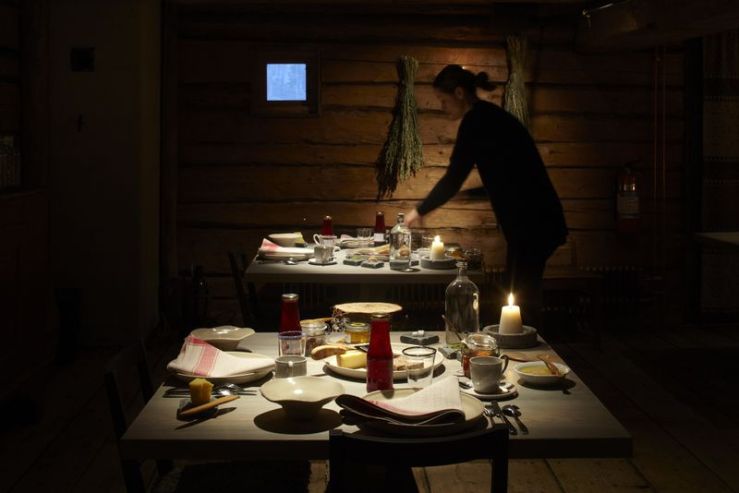
Following seasonal variations is at the heart of what Nilsson does at the 16 seat restaurant, as is keeping things rustic – the dining room is located in an old barn and is decorated with a full-length fur coat on the wall and aged cuts of meat hung from the ceiling.

Whatever is available on the day – be it carrots harvested several months ago or fish that was pulled from the river that morning – is served up as a theatrical 32-course extravaganza.

The methods Nilsson uses to prepare his menu include vegetables smoked using decomposing leaves, warm marrowbone extracted from a cow’s shinbone using a two-man saw and ice cream churned in a creaky wooden ice cream maker from the 1920s. Nilsson purposefully doesn’t take great care of the machine, as the noise it makes enhances the Fäviken experience.

We do things as they have always been done at Jämtland mountain farms; we follow seasonal variations and our existing traditions. We live alongside the community.

During the summer and autumn, we harvest what grows on our land as it reaches the peak of ripeness, and prepare it using methods we have rediscovered from rich traditions, or that we have created through our own research to maintain the highest quality of the end product.

We build up our stores ahead of the dark winter months. We dry, salt, jelly, pickle and bottle. The hunting season starts after the harvest and is an important time, when we take advantage of the exceptional bounty with which the mountains provide us. By the time spring and summer return to Jämtland, the cupboard is bare and the cycle begins again.

– Magnus Nilsson

I can remember the day after I watched Chef’s Table. I went to my Swedish class and, instead of doing online study with a Swedish language app, I sneakily waded through all of the interviews and reviews of Fäviken that I could find. I wanted to know everything. When I discovered that Nilsson had written a Fäviken cookbook, it took all of my will power not to skip class and power to the library.

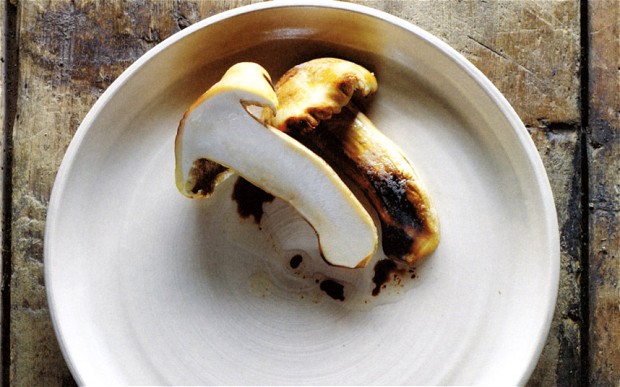
food3_2355637b
An image from the cookbook.

When school was over, I practically flew to the library and went immediately to the food section, panicking that someone else would have been as enchanted about Fäviken as I had been and would have got there first. But they hadn’t. And when I found it I nearly cried. I opened it up at random and landed on a page where one of his signature dishes shone back at me – a single scallop that’s been poached in its own juices and served in a huge shell on top of a bed of moss and smouldering juniper branches. I hugged the book to my chest and hurried home to read.

WAMCCYGOJ5GYHGURZIT4QKTGVE
Photo : Erik Olsson

I dove into the Fäviken cookbook with an enthusiasm that I’ve never before felt for any book about food. And it didn’t disappoint.  The sumptuous narrative about one of Sweden’s most special places kept giving and giving and giving. As well as being a chef with the world in the palm of his hand, Magnus Nilsson can also write extraordinarily well. This isn’t just a cookbook with recipes – but oh friends, what recipes they are! – it’s a beautiful tale about a wondrous restaurant and the people and wild things that make it what it is.

ZVFZOM3TXNAEXL2MBF3O2O6AFU
Photo : Erik Olsson

Time has passed since I first heard about Fäviken and relished the cookbook (Nilsson has also written The Nordic Cookbook, a humongous tome that records the past several hundred years of Nordic cooking and contains a whopping 730 recipes), but I’ve missed my chance to eat there. I will die without having eaten at Fäviken.

SFY7W4WCABHHDLXTZJZP5Q7524
Photo : Erik Olsson

You see, Fäviken shall, by the end of this year, be no more. The other day on Instagram, a post popped up from Nilsson about how this year the restaurant will close and it will never open again. He waited until the restaurant was fully booked for the year before announcing the closure. Nilsson has given one interview about the closure – to the LA Times – and that’s it.

Now, while it might seem a tad dramatic, I do feel this real sense of loss. I never doubted that I would, one day, be eating 32 courses at a barn in the far north of Sweden. But I don’t intend for my dream to die entirely…I’ll be going back to the cookbook with the goal of making every damn recipe in it.


An Expat’s Life In Sweden : My Relationship With Winter

I think about winter all. the. time. There’s never a time when the cold isn’t on my mind. As soon as the year ticks over into November, I turn my face to the sky for that first snowfall.

But snow has been scarce this year. Extremely scarce. Scarily scarce. I want to move further north, where it’s colder, and darker and the snow has been falling steadily for weeks. I dream of having a house where the forests meet the mountains and people are few and far between.

I’m grateful for the ice that we have though, even if the temperatures are fluctuating wildly, leaving it to weep then crackle and freeze…weep then crackles and freeze.

_MG_0403-2.jpg

_MG_0411-3.jpg

_MG_0391-2

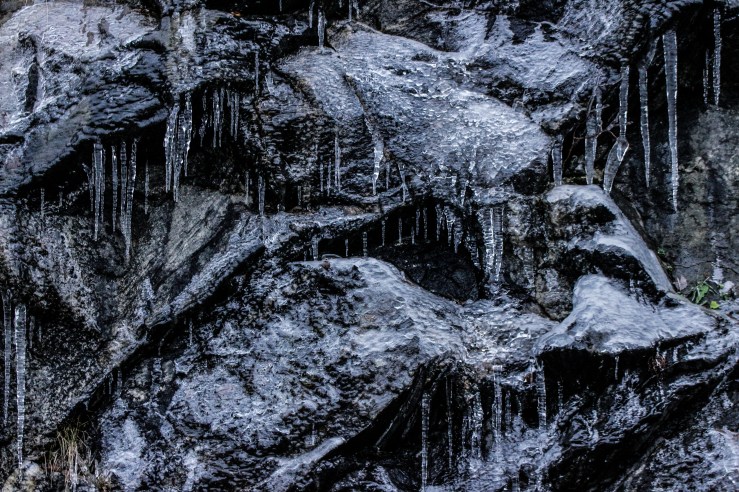
There’s a wall of rock near home, one that has captivated ever since I moved to Sweden. I pass it almost everyday, but it’s in winter time when I can’t stay away from it, for those months when it grows ice.

These photos were taken today, at around 2.30. I’d just come back from the store and ran inside to grab my camera. The rock wall with become covered with more ice over the coming months, and while today, many of the icicles were breakable, they will become thicker and more steadfast, glistening and shimmering in the short hours of daylight, and gathering strength in the cold hours of night.