Biting Season: Notes On A Northern Plague

Autumn and its gales may be here (rejoice!), but I’m sharing this post regardless. I started writing about mosquitoes in September, but glanced away from the page, and October blew in. You know how it is, I’m sure.  

A few years ago, I was celebrating Midsummer with family in Sweden. The weather was impeccable, the midsommarstång inspiring to behold, and the mosquitoes, for whatever reason (no repellent involved – I’d forgotten it), keeping a wide berth.

Well, keeping a wide berth from me. I was the only one not being savaged by summer’s least welcome players. My partner at the time – a man of Icelandic stock – was plagued worse than everyone and carries the scars to prove it.

Intriguingly, it may have been an odour in my sweat that was keeping them at bay. This lucky break was an isolated incident, though, as typically I’m swarmed and left with archipelagos of bites which swell to memorable heights.
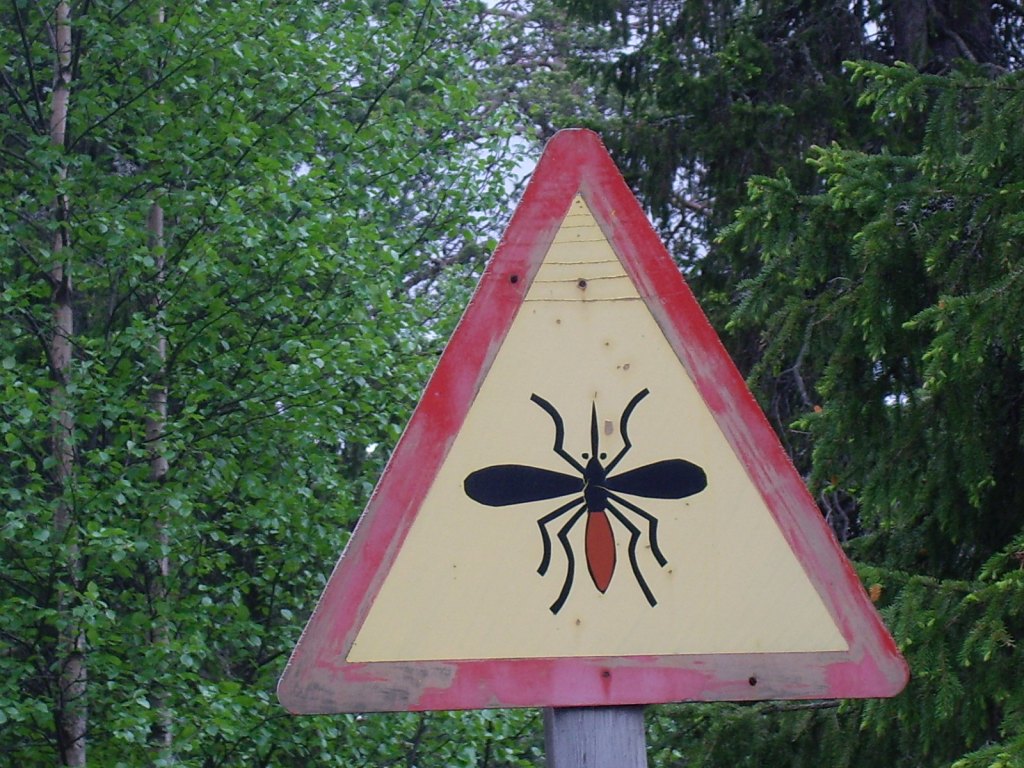
Legit mosquito sign in Finland. (Wikipedia.)

It’s a little awkward to admit that I typically try to “shoo” mosquitoes away. On the occasion I’ve been beset with rage by their assaults and have slapped them to death, I’ve felt horrible. It’s difficult to reason with yourself when your neurodivergent empathy extends to biting insects. I may have felt differently had I been in Lapland, where mosquito swarms are biblical. I read a comment on Reddit about a couple getting out of their car, only to immediately dart back inside after spotting a fast-approaching mosquito cloud.

It’s not unusual for animals to spend so much time trying to escape mosquitoes that eating becomes impossible, and they starve to death. They can also die from blood loss – a swarm can take as much as 300 ml of blood from a single caribou in a one day.
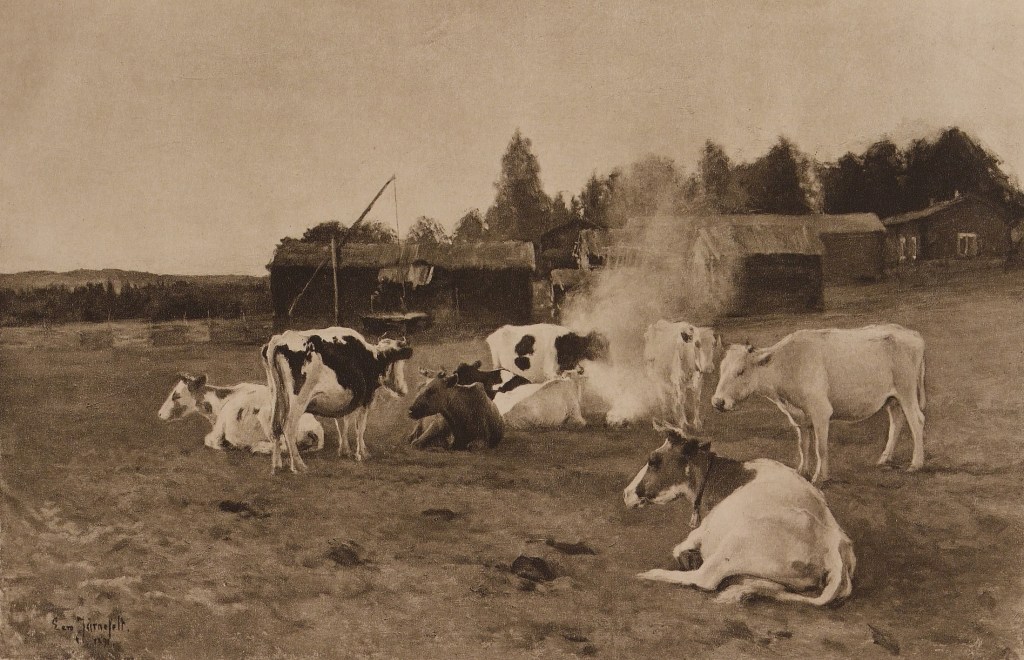
‘Smoking fire near the cows to keep off mosquitoes and other insects while the cows were milked.’
Eero Järnefelt (1891)

I’m familiar with summer in the Nordics for the most part, but I’ve only recently learned that there are 50-60 species of mosquitoes in the Nordic countries alone. (Imagine how flabbergasted I was to discover over 3,000 species of mosquitoes exist worldwide.) I was also late to learn that it’s only female mosquitoes that feed on blood, while males feed exclusively on nectar.

Any standing water – from a puddle to a gutter to a tyre track –  can host a breeding ground and then a nursery for developing larvae. Iceland’s lack of standing water is one reason mosquitoes haven’t managed to get a foothold.

…as I made my way round their boggy breeding grounds they rose up to meet me in dark, swirling clouds, insinuating themselves in my clothes, choking my mouth and smothering every inch of my skin in bites. As I  saw my hands beginning to swell, I ruefully consoled myself with the thought that at least I would not contract malaria, because my tormenters belonged to the genus Aedes which, happily, are not carriers of the disease.”

Walter Marsden, Lapland: The World’s Wild Places

*Soon after reading this – bear in mind Lapland was published in 1975 – I found out that mosquito-borne diseases such as malaria are spreading across Europe due to the climate crisis.

Early explorers of the North described mosquitoes as ‘worse than the cold,’ and ‘the one serious drawback of the north.’ I’m surely not the only one who relishes the vision of fumbling English gentry being set upon by mosquitoes, which have also been called ‘a frightful curse,’ as well as, quite fabulously, ‘…devils…armed with a lancet and a blood-pump…’    

“In the summertime in Iqaluit, the capital city of the Inuit-administered Canadian territory of Nunavut, swarms of insects hover above the inhabitants like cartoonish clouds of gloom as they go about their day-to-day lives.

Kate Press, Briarpatch Magazine

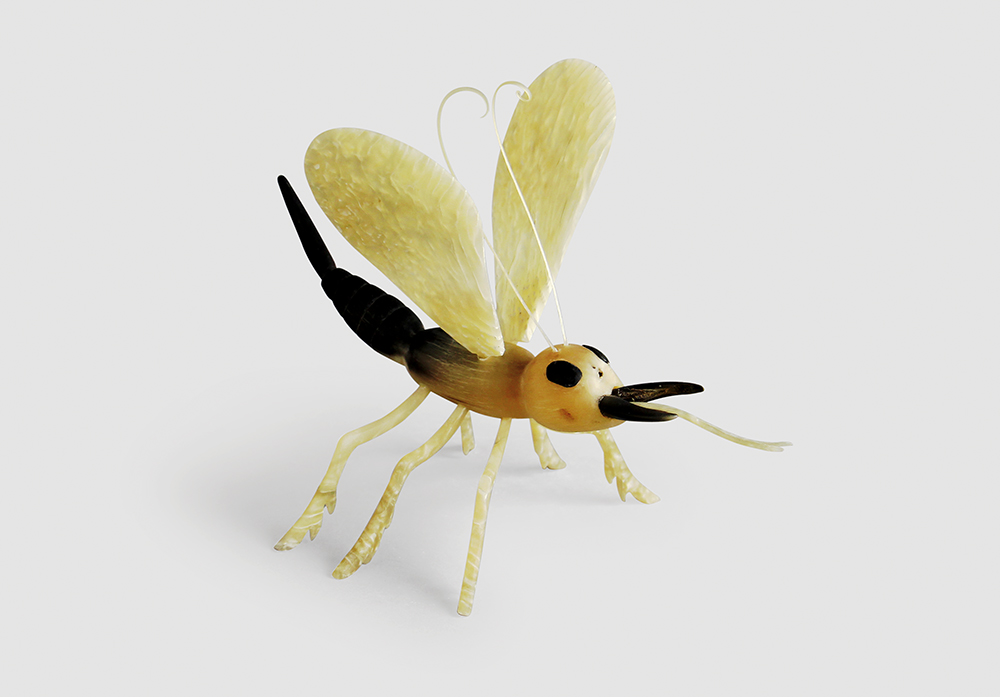
Igah Hainnu Mosquito (2016) Muskox horn, seal whiskers and seal claws 

Many indigenous peoples of the Arctic viewed mosquitoes as something sent to ‘test endurance.’ For the Sámi, enduring harassment from mosquitoes was a way of proving hardiness. Young herders and hunters were expected to tolerate swarms during migration and calving season without excessive complaint. Jonna Jinton, an artist living in northern Sweden, endures the biting plague with humour, as demonstrated in this tongue-in-cheek mosquito meditation video.

In the Swedish town of Övertorneå, the community hosts the World Championship in Mosquito Catching, where the winner is the person who catches the most mosquitoes in just fifteen minutes, earning a cash prize and being crowned world champion.   

In Finland, one of the Nordic countries I’ve yet to visit, these micro-predators have their own signs, and there’s a history of ‘mosquito bravado.’ Especially among the likes of fishermen and loggers who work amidst clouds of mosquitoes.

“We were breathing hard now, sweating in the afternoon haze and mobbed by a few thousand mosquitos each. Every square inch of exposed skin was smeared with Vietnam-issue jungle juice, stuff that dissolves plastic buttons and burns like acid in your eyes. It kept the actual blood loss down to a level that didn’t threaten death, but that wasn’t the real problem. It was the psychological warfare, airborne water torture. You felt the constant patter, and knew that your back was crawling with living grey fur, hundreds of relentless snouts probing for a chink in your armour. A hand wiped down a sleeve would come away sticky, smeared with corpses, and you strained them through your teeth.”

Nick Jans, The Last Light Breaking: Living Among Alaska’s Inupiat Eskimos

In the 1970s, the Inuk community leader Abe Opic wrote an essay called What it means to Be an Eskimo, where he, justifiably, compared white people to mosquitoes: “There are only very few Eskimos but millions of whites, just like the mosquitos. It is something very special and wonderful to be an Eskimo – they are like snow geese. If an Eskimo forgets his language and Eskimo ways, he will be nothing but just another mosquito.”

Michael Massie The Endurance Game, 2016, serpentinite, bone, birch, ebony and brass

The Inuit have several stories about how mosquitoes came to be. The one you’re about to read was told to the Greenlandic/Danish explorer Knud Rasmussmun by Inugpasugjuk, a member of the Nattilingmiut Inuit community.

There was once a village where the people were dying of starvation. At last there were only two women left alive, and they managed to exist by eating each other’s lice. When all the rest were dead, they left their village and tried to save their lives. They reached the dwellings of men, and told how they had kept themselves alive simply by eating lice. But no one in that village would believe what they said, thinking rather that they must have lived on the dead bodies of their neighbours. And thinking this to be the case, they killed the two women. They killed them and cut them open to see what was inside them; and lo, not a single scrap of human flesh was there in the stomachs; they were full of lice. But now all the lice suddenly came to life, and this time they had wings, and flew out of the bellies of the dead women and darkened the sky. Thus mosquitoes first came.

If you do head to the far North, where the waters lie still and light lingers long into the night, wear long-sleeved shirts (doubling up is advised), socks, and trousers made from dense material. Wear a head net if you have access to one and remember that repellent loses its effectiveness when you begin to sweat. If you think you can escape them by going a bit further North, I should warn you that these blighters are now appearing in places where it was once too cold for them, which is, to put it lightly, worrying as fuck. We all know the North is warming, but the migration of mosquitoes makes it ever more painfully real.

I don’t want to abandon this post without attempting to lighten the mood (for you and me), so if you’re interested in seeing what it’s like to sit in a Finnish forest during summer, this gentleman can show you.

Sources

Inuit Art Foundation

Atlas Obscura (If you want to know about the mosquito catching championship.)

Nunatsiaq News (Observations from Inuit about mosquitoes, including the story featured in this post.)

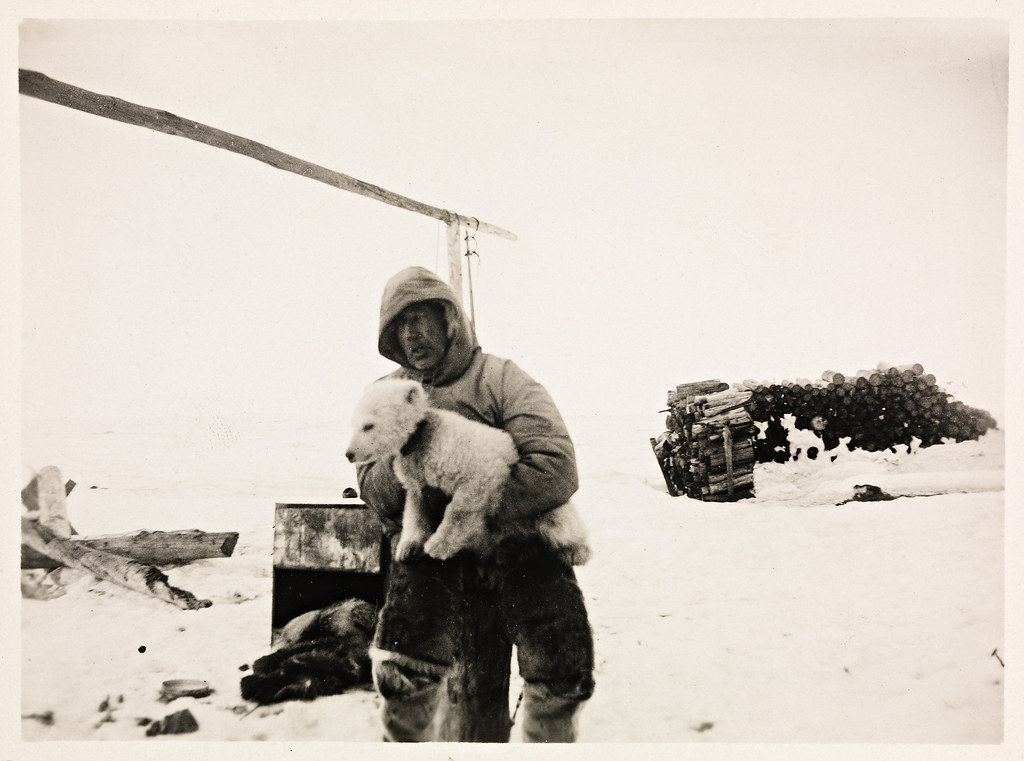
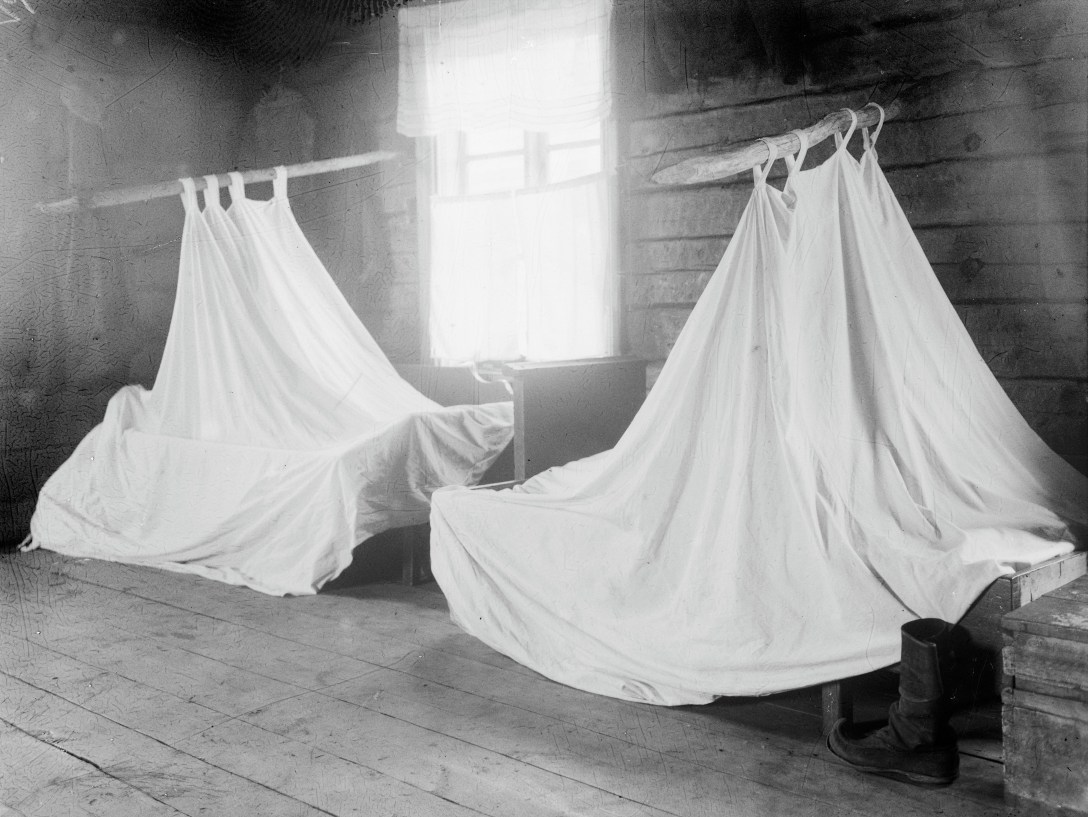
The featured image was taken by Samuli Paulaharju in 1937.

A Nostalgic Yearning For The North – Photographic Finds From The Public Domain Review

Thus far, 2024 has been disorientating, exhausting, painful, maddening and swift. So swift. Too swift. Since doing my initial ADHD assessment over a year ago, I’ve been struggling to come to grips with the reality that I’ve been living with this condition my entire life, and it’s only just coming to light as I hurtle towards my 40s. I’ve also been grieving everything that ‘could have been.’ But I’ll write more about this on my other blog awyrdofherown.blog when possible. 
Around midnight last night, too tired to read, I flickered around on Pinterest, looking for… I’m not even sure what. At some point, I landed on this knitted cape, leading me to Little Scandinavian, where I ended up on a post about The Scandinavian School in London, which looked like everything I would want for my daughter in a school, but whose gigantic fees were painful to read. It’s ridiculous, laughable even, that I let the fees of a school in a city where I don’t even live upset me.

I should have gone to bed then but didn’t. My mood was wounded. So I decided to scout out an image for the cover of my next book and ended up on The Public Domain Review – a treasury for the insatiably curious creative – which I combed through for Nordic bounty. 

While I furiously bookmarked articles and added, to my already gridlocked desktop, old photographs of Norwegian fjords and Icelandic fishermen, I thought about producing an art appreciation post of some of the stuff I unearthed.

For the longest time, ‘art appreciation posts’ and ‘I-saw-these-things-and-thought-you-might-like-them-too’ posts were the lifeblood of my blogs. But then I gradually stopped making them, and I’ve missed making them, and am now on a mission to eradicate the idea from my head that making them ‘is not a good use of my time.’

The articles featured here in order are:

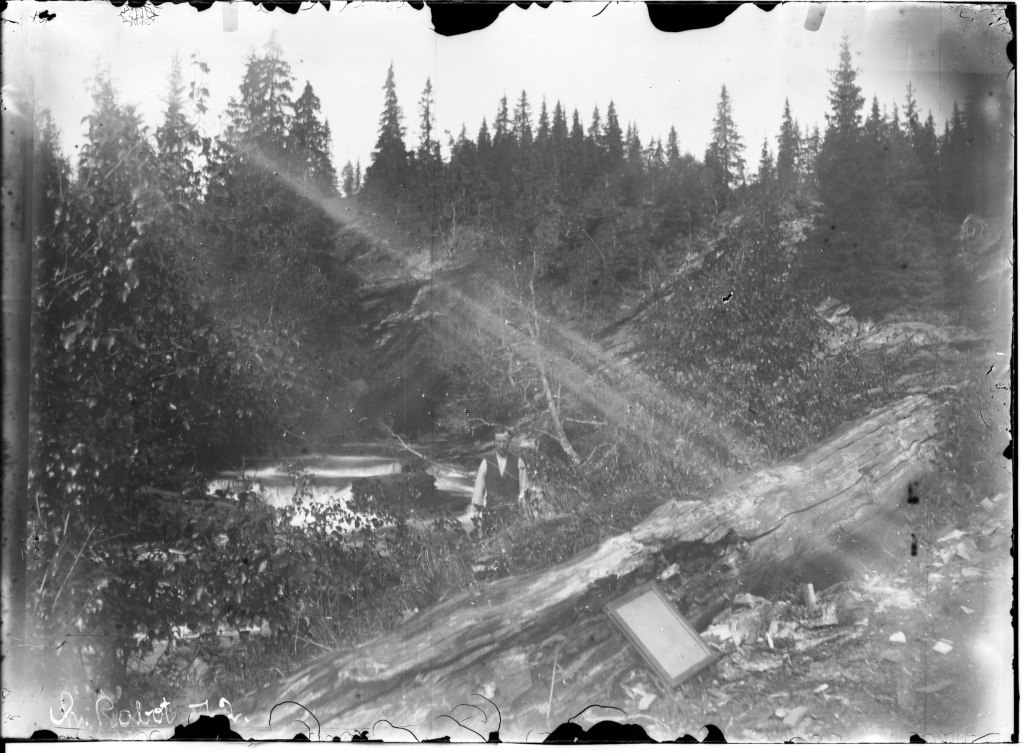
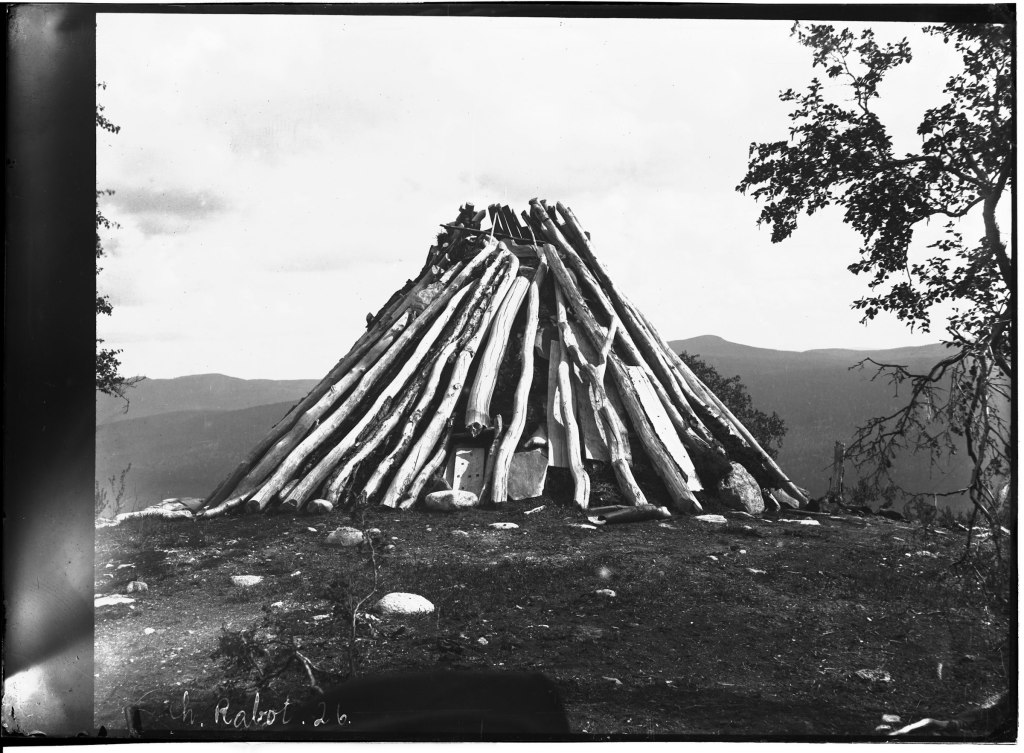
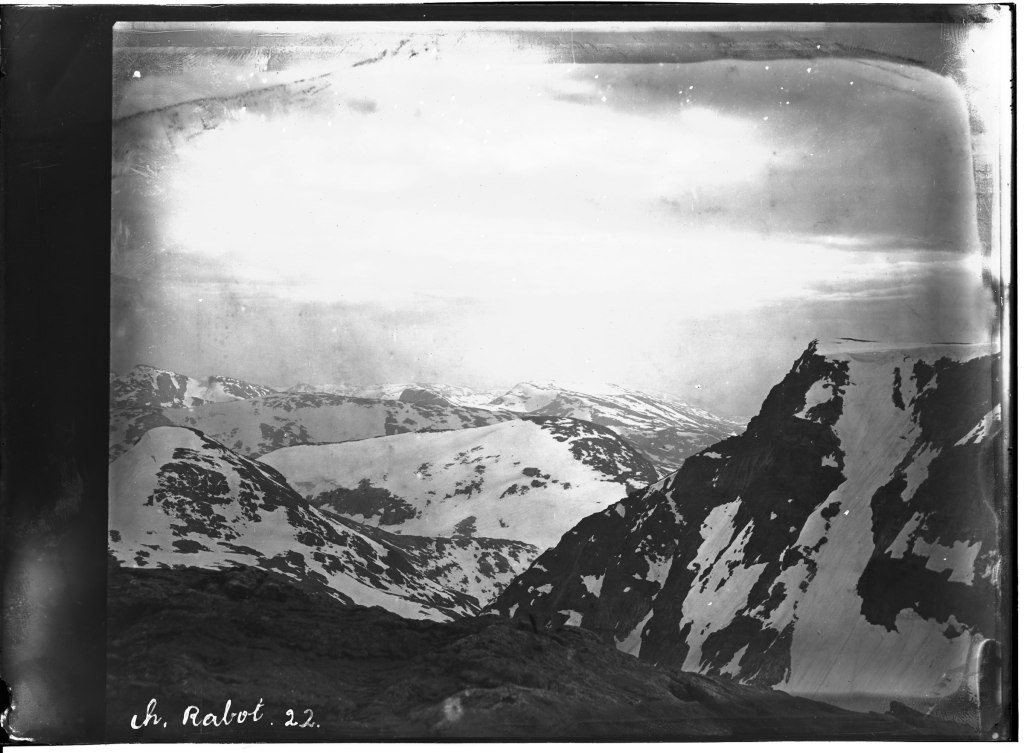
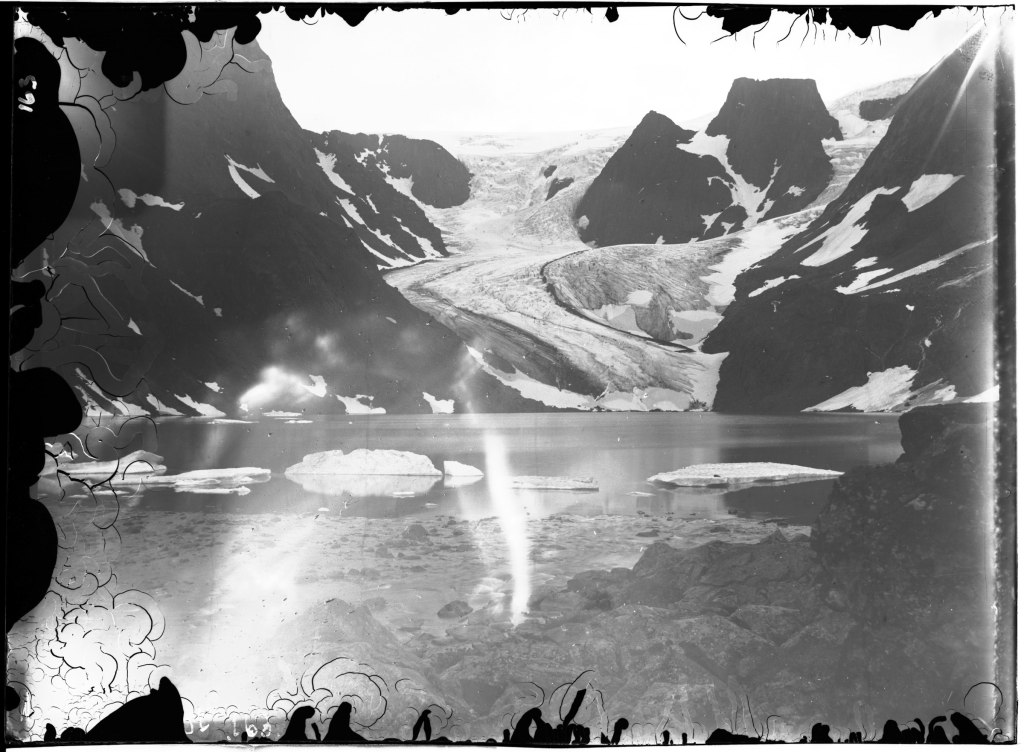
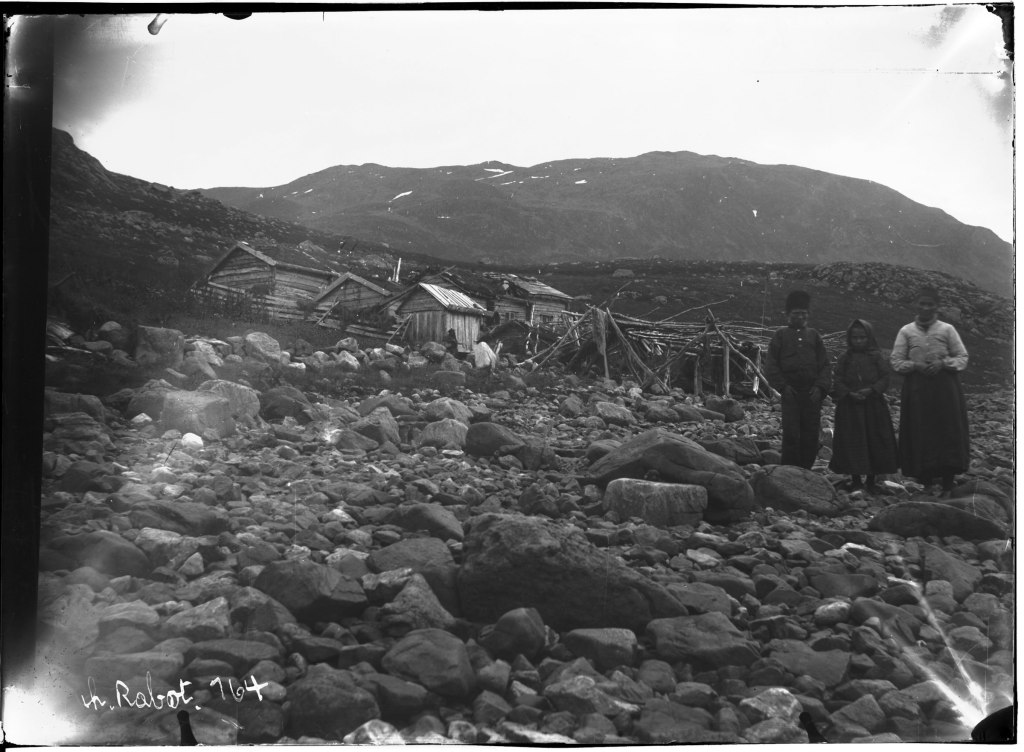
Masters of the Ice: Charles Rabot’s Arctic Photographs (ca. 1881)

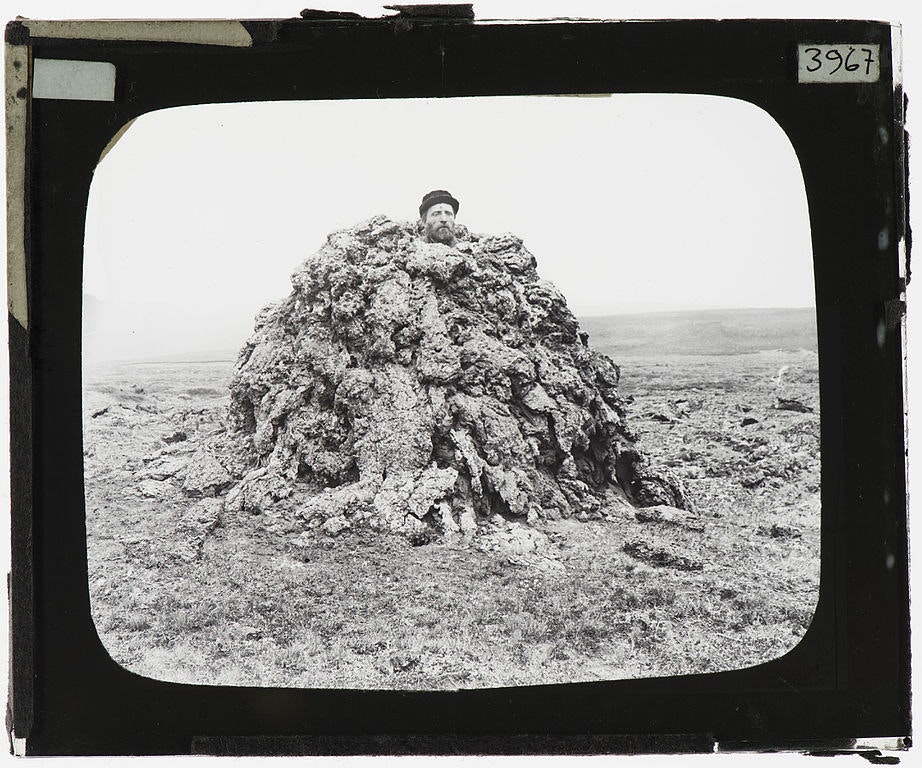
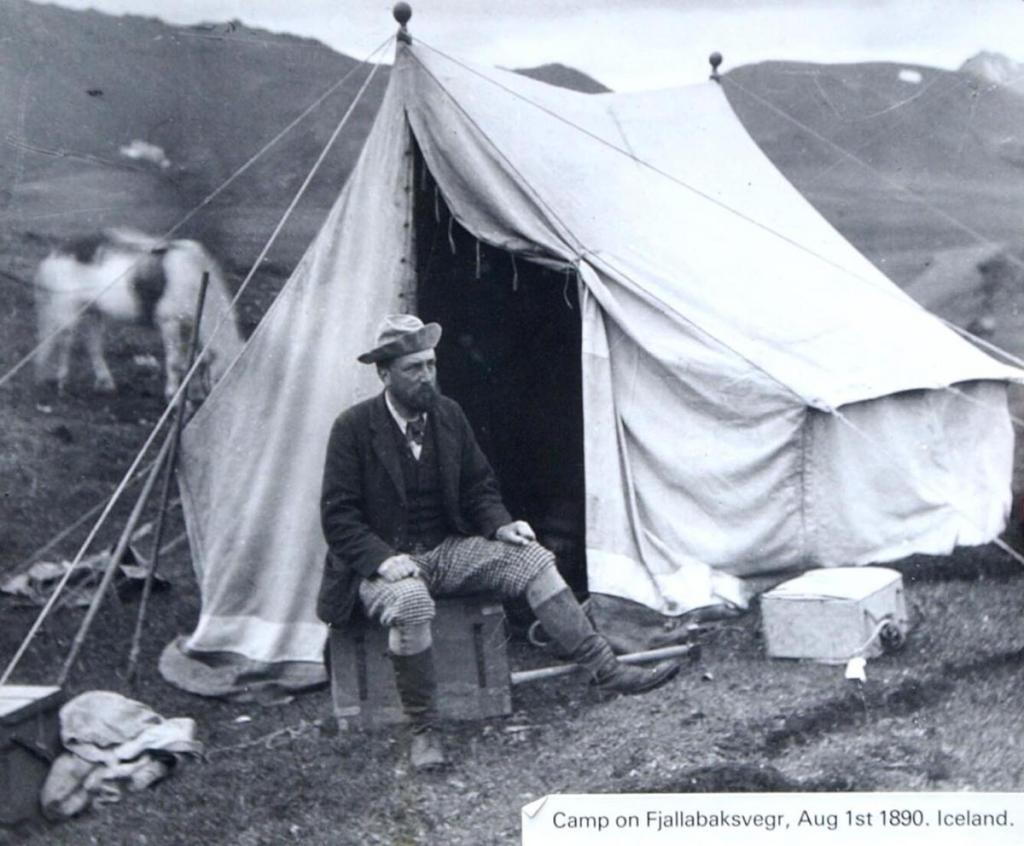
Tempest Anderson: Pioneer Of Volcano Photography

 Lantern Slides Of Norway (ca. 1910)

The first thing to catch my attention on The Public Domain Review was this striking, slightly sinister portrait of French geographer, glaciologist, and photographer Charles Rabot. This picture led me to a stupendously readable essay about Rabot by Erica X Eisen (whose other work I’m going to consume with gusto). Rabot had a ‘particular affinity for Norwegian culture…’ and his awe of ‘boral landscapes’ and ‘nostalgic yearning’ for the north is something I strongly identify with: 

They are so beautiful, so magnificent, those deathly solitudes, so strange in their fleeting finery of brilliant colors, that they always leave one with a burning desire to see them again.’ – Charles Rabot

Eisen’s writing is astute and memorable – the following passage in particular ‘If there are any people to be seen in these snow-pied expanses, they are tiny afterthoughts so overwhelmed by the whiteness around them that any individuating features are obliterated completely — to the extent that these figures seem less like the protagonists of the shots and more like another accidental void bitten into the negative by the frost.’

The first person to climb Kebnekaise, Sweden’s highest mountain, in 1883, Rabot was also friends with the most swoon-worthy of Norwegian explorers, Fridtjof Nansen who’ll be much more thoroughly swooned over in another post where I’ll look at the bizarre but beguiling topic of fancying long-dead polar explorers.

When I searched Iceland on The Public Domain Review, ‘ volcano chaser and pioneer of volcanic photography,’ Tempest Anderson showed up with one of the most gloriously surreal photographs I’ve ever seen.

Very much intrigued by the name Tempest, I was convinced there’d be a riveting origin story, so was a bit put out to find it was simply inspired by a prominent West Yorkshire family. 

Yet there’s no doubt the man led a life not dissimilar to a windstorm—his list of occupations and accomplishments is…extensive. York-born and bred Anderson was a leading eye surgeon as well as a photographer, an inventor of photography equipment, a consulting physician to a lunatic asylum, a prison medical officer, a Sheriff of York… the list ploughs on. At 43, unmarried and restless, Anderson decided he’d use his spare time to study volcanology and chase volcanic eruptions. The photographs he shot in Iceland were taken using one of the earliest panoramic cameras, which, unsurprisingly, Anderson had developed himself. 

I’ll keep coming back to look at these lantern slides depicting Norway from the early 20th century, and I know each time I do, they’ll thrill me all over again. By the way, for full disclosure, I had to Google what a lantern slide is. 

Lantern slides are positive, transparent photographs made on glass and viewed with the aid of a “magic lantern,” the predecessor of the slide projector. Lantern slide plates were commercially manufactured by sensitizing a sheet of glass with a silver gelatin emulsion. The plate was then exposed to a negative and processed, resulting in a positive, transparent image with exceptional detail and a rich tonal range. – Constance McCabe (National Gallery of Art.)

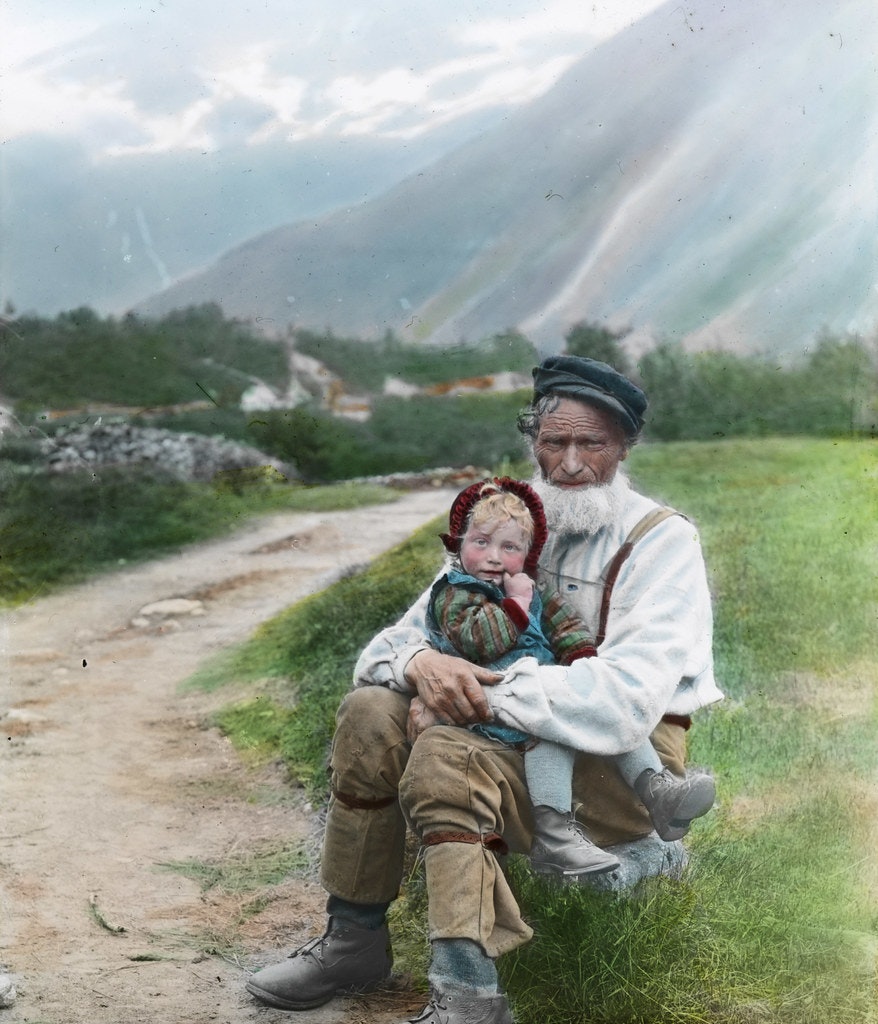
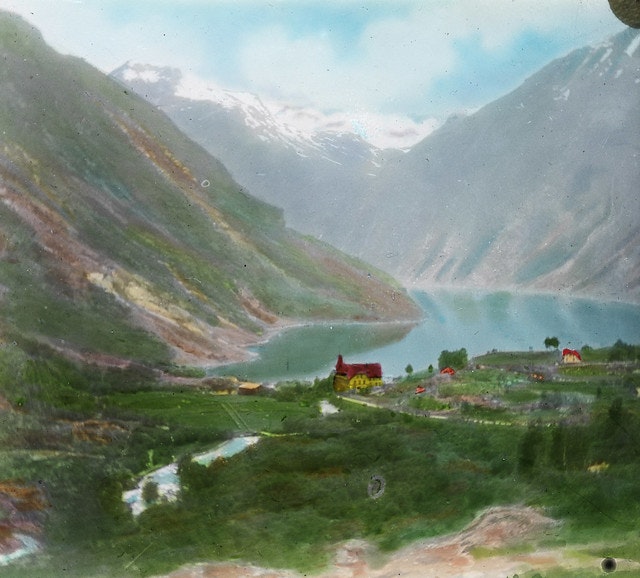
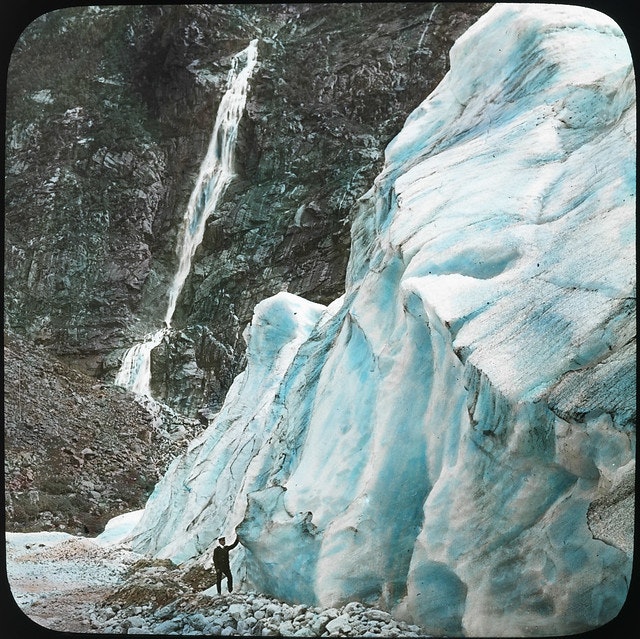
Produced by British photographers Samuel J. Beckett and P. Heywood Hadfield in my favourite part of Norway – Sogn og Fjordane (now known as Vestland) – these bold, crazily vivid lantern slides are held at the county archives in the fjord village of Leikanger, somewhere I’m going to absolutely seek out when I’m next over by way of the Sognefjord. Right now though, I’d very much like to know what the woman on the steps was thinking when this picture was made. Also, image 4 – haunted to my core.

Hadfield was a surgeon on a ship cruising the Norwegian fjords and an amateur photographer in his free time. Little is known about Beckett, but copies of books by both men (The Fjords and Folk of Norway by Beckett and Fjords of Norway A Cruise On The SS Ophir by Heywood) are available on Abebooks and eBay and are very kindly priced for books printed well over a hundred years ago. 

More Recommended Reading From The Public Domain Review

Season’s Bleatings: Finnish Photographs of the Nuuttipukki (1928)

Aurora Borealis In Art

Photographs Of 19th Century Norwegians

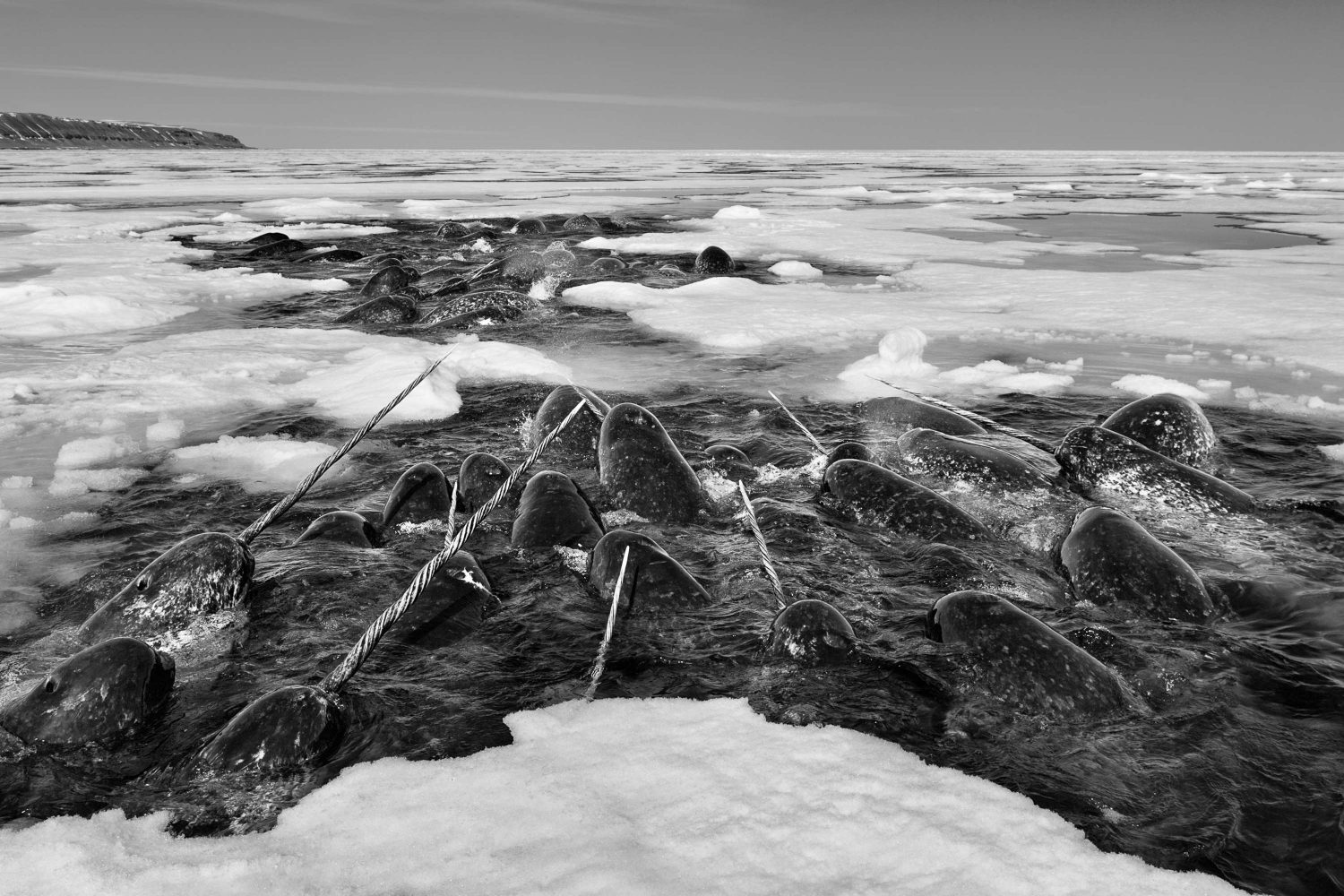
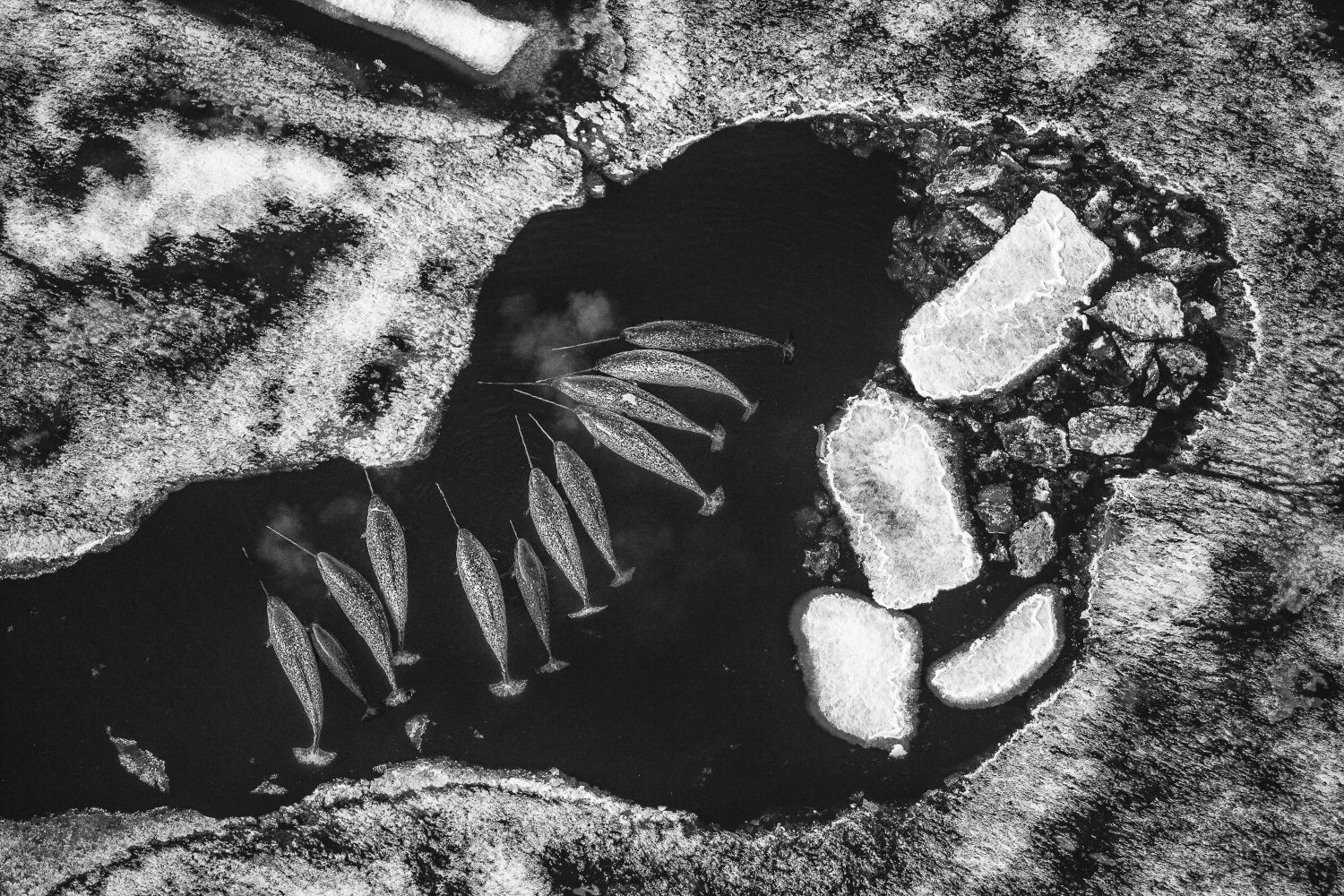
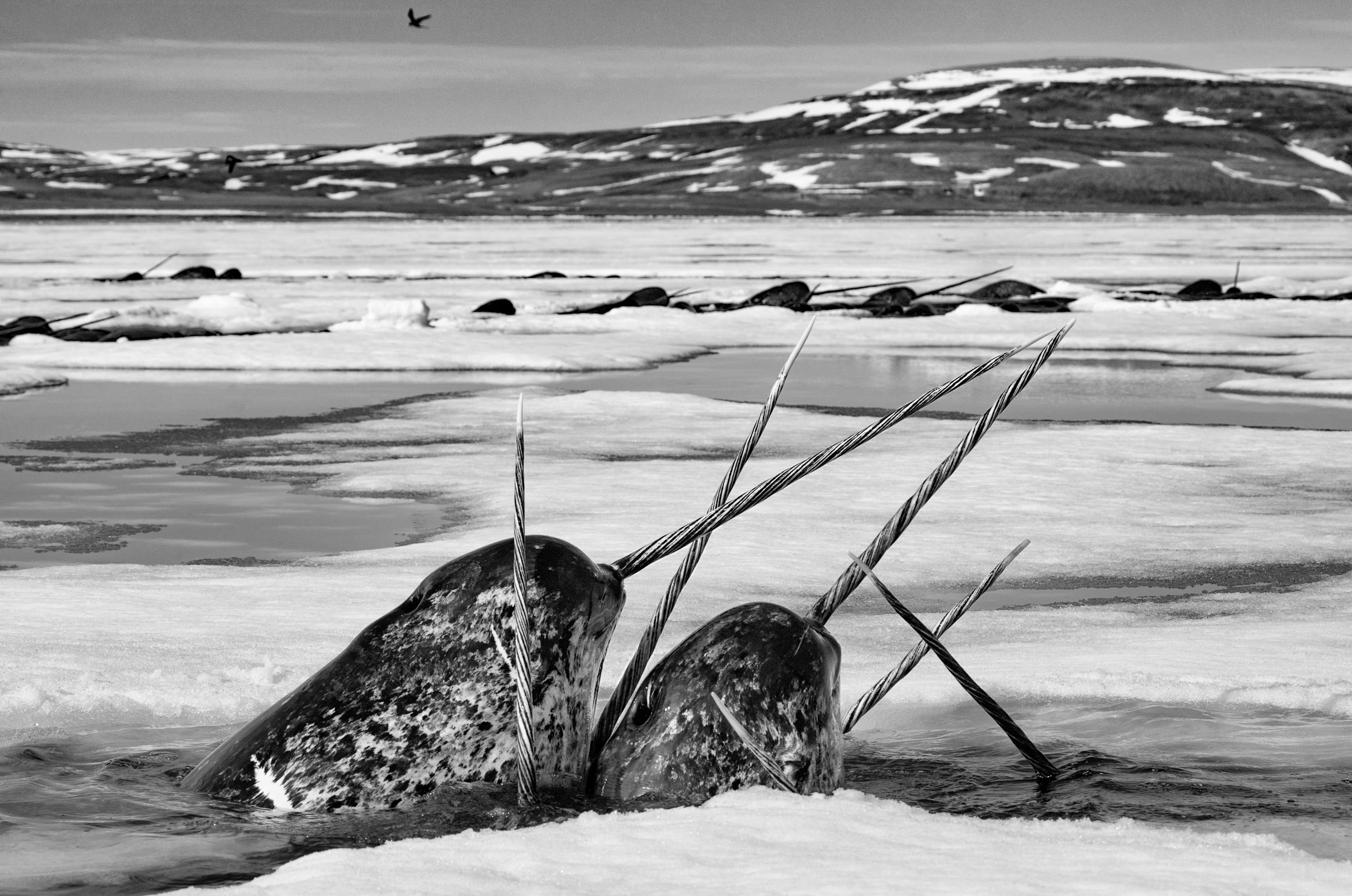
Curious North : 5 Narwhal Facts

Narwhals Are Descended From An Evil Woman

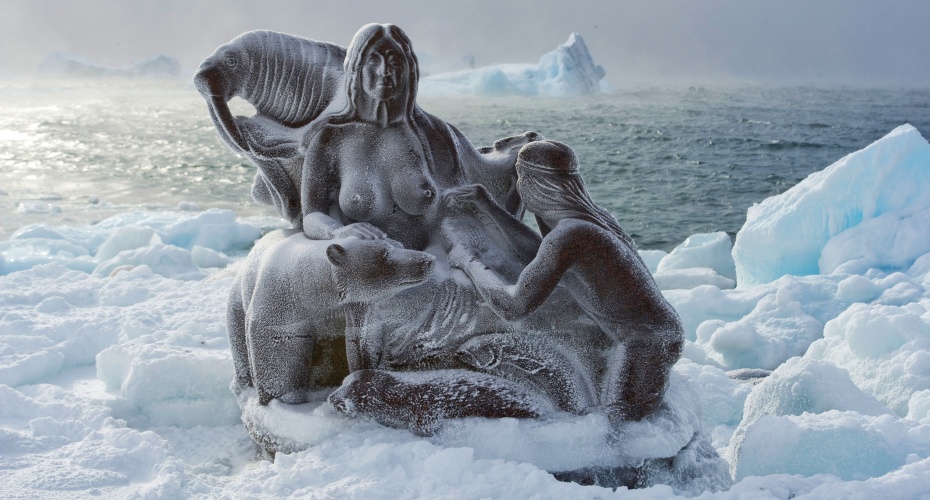
In Inuit folklore, there’s a tale about an evil woman who kept her daughter well fed but starved her blind son. The mother and daughter feasted in secret on the meat of a polar bear the son had shot with a bow and arrow. The son didn’t know he’d killed it, what with him being blind, and his mother insisted it had fled. (For the record, his sister helped him get the shot. In some versions of the tale, she’s sympathetic to his cause.)

Eventually, the son’s sight returned and he found the bear’s skin outside their hut. One day, there was a pod of white whales which the mother intended to harvest, but the son had other ideas. He lashed a rope attached to a harpoon around his mother’s middle and harpooned a whale. The whale dragged the boy’s mother from the ice floe she was standing on and out into the sea. Her transformation into a narwhal began when she twisted her long hair into what we know as the narwhal’s distinctive spiraling tusk.

pn
Paul Nicklen

There Are None In Captivity

The last narwhal in captivity was in 1969/1970. It was an orphaned calf that had been caught at Grise Fiord in Canada (one of the coldest inhabited places on earth) and was airlifted to the New York aquarium. A month later and it was dead. At around the same time, the Vancouver aquarium captured six narwhals. Unable to handle the stress of captivity, they all died within months.

pn3
Paul Nicklen

They Change Colour With Age

Newborn narwhals are mottled -blue-grey, juveniles are blue-black, adults are spotted grey and old narwhals are almost completely white. James Mead, the curator of marine mammals at the Smithsonian’s National Museum of Natural History says the speckles complexion of the narwhal is ‘weird’ as whales are usually a more uniform colour.

pn4.jpg
Paul Nicklen

It’s Tusk Is Actually A Tooth

The narwhal’s tusk is actually an exaggerated front left tooth. (Its right tooth is smaller and remains inside its mouth.) While most teeth, humans included, have a hard exterior and a sort interior, it’s the opposite in the case of the narwhal. Covered in thousands of nerve endings, this tooth can grow up to ten feet long and is able to bend about a foot before breaking off.

pn2.jpg
Paul Nicklen

Narwhal Tastes Nutty…To Some

Muktuk is the name for the Inuit staple of whale skin and blubber. Apparently, when it’s eaten raw, muktuk becomes quite chewy and tastes nutty.  However, ‘nutty’ isn’t how one writer describes it. When Abigail Tucker when to Greenland she sampled some muktuk and this is her experience: “With the tips of my fingers I seized a tiny, half-frozen piece of raw blubber, dunked it soy sauce and put it in my mouth. That first bite was exactly like chomping down on a thick vein of gristle in a great aunt’s holiday roast. It was tough as rubber, with a taste like congealed gravy.

Sources

Smithsonian Mag

Mental Floss


North Of Instagram : Ragnar Axelsson

My life changed when I first encountered the work of Icelandic photographer Ragnar Axelsson, through his profound and powerful first book Faces Of The North over ten years ago.

When I was studying Axelsson’s black and white photography, documenting the vanishing ways of life of the hunters, farmers, and fishermen in Greenland, Iceland, and the Faroe Islands I noticed my heart had started beating to a different rhythm.

As much as the north has always been a part of my existence, Axelsson’s imagery made me crave it. Crave it in such a way that learning and writing about these far northerly places – and visiting some whenever I could – became as much a part of my life as breathing, as eating, as sleeping.

As I sit here at my little desk, in a little room, in little England looking at an Axelsson postcard I sent to my parents from Iceland several years ago, I find myself feeling distressed that I’m not as far north as I need to be. However, while I can’t magic myself to Greenland or Iceland or the Faroe Islands right now, I do have Axelsson’s photography to take me there.

If this is the first time you’ve seen Axelsson’s work, I believe, I really believe you’ll come away changed and the north will have a new and deeper significance for you.


Curious North : 10 Polar Bear Facts

annie-spratt-YXPKFBsLtkc-unsplash
Annie Spratt

The Inuit Have Many Different Names For The Polar Bear

The Inuit have many, many names for Nanuq. In this instance, I’ll take examples from The Netsilik Inuit of Canada. (Interestingly, they were among the last of the northern indigenous peoples to be preyed upon by Southern missionaries.) The adult male is anguraq, the adult female without cubs is tattaq, the pregnant female is arnaluk, the newborn is hagliaqtuq and the teenage polar bear who’s almost the same size as his mother is namiaq.

havets_moder
‘Havets Moder’ by Christian Rosing

In Inuit Mythology, The Polar Bear Is Said To Have Been One Of Sedna’s Finger Joints

In Inuit culture, the origin of the polar bear is somewhat blurred. However, in some stories, the polar bear started life at the same time as all other Arctic marine creatures – when Sedna had her hands hacked off with an axe wielded by her own father. It’s said that the sea goddess’s fingers became seals and fish, whereas the rest of her hands became the whales and polar bears.

David Shephard
David Shepherd

Nanuq Was Always Honoured By The Inuit After The Hunt

When hunting, the Inuit always maintained the highest level of respect for the great wanderer. And this continued after death. In northwestern Alaska for example, a ritual would be observed called the Polar Bear Dance. It would celebrate both the hunter and the hunted.

It was believed the bear’s spirit would attend the ceremony, so great care was taken to honour the spirit so it would move on its way. The bear’s skull would be placed on a bench so it was able to ‘watch’ the dancing and feasting. This would go on for four or five days, after which the hunter who had killed the bear would then take the skull out onto the sea ice. When the hunter would hear the sea ice make a noise, he would know the spirit had left.

Adam Binder
Adam Binder

The Mother Of All Polar Bears Was Found In Ireland

When I think of all the places the polar bear could have originated from, Ireland isn’t the first destination on the list. However, it appears the mother of all polar bears descended from a brown bear which lived 20,000 – 50,000 years ago in the present-day Emerald Isle. DNA taken from polar bears from Russia, Canada, Greenland, Norway, and Alaska showed that each individual bear’s ancestry could be traced back to the Emerald Isle dweller.

tumblr_nakhhqwFT21qhh9l6o1_400
Le Petit Journal

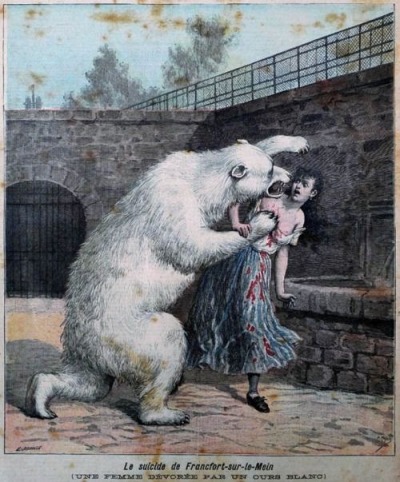
Suicide by Polar Bear Has Happened More Than Once

Remember that tragic event in 2009 when Mandy K, a school teacher from Berlin attempted to commit suicide by entering the polar bear enclosure at Berlin Zoo? Well, I’ve recently discovered that she’s not the only person to have entered a polar bear enclosure with the intention of killing themselves.

Back in 1891, a woman by the name of Karoline Wolfe climbed down a rope into the Frankfurt Zoo’s bear pit with the aim of ‘being eaten alive by a white bear.’ Unlike Mandy K, Karoline didn’t leave the pit alive. In 1903 when the bear who had ‘shredded her flesh’ passed away, a number of Frankfurt businessmen has some postcards printed on which was the bear’s obituary. In the obituary, the bear was described as Wolf’s ‘ravenous lover,’ who was ‘so infatuated with her that he ‘gobbled her up.’

no-nb_bldsa_NPRA1998 001
Photographer unknown

Roald Amundsen Considered Using Polar Bears To Pull His Sledges

Poor Captain Scott has been mocked relentlessly for his idea to use ponies to pull his sleds in Antarctica. But Norwegian explorer Roald Amundsen also had a bizarre plan for his North Pole expedition – to use polar bears instead of dogs. Apparently, the thought first crossed his mind when he first saw trained polar bears in a zoological garden in Hamburg.

In an interview, Amundsen said: “These bears, when properly trained, are as tractable as oxen. They are at home in the cold of the Arctic and can be easily cared for and fed with seal meat.” But taming a bear isn’t an easy feat. The idea didn’t take off in the end – Amundsen wasn’t prepared to try and handle his fury convoy on his own – though over a decade after proposing the idea, he was still up for it, despite having been mauled by a bear in the meantime.

annie-spratt-3zE3OXraC9Q-unsplash
Annie Spratt

Polar Bears Get Hot Extremely Fast

You would think that, on occasion, a polar bear might get a bit cold. But they actually have the opposite problem – they overheat extremely easily. It’s much more likely for a polar bear to die from the heat than it is for them to die from the cold. With their two layers of fur and a solid layer of fat (which can measure up to 4.5 inches thick), their metabolic rate is steady, even in the most frigid of temperatures. While they can sprint up to 30 miles an hour if they need to, they can’t spend much time running as their temperature can rise to dangerous levels if they move too fast.

Svalbard

Polar Bears Don’t Hibernate

Unlike grizzlies and black bears that spend each winter in hibernation, polar bears don’t need to, and instead spend all winter being active. The reason being that there’s plenty of food available to hunt. The exception though is when a female bear is pregnant. Then, she digs herself a den and is sealed inside, surviving off her fat stores, until her cubs are large enough to brave the outdoors.

2017LEDOUX_030_002_013-3.jpg
Florian Ledoux

Doors Are Kept Unlocked In Churchill On Halloween

On the shores of the Hudson Bay in Manitoba, Canada, lies the town of Churchill. During Autumn, hundreds of bears pass through on their way to the hunting grounds. During this time, many of the locals don’t lock their doors so that if someone is running from a polar bear, they can duck inside. Halloween happens smack bang in the middle of polar bear season and, unsurprisingly, kids aren’t allowed to wear anything white for the festivities.

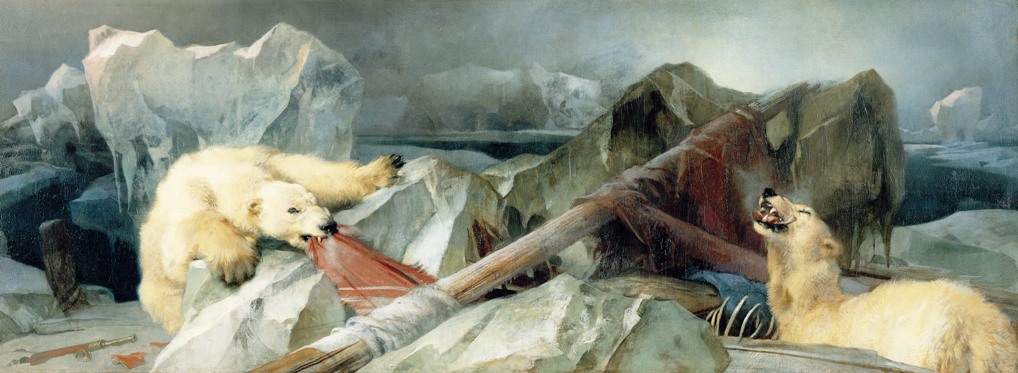
Manproposesgoddisposes.jpg
‘ Man Proposes, God Disposes’ by Edwin Henry Landseer

Superstition Surrounds Man Proposes, God Disposes

The painting Man Proposes, God Disposes (1864) by Edwin Henry Landseer, was inspired by the search for Franklin’s Lost Expedition and features two polar bears among the grizzly remains of the expedition wreckage. The painting, which hangs in the study hall of Royal Holloway, University London was, for a long time, covered up with a Union Jack during exams, for it was said students who sat in front of it were doomed to fail. One urban legend claims that in the 1920s a student looked at the painting and stabbed themselves in the eye with a pencil, after writing on their exam paper ‘the bears made me do it.’

Sources

Ice Bear by Michael Engelhard