In 1628, the Swedish nation built The Vasa, a huge warship, to reflect the country’s power. The boat sank a mile from shore within 20 minutes.
In 1980 Norway banned the film Life of Brian for blasphemy. Sweden then marketed it as “The film that is so funny that it was banned in Norway!”
As recently as 1979 homosexuality was considered to be an illness in Sweden. Swedes protested by calling in sick to work, claiming they “felt gay”.
Sweden’s tourist association has created a “Call a Swede” phone number which is assigned to random ‘fact ambassadors’ with no training or expectations. The purpose is to provide an unfiltered view of Swedish life.
The Ice Hotel, built every year out of ice from the Torne River, is required to include fire alarms, despite being made entirely out of frozen water.
In this weekly post, I collect all the need-to-read arctic related things that I’ve found over the past several days, and put them here in a handy bundle of links for you to pick, click and read.
In Stockholm they tested a ‘Speed Camera Lottery.’ If you didn’t drive like a dickhead, you were automatically entered into a lottery funded by the fines of drivers who did drive like dickheads.
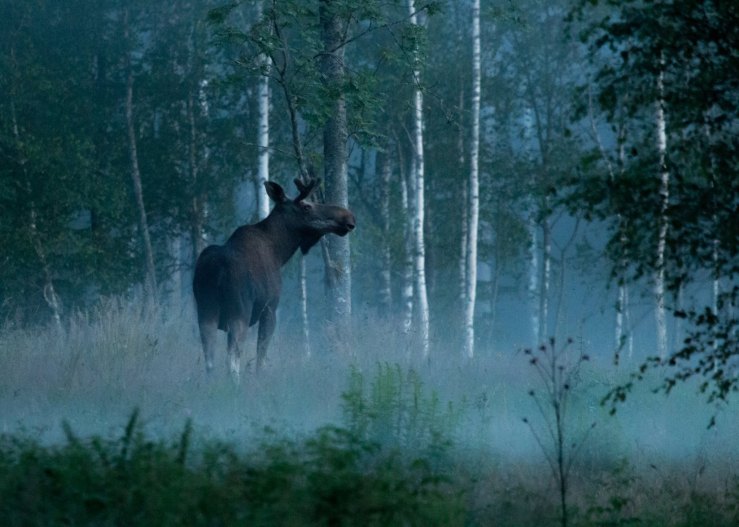
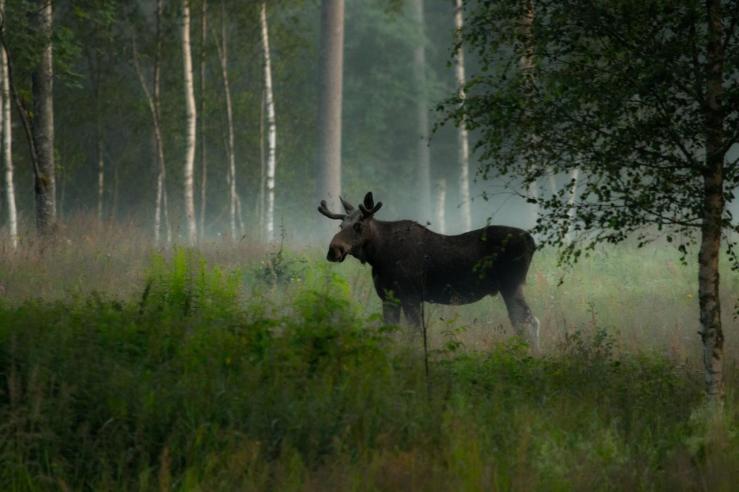
Thousands of ‘moose-crossing’ warning signs are nicked every year.
If you donate blood in Sweden, you receive a text message every time it’s used to save someone’s life.
The late Swedish badass Göran Kropp rode his bike from Stockholm to Nepal, climbed Mount Everest alone without Sherpas or oxygen, then cycled back to Sweden.
In Älvdalen, a locality in Dalarna, the people still speak an ancient dialect of Old Norse called Elfdalian. These also used runes up until the 1900s.
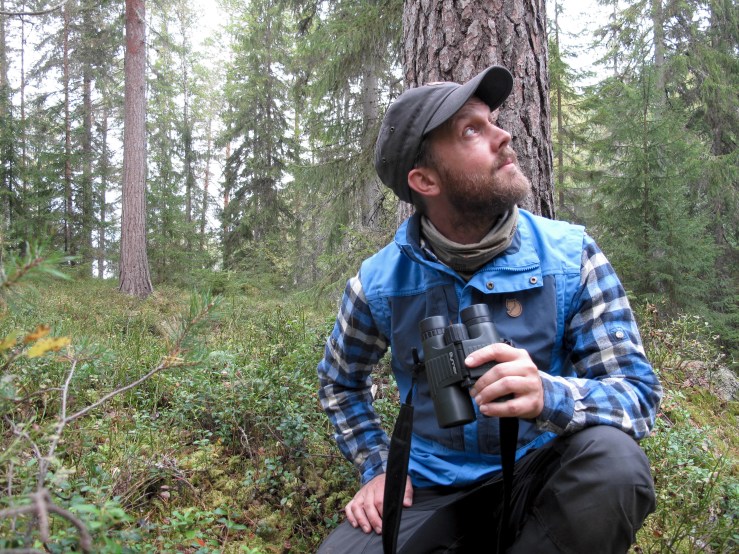
It was thanks to orangutans and a group of enthusiastic guides in Indonesia that Marcus Eldh had an ultimate light bulb moment and realized his mission in life – to become a wildlife guide in his homeland of Sweden.
Within a few days of setting up his website offering moose tours, Marcus had his first bookings with WildSweden and his career as a guide kicked off.
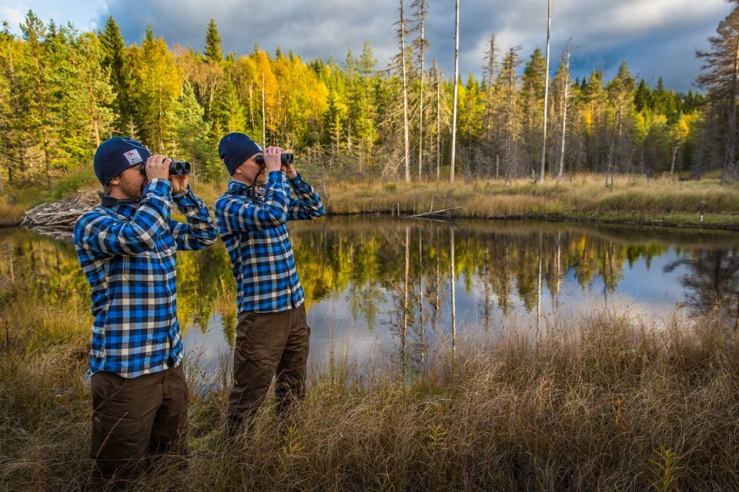
What started as a one man venture in 2003 is now a hugely popular, award winning eco tourism organisation offering dozens of, quite frankly, amazing opportunities for people to experience Sweden’s staggeringly beautiful nature and wildlife up close.
The day trips and wildlife expedition holidays offered by WildSweden will enable you to collect the kinds of memories you’ll never want to loose.
MostNorthern caught up with Marcus to dig deeper into the story behind WildSweden, to talk about his first moose tour, the value of Allemansrätten and how WildSweden helps with the monitoring of Sweden’s wolf population.
Marcus Eldh
Hi Marcus! Would you care to introduce yourself, and talk a little about WildSweden?
Hello! Well, who am I? Today I am a bearded-soft-adventure-nature-lover. I was born and raised in Blueberryland among moose and pine cones. I eat plants, drink oats and locally brewed ale. I spend a lot of time out in the woods, on wooden skis and in canoes on any of the thousands of lakes. I heat up in saunas and cool down in Lapland.
I share my days with my wife and I am also father to two little blond fairies. We live in a white wooden house in a village called Sundborn in Dalarna. I founded WildSweden in 2003 and it is the only job I have ever had. Although I have a handful of amazing guides and colleagues I still love to lead tours.
Jan Nordstrom
The story behind how WildSweden came to be reads like a dream. You set up in business on the day you decided to become a guide, and a few days later, had your first clients booked. What did you do that was so right and which led this immediate success?
I followed my dream and I guess people were drawn in to join me on my path. I made a lot of beginner’s mistakes, but I never focused on them. When obstacles showed up I just went slalom. I also had a lot of beginners luck. Crucial was that I offered tours that people were able to book. I am sure that one of my main success factors was that my tours were ready made, all inclusive, at set dates and with set rates. That made it easy for tempted nature lovers to just click and join me.
Jan Nordstrom
Can you take us back to your very first moose tour?
Hehe, yes I still remember that first Moose tour. I had never been on a moose tour myself but I had an idea how to see moose and how to make it a memorable experience for my guests. Three cool persons from Russia and Austria.
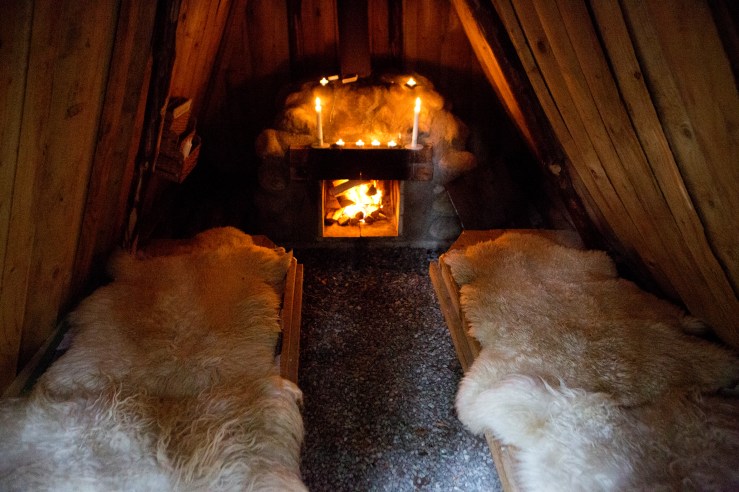
Luckily we did find some moose that night. We also stayed overnight in an abandoned forest worker’s cabin far out in the woods where we grilled sausages over an open fire. The next morning I woke up in the cabin and two thoughts came to my mind: 1) Wow, I am now a moose guide. 2) I will never do this again!
Glenn Mattsing
WildSweden can boast that it’s one of the most prolific eco tourism companies in Sweden, having won several awards, including Eco Tourism Company Of The Year (2009). Did you visualise your company becoming the roaring success it is now? Are you happy with the current situation, or are there any grand plans to expand the services you provide?
I don’t really make plans… I just go for whatever feels right at the moment. I already live my dream and I have what I need. But of course I still like to evolve. I love to find ways to improve our tours and to create new tours. How can we create better experiences for our participants? How can we make life better for our guides? How can we contribute to the local society? And how can we preserve and rewild nature?
WildSweden will never grow to become a large company. Small is good. But I know that there is an increasing demand for nature based experiences. I also see that a lot more people could get involved in leading guided tours. But instead of growing WildSweden I would like to share my experiences to help other ecotourism businesses get up on their feet and to take off.
Jan Nordstrom
On every tour, for fifteen years, you and your team have provided tourists with sightings of moose. How do you stake out the places where you’re going to take your visitors?
Well… last week we actually had our first tour when we didn’t see a moose 🙂 But we still have a fantastic track record. Our guides are local and they know where and how to find wild animals. Our strength is not that we know how to find wild animals, but that we know how to create memorable experiences around wild animals.
When I introduce new guides I tell them that finding wild animals is actually one of the easiest things with being a guide. We always know that Moose, beavers, wolves and bears are. They are in the forest! Our participants however… they are from all over the world, stay at different guesthouses and hotels, they all have high expectations and different reasons for coming on our tours. And when they arrive they are not used to being out in these forests. I can easily say that it is more difficult to find participants than to find a moose 🙂
Jan Nordstrom
For those who don’t know about Allemansrätten, could you explain what it is and why it’s valuable for WildSweden?
Allemansrätten is just common sense. It states that the land is open for anyone to enjoy. It states that noone can buy land and close people out. I can’t understand why Allemansrätten is not global. For our guides and participants it means that we can walk and canoe in nature wherever we like. I wouldn’t be able to run WildSweden without the freedom to roam.
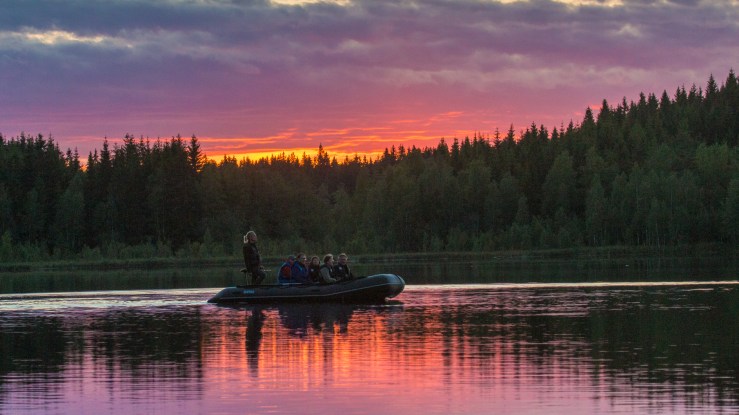
Vargsafari i Skinnskatteberg / WildSweden
Does one tour in particular stand out for you?
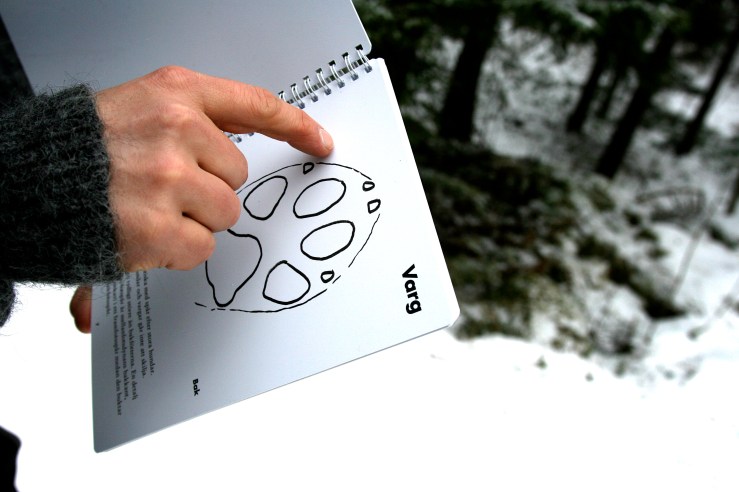
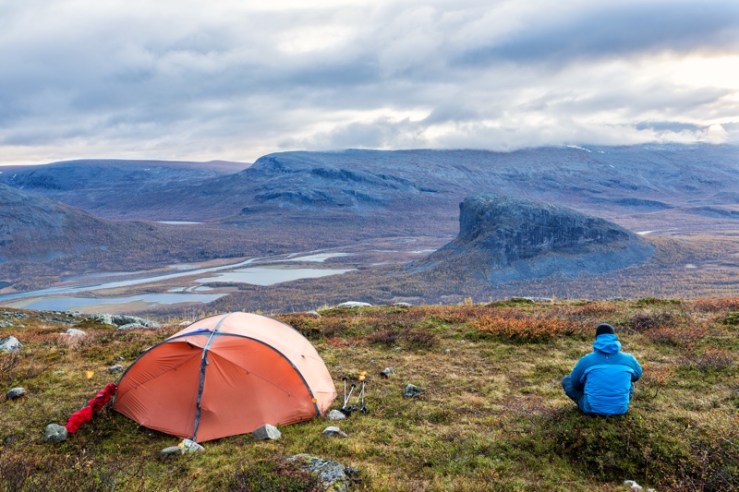
We have wolves here and our wolf tours have provided me with lots of unforgettable memories. I remember this warm Summer night some years ago… We had found fresh tracks of wolves and I knew they were probably nearby. We had set up a tented camp with a family from England. As it got dark we went up on a small hill to listen for the wolves’ howling.
We waited for about an hour and then heard the wolf family howl together. When we got down to the camp and the lake we realized it was full moon and the moon was reflecting nicely in the still water. We lit a fire and then we all went for a swim in the dark lake. To swim under the full moon with a family of wild wolves nearby was an amazing experience. I felt truly rich.
Kolarbyn / WildSwedenPer Groth
Have you had any terrifying encounters with moose, wolves or bears in the Swedish forest?
Nope, never.
Sarek Lapland Kungsleden Camping / WildSweden
You taught yourself how to howl like a wolf. How did you do this and how would you describe the feeling when wild wolves respond to you?
I recorded their howls and then listened to the recordings and practiced while driving my car where no one could hear me. I have then tried different types of howls and pitches to see how they respond. Hearing wolves howl is definitely ones of nature’s great wonders, but I am honestly more fascinated by how silent and elusive they are. People say wolves howl. I would say they are extremely silent and just howl once or twice each night.
Serek Wildlife Expedition / WildSweden
As well as being an important contribution to the life experiences of thousands of people from across the world, WildSweden provides valuable information to researchers to assist in the monitoring of Sweden’s wolf population. How do you gather your findings?
Throughout the years we have reported lots of wolf droppings that rangers and researchers may collect for DNA-testing to monitor the population. We have also reported howling pups which has contributed to find new litters.
Marcus Westberg
WildSweden holds tours all year round, but do you have a favourite season?
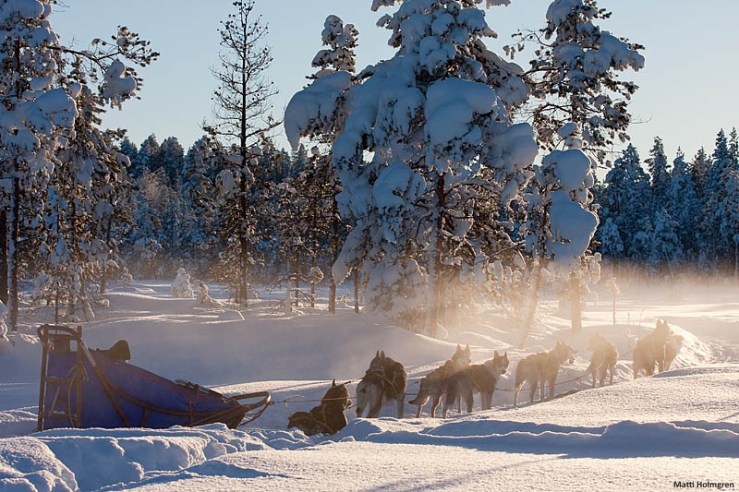
Personally I love winter when I can play in deep snow, ski across frozen lakes, breathe the crisp air, dress up to stay warm. September is also a favourite time of year when the forest explode in colours and the forest floor is covered in lingonberries and autumn chanterelles.
Lapland / WildSweden
Have you ever seen an albino moose?
I suppose you mean white moose… there are about a hundred white moose in Sweden, but they are not albinos. I haven’t seen them.
Matti Holmgren
You recommend people to turn off their phones to truly disconnect when they’re on a WildSweden day trip or holiday. Do they mostly listen, and do as you recommend? Also, do you find because of your line of work, and the passions that you hold in life ordinarily, that it’s easy for you not to become trapped on your mobile?
It is difficult to keep away from phones. Some guests do and some don’t. Most guests are taking pictures, and some take pictures all the time, with their camera or phone. Sometimes I get the feeling that they are not actually experiencing nature at first hand, but rather taking pictures to enjoy later, again watching them in their phone or computer.
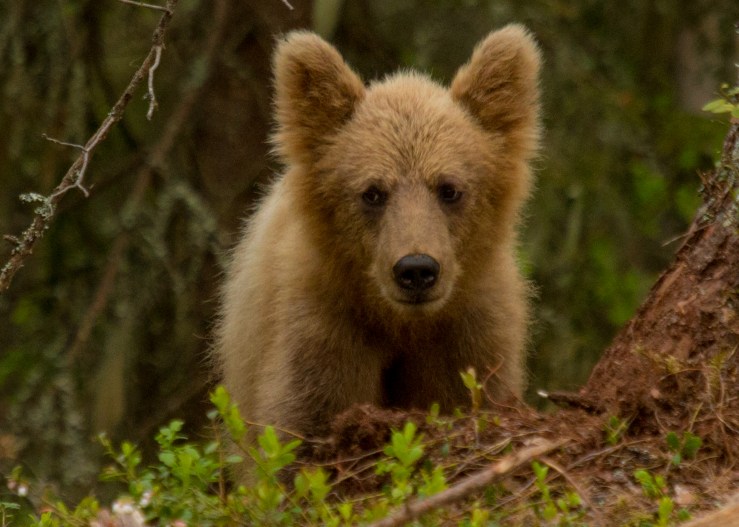
I remember this one time when a woman filming a bear that was just in front of us outside our hide. After a few minutes of filming I asked her… ”Have you actually seen the bear?” She didn’t understand my question as she was watching the bear in the iphone at that very moment. I pushed her hand and the iphone aside gently and when she saw the bear at first hand she twitched, and then she put down her phone.
I have to admit I use my phone a lot and sometimes more than I want. But the positive side is that I can keep in contact with friends, family and colleagues even when I am out in the forest. I can also manage all parts of my business like emails, bookings, social media, manage evaluation forms and much more. I don’t have an office. It is all in the cloud.
Marcus Westberg
Being so attached to nature, what’s it like going out into the city?
Haha, I only live three hours away from Stockholm, but I go there less and less. Sometimes when I read a status update on Facebook where friends are asking if there is anyone who wants to go for a beer or concert tonight… Well… I can’t even if I would like to.
On the other hand, Sweden’s countryside is amazing… This evening I just got back from the sauna where me and my daughters plunged into a fresh water lake surrounded by forests and hills. This is where I want to be.
Lennart Pittja Camp / WildSwden
For this year’s Midsummer, you posted on Instagram a famous painting by the late Swedish artist John Bauer, and called him ‘The Great Master of Dark Forests’ – such an apt title! Can you talk about your relationship to his artwork?
When I was a small child my grandfather gave me a big book with John Bauer’s paintings in it. I fell in love with his art. I am fully aware that most people prefer to lay on a sunny beach on a warm summer day, with endless views across the horizon.
I can appreciate that too (if not too hot and with plenty of clouds). But for some reason I have always been more attracted to dark forests with old growth conifers and large rocks covered in moss and lichen in all shades from grey to green. John Bauer didn’t seem to prefer sunny beaches either 🙂
What’s the furthest north you’ve ever been, and where do you ache to go?
I’ve been in Northern Norway a few times and in Northern Sweden many times. Some weeks ago I went to Alta in Norway’s far North to attend an adventure travel conference. 15 hours by train + 8 hours by car driving through an amazing landscape.
I went along with some friends. We were camping by a fjord and went backcountry snowboarding under the midnight sun. That is my ultimate holiday, very inspiring. I have always wanted to go to Svalbard, but I avoid flying, and there are so many places I still want to visit on the mainland.
Lapland / Boel Engkvist
What do you think draws people to the north?
I guess the north is exotic to most people as most people don’t live in the north and it is not a rather new tourist destination. There is wilderness, wildlife and inspiring culture.
I’m madly curious about people, especially where they live, especially when where they live is in the North. I’m also madly curious about what happens in their everyday. That’s why many of us read blogs in general and that’s one of the main reasons I established MostNorthern.
So, I thought it might be interesting for you to see some of my everyday, and in this instance, it was a hike in the forest surrounding our home, after a morning at my laptop writing about what mothers could be doing when their newborn baby is napping…
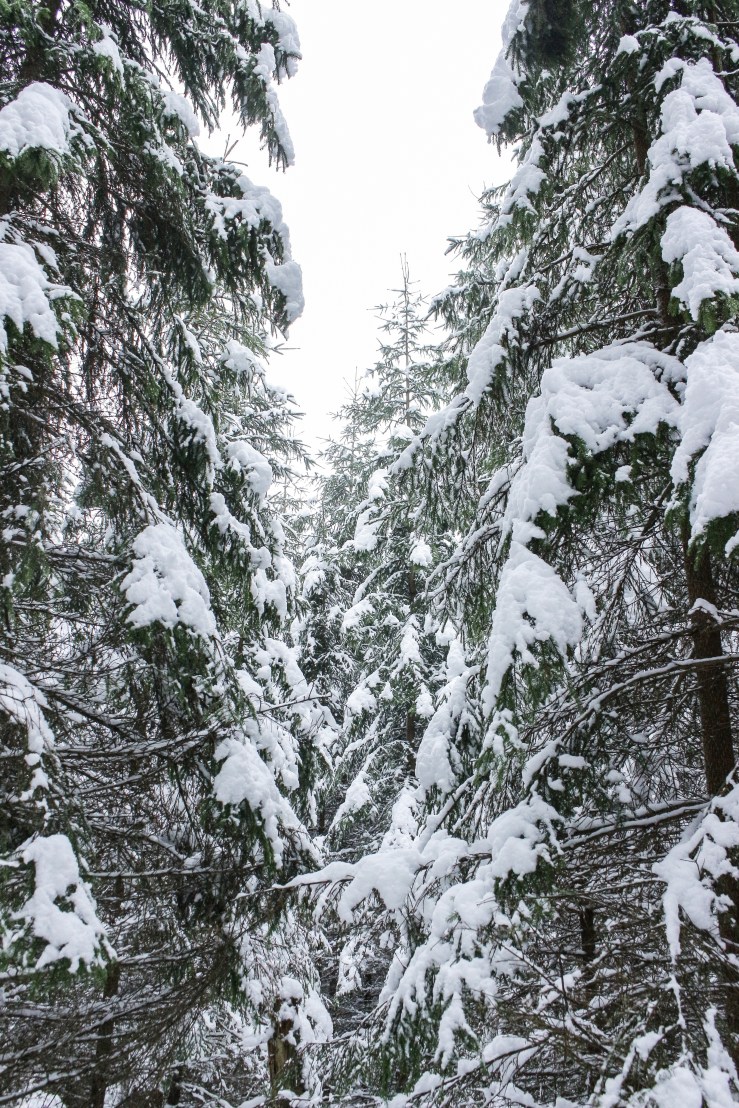
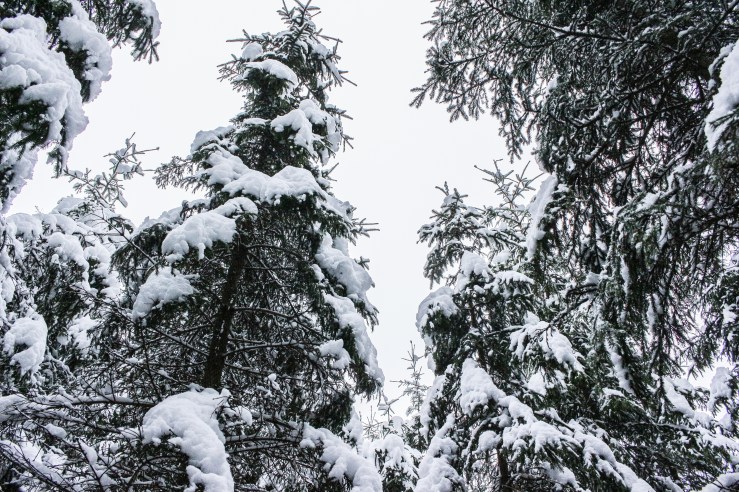
Winter is just giving and giving and giving this year, and I couldn’t be more grateful! After a morning of heavy snowfall, I trekked out into the trees to see what the skies had left, and here’s some of what I found.









 Northern Fever