A Nostalgic Yearning For The North – Photographic Finds From The Public Domain Review

Thus far, 2024 has been disorientating, exhausting, painful, maddening and swift. So swift. Too swift. Since doing my initial ADHD assessment over a year ago, I’ve been struggling to come to grips with the reality that I’ve been living with this condition my entire life, and it’s only just coming to light as I hurtle towards my 40s. I’ve also been grieving everything that ‘could have been.’ But I’ll write more about this on my other blog awyrdofherown.blog when possible. 

Around midnight last night, too tired to read, I flickered around on Pinterest, looking for… I’m not even sure what. At some point, I landed on this knitted cape, leading me to Little Scandinavian, where I ended up on a post about The Scandinavian School in London, which looked like everything I would want for my daughter in a school, but whose gigantic fees were painful to read. It’s ridiculous, laughable even, that I let the fees of a school in a city where I don’t even live upset me.

I should have gone to bed then but didn’t. My mood was wounded. So I decided to scout out an image for the cover of my next book and ended up on The Public Domain Review – a treasury for the insatiably curious creative – which I combed through for Nordic bounty. 

While I furiously bookmarked articles and added, to my already gridlocked desktop, old photographs of Norwegian fjords and Icelandic fishermen, I thought about producing an art appreciation post of some of the stuff I unearthed.

For the longest time, ‘art appreciation posts’ and ‘I-saw-these-things-and-thought-you-might-like-them-too’ posts were the lifeblood of my blogs. But then I gradually stopped making them, and I’ve missed making them, and am now on a mission to eradicate the idea from my head that making them ‘is not a good use of my time.’

The articles featured here in order are:

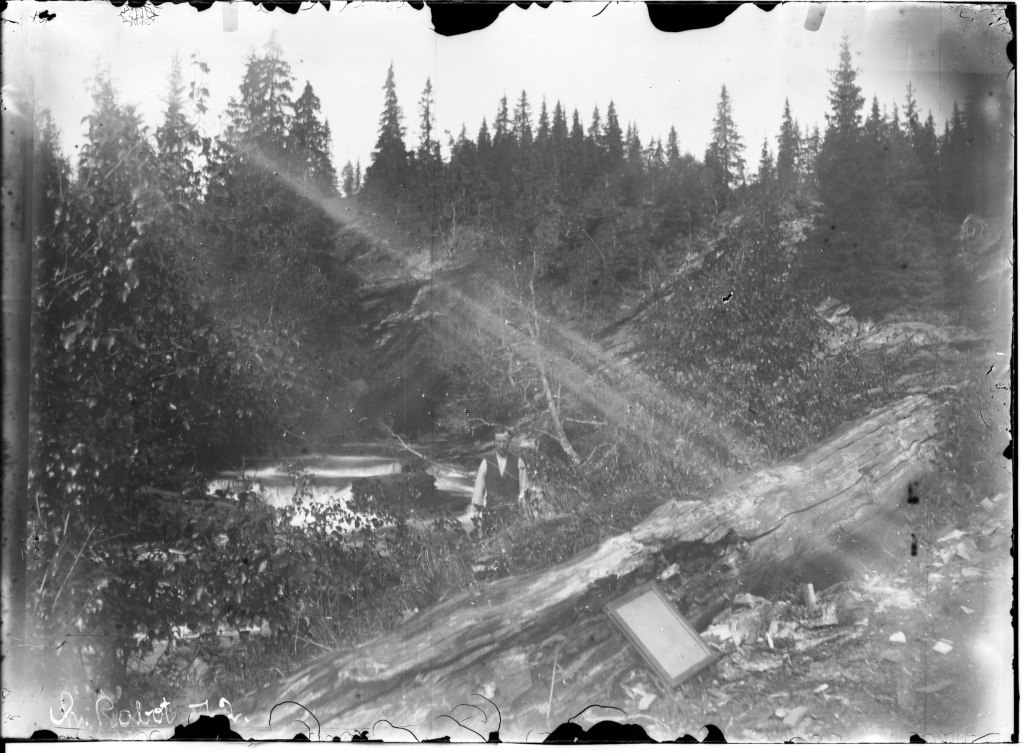
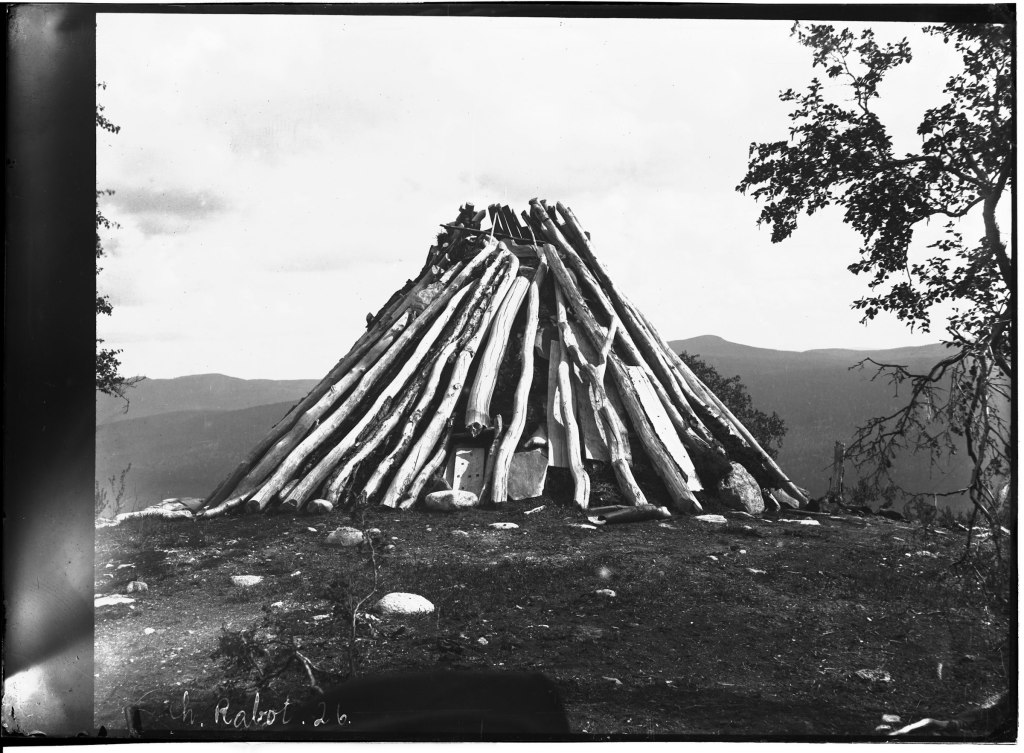
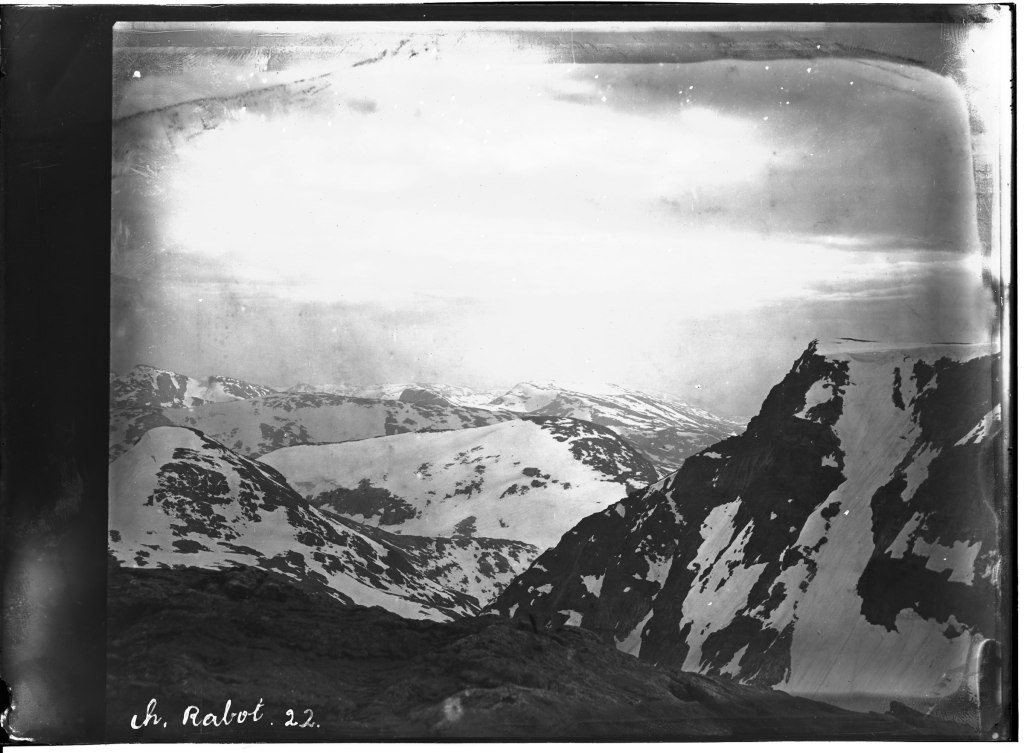
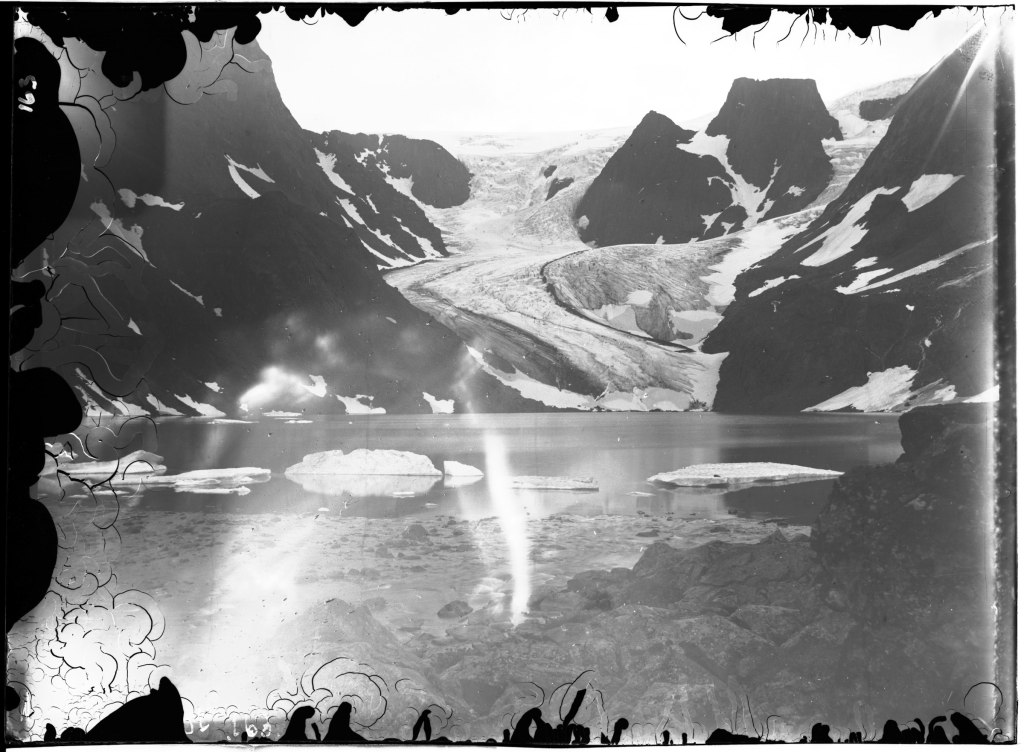
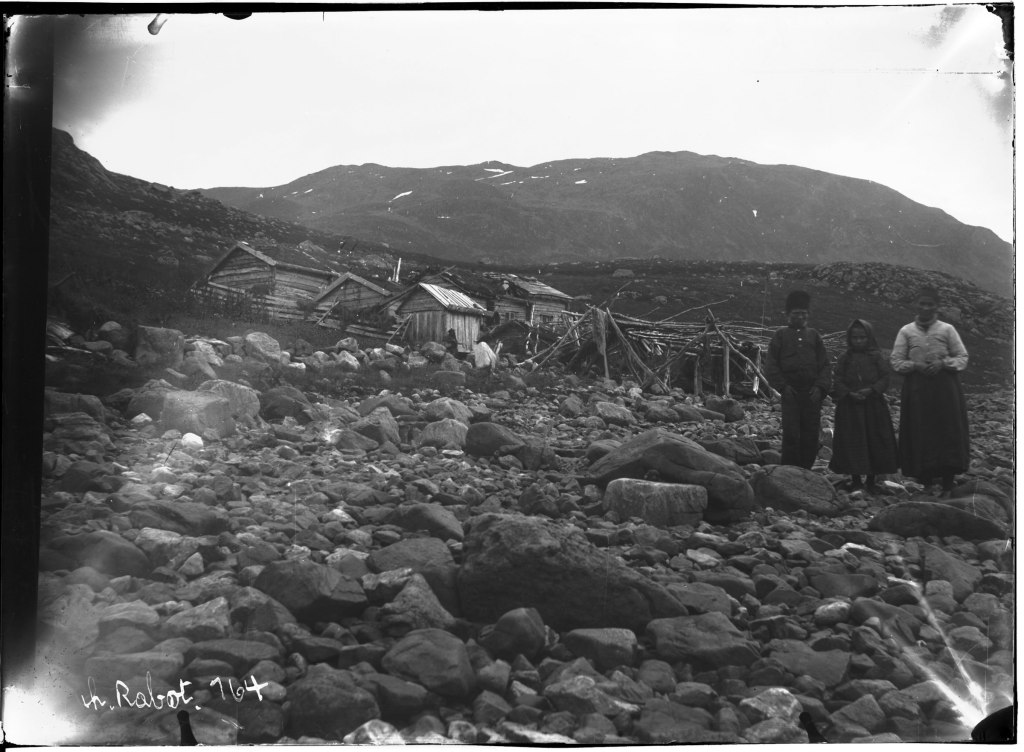
Masters of the Ice: Charles Rabot’s Arctic Photographs (ca. 1881)

Tempest Anderson: Pioneer Of Volcano Photography

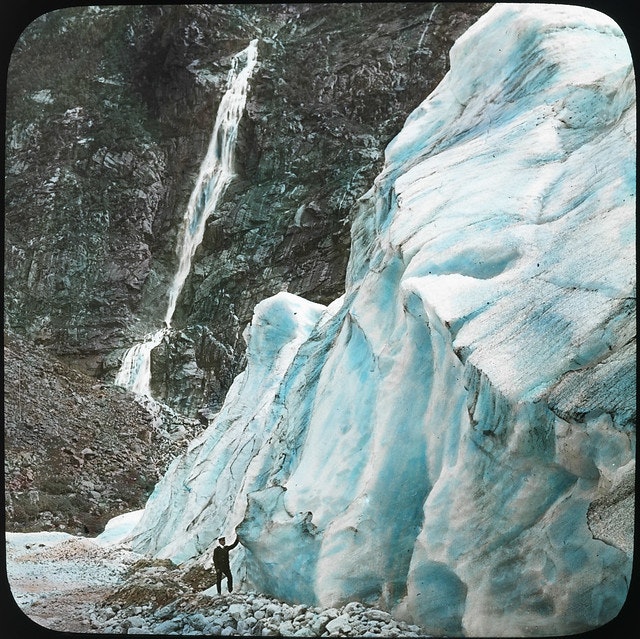
 Lantern Slides Of Norway (ca. 1910)

The first thing to catch my attention on The Public Domain Review was this striking, slightly sinister portrait of French geographer, glaciologist, and photographer Charles Rabot. This picture led me to a stupendously readable essay about Rabot by Erica X Eisen (whose other work I’m going to consume with gusto). Rabot had a ‘particular affinity for Norwegian culture…’ and his awe of ‘boral landscapes’ and ‘nostalgic yearning’ for the north is something I strongly identify with: 

They are so beautiful, so magnificent, those deathly solitudes, so strange in their fleeting finery of brilliant colors, that they always leave one with a burning desire to see them again.’ – Charles Rabot

Eisen’s writing is astute and memorable – the following passage in particular ‘If there are any people to be seen in these snow-pied expanses, they are tiny afterthoughts so overwhelmed by the whiteness around them that any individuating features are obliterated completely — to the extent that these figures seem less like the protagonists of the shots and more like another accidental void bitten into the negative by the frost.’

The first person to climb Kebnekaise, Sweden’s highest mountain, in 1883, Rabot was also friends with the most swoon-worthy of Norwegian explorers, Fridtjof Nansen who’ll be much more thoroughly swooned over in another post where I’ll look at the bizarre but beguiling topic of fancying long-dead polar explorers.
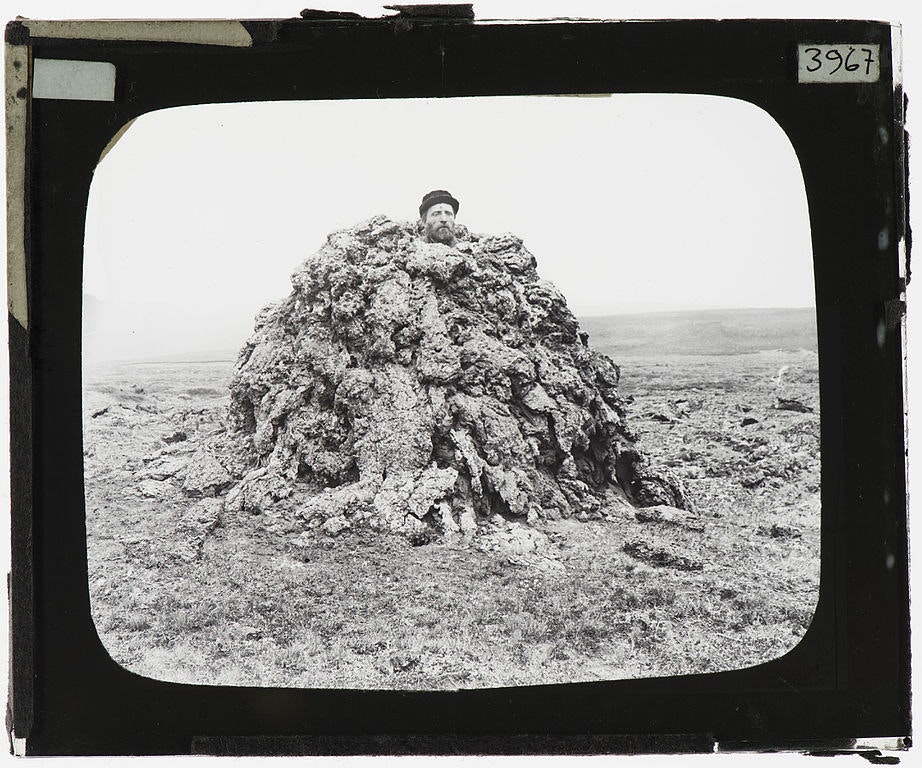
When I searched Iceland on The Public Domain Review, ‘ volcano chaser and pioneer of volcanic photography,’ Tempest Anderson showed up with one of the most gloriously surreal photographs I’ve ever seen.

Very much intrigued by the name Tempest, I was convinced there’d be a riveting origin story, so was a bit put out to find it was simply inspired by a prominent West Yorkshire family. 
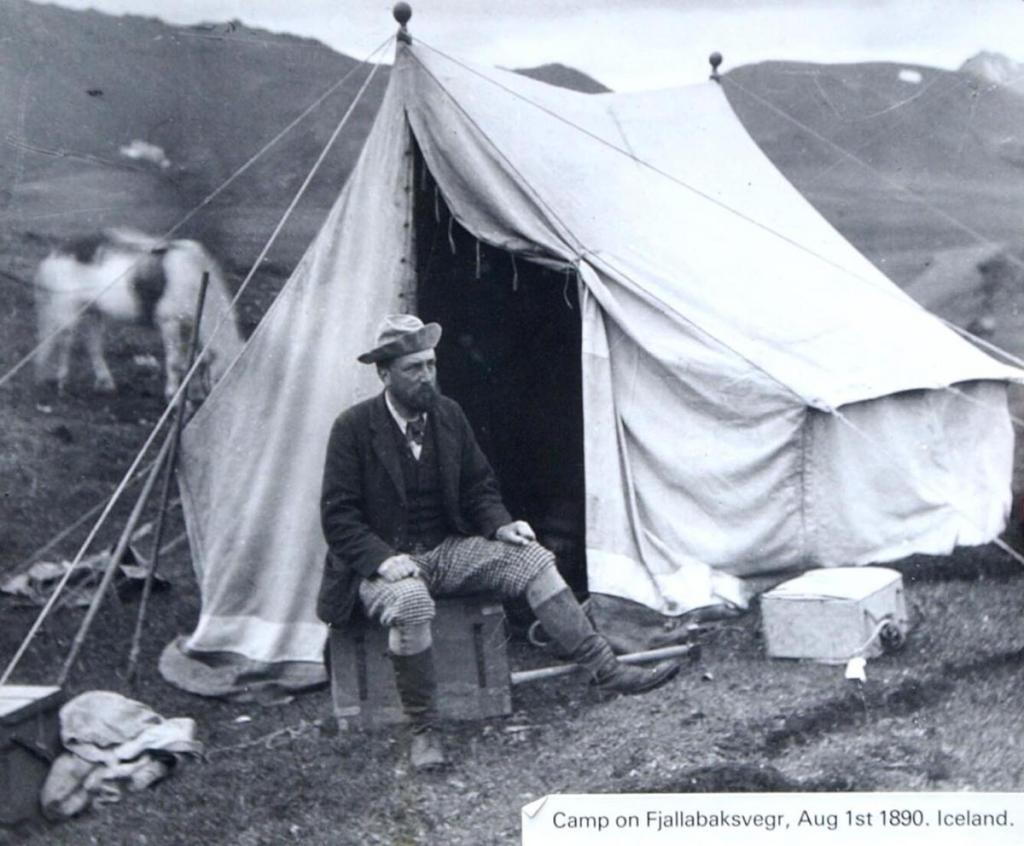
Yet there’s no doubt the man led a life not dissimilar to a windstorm—his list of occupations and accomplishments is…extensive. York-born and bred Anderson was a leading eye surgeon as well as a photographer, an inventor of photography equipment, a consulting physician to a lunatic asylum, a prison medical officer, a Sheriff of York… the list ploughs on. At 43, unmarried and restless, Anderson decided he’d use his spare time to study volcanology and chase volcanic eruptions. The photographs he shot in Iceland were taken using one of the earliest panoramic cameras, which, unsurprisingly, Anderson had developed himself. 

I’ll keep coming back to look at these lantern slides depicting Norway from the early 20th century, and I know each time I do, they’ll thrill me all over again. By the way, for full disclosure, I had to Google what a lantern slide is. 

Lantern slides are positive, transparent photographs made on glass and viewed with the aid of a “magic lantern,” the predecessor of the slide projector. Lantern slide plates were commercially manufactured by sensitizing a sheet of glass with a silver gelatin emulsion. The plate was then exposed to a negative and processed, resulting in a positive, transparent image with exceptional detail and a rich tonal range. – Constance McCabe (National Gallery of Art.)

Produced by British photographers Samuel J. Beckett and P. Heywood Hadfield in my favourite part of Norway – Sogn og Fjordane (now known as Vestland) – these bold, crazily vivid lantern slides are held at the county archives in the fjord village of Leikanger, somewhere I’m going to absolutely seek out when I’m next over by way of the Sognefjord. Right now though, I’d very much like to know what the woman on the steps was thinking when this picture was made. Also, image 4 – haunted to my core.
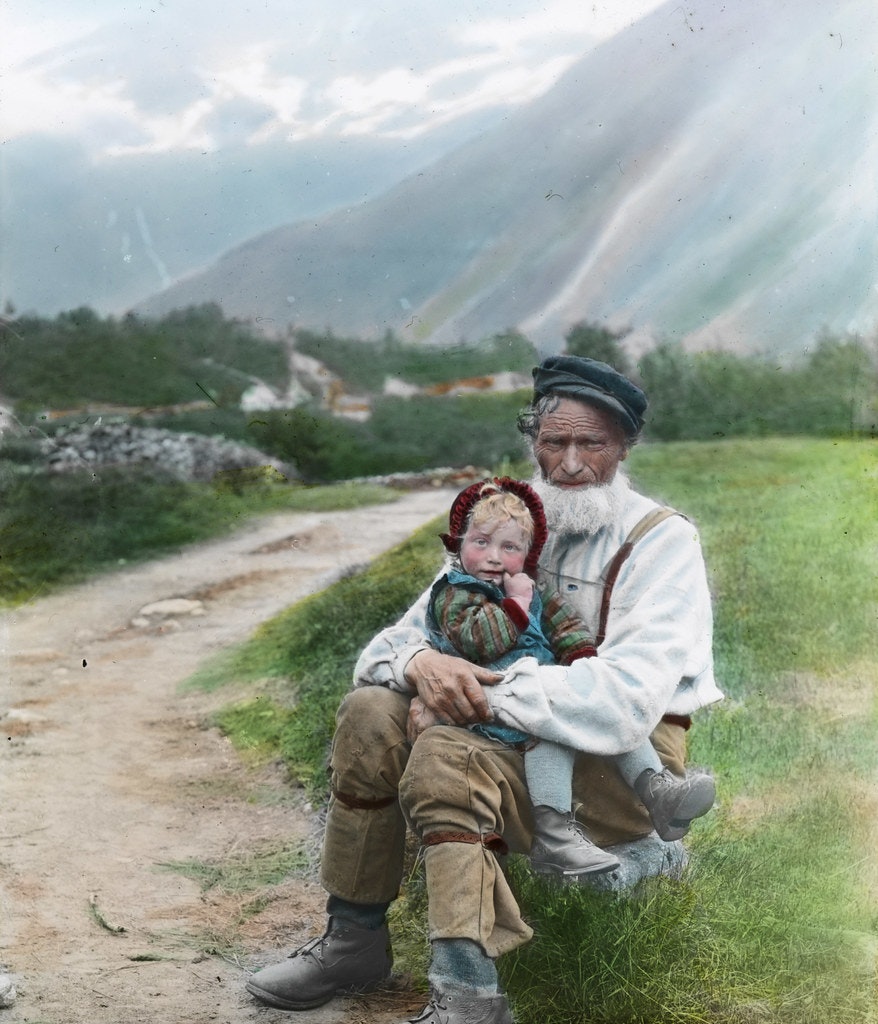
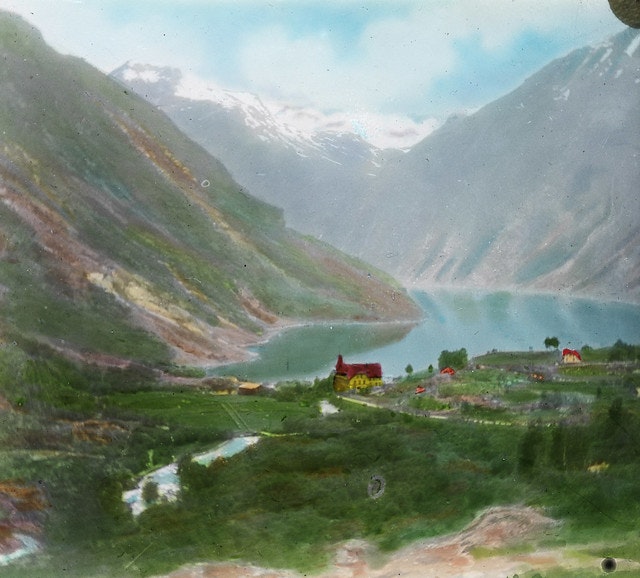
Hadfield was a surgeon on a ship cruising the Norwegian fjords and an amateur photographer in his free time. Little is known about Beckett, but copies of books by both men (The Fjords and Folk of Norway by Beckett and Fjords of Norway A Cruise On The SS Ophir by Heywood) are available on Abebooks and eBay and are very kindly priced for books printed well over a hundred years ago. 

More Recommended Reading From The Public Domain Review

Season’s Bleatings: Finnish Photographs of the Nuuttipukki (1928)

Aurora Borealis In Art

Photographs Of 19th Century Norwegians

Holavallagarður – Reykjavik’s Forested Garden Of The Departed

In 2011, I stayed near Holavallagarður cemetery on a friend’s living room floor for a few nights. It was my first time in Iceland, and I knew nothing about Reykjavik’s ‘largest and oldest museum.’ Thus, I cruised on by its hefty iron gates and didn’t think about it again for the remainder of my three-month trip. 

Ten years later, in 2021, I finally crossed into the centuries old forested cemetery – home to over 10,000 marked graves – with my enthusiastic guides, the two wraiths from Icelandic dungeon synth band Dyfliza.

One of the first things you spot when you walk into the cemetery from the main entrance is the lychgate. In bygone times, it was where the morgue stood, used for the corpses of the poor and foreign sailors. The well-off dead remained at home until it was time for their funeral. The morgue was moved in 1950, though you can still see the bell.*

*I don’t know why there was a bell in the morgue. A speedy Google search suggested it was to keep evil spirits away from the body, though this wasn’t specifically about Icelandic morgues, so I’m none the wiser really. 

It’s easy to while away hours picking your way around the seven-and-a-half acres of gridded grounds. Narrow paths, slippery with moss, wind around jumbled graves. Drooping willows, spruces and poplars, birch and rowan all call Holavallagarður home, along with a type of snail found nowhere else in Iceland. (‘Found nowhere else in Iceland’ is a running theme.) 

Chipper birds congregate to gossip in small, gnarled trees, and they attract cats. Lots of cats. There’s also an abundance of fungi to be discovered during autumn. The most exciting of them has to be the Common Stinkhorn or Fylubollur, which amusingly (because I’m a childish buffoon) translates as ‘stinky male genitals.’ 

Its odour, akin to rotting flesh, is irresistible to flies. A Common Stinkhorn looks like a penis erupting from the ground, and it was thought, once upon a time, that it was an aphrodisiac capable of providing men with ‘powerful erections.’ Common Stinkhorns aren’t actually common at all in Iceland (the first one was documented in 1990), and yes, you guessed it, the only place they’re found is Holavallagarður.

While the cemetery was ready for occupancy in the summer of 1837, it would only be in the winter of 1838 that the first person was laid to rest. In Icelandic folklore, the first person to be buried in a cemetery is bound to be its Guardian for all time, greeting the newly deceased and keeping a watchful eye on all those who come to be buried there after them. 

Predictably, very few people wanted to nominate their loved ones to take on this everlasting position, even if it did mean the deceased would never decay. Also, the church didn’t want just anyone to be the Guardian of Holavallagarður, and turned people down because they weren’t ‘in the right standing’ for the role. The position was eventually taken on by 59-year-old Guðrún Oddsdóttir, who was ‘offered’ to the cemetery by her husband, the Chief Justice of the National Court. 

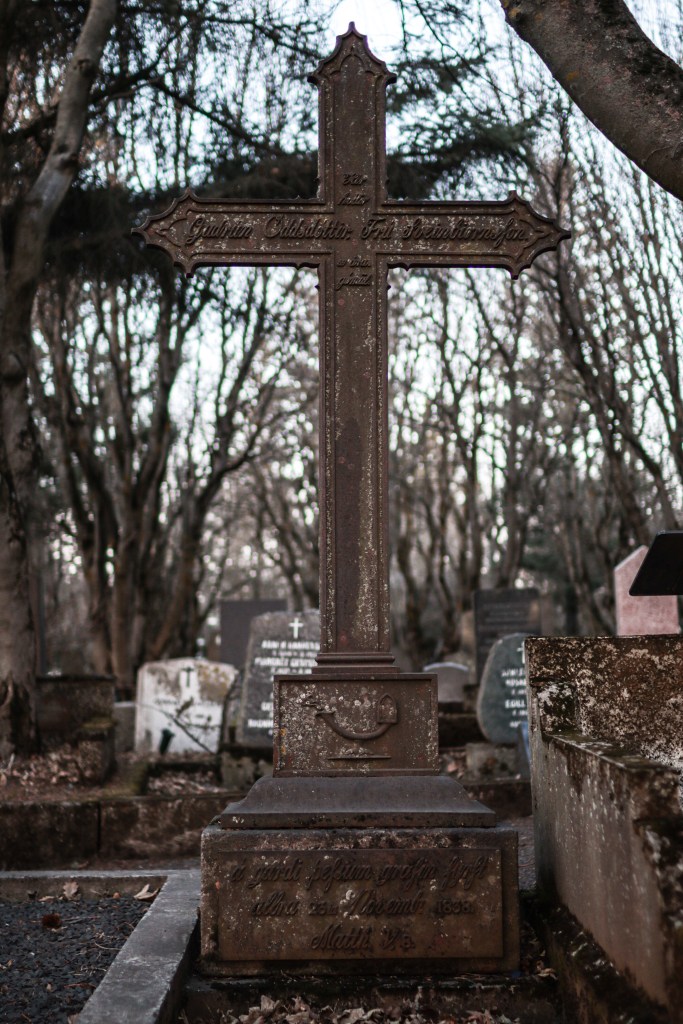
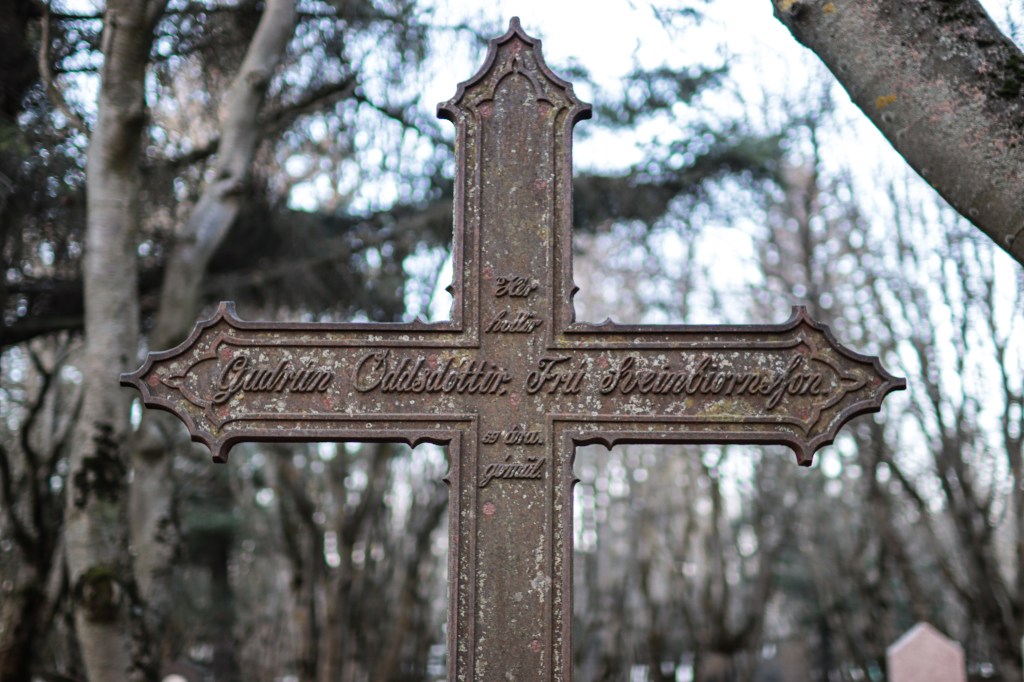
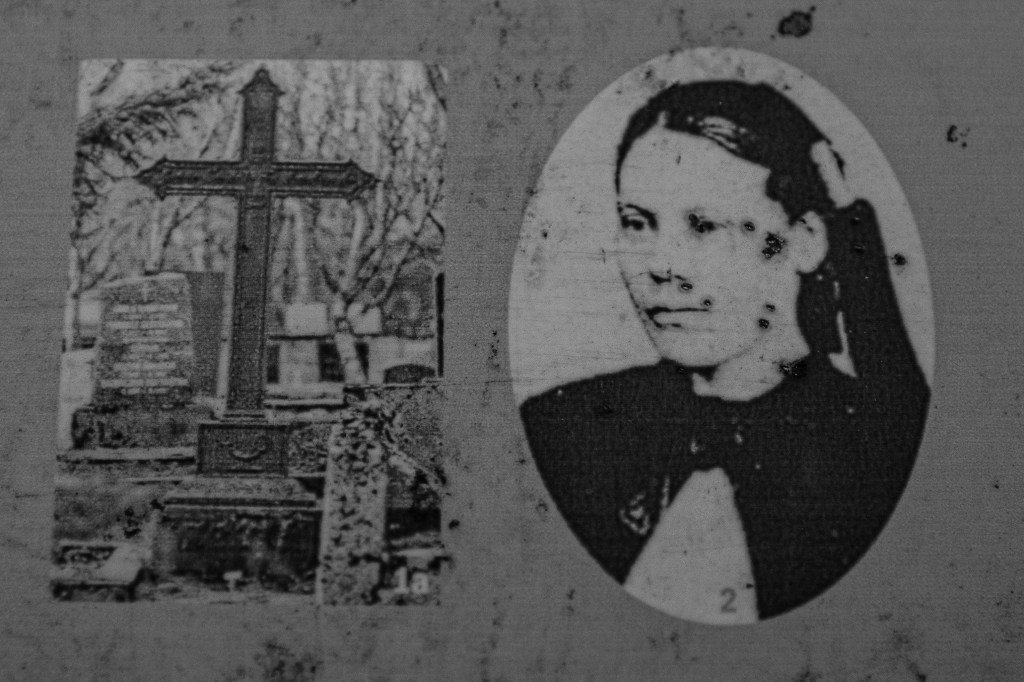
Guðrún’s imposing cast iron memorial cross (you can find it at the T-405 section of the cemetery) is the largest of its kind in Iceland. It’s engraved with a flaming lamp (the cemetery Guardian is also known as a ‘Light Bringer’ so it’s a most suitable motif) with the word Her huili husfru – Here rests the mistress of the house. The engravings remain remarkably easy to read.

Inspired by Guðrún, and the lore surrounding cemetery Guardian’s, my best friend Giorgia Sottotetti and I shot some photos in Holavallagarður. Giorgia’s dress (Ovate, in case you’re wondering) is red because, in tales of cemetery Guardians, they’re said to appear wearing red or green.  

Politicians, painters and poets are lying in Holavallagarður…as well as the notorious murderess Steinunn Sveinsdóttir. In the Summer of 1802, in a two-family ‘village’ near Rauðasandur beach in the Westfjords, Steinunn Sveinsdóttir and her lover Bjarni Bjarnason murdered their respective spouses in what would go on to become one of the best known criminal cases in Iceland. 

In May 1803, the couple were sentenced to death. But there was a problem. No executioner could be found in Reykjavik, or at least not one qualified enough to do the job. So, the couple were to be deported to Norway. 

Sveinsdóttir died in prison of unknown circumstances before she could be deported. After numerous prison breaks and re-captures, Bjarnason was sent to Kristiansand. In a style reminiscent of medieval execution, he was put on a breaking wheel and stretching bench before having his head and hands cut off and jammed on spikes. In a differing account, he had a hand cut off and was then decapitated. Dismemberment followed, with his torso and head ending up on spikes. 

Initially, Sveinsdóttir was buried where the statue of Leif Eiriksson stands today, something I learned from the excellent thesis, Haunted Reykjavik: Cultural Heritage in the form of Ghost Stories by Matthildur Hjartardóttir.

Hjartardóttir explains: ‘Since Steinunn was considered evil, she wasn’t buried in the traditional sense, and she wasn’t buried in consecrated ground, as was custom at the time. Steinunn was dysjuð, which is a grave consisting of heaped-up stones, a practice reserved for people who were not deemed worthy of a proper burial. People then started throwing rocks at the mound for various reasons. Some did it to maintain the mound; others did it because they were afraid that she would come back, and others did it so her spirit would leave them alone.’

I don’t know where she was relocated to next (I heard her remains were moved several times), but for some years, she laid in an unmarked grave in Holavallagarður. It was only in 2012 that her grave was finally given a marker, following a prolonged fight for recognition by her descendants, who were staunch in their belief in her innocence. 

Speaking to the Iceland Review in an article celebrating the cemetery’s 180th anniversary, the caretaker Heimir Janusarson said: ‘The cemetery is very unique in Europe because it has never been reorganized or dug under… We have the first grave, we have the cemetery’s developmental history. You can read its planning history. You can read its vegetation history – when a [new species of] tree arrived in the country – because they were always planted in the cemetery first [because it was an] enclosed area and there [were] no sheep or horses to eat them.’

I’ve spent much time in Holavallagarður since 2021; in theory, I should know it almost as well as the back of my hand. But it proves me wrong whenever I think I’ve figured it out. Despite how well I may have studied the map beforehand, I still find it oddly special (okay, and sometimes infuriating…) that I’m never quite sure where I’m going when stepping off the main paved footpaths and onto the trails twisting through the forested garden of the departed. 

Sources

Flickering Lamps

Iceland Review

Atlas Obscura

Iceland Mag

New Year’s Eve In Iceland

I’ve always found the frenzy of New Year’s Eve overwhelming. The relentless din of fireworks, the roaring countdown, the gargantuan pressure to have THE BEST TIME EVER. It’s just too much. Most of my New Year’s Eves have been spent in bed with my journal, picking over the past year in minute detail.  

My perfect NYE would be in a forest cabin, hours from the closest town, where I’d experience absolute stillness well before and after midnight. If there did have to be noise, I’d much prefer to hear the pattering of hail, or a tree cracking in the cold or a raven cawing rather than fireworks and the deafening screams of HAPPY NEW YEAR! 

But, this year, I was elated to be involved in the celebrations, which included fireworks and hugging at midnight, though thankfully no screaming. My Icelandic boyfriend invited me to spend the evening (though the evening lasts most of the day, with only four hours of light in Iceland at this time of year) with his family and girlfriend (our relationship is open). 

I happily jumped head first into their traditions and felt much more upbeat than usual because the weather was suitably wintery – as it should be at the end of December. It was cold (-6.5 at times), and there was plenty of snow. (In a post on my blog, A Wyrd of her Own, I wrote about how out of sync I felt with the UK’s weather and the gigantic impact this had on my mood over Christmas.) In the UK, on NYE, it was wet, cloudy and blustery, with the temperature well into double figures. 

It’s tradition in Iceland to meet for a family meal between 6pm and 7pm. (We met at 6.30pm), and our meal was made up of typical Jól fare, including caramel-glazed potatoes, red cabbage, Waldorf salad (bound together with an incredible amount of whipped cream), endless bottles of Appelsín (orange soda) and cans of Malt og Appelsín (non-alcoholic malt beer mixed with aforementioned orange soda. Apparently it’s the taste of an Icelandic Christmas in a can.) There was also Toblerone ice cream. Curiously, decades ago in Iceland it became extremely popular as a festive dessert, and after snaffling down two helpings I can absolutely understand why. 

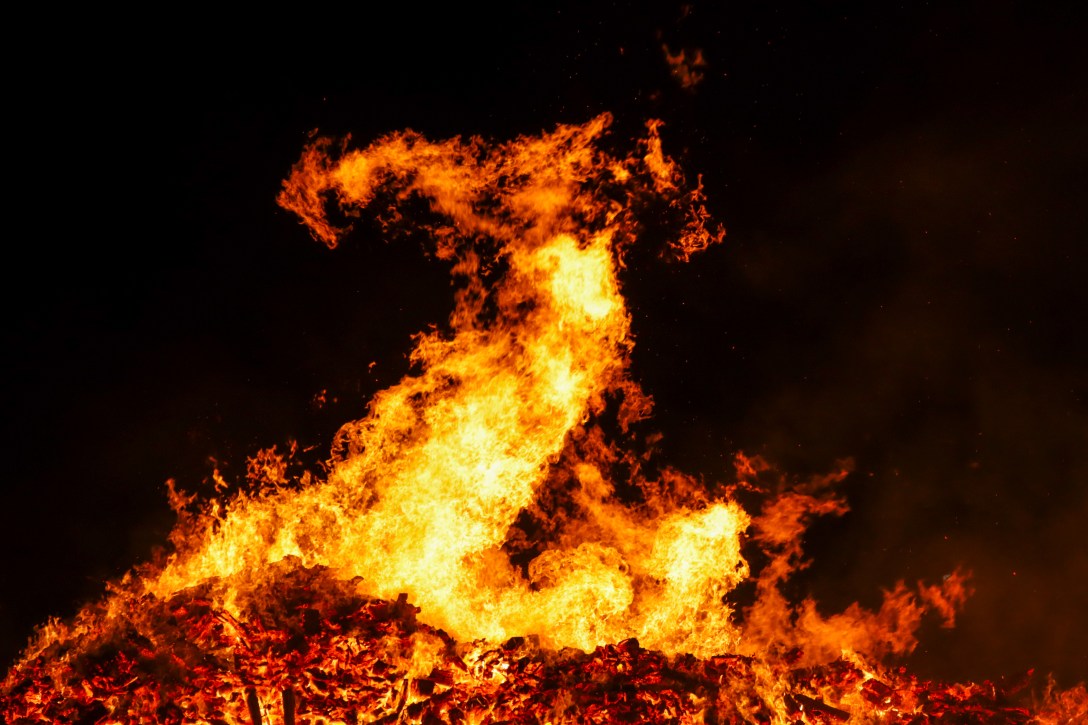
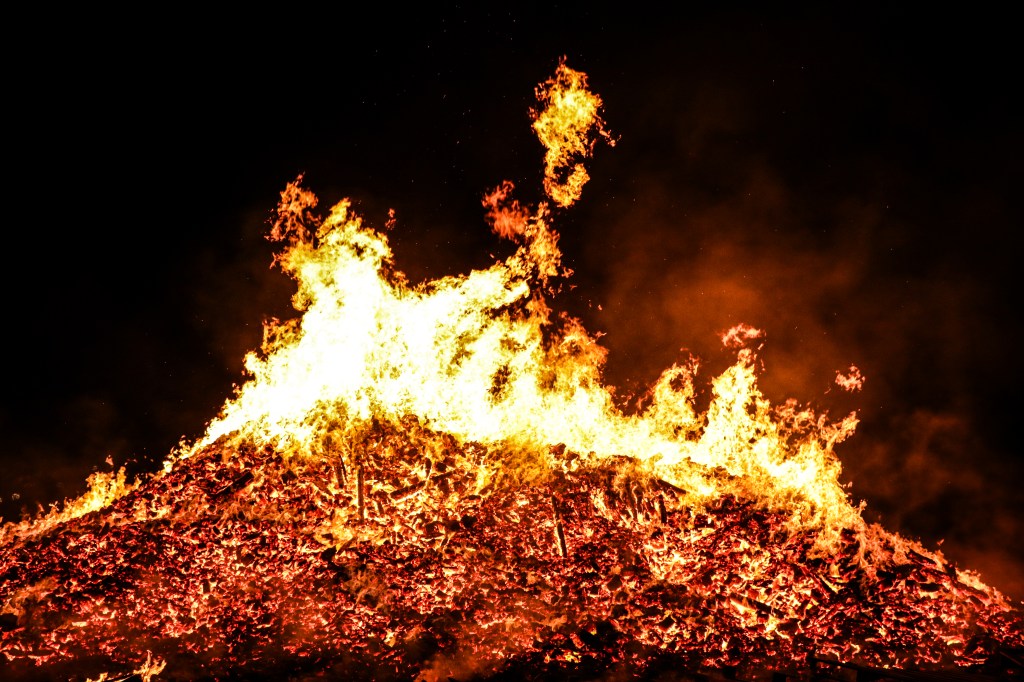
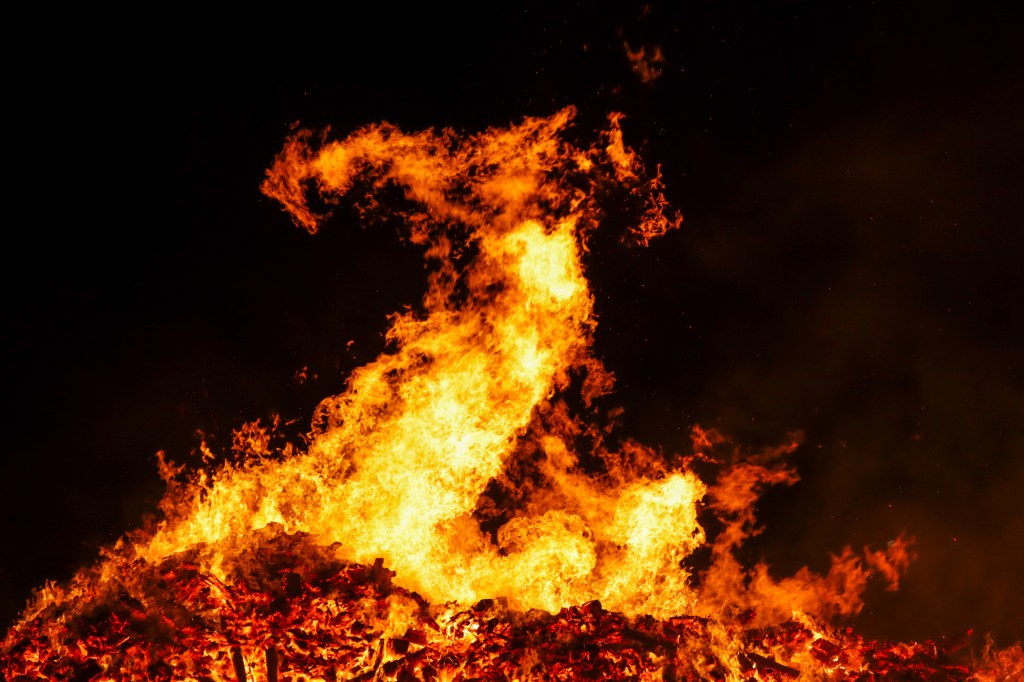
After dinner and heartfelt debates about the existence of elves (according to my boyfriend’s uncles it’s simply not true that 54% of the population believes in them), we tramped across a field of deep snow to wonder at a gigantic communal bonfire. Known as Áramótabrennur, these fires have burned on NYE in and around Reykjavik since the 18th Century and originated from the belief that to have a clean start in the new year, you had to burn away the old year and all that it represented. We went to the bonfire at Geirsnef (you can ogle some of my photographs below), though we had several places to choose from in the Greater Reykjavik area. Across Iceland, around 90 bonfires are ignited on NYE. 

There’s heaps of folklore linked to NYE in Iceland, and the folk tales of Jón Árnason, compiled in the 19th Century, talk of New Year’s Eve as the time when Hidden Folk would relocate their homes and become visible to people. Women would make the home spotless and light a candle in every corner. Once clean, the mistress of the house would walk around it and welcome any passing elves inside by saying, ‘Those who want to come may come, those who want to leave may leave, without harm to myself and my people.’ Leaving candles outside to guide the Hidden Folk was also customary.  

Following the fire, we watched the annual comedy show, Áramótaskaupið (New Year’s Spoof). Broadcast on TV since 1966, it’s become such an central part of NYE celebrations that in 2002, an estimated 95.5% of the population tuned in to watch it. 

After the show, from which I learned that Icelanders call Tenerife Tene (I find it amusing that Icelanders flee a cold volcanic island for a warm one), it was time to bring out the fireworks. Fireworks in Iceland differ from those elsewhere. They’re sold by ICE-SAR, the Icelandic Association for Search and Rescue (a volunteer-led organisation that saves upwards of 1200 people a year), who use the profits – which can reach hundreds of millions of kronur – to update their equipment. 

We watched the kaleidoscopic display from a snowy hilltop. There was no being penned in by thousands of people screaming HAPPY NEW YEAR, and, for the first time, I genuinely enjoyed watching fireworks illuminate the new year. 

There was absolutely zero pressure to have THE BEST TIME EVER, which enabled me, I’m sure, to really have fun. The evening ended with me feeling not overwhelmed but grateful, loved, and calmer than I can ever say I’ve been before on what I’d always thought of as the most highly-strung night of the year. 

You Can Listen To My Poem Grýla

Grýla was one of the first poems I wrote for my upcoming poetry collection. For those unfamiliar with Icelandic Christmas lore, Grýla is an ogress who comes down from her cave on Mt Esja (the mountain range that watches over Reykjavik) at Christmas time to steal and devour disobedient children. You can read much more about her in my previous blog post.

The threat of Grýla has been much softened over the years, and children aren’t as scared of her as they used to be. There’s even been a rumour going around Iceland for years that she died of starvation. However, not everyone agrees with this, including Terry Gunell, a professor in Folkloristics at the University of Iceland. In an article for the Iceland Monitor, he said, ‘She’s living a great life in the mountains still eating her human sushi…’

This ‘softening’ didn’t sit comfortably with me, and I felt I needed to write something that would hopefully capture the essence of her horribleness. To listen to my poem, just click the art work below. I wrote a post all about her on my other blog, A Nordic Fever, if you’re interested in delving deeper into her history. Other than that, I hope you enjoy (?) listening to the poem!

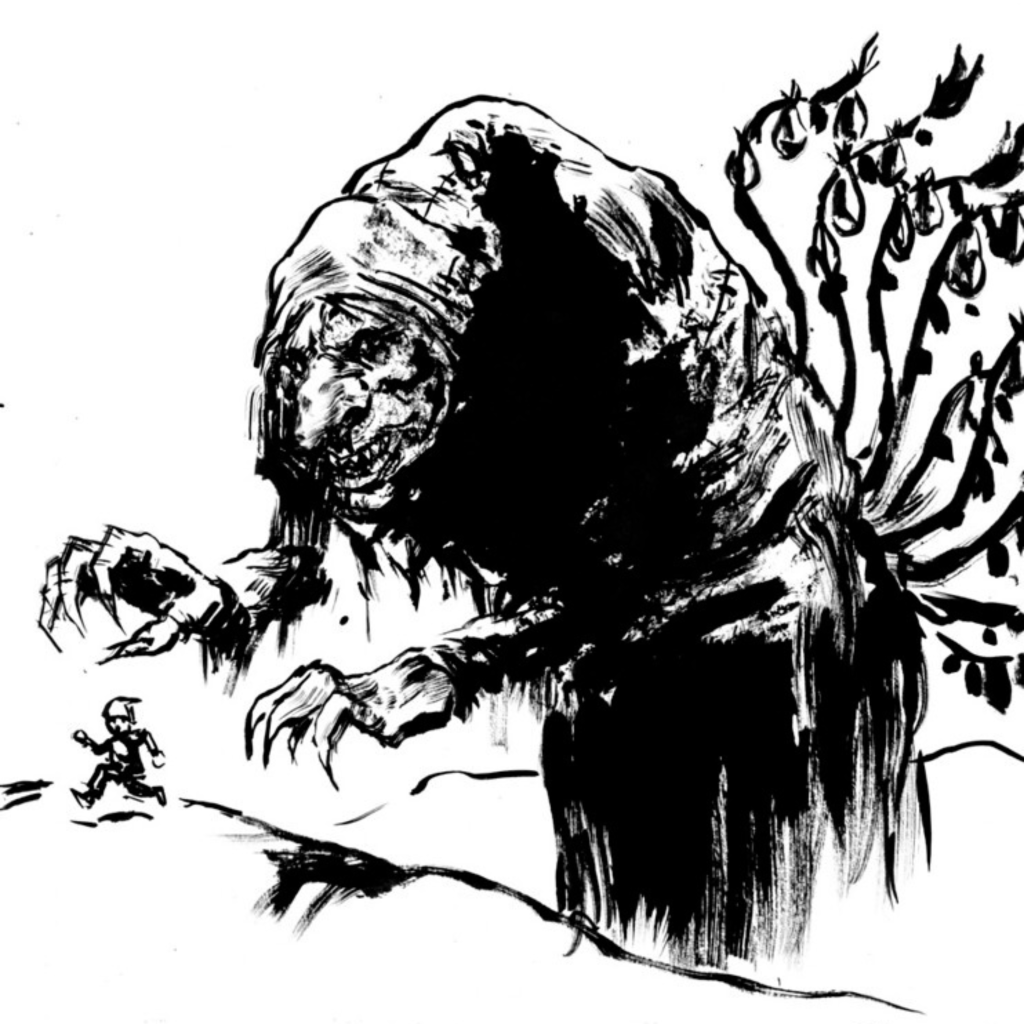
*The art you’re looking at was made by the humongously talented artist Kim Holm. You can see more of his work here.

Grýla – The Child-Eating Ogress of Christmas (And a poem about her)

I initially wrote about Iceland’s child-eating ogress of Christmas in 2009, two years before I even set foot on the island. It was a mild, one-page poem for university which featured in my first poetry collection. 

But Grýla never strayed far from my consciousness, so I wrote another poem about her for my upcoming collection themed on winter in Iceland. And it’s considerably more unsettling than the one I penned while still a fledgling poet. 

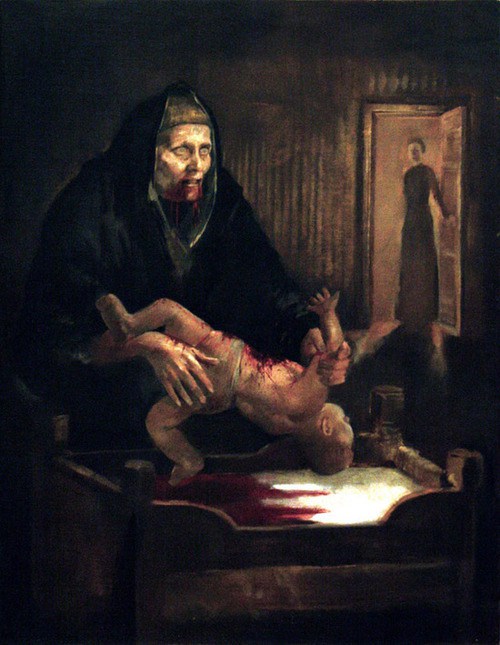
Of all the creepy Nordic folkloric beings, Grýla is, without doubt, one of THE creepiest, with her insatiable appetite for the flesh of children. Another aspect of her legend which unnerves me, and really quite profoundly, is the reaction parents were said to have about her eating their kids. Basically, they accepted it as a fact of life, something which Þrándur Þórarinsson illustrated brilliantly in his chilling painting. 

I’ll readily admit that until recently, I thought this painting was OLD, so old I was confident it would be within the public domain. But it isn’t old. Not at all. Þórarinsson was born in 1978.

When a photograph of the then relatively unknown (outside of Iceland) painting was put online in 2009, it went viral and was viewed by 620,000 people thereabouts in a single day. I wouldn’t be surprised if, nowadays, it’s the best-known image of Grýla on the web.

Another artwork that depicts her in a most gloriously grim way is this inked piece* by Norwegian artist Kim Holm.

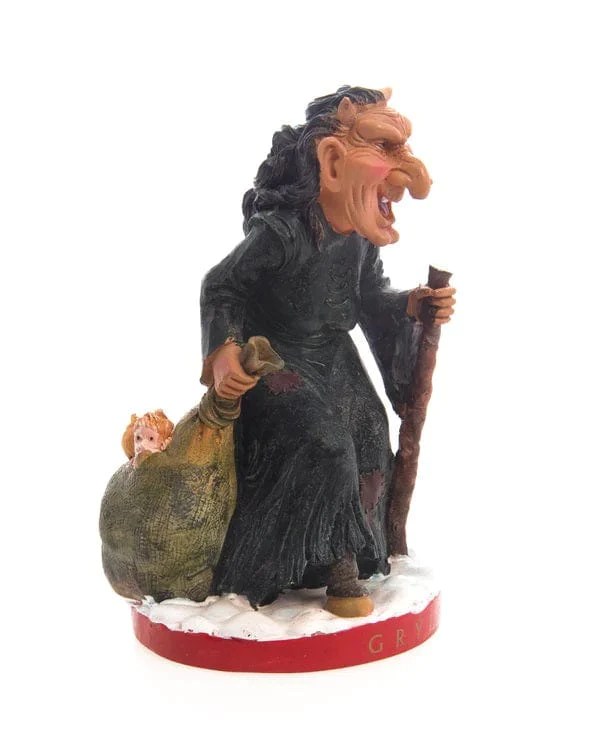
Grýla has a ‘special’ place in the hearts of Icelanders, and I’ve spoken to several about how genuinely scared they were as kids that Grýla would turn up at their home, abduct them and haul them away to the mountains where they’d end up being boiled alive in her cauldron. Though she seems to be ‘much tamer’ these years and is known mainly for being the mother of the Yule Lads. Though some keep the legend alive, as with this popular Icelandic Store sculpture of her, gleefully dragging her sack of children.

But Grýla hasn’t always been associated with Christmas. The first mentions of her appeared in The Saga of Icelanders and Sverris Saga, both 13th-century texts. She would only become connected to the festive season in the 17th Century through the Poem of Grýla.

How Grýla looks depends on who you ask, though 300 heads, fifteen tails, claws and cloven hooves are usually mentioned. Sometimes, she has a beard, sometimes she has horns. Though if you ask whoever directed the episode of Sabrina The Teenage Witch that featured Grýla, she’s quite the babe and, from what I understand about the episode (I’ve never seen it), only eats one child.

But are kids still scared of Grýla today? There is a story going around Iceland that she died of starvation. But not every parent goes along with it. The headmaster of the Elf School (an institution based in Reykjavik, devoted to Icelandic folklore), Magnus H. Skarphedinsson, told Vice in 2017 that he called home and pranked his daughter by pretending to be a Yule Lad. 

He told her his mother, Grýla, was furious with her for being badly behaved. After that phone call, his daughter hid under her bed and you can guess the rest.

Terry Gunnell, a professor in Folkloristics at the University of Iceland, said in a Smithsonian Magazine article that Grýla was ‘…a personification of the winter and the darkness and the snow getting closer and taking over the land again…’ Grýla represented the threat of winter and controlled the landscape, which, way back when, the Icelandic people believed they were only ‘tenants’ of. ‘You don’t mess with Grýla,’ Gunnell went on to say. ‘She rules the roost up in the mountains.’

Below, you’ll find my poem, Grýla. I hope it does what it’s supposed to and harks back to the days when the child-eating ogress of Iceland still chilled the blood of children when Christmas came around, and they weren’t sure if they’d been well enough behaved not to be taken from their beds and boiled up for stew.

Gryla

There's not one man, woman or child 
on this sterile, far-flung isle whose smile
doesn't waver at the growl of my name.

Generations of wicked children have pleaded
to uproot from houses they were born to,
bed down Skyr pale limbs and buttery heads
in places no one roams but the dead.

Pity those young minds that don't comprehend
- nowhere is safe from me.

I said, nowhere is safe from me.

Even the aged, with their crumbled minds,
and murk-filled, frightened eyes, remember Grýla.

They shit in their clothes saved for Jól,
and piss in their soft chairs and beds.

The stench overpowers the lamb and cardamom,
festivities are disrupted with thin cries for help.

Hjálpaðu mér mamma, Grýla kemur!
Help me mamma, Grýla is coming!

But their mammas are gone long ago,
their rib bones timber for Huldufólk homes.

The flames beneath my cauldron were spitting
well before Snorri dashed ink on calf vellum.

I've been watching this unclad land as long as Esja has.

Above my head, it's cooled lava dark.
Below, Reykjavík sparkles like a whore
who has stolen every star.

I remember turf houses. How easily I could
make those soft walls fall, pluck up children
crawling between the debris.

Now, I run my claws against corrugated iron walls.
This time of year, children's ears are the keenest.
They hear the slow and steady clattering
from several streets away.

Some parents appreciate my coming.
Many have seen me take their offspring.
It's how life is; I often hear them thinking.

Last Jól, a child said to me you're not real.

Boy, I replied, you're about to die in my hands,
and I'll see to it your skin is flayed off and tanned.

Then I lowered my mouth over his bobbing head,
chomped through his bird bone neck,
stuffed him, headless and silent, into my sack.

I always need a thread to sew Leppalúði's socks.
I need girls with long hair, though, if I don't take enough,
tendons do the job almost as well.

Tonight, children are waiting in terrible silence.

Some whisper, Grýla, we hail you, clutch lava stone effigies
of me, hoping I'll pass by, gift them more time.

This year, there's an odd little child,
a child so very…other.

He's gone so far as to scratch HAIL GRÝLA
on the floorboards beneath his bed.

I can read the startling thoughts he has
tied so neatly in his head.

He wants to join me, trail my gory path,
stir to the great depths of my cauldron, taste
his schoolmate's meat, pick splinters of their bones
from between his fence-like teeth.

He wants to run about after my lads,
become known for creating carnage of his own.

He wants to dig out the crusted human blood
stuck between my cat's sweet toe pads.

He's waiting in a white house
within sight of Hallgrímskirkja.

He's waiting to hear my hooves on stone,
my claws on iron. He's waiting for my face
to loom around the door to his room where he sits,
quiet as a lamb, hands in lap, patient as can be.

He'll drop to his knees. There'll be no dread,
no fear, not even a shred.

I'll beckon for him to follow me out.
Reykjavík's foundations will quake as we walk.

With my forefingers and thumbs,
I'll pinch out each maddening light.

I'll bring Jól to an end and greet again
the merciless Icelandic winter night.

*I used this artwork as the front cover for my pamphlet The Darkest Days which features my Grýla poem along with work about Jack Frost and Swiftrunner.

Related: Art of Grýla