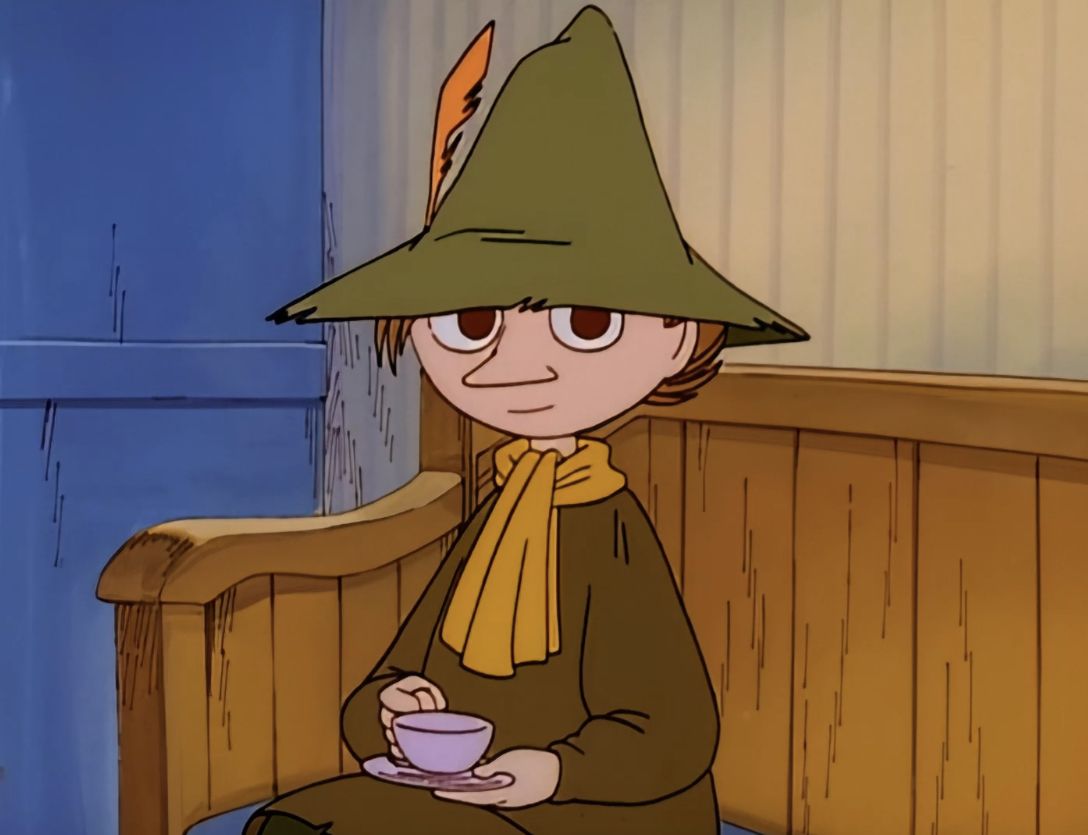
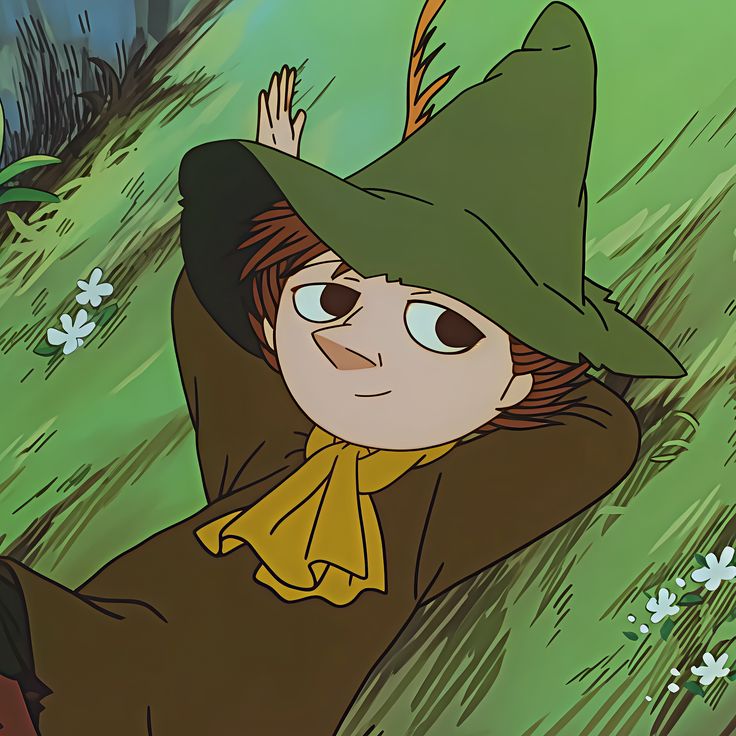
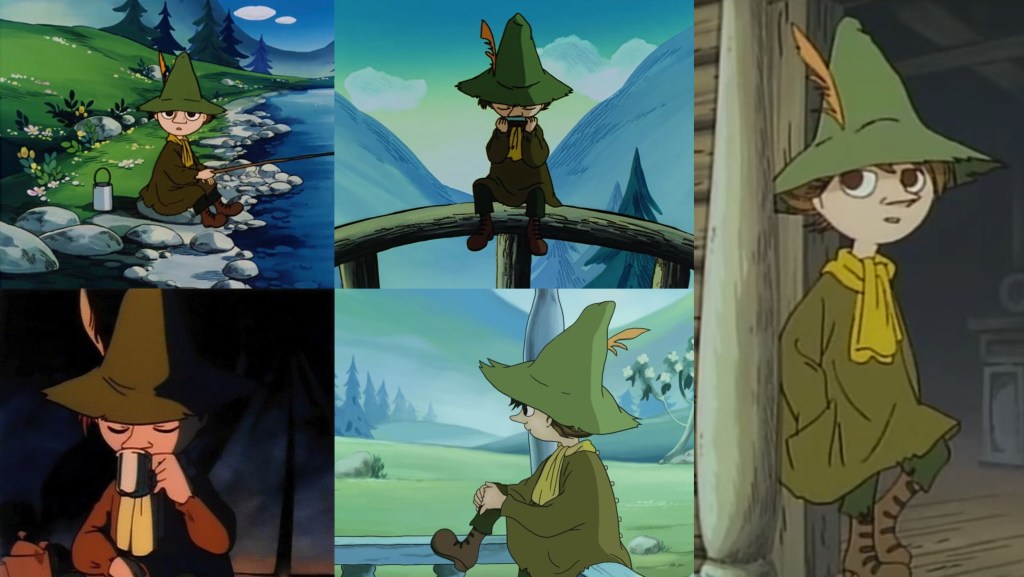
A core childhood memory for me is the ritual of watching Moomin before school, and it took only a couple of episodes before I found myself excited to see one character in particular – the smock-wearing, pipe-puffing, saucer-eyed Snufkin.
I was besotted with the handsome philosophical nomad and his zen demeanour, my little heart fluttering whenever a breeze ruffled his cartoon hair.
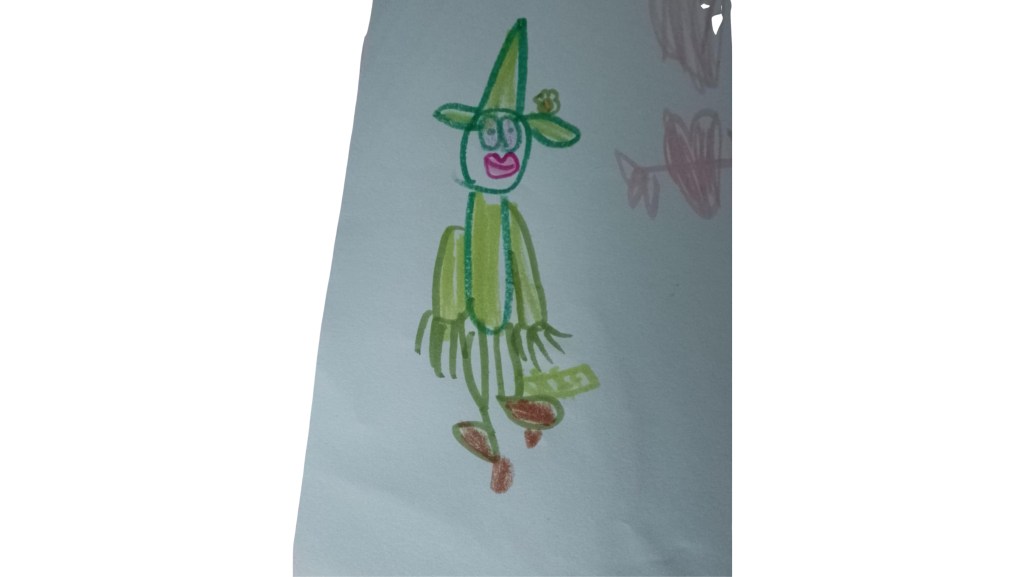
Over two decades later, Snufkin’s appeal hasn’t waned. I know, because I’m a mother to Saga, a seven-year-old who’s similarly smitten with his character. Saga was six when she looked at me shyly from underneath her hair, trying desperately not to break into an embarrassed smile. ‘I love him,’ she said with conviction. Her words had a familiar weight, but Saga’s infatuation went a bit further than mine did, as she went on to draw his portrait, complete with flute, something I’d never even considered doing.
When, as a little girl, I found out that I wasn’t the only one who liked him, that to crush on Snufkin was actually a common experience, I was devastated! I felt the same devastation when I discovered I wasn’t the only one who fancied Atreyu from The Neverending Story and Madmartigan from Willow.
Now, as a grown adult woman, Snufkin is no longer my favourite character. His rank has been usurped by two characters in equal proportion: Snufkin’s sister Little My (a character I loathed as a child but can now wholly relate to) and the Groke, whom I also, in ways, relate to. Saga remains devoted to Snufkin, though it looks like he might soon be demoted by the more mysterious Hattifatteners.
Out of curiosity, I looked on Reddit to see what people said about Snufkin’s appeal. On a thread called ‘Why does everyone have a crush on Snufkin?’ the commenter Bunnything wrote: ‘He’s chill and a good listener and generally has a mature understanding of who he is and what he wants.’ Moneymilk69 simply wrote: ‘Oh, to be in Moominvalley.’
I suspect most of us, whether we once fancied Snufkin or not, have thought the same.
Thus far, 2024 has been disorientating, exhausting, painful, maddening and swift. So swift. Too swift. Since doing my initial ADHD assessment over a year ago, I’ve been struggling to come to grips with the reality that I’ve been living with this condition my entire life, and it’s only just coming to light as I hurtle towards my 40s. I’ve also been grieving everything that ‘could have been.’ But I’ll write more about this on my other blog awyrdofherown.blog when possible.
Around midnight last night, too tired to read, I flickered around on Pinterest, looking for… I’m not even sure what. At some point, I landed on this knitted cape, leading me toLittle Scandinavian, where I ended up on a post about The Scandinavian School in London, which looked like everything I would want for my daughter in a school, but whose gigantic fees were painful to read. It’s ridiculous, laughable even, that I let the fees of a school in a city where I don’t even live upset me.
I should have gone to bed then but didn’t. My mood was wounded. So I decided to scout out an image for the cover of my next book and ended up on The Public Domain Review – a treasury for the insatiably curious creative – which I combed through for Nordic bounty.
While I furiously bookmarked articles and added, to my already gridlocked desktop, old photographs of Norwegian fjords and Icelandic fishermen, I thought about producing an art appreciation post of some of the stuff I unearthed.
For the longest time, ‘art appreciation posts’ and ‘I-saw-these-things-and-thought-you-might-like-them-too’ posts were the lifeblood of my blogs. But then I gradually stopped making them, and I’ve missedmaking them, and am now on a mission to eradicate the idea from my head that making them ‘is not a good use of my time.’
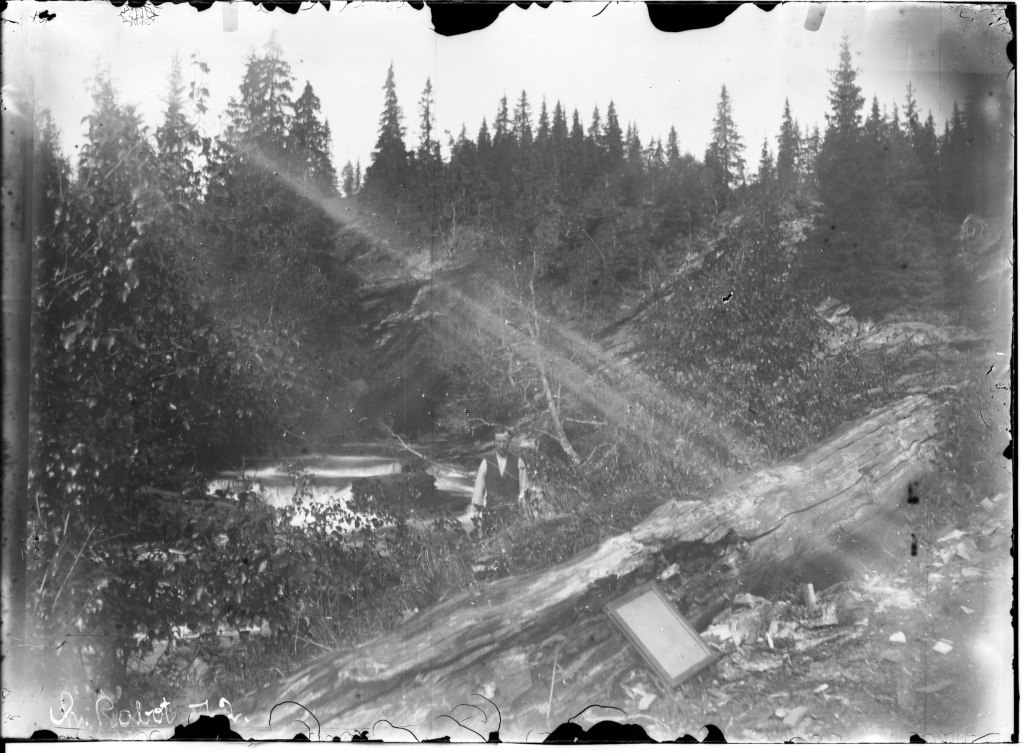
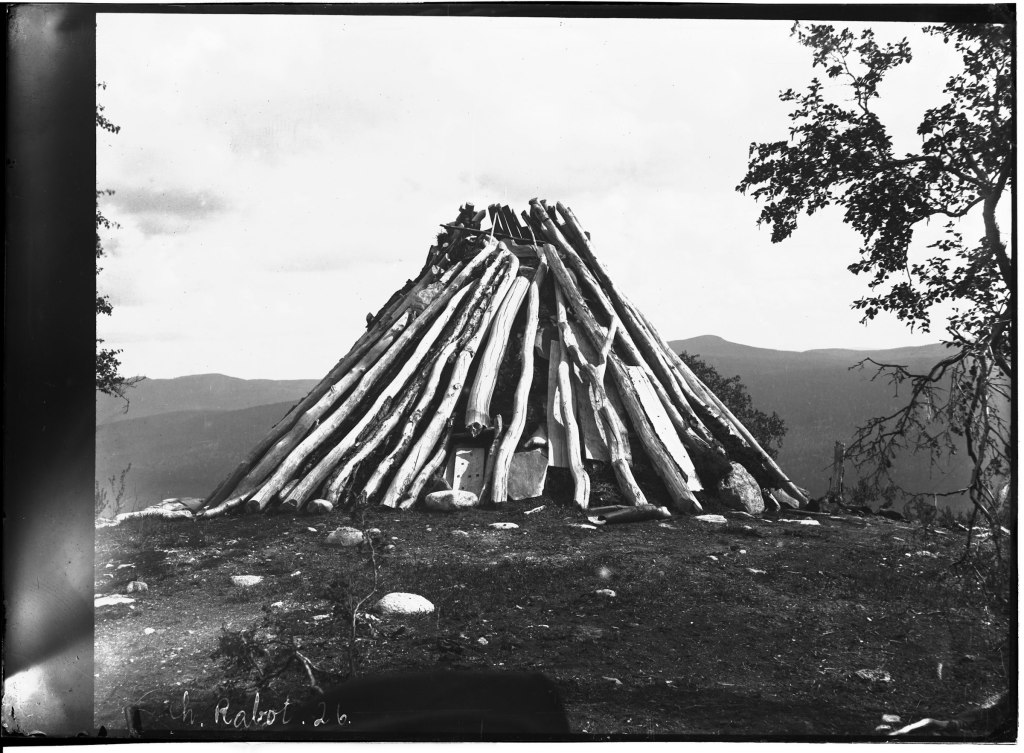
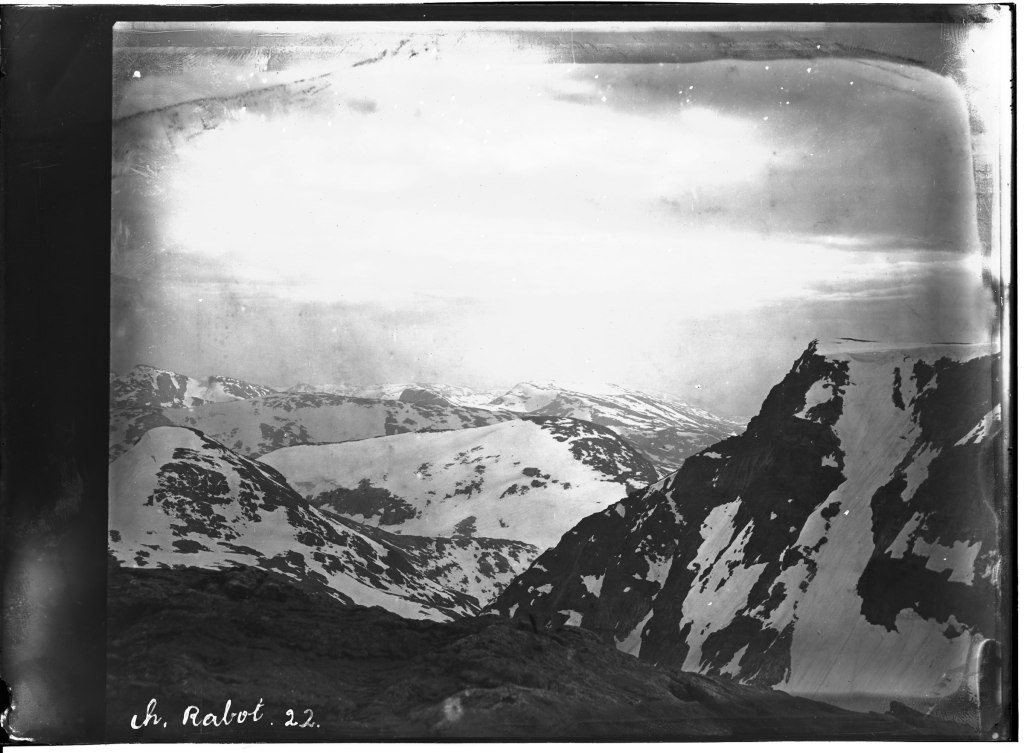
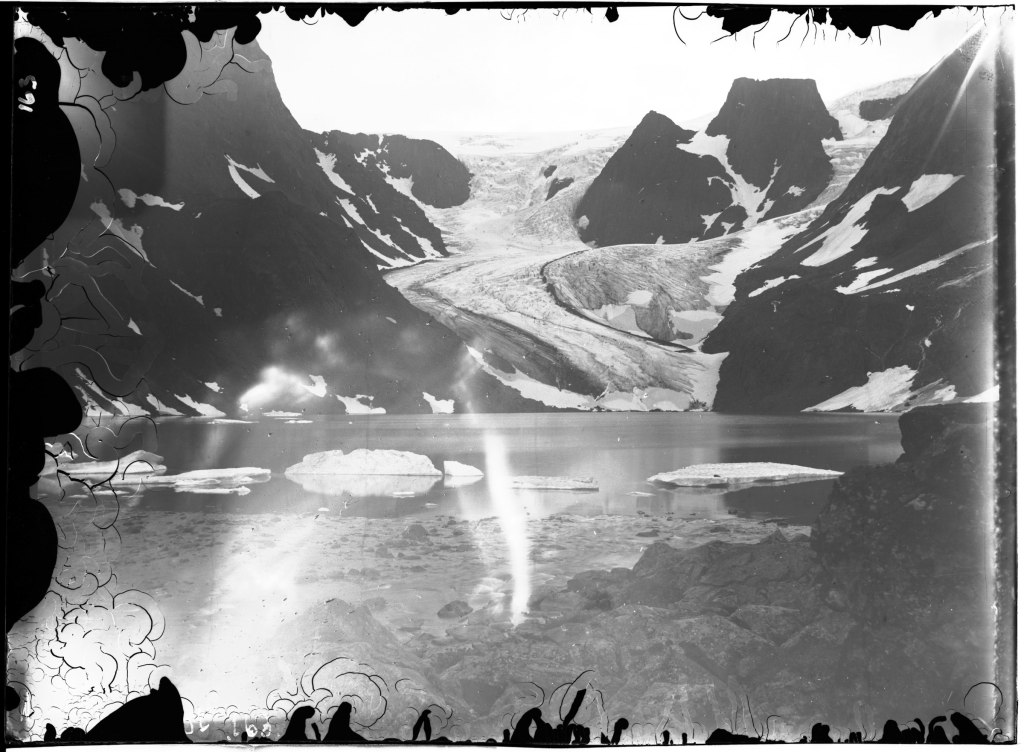
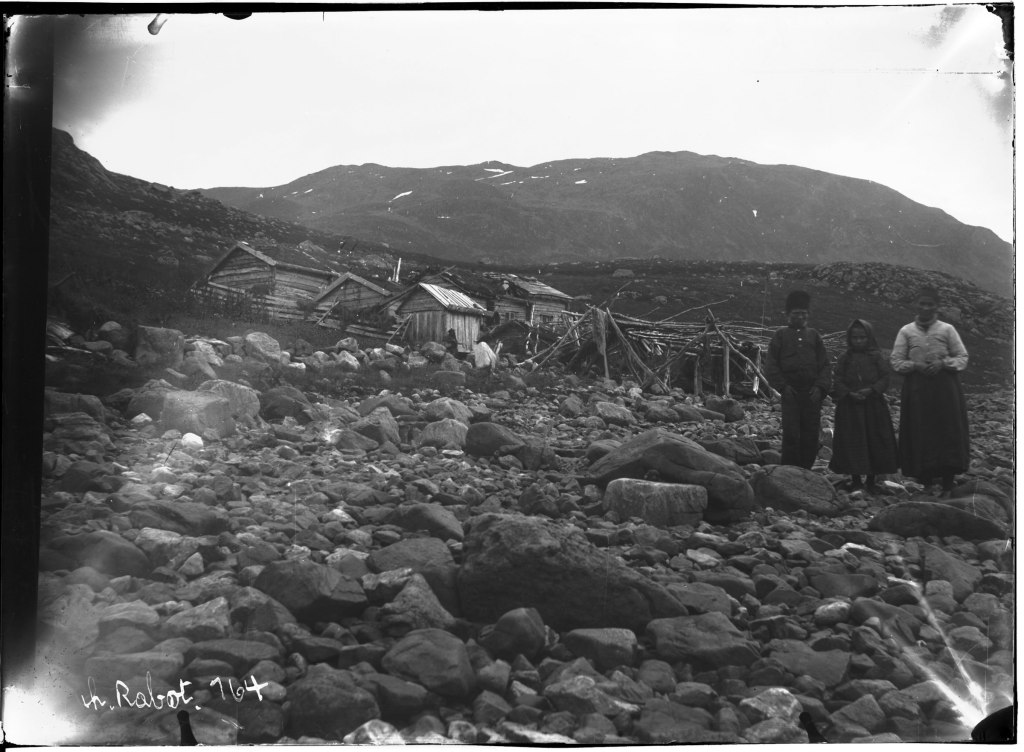
The first thing to catch my attention on The Public Domain Review was this striking, slightly sinister portrait of French geographer, glaciologist, and photographer Charles Rabot. This picture led me to a stupendously readable essay about Rabot by Erica X Eisen (whose other work I’m going to consume with gusto). Rabot had a ‘particular affinity for Norwegian culture…’ and his awe of ‘boral landscapes’ and ‘nostalgic yearning’ for the north is something I strongly identify with:
‘They are so beautiful, so magnificent, those deathly solitudes, so strange in their fleeting finery of brilliant colors, that they always leave one with a burning desire to see them again.’ – Charles Rabot
Eisen’s writing is astute and memorable – the following passage in particular ‘If there are any people to be seen in these snow-pied expanses, they are tiny afterthoughts so overwhelmed by the whiteness around them that any individuating features are obliterated completely — to the extent that these figures seem less like the protagonists of the shots and more like another accidental void bitten into the negative by the frost.’
The first person to climb Kebnekaise, Sweden’s highest mountain, in 1883, Rabot was also friends with the most swoon-worthy of Norwegian explorers, Fridtjof Nansen who’ll be much more thoroughly swooned over in another post where I’ll look at the bizarre but beguiling topic of fancying long-dead polar explorers.
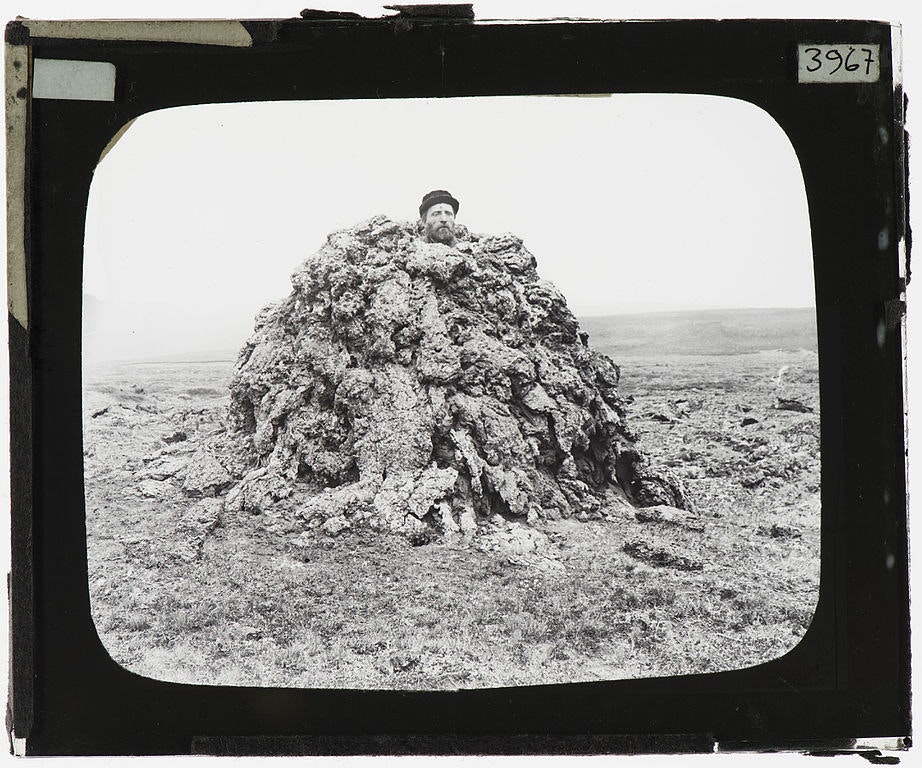
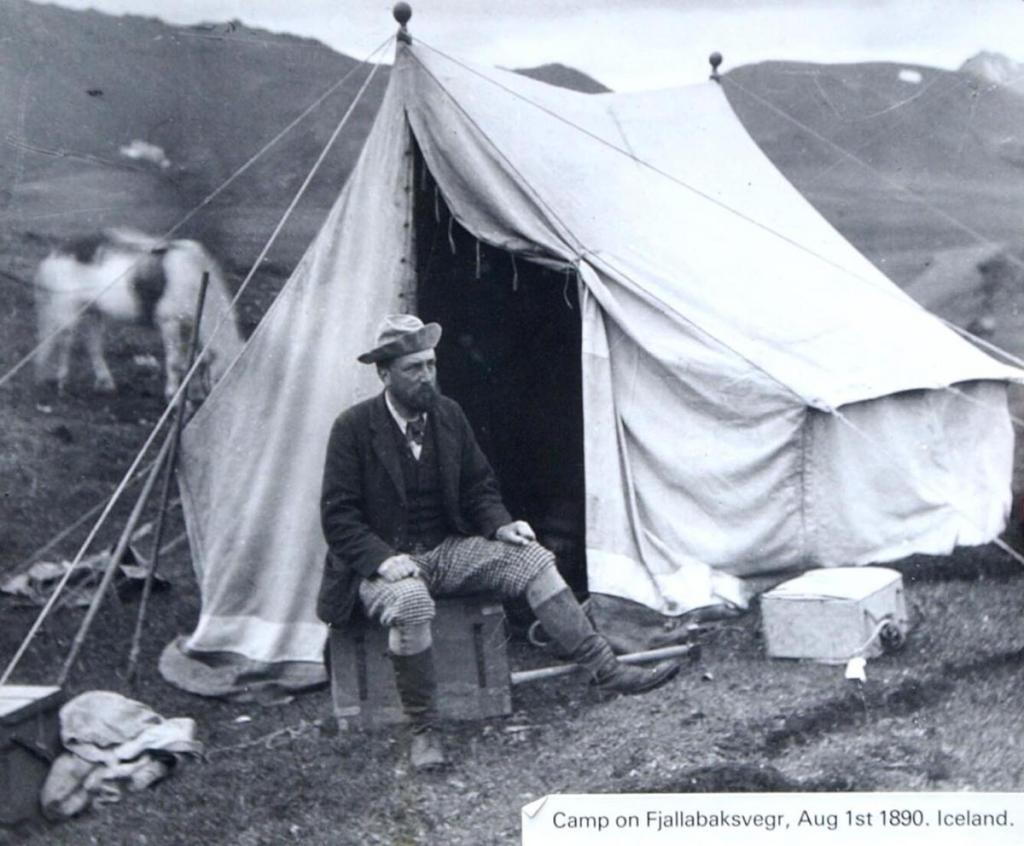
When I searched Iceland on The Public Domain Review, ‘ volcano chaser and pioneer of volcanic photography,’ Tempest Anderson showed up with one of the most gloriously surreal photographs I’ve ever seen.
Very much intrigued by the name Tempest, I was convinced there’d be a riveting origin story, so was a bit put out to find it was simply inspired by a prominent West Yorkshire family.
Yet there’s no doubt the man led a life not dissimilar to a windstorm—his list of occupations and accomplishments is…extensive. York-born and bred Anderson was a leading eye surgeon as well as a photographer, an inventor of photography equipment, a consulting physician to a lunatic asylum, a prison medical officer, a Sheriff of York… the list ploughs on. At 43, unmarried and restless, Anderson decided he’d use his spare time to study volcanology and chase volcanic eruptions. The photographs he shot in Iceland were taken using one of the earliest panoramic cameras, which, unsurprisingly, Anderson had developed himself.
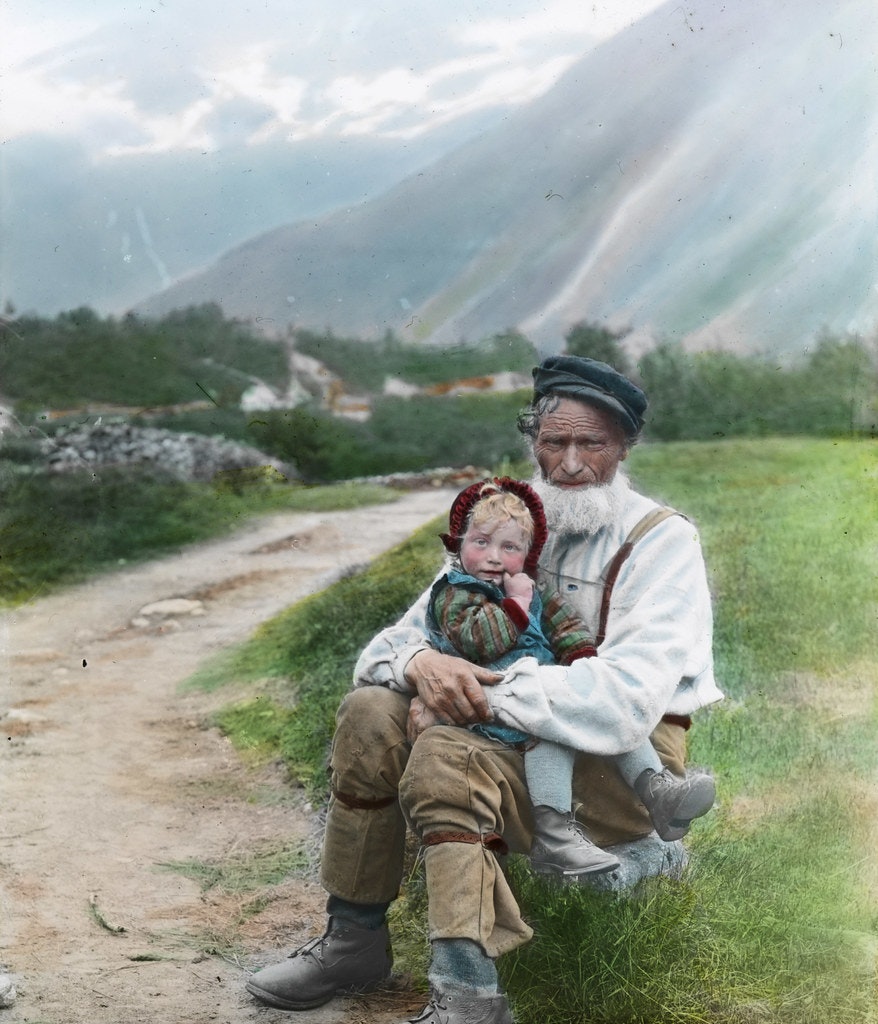
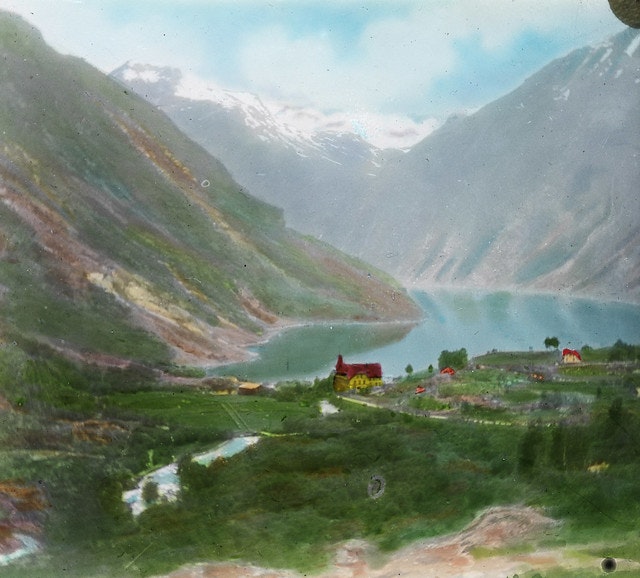
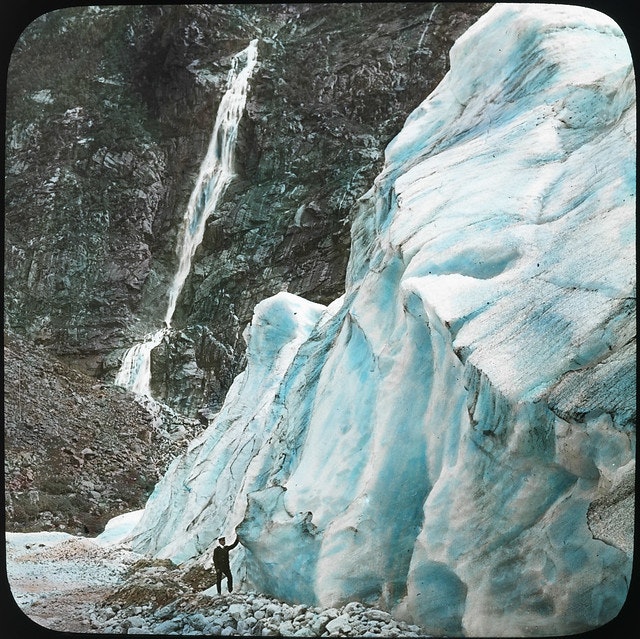
I’ll keep coming back to look at these lantern slides depicting Norway from the early 20th century, and I know each time I do, they’ll thrill me all over again. By the way, for full disclosure, I had to Google what a lantern slide is.
Lantern slides are positive, transparent photographs made on glass and viewed with the aid of a “magic lantern,” the predecessor of the slide projector. Lantern slide plates were commercially manufactured by sensitizing a sheet of glass with a silver gelatin emulsion. The plate was then exposed to a negative and processed, resulting in a positive, transparent image with exceptional detail and a rich tonal range. – Constance McCabe (National Gallery of Art.)
Produced by British photographers Samuel J. Beckett and P. Heywood Hadfield in my favourite part of Norway – Sogn og Fjordane (now known as Vestland) – these bold, crazily vivid lantern slides are held at the county archives in the fjord village of Leikanger, somewhere I’m going to absolutely seek out when I’m next over by way of the Sognefjord. Right now though, I’d very much like to know what the woman on the steps was thinking when this picture was made. Also, image 4 – haunted to my core.
Hadfield was a surgeon on a ship cruising the Norwegian fjords and an amateur photographer in his free time. Little is known about Beckett, but copies of books by both men (The Fjords and Folk of Norway by Beckett and Fjords of Norway A Cruise On The SS Ophir by Heywood) are available on Abebooks and eBay and are very kindly priced for books printed well over a hundred years ago.
More Recommended Reading From The Public Domain Review
Antti Kertsi Keränen is the Finnish photographer behind CVLT FVCK, one of the few Instagram accounts which I retreat to when everything just gets too much. You’ll understand why in just a moment…
I think about the aurora borealis on a daily basis. You only need to say the word ‘aurora…’ and my ears prick up like those of the fox in the beautiful short animation Fox Fires by Keilidh Bradley, a Scottish animator and visual development artist. She created the film as her graduation project from Scotland’s Duncan of Jordanstone College of Art & Design.
Inspired by the Finnish tale of how the aurora borealis came into being, Fox Fires is an exquisite combination of 3D and 2D animation. It’s accompanied by a gorgeous score that I could easily have on repeat for weeks. In Bradley’s film, the moon comes down from the sky and asks for the help of Earth’s animals to light up the darkness of night-time…
In Finnish, the aurora borealis (or northern lights) are known as Revontulet which translates to Fox Fires. In Finnish culture, it’s believed the mystical lights are created by a fox racing across the land, sweeping the earth’s snow with his tail as he goes and igniting the night sky as his fur scratches the trees. Legend says that if anyone were to catch the fire fox (tulikettu) they would be rich beyond their wildest imaginings.
This little animation enchanted me almost to the point of tears, and it’s enchanted many more folk besides, as it’s now had over one million views on YouTube. It’s also been shared by the Embassy of Finland in the US and the official Twitter account of Sweden. I have to share with you some of the comments from You Tube…they’re too good not to. I wholeheartedly agree with Faniaqua on the ‘too many chills to handle.’
In this weekly post, I collect all the need-to-read arctic related things that I’ve found over the past several days, and put them here in a handy bundle of links for you to pick, click and read.


















 Northern Fever