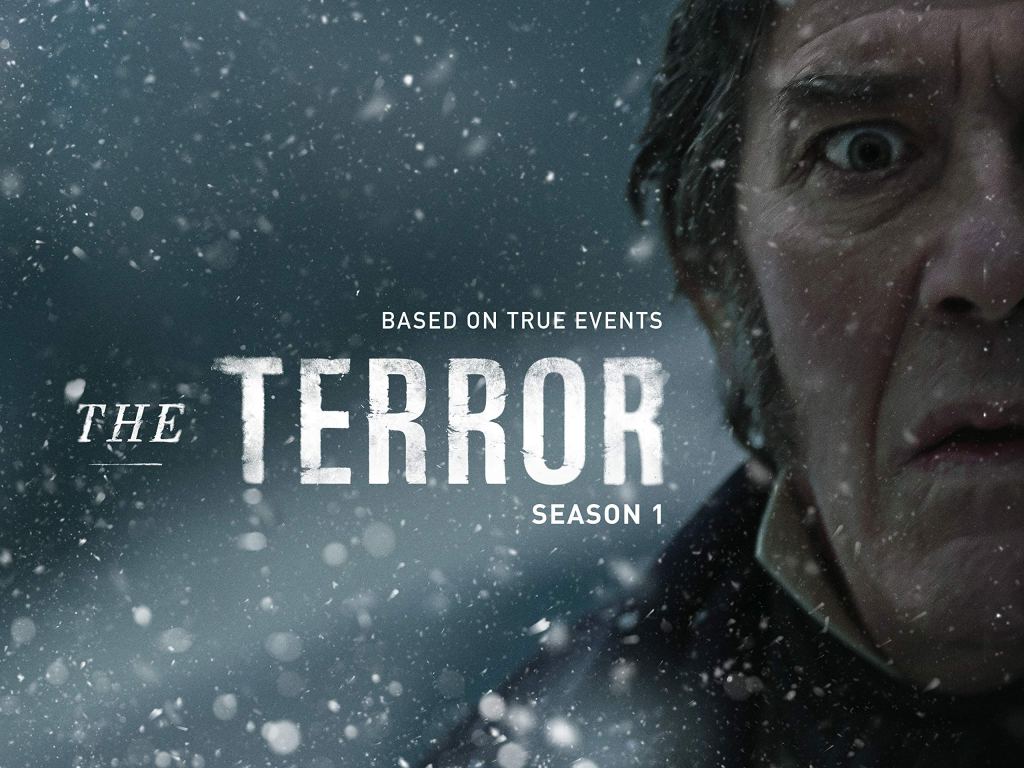
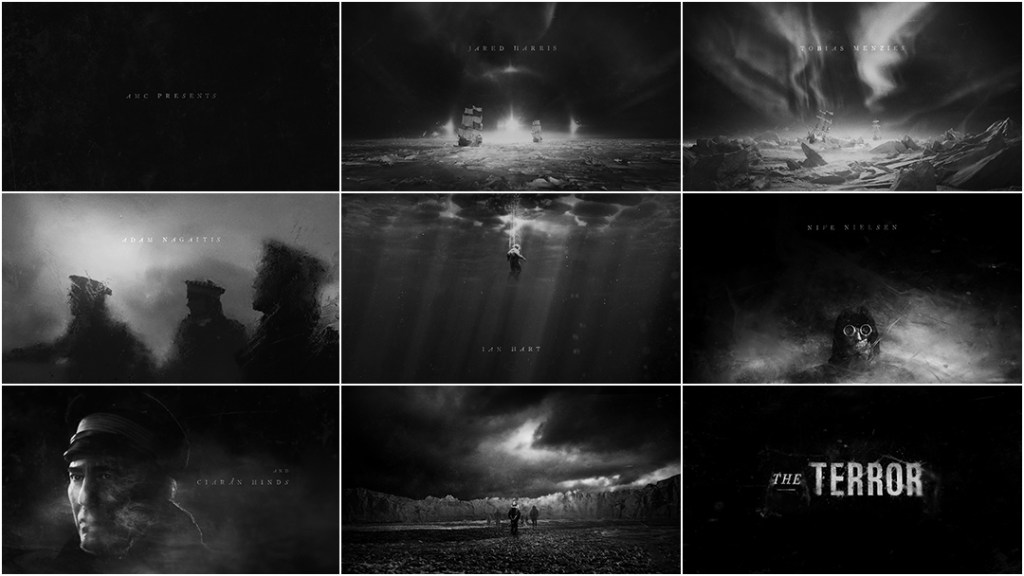
Watching The North – The Terror

I’m not very good at watching TV. More often than not, it’ll take me a week or more to get through an episode of something, even if it’s a mere forty minutes. My books are like sirens you see, and they’re almost always successful in luring back my attention.

But I thought I’d share some words on The Terror, one of the shows – it’s common for me to have a few on the go at the same time, so I can pick and choose depending on my mood – I’m making my way through. (I actually started it last night…though it was first aired in 2018. I’m late to everything.)

A few years ago, I tried hard, really hard to read Dan Simmon’s novel The Terror – I borrowed it from the library twice – on which the TV show is based, but found it difficult to get into. I don’t think I was in the right headspace at the time.

Nevertheless, I wanted to give the 10 part show a go because the trailer was too enticing and the subject matter too close to my heart. Plus, it’s directed by Ridley Scott, and I have faith in him. (Also, Scott hails from the North of England, so it sort of my duty to watch it.)

The Terror is a fictionalized account of Captain Sir John Franklin’s doomed Arctic expedition in search of the Northwest Passage in the 1840s. In the story, the British Royal Navel ships HMS Erebus and HMS Terror become trapped in ice. With limited resources and ebbing hope, the crew must try and survive the unforgiving Arctic conditions, as well as each other, while being stalked by something horrifying and nameless.

Interesting Note: The wreak of Erubus was discovered in 2014 and Terror was found two years later in 2016. Inuit knowledge played a valuable role in the discoveries.

If you’re too involved now to turn back, there’s much to be found about the lost expedition here. Also, Kat Eschner wrote an excellent article for Smithsonian Mag on the TV show, and the ways in which it ‘succeeds in being inclusive of indigenous culture.’

Update: I’ve just finished watching episode one and it was so good. Harrowing and riveting, with meticulous attention to detail. I’m in two minds as to whether I should give the novel another go. I probably will.

What Is Akutuq?

For the past few weeks, I’ve been thinking about akutuq an awful lot. So much so that I’ve written a poem about it and developed a real hankering to try some, despite usually shunning meat.

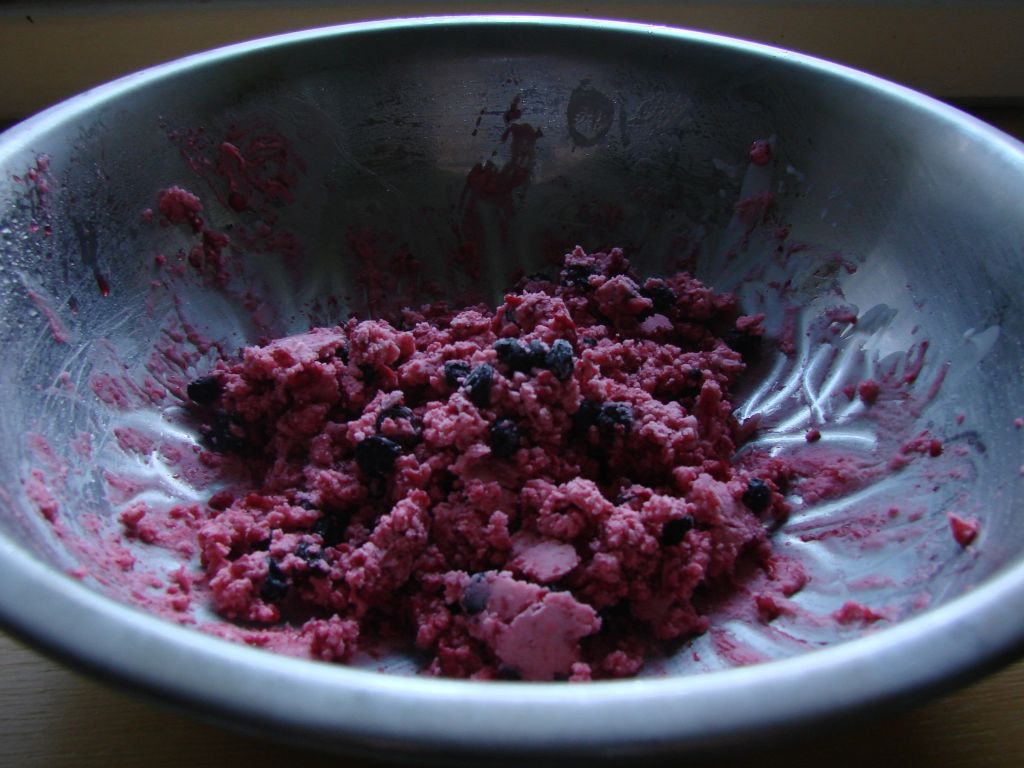
Also known as ‘Alaskan ice cream,’ ‘Native ice cream’ or ‘Eskimo ice cream,’ akutuq is animal fat – caribou, usually – mixed with seal oil and whipped together with handfuls of berries, freshly fallen snow or water. Each family has their own recipe, and it’s said the berries you choose to use is a lifetime decision. It’s alright to eat any flavor made by others, but your social standing will be lost if you’re found using berries different to the ones you initially chose.

Interesting Note: Seal oil is used to enhance pretty much all native foods.

The word akutuq means ‘to stir,’ and is pronounced ‘AUK – goo – duck.’ The Inuit have been making akutuq for centuries, and up until fairly recently, would store it in permafrost cellars, so it was ready for when guests dropped by.

On my wanders through the crevasses of the internet, I encountered Zona Spray Starks’s excellent article ‘What Is Eskimo Ice Cream?’ in which she talks about her experience of akutuq:

My favorite jaunt was out on the river to watch men haul fishnets up through the ice, sending whitefish flapping like crazy over the frozen surface. Seeing me, a neighbor named Old Jim would grin widely and yell “akutuq!” as he stooped to pick up a fish. Holding it belly up, he’d bend it until the skin snapped open and eggs popped out onto the ice.

Jim would quickly smash the egg membranes with a rock. With splayed fingers he’d stir, faster and faster, pulling little handfuls of snow into the mass. Within ten minutes a cloud-like batch of frozen akutuq would take shape. We devoured it on the spot, scooping up portions with our fingers, savoring each mouthful as it melted over our tongues. Old Jim’s version of the dish is one of many, and perhaps the most basic.

Zona Spray Starks
More photos can be found here.

A century back, women would hurry the process by chewing the fat to soften it. This had the potential to spoil the dish though, if the woman chewing was a pipe smoker. Watching videos on YouTube of the process of making traditional akutuq – splayed, experienced fingers whipping the fat until it triples in volume, adding a tablespoon of seal oil at a time and a little water to maximize the fluffiness – is akin to magic.

It takes about forty-five minutes for the fat to be transformed into something that looks very much like cake frosting. At this point, berries are added and perhaps a little sugar. (Whalers brought sugar to the Arctic in the 1800s.) The taste of akutuq is apparently ‘delicate, slightly sweet and rich, with a smooth and silky texture.’ It could also be made for hunters to take with them on long trips, by using dried meat instead of fruit.

In 1842 there was a gathering along the Yukon River and an akutuq cooking contest took place. Husbands heckled their wives to create bizarre variations. Some of the ingredients that found their way into the mixing bowls were blood, beaver, otter, caribou stomach contents and bird eggs.

Crisco (shortening) is often used to make akutuq these days, along with raisins. There are several ‘How To’s’ on YouTube – this one is particularly good – if you’re feeling intrepid. You can use a whisk instead of your fingers though, unless you’re keen on a more authentic experience.

Sources

Smithsonian Magazine / What Is Eskimo Ice Cream?

What’s Cooking America / Akutaq

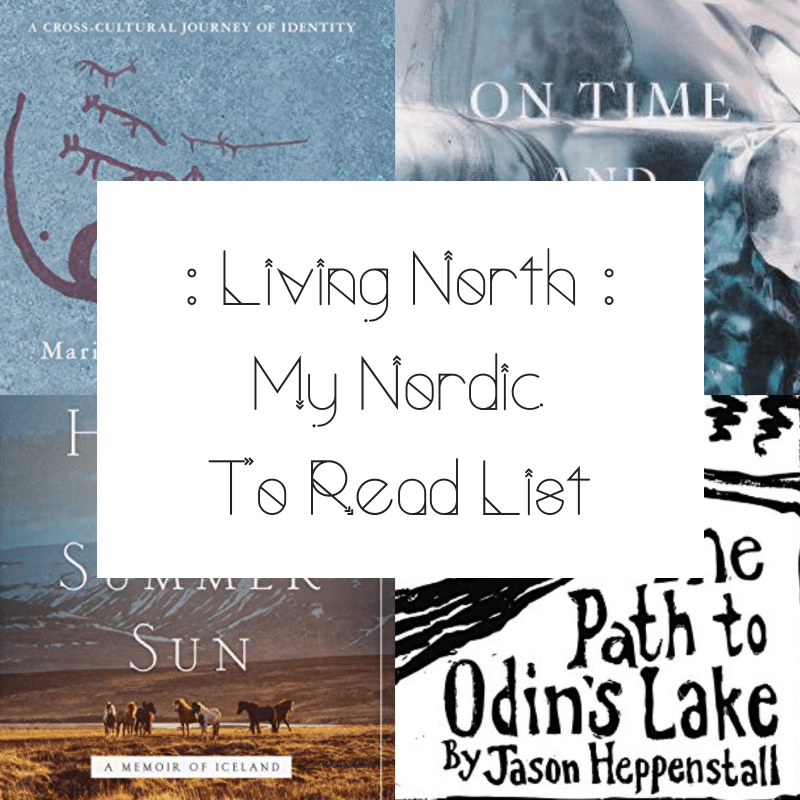
Living North : My Nordic ‘To Read’ List

I haven’t been able to read much recently. Depression made the thing I enjoy doing most in the world an agonizing challenge. But now my concentration is slowly returning to some sort of normality and I’ve been spending massive amounts of time on Amazon, hunting down literature about the Nordics that I haven’t read yet. I thought you might like to see what I’ve found!

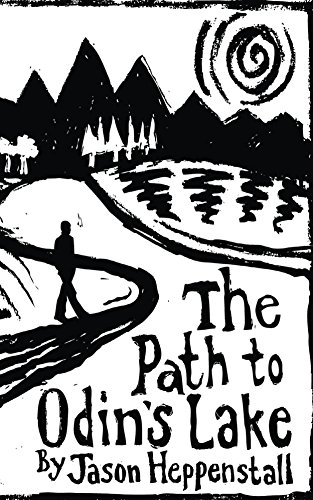
The Path To Odin’s Lake By Jason Heppenstall
51SNJvTCNXL

“Ex-newspaper editor Jason Heppenstall, worn down by the constant drumbeat of dire news in the world, decides to set out on a journey in search of some answers. With not much more than some walking boots, a notebook and a wooden staff, he sets off from his old home in Copenhagen with a vague idea to “head north”. It isn’t long before a series of bizarre coincidences leads him to believe that his journey is being guided towards an ancient lake in Sweden where the Norse god Odin was once worshipped.

Along the way he falls foul of the authorities, endures the wettest weather in living memory and meets a peculiar man of the forest who gives him a special gift. He discovers a modern day Sweden caught between a desire to do good in the world and one struggling to come to terms with the refugees from war-torn Syria and beyond.” – Amazon

Buy it here.

Blond Roots: A Cross-Cultural Journey of Identity By Marilyn E Fowler

“The Western world insists on following rational dictates, but there is freedom in allowing our deeper intuition to show the way forward. By surrendering to the heart, we can navigate the unknown world to come to a new understanding of ourselves.

51qfmFZSEdL

Author Marilyn E. Fowler, PhD, begins her journey with very little information about her cultural heritage. A family search uncovers an old picture of her great-grandmother Karoline, who was born somewhere in the northern reaches of Scandinavia among the indigenous Sámi people.

Fowler’s inner compass and a sequence of powerful, metaphysical events push her to venture alone to this distant territory. On this journey she has the honor of meeting Elina, a Sámi elder, who provides more clues to Fowler’s ancestral heritage.

Slowly, guided by intuition, she begins putting the pieces together, discovering the identity of her ancestors. She wants to understand them, and what she finds is a completely fresh perspective on life. As Fowler slowly learns about Sámi culture, she allows herself to let go of conventional reasoning and discover a new understanding of who she is and a new sense of connection with the earth. When she finally returns home, she finds that her perspectives on life have forever changed.” – Amazon

Buy it here.

On Time And Water By Andri Snær Magnason

41jcbqVzN0L

“Icelandic author and activist Andri Snær Magnason’s ‘Letter to the Future’, an extraordinary and moving eulogy for the lost Okjökull glacier, made global news and was shared by millions. Now he attempts to come to terms with the issues we all face in his new book On Time and Water. Magnason writes of the melting glaciers, the rising seas and acidity changes that haven’t been seen for 50 million years. These are changes that will affect all life on earth.

Taking a path to climate science through ancient myths about sacred cows, stories of ancestors and relatives and interviews with the Dalai Lama, Magnason allows himself to be both personal and scientific. The result is an absorbing mixture of travel, history, science and philosophy.” – Amazon

Buy it here.

Wild Horses of the Summer Sun: A Memoir of Iceland By Tory Bilski

“Each June, Tory Bilski meets up with fellow women travelers in Reykjavik where they head to northern Iceland, near the Greenland Sea. They escape their ordinary lives to live an extraordinary one at a horse farm perched at the edge of the world. If only for a short while.51mCiBg78jL

When they first came to Thingeyrar, these women were strangers to one another.  The only thing they had in common was their passion for Icelandic horses. However, over the years, their relationships with each other deepens, growing older together and keeping each other young. Combining the self-discovery Eat, Pray, Love, the sense of place of Under the Tuscan Sun, and the danger of Wild, Wild Horses of the Summer Sun revels in Tory’s quest for the “wild” inside her.

These women leave behind the usual troubles at home: illnesses, aging parents, troubled teenagers, financial worries–and embrace their desire for adventure.

Buoyed by their friendships with each other and their growing attachments and bonds with the otherworldly horses they ride, the warmth of Thingeyrar’s midnight sun carries these women through the rest of the year’s trials and travails.” – Amazon.

Buy it here.

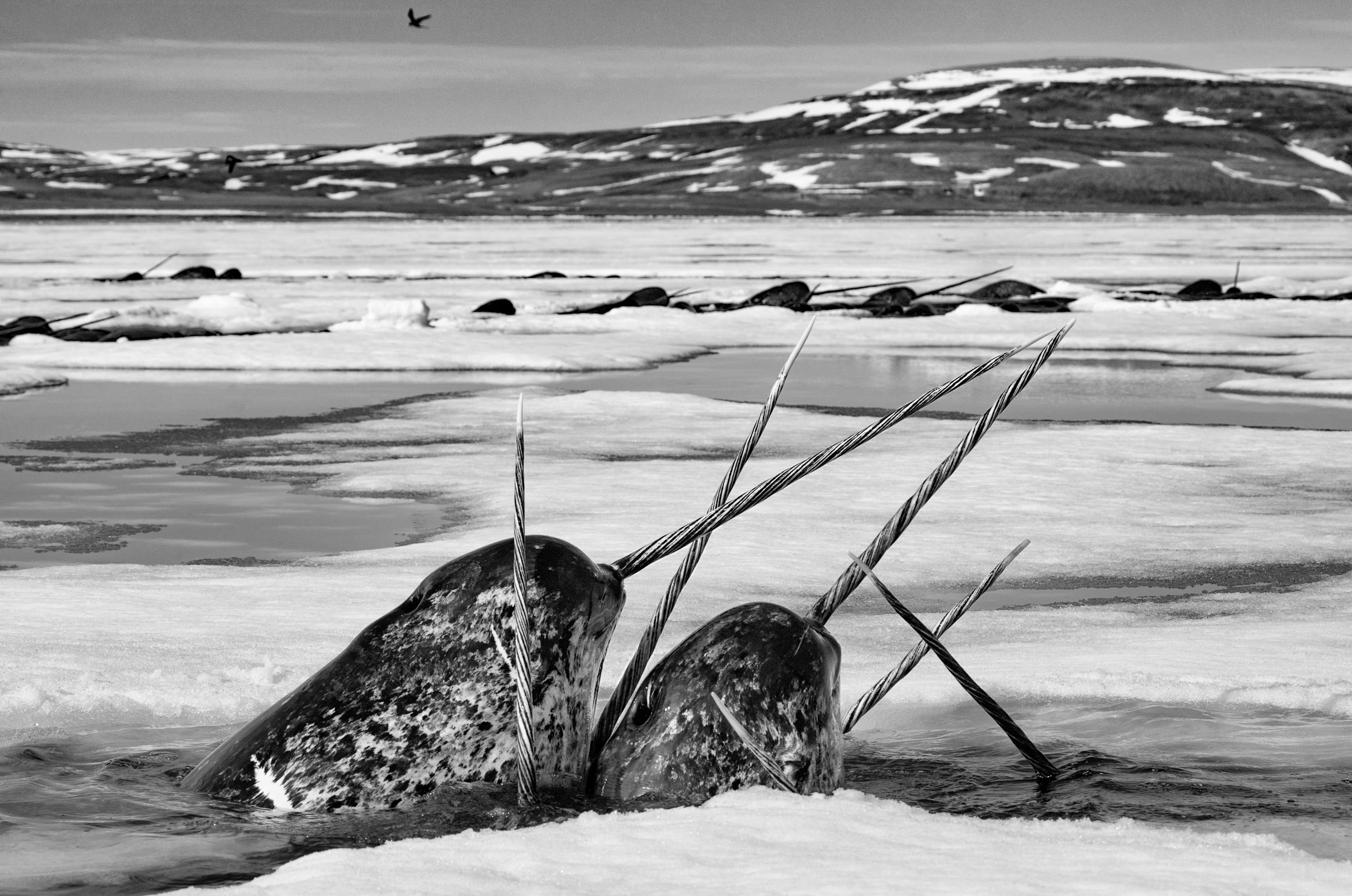
Curious North : 5 Narwhal Facts

Narwhals Are Descended From An Evil Woman

In Inuit folklore, there’s a tale about an evil woman who kept her daughter well fed but starved her blind son. The mother and daughter feasted in secret on the meat of a polar bear the son had shot with a bow and arrow. The son didn’t know he’d killed it, what with him being blind, and his mother insisted it had fled. (For the record, his sister helped him get the shot. In some versions of the tale, she’s sympathetic to his cause.)

Eventually, the son’s sight returned and he found the bear’s skin outside their hut. One day, there was a pod of white whales which the mother intended to harvest, but the son had other ideas. He lashed a rope attached to a harpoon around his mother’s middle and harpooned a whale. The whale dragged the boy’s mother from the ice floe she was standing on and out into the sea. Her transformation into a narwhal began when she twisted her long hair into what we know as the narwhal’s distinctive spiraling tusk.

pn
Paul Nicklen

There Are None In Captivity

The last narwhal in captivity was in 1969/1970. It was an orphaned calf that had been caught at Grise Fiord in Canada (one of the coldest inhabited places on earth) and was airlifted to the New York aquarium. A month later and it was dead. At around the same time, the Vancouver aquarium captured six narwhals. Unable to handle the stress of captivity, they all died within months.

pn3
Paul Nicklen

They Change Colour With Age

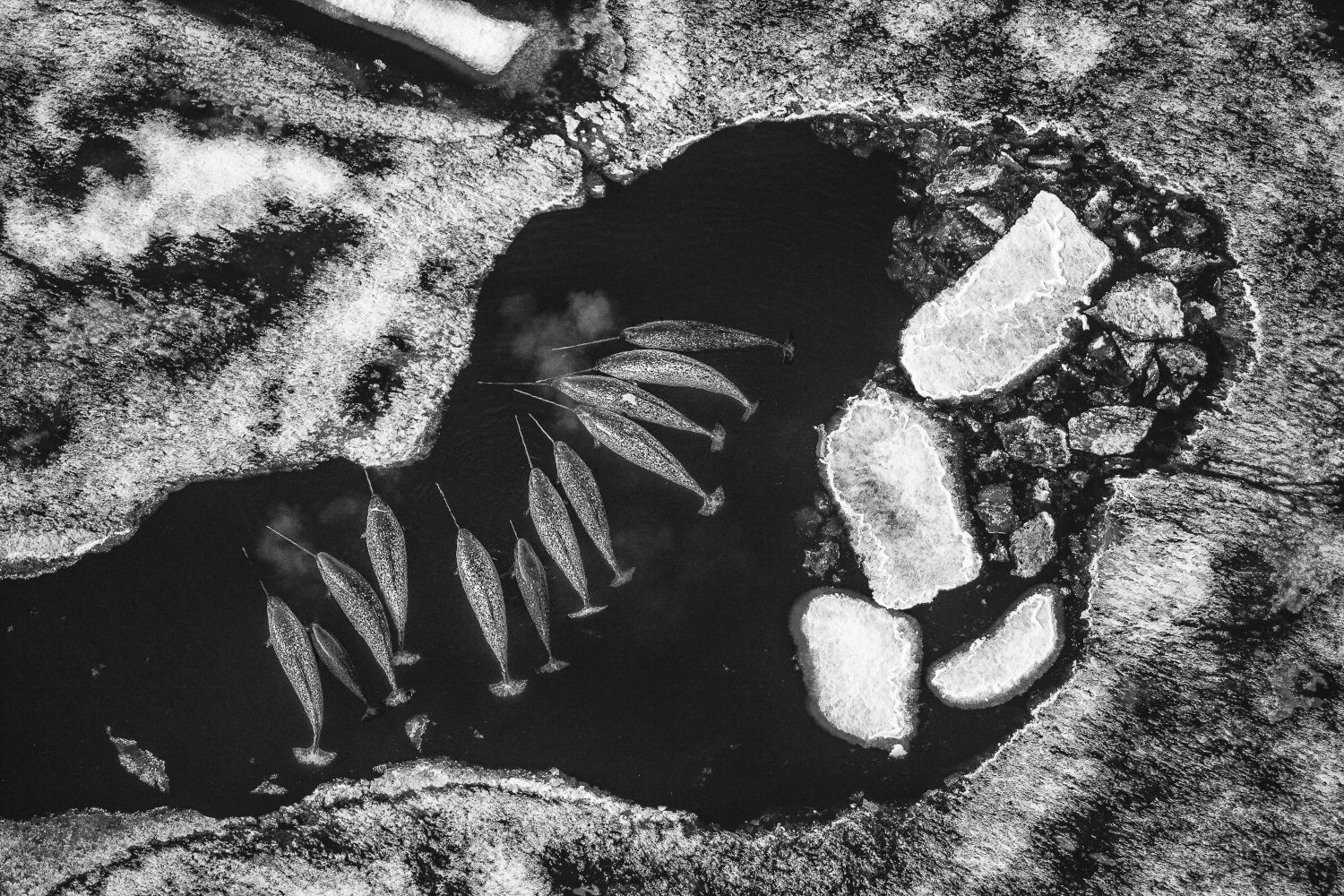
Newborn narwhals are mottled -blue-grey, juveniles are blue-black, adults are spotted grey and old narwhals are almost completely white. James Mead, the curator of marine mammals at the Smithsonian’s National Museum of Natural History says the speckles complexion of the narwhal is ‘weird’ as whales are usually a more uniform colour.

pn4.jpg
Paul Nicklen

It’s Tusk Is Actually A Tooth

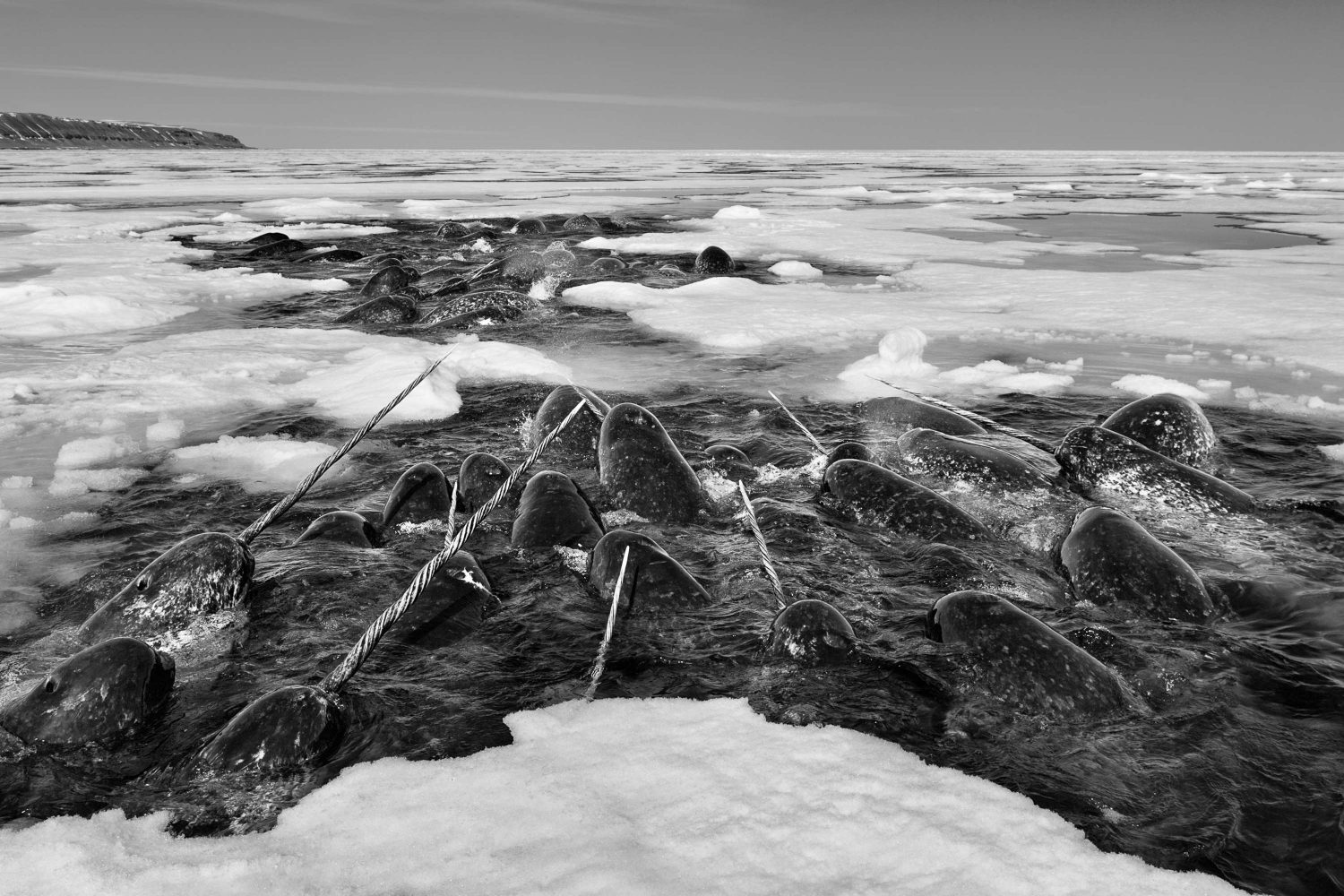
The narwhal’s tusk is actually an exaggerated front left tooth. (Its right tooth is smaller and remains inside its mouth.) While most teeth, humans included, have a hard exterior and a sort interior, it’s the opposite in the case of the narwhal. Covered in thousands of nerve endings, this tooth can grow up to ten feet long and is able to bend about a foot before breaking off.

pn2.jpg
Paul Nicklen

Narwhal Tastes Nutty…To Some

Muktuk is the name for the Inuit staple of whale skin and blubber. Apparently, when it’s eaten raw, muktuk becomes quite chewy and tastes nutty.  However, ‘nutty’ isn’t how one writer describes it. When Abigail Tucker when to Greenland she sampled some muktuk and this is her experience: “With the tips of my fingers I seized a tiny, half-frozen piece of raw blubber, dunked it soy sauce and put it in my mouth. That first bite was exactly like chomping down on a thick vein of gristle in a great aunt’s holiday roast. It was tough as rubber, with a taste like congealed gravy.

Sources

Smithsonian Mag

Mental Floss


North Of Instagram : CVLT FVCK

Antti Kertsi Keränen is the Finnish photographer behind CVLT FVCK, one of the few Instagram accounts which I retreat to when everything just gets too much. You’ll understand why in just a moment…

View this post on Instagram

Among the Giants..

A post shared by Antti Kertsi Keränen (@cvltfvck) on

View this post on Instagram

Can you hear me, Major Tom? 📡

A post shared by Antti Kertsi Keränen (@cvltfvck) on

View this post on Instagram

Surnia ulula. #Northernhawkowl

A post shared by Antti Kertsi Keränen (@cvltfvck) on

View this post on Instagram

Oblivion. #CVLTFVCK

A post shared by Antti Kertsi Keränen (@cvltfvck) on

View this post on Instagram

Sleeping giants.

A post shared by Antti Kertsi Keränen (@cvltfvck) on